
日本经济危机

Search documents
日本经济崩盘,债务创28年新高,高市支持率断崖下跌
Sou Hu Cai Jing· 2026-01-26 14:56
Economic Crisis Overview - Japan's economy is facing a multifaceted crisis, with debt levels reaching a 28-year high and significant turmoil in the bond market [2] - The crisis is attributed to short-sighted policies and long-standing issues, exacerbated by tax cuts and early elections [2] Tax Policy and Market Reaction - Prime Minister Fumio Kishida announced a controversial policy to suspend the 8% food consumption tax for two years, aimed at gaining voter support ahead of the February 8 election [4] - This tax cut is unprecedented in Japan, as even former Prime Minister Shinzo Abe refrained from reducing taxes [5] - The announcement led to a rapid sell-off in the bond market, with the 10-year government bond yield surging by 18.5 basis points to 2.380%, a 28-year high, and the 40-year bond yield exceeding 4% [9] Fiscal Implications - The food consumption tax is a crucial revenue source, accounting for nearly 22% of Japan's fiscal income, and its suspension could create a fiscal gap of 5 trillion yen annually, comparable to Japan's entire education budget [10] - Investor confidence in Japan's fiscal stability has collapsed, leading to increased bond selling and a worsening debt market crisis [12] Broader Economic Impact - The depreciation of the yen has raised import costs for energy and food, further exacerbating inflation [14] - Rising bond yields have increased mortgage rates, putting financial pressure on households, while small businesses face higher financing costs, leading to layoffs and wage freezes [14] Structural Debt Issues - Japan's public debt-to-GDP ratio exceeds 240%, the highest among developed nations, with the fiscal budget for FY2026 projected at a record 122.3 trillion yen [15] - A significant portion of Japan's public debt is supported by domestic savings, but this buffer is diminishing as the Bank of Japan moves towards tightening monetary policy [17][19] Political Consequences - Kishida's cabinet support rate has plummeted from 67% to 57%, marking a significant decline due to public dissatisfaction with perceived political opportunism [23] - The early dissolution of the House of Representatives has delayed critical budget discussions, contradicting Kishida's earlier commitments to address high prices [25] Conclusion - The ongoing crisis in Japan is a result of structural issues compounded by short-term political maneuvers, creating a vicious cycle of high debt, market instability, and eroded political trust [30] - Without addressing these underlying problems and implementing pragmatic measures, Japan's path to economic recovery will remain challenging [32]

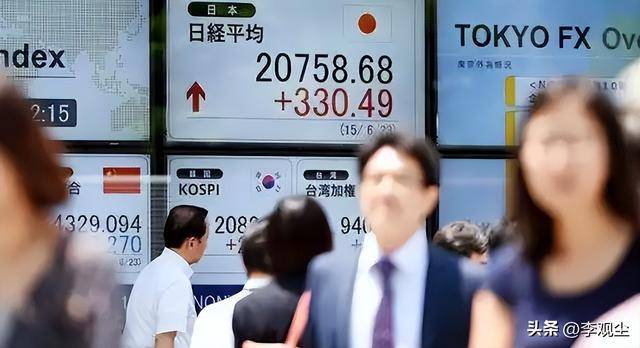
GDP降幅超预期 日本经济或将行至危机边缘?
Zhong Guo Xin Wen Wang· 2025-12-09 00:43
Group 1 - The Japanese economy is facing a more pessimistic outlook for Q3 2025, with a revised GDP contraction of 0.6% quarter-on-quarter and an annualized decline of 2.3%, exceeding previous market expectations of 2.0% [2] - Initial estimates indicated a smaller contraction of 0.4% quarter-on-quarter and a 1.8% annualized decline [3] - The downward revision is primarily attributed to a significant decrease in corporate investment, which was adjusted from a 1.0% growth to a 0.2% decline, alongside a reduction in public investment from a 0.1% growth to a 1.1% decline [4] Group 2 - Japan's economic challenges are compounded by limited fiscal and monetary policy space, insufficient internal growth momentum, and external trade risks [4] - Recent policy moves and diplomatic statements from Prime Minister Sanna Takashi have heightened market concerns, particularly regarding military expansion and deteriorating relations with China [5] - Economists warn that these developments could lead to further economic downturns, with potential negative growth in Q4 [5]
GDP降幅超预期,分析称“日本经济或将行至危机边缘”
Zhong Guo Xin Wen Wang· 2025-12-08 13:46
Group 1 - Japan's GDP for Q3 2025 has been revised to a quarter-on-quarter contraction of 0.6%, with an annualized decline of 2.3%, exceeding previous market expectations of a 2.0% drop [3] - Corporate investment was significantly downgraded from an initial forecast of a 1.0% increase to a 0.2% decrease, primarily contributing to the GDP decline [3] - Public investment also saw a downward revision from a 0.1% increase to a 1.1% decrease, indicating a broader economic contraction [3] Group 2 - Japan is facing multiple economic challenges, including limited fiscal and monetary policy space, insufficient internal growth momentum, and external trade environment risks [3] - The new Prime Minister, Sanae Takaichi, has raised concerns with her defense policies and statements regarding Taiwan, which have strained Japan-China relations and heightened market anxiety [4] - Economists warn that these developments could lead to further economic downturns, potentially pushing Japan's economy to the brink of crisis [4]
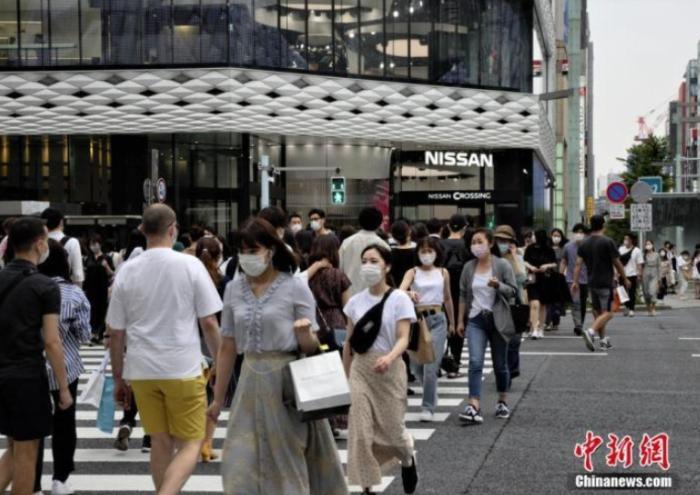
高市错误言论使日经济雪上加霜,鼓吹“日本人优先”是南辕北辙
2 1 Shi Ji Jing Ji Bao Dao· 2025-11-24 13:24
Economic Impact - Japan's economy is facing significant challenges, including four consecutive months of export decline, rising food prices, and negative GDP growth [2][6] - The recent controversial remarks by Prime Minister Kishi Sanae regarding Taiwan have exacerbated the economic situation, leading to public protests and calls for retraction and apology [2][3] - The tourism sector is particularly affected, with over 540,000 flight cancellations to Japan and a 29% drop in flight bookings from China following the remarks [3][4] Tourism Sector - The decline in Chinese tourists is severely impacting Japan's tourism industry, especially in popular destinations like Hokkaido, where hotel bookings have seen significant cancellations [4][5] - Data from Japan's Ministry of Land, Infrastructure, Transport and Tourism indicates that from January to September, foreign tourist spending reached 6.92 trillion yen, with Chinese tourists contributing approximately 30% [4] - Analysts predict that the loss of Chinese tourists could result in a reduction of about 2.2 trillion yen in tourism revenue and a 0.36% decrease in Japan's GDP [4][6] Foreign Relations and Trade - High-profile statements from Kishi Sanae have led to a halt in the release of Japanese films in China and a potential decline in Chinese consumer interest in Japanese products [5][6] - Japan's economic structure is highly dependent on external markets, particularly China and the U.S., making it vulnerable to trade shocks [6][9] - The recent remarks have prompted Chinese authorities to issue travel warnings, further straining Japan-China relations and impacting trade [3][6] Labor Market and Demographics - Japan is experiencing a demographic crisis with declining birth rates and an aging population, leading to labor shortages [7][8] - The introduction of foreign labor is seen as a necessary measure to address these shortages, with foreign workers primarily filling roles in manufacturing, construction, and caregiving [9][11] - Despite the economic necessity, there is a societal reluctance to accept foreign workers, reflecting a deep-seated tension between economic needs and national identity [12]
一家酒店1000人取消预定?日本前首相鸠山引用论语批评高市
Zhong Guo Xin Wen Wang· 2025-11-20 12:08
Core Viewpoint - The remarks made by Japanese Prime Minister Kishi Sanae have led to widespread criticism and a potential economic crisis in Japan, with significant backlash from both the public and former political leaders [3][4][5]. Group 1: Economic Impact - A hotel reportedly experienced 1,000 cancellations due to the fallout from Kishi's comments, indicating a direct negative impact on the hospitality sector [3]. - Japan's economy is under pressure, with a reported 1.8% year-on-year decline in real GDP for Q3 2025, marking a return to negative growth since Q1 2024 [5]. - Concerns are rising among investors regarding the deteriorating fiscal situation of the Japanese government, particularly affecting sectors closely tied to inbound consumption, such as retail, transportation, and hospitality, leading to significant stock declines [5]. Group 2: Public and Political Reaction - Former Prime Minister Yukio Hatoyama criticized Kishi's statements for straying from the principle that the Taiwan issue is a domestic matter for China, suggesting that the relationship between Japan and China has reached a critical low point [3][6]. - Protests have erupted in front of the Japanese Parliament, with citizens demanding Kishi retract her statements and apologize to China, reflecting public discontent with her leadership [4]. - Social media users are calling for Kishi to either sincerely apologize to China or resign, highlighting the perceived severity of her missteps [5][6].
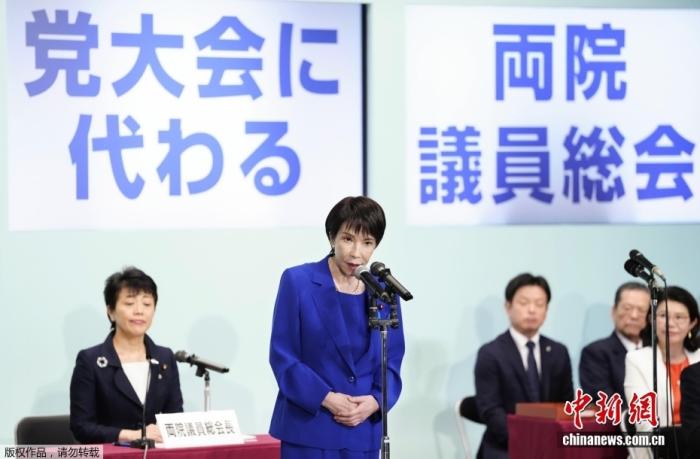
日本中年返贫史,中年危机遇上失业潮,他们如何度过?
Hu Xiu· 2025-08-23 08:06
Core Insights - The period from 1990 to 2004 is identified as the darkest 15 years for the Japanese economy, coinciding with the middle age of the Japanese baby boomers [1] Group 1 - The article discusses the challenges faced by middle-aged individuals in Japan during the economic crisis [1]