普通高中学位供给

Search documents
不能简单“增补”,应在宏观维度下推进
Xin Lang Cai Jing· 2026-02-05 22:20
Core Insights - The article emphasizes the need for expanding high school enrollment to better allocate quality educational resources, as highlighted by a local education leader [1][2] Group 1: Educational Resource Allocation - The provincial government has committed to increasing the supply of ordinary high school seats, addressing the demand for quality education [1] - A precise prediction of population trends is essential, especially during the "14th Five-Year Plan" period, to ensure that new quality resources are allocated effectively in areas experiencing population growth [1] - The article suggests that educational resource allocation should not solely depend on student numbers but should also consider the quality and diversity of education across different stages [1] Group 2: Policy Optimization and Integration - There is a call for optimizing and integrating educational policies by leveraging experiences from small class reforms and group-based schooling to facilitate resource flow across different educational stages [1] - The exploration of creating "education resource allocation experimental zones" that adapt to population changes is proposed to systematically enhance high school seat supply and the scientific layout of educational resources [1] - A comprehensive approach is recommended to address multiple issues related to enrollment, teacher-student ratios, and educational equity [1]
2025拿下多个全国第一!省两会,江苏教育又“上新”
Xin Lang Cai Jing· 2026-02-05 14:08
Core Viewpoint - Jiangsu province is making significant strides in education, achieving numerous national rankings and focusing on quality and equitable education in its future plans [1][8]. Group 1: Achievements in Education - Jiangsu's early childhood education and balanced development of compulsory education are ranked among the best in the country during the 14th Five-Year Plan [1]. - The province has 16 universities and 48 disciplines included in the "Double First Class" initiative [1]. - In the past year, Jiangsu has restructured 63 provincial key laboratories and ranked first in the number of individuals selected for national major talent projects [1][3]. - The number of admissions to ordinary high schools, undergraduate programs, and high-level universities has reached historical highs [1]. - Jiangsu leads the nation with 31 comprehensive reform pilot projects for building a strong education country [3]. - The province has been recognized for its achievements in vocational education, including 294 national planning textbooks and 113 gold medals at the World Skills Competition [4]. Group 2: Future Plans for Education - The government report emphasizes promoting educational equity and quality, including the implementation of free preschool education and increasing the supply of ordinary high school places [8]. - Plans include enhancing the quality of student dormitories in provincial universities and supporting the establishment of high-level vocational colleges [8]. - The report outlines initiatives to strengthen artificial intelligence education and improve the integration of education and technology [8]. - A focus on creating a supportive environment for innovation and entrepreneurship among youth is highlighted, with plans to support international talent recruitment [8]. - The 2026 civil affairs agenda includes 45 initiatives related to education, such as expanding community childcare services and enhancing mental health support for youth [9][10].


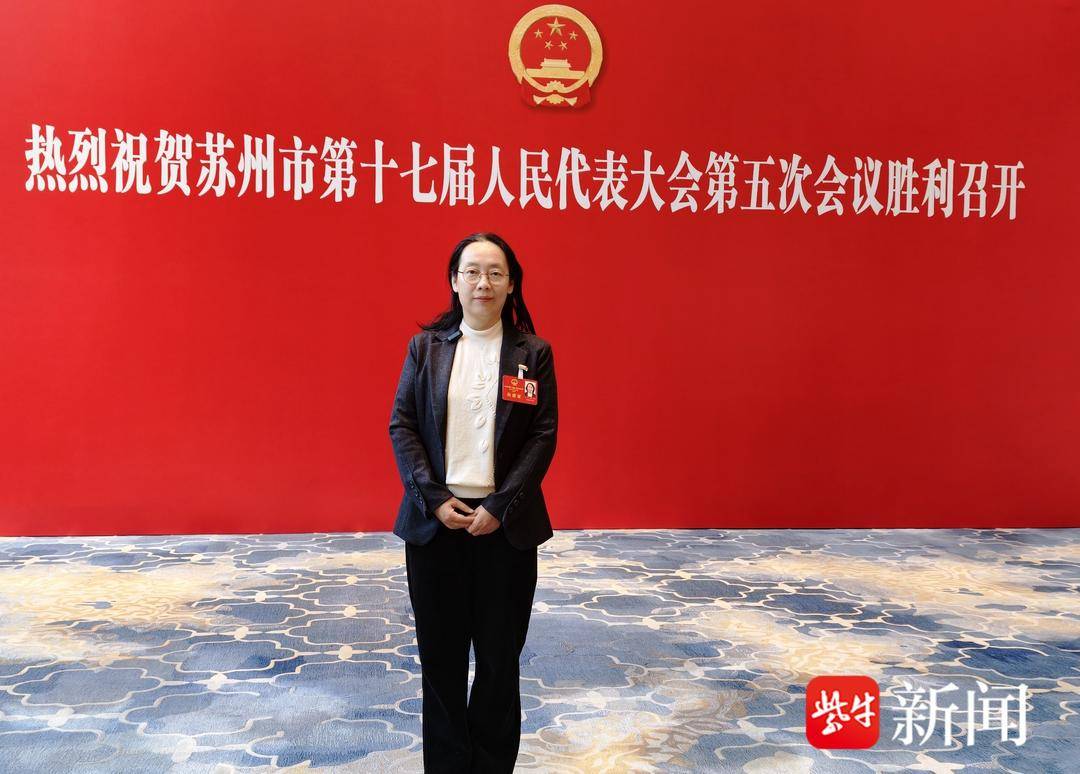
苏州市人大代表庄梅:以教育之笔,绘就吴中发展新画卷
Yang Zi Wan Bao Wang· 2026-01-23 14:16
Group 1 - The government work report of Suzhou comprehensively reviews the achievements in various fields over the past five years, with significant accomplishments in the education sector, particularly in the supply of ordinary high school places [3] - By 2025, Suzhou plans to add approximately 21,000 ordinary high school places, with the completion of 5 new schools and the commencement of 2, which aims to alleviate the pressure of high school entrance examinations and provide policy guidance for educational development in the Wuzhong District [3] - The Wuzhong District has experienced rapid economic growth and population increase, leading to a rising demand for quality educational resources, although there is still a shortfall in the supply of ordinary high school places [3] Group 2 - Recommendations include increasing the supply of ordinary high school places based on population trends and school-age population distribution, with a focus on densely populated and emerging areas like Taihu New City [4] - There is a need to enhance the construction of characteristic high schools, as the overall level still requires improvement, with existing schools lacking in distinctive positioning, curriculum setup, and faculty allocation [4] - A mechanism for evaluating characteristic high schools should be established to assess their operational quality and development effectiveness, with recognition and rewards for successful schools and guidance for those facing challenges [4]