智能体产业化

Search documents
速度与成本的双重考验,AI算力“大考”已至丨ToB产业观察
Tai Mei Ti A P P· 2026-01-14 06:10
Core Insights - The transition of generative AI from experimental to essential for enterprise survival highlights the challenges faced in deploying AI applications, including high computational costs and response delays [2][3][4] Group 1: AI Deployment Challenges - 37% of enterprises deploying generative AI report that over 60% experience unexpected response delays in real-time applications, with significant computational costs leading to losses upon deployment [2][4] - The demand for computational power is growing exponentially, with enterprise AI systems requiring an annual growth rate of 200%, far exceeding hardware technology iteration speeds [3] - The complexity of AI applications has evolved from simple Q&A to intricate tasks, resulting in a paradox where non-scalability leads to no value, while scalability incurs losses [2][3] Group 2: Market Growth and Projections - The global AI server market is projected to reach $125.1 billion in 2024, increasing to $158.7 billion in 2025, and potentially exceeding $222.7 billion by 2028, with generative AI servers' market share rising from 29.6% in 2025 to 37.7% in 2028 [3] - The financial sector's AI applications require millisecond-level data analysis, while manufacturing and retail sectors demand real-time processing capabilities, further driving the need for advanced computational resources [3] Group 3: Cost and Efficiency Issues - The cost of token consumption is rising sharply, with ByteDance's model usage increasing over tenfold in a year, and Google's platforms processing 43.3 trillion tokens daily by 2025 [6] - High operational costs are evident, with AI programming token consumption increasing by approximately 50 times compared to the previous year, while the cost of computational power is decreasing at a rate of tenfold annually [6][7] - The average utilization of computational resources is low, with some enterprises reporting GPU utilization rates as low as 7%, leading to high operational costs [9] Group 4: Structural and Architectural Challenges - The mismatch between computational architecture and the demands of AI applications leads to inefficiencies, with over 80% of token costs stemming from computational expenses [8][9] - Traditional architectures are not optimized for real-time inference tasks, resulting in significant resource wastage and high costs [9][10] - Network communication delays and costs are significant barriers to scaling AI capabilities, with communication overhead potentially accounting for over 30% of total inference time [11] Group 5: Future Directions and Innovations - The future of AI computational cost optimization is expected to focus on specialization, extreme efficiency, and collaboration, with tailored solutions for different industries and applications [16] - Innovations in system architecture and software optimization are crucial for enhancing computational efficiency and reducing costs, with a shift towards distributed collaborative models [13][14] - The industry is moving towards a model where AI becomes a fundamental resource, akin to utilities, necessitating a significant reduction in token costs to ensure sustainability and competitiveness [14][16]

1元/百万token,8.9ms生成速度,Aengt落地“成本账”与“速度账”都要算丨ToB产业观察
Tai Mei Ti A P P· 2025-09-29 08:12
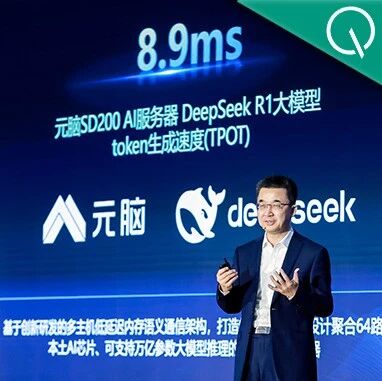
Core Insights - The cost of AI token generation can be reduced from over 10 yuan per million tokens to just 1 yuan through the use of Inspur's HC1000 AI server [2] - The response speed of AI systems is critical for their commercial viability, with a target of reducing latency from 15ms to 8.9ms [2][5] - The commercialization of AI agents hinges on three key factors: capability, speed, and cost, with speed being the most crucial for real-world applications [3][5] Cost and Speed - The average token generation speed for global API service providers is around 10-20 milliseconds, while domestic speeds exceed 30 milliseconds, necessitating innovations in underlying computing architecture [4] - In financial scenarios, response times must be under 10ms to avoid potential asset losses, highlighting the importance of speed in high-stakes environments [5] - The cost of tokens is a significant barrier for many enterprises, with the average cost per deployed AI agent ranging from $1,000 to $5,000, and token consumption expected to grow exponentially in the next five years [7][8] Technological Innovations - The DeepSeek R1 model achieves a token generation speed of just 8.9 milliseconds on the SD200 server, marking it as the fastest in the domestic market [5] - The architecture of AI systems must evolve to support high concurrency and large-scale applications, with a focus on decoupling computational tasks to enhance efficiency [9][10] - The HC1000 server employs a "decoupling and adaptation" strategy to significantly reduce inference costs, achieving a 1.75 times improvement in performance compared to traditional systems [10]

8.9ms,推理速度新记录!1块钱百万token,浪潮信息AI服务器加速智能体产业化
量子位· 2025-09-29 04:57
Core Viewpoint - The article discusses the advancements made by Inspur Information in AI computing infrastructure, specifically through the introduction of the Meta-Brain HC1000 and SD200 servers, which significantly reduce AI inference costs and improve processing speed, addressing key challenges in the commercialization of AI agents [2][43]. Group 1: Speed and Cost Reduction - The Meta-Brain HC1000 server reduces the cost of generating one million tokens to just 1 yuan, achieving a 60% reduction in single-card costs and a 50% reduction in system costs [26][27]. - The Meta-Brain SD200 server achieves an end-to-end inference latency of under 10 milliseconds, with a token output time of only 8.9 milliseconds, nearly doubling the performance of previous state-of-the-art systems [10][12]. - The combination of these servers provides a high-speed, low-cost computational infrastructure essential for the large-scale deployment of multi-agent collaboration and complex task inference [8][43]. Group 2: Technological Innovations - The Meta-Brain SD200 employs an innovative multi-host 3D Mesh architecture that integrates GPU resources across multiple hosts, significantly enhancing memory capacity and reducing communication latency [19][21]. - The server's communication protocol is simplified to three layers, allowing for direct GPU access to remote memory, which minimizes latency to the nanosecond level [21][22]. - The HC1000 server optimizes the inference process by decoupling different computational stages, improving resource utilization and reducing power consumption [39][40]. Group 3: Market Implications - The demand for tokens in AI applications is surging, with a 50-fold increase in token consumption for programming assistance over the past year, leading to an average monthly cost of $5,000 per deployed agent [30][31]. - The article emphasizes that as the complexity and frequency of tasks increase, the cost of tokens will become a bottleneck for large-scale deployment unless reduced significantly [34][35]. - The shift from general-purpose computing architectures to specialized AI computing systems is necessary to meet the growing computational demands of the AI agent era [46][50].