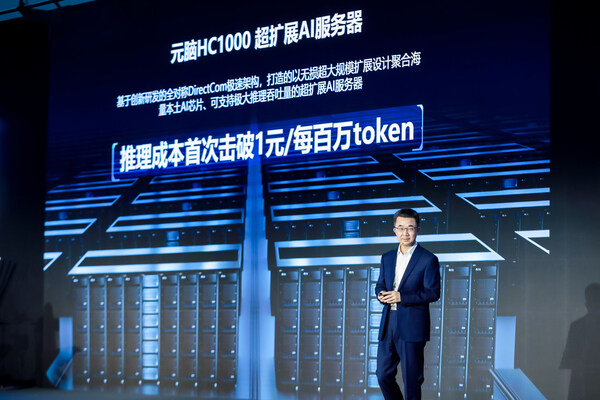
元脑HC1000超扩展AI服务器

Search documents
推理成本打到1元/每百万token,浪潮信息撬动Agent规模化的“最后一公里”
量子位· 2025-12-26 04:24
Core Viewpoint - The global AI industry has transitioned from a model performance competition to a "life-and-death race" for the large-scale implementation of intelligent agents, where cost reduction is no longer optional but a critical factor for profitability and industry breakthroughs [1] Group 1: Cost Reduction Breakthrough - Inspur Information has launched the Yuan Brain HC1000 ultra-scalable AI server, achieving a breakthrough in inference cost to 1 yuan per million tokens for the first time [2][3] - This breakthrough is expected to eliminate the cost barriers for the industrialization of intelligent agents and reshape the underlying logic of competition in the AI industry [3] Group 2: Future Cost Dynamics - Liu Jun, Chief AI Strategist at Inspur, emphasized that the current cost of 1 yuan per million tokens is only a temporary victory, as the future will see an exponential increase in token consumption and demand for complex tasks, making current cost levels insufficient for widespread AI deployment [4][5] - For AI to become a fundamental resource like water and electricity, token costs must achieve a significant reduction, evolving from a "core competitiveness" to a "ticket for survival" in the intelligent agent era [5] Group 3: Historical Context and Current Trends - The current AI era is at a critical point similar to the history of the internet, where significant reductions in communication costs have driven the emergence of new application ecosystems [7] - As technology advances and token prices decrease, companies can apply AI on more complex and energy-intensive tasks, leading to an exponential increase in token demand [8] Group 4: Token Consumption Data - Data from various sources indicates a significant increase in token consumption, with ByteDance's Doubao model reaching a daily token usage of over 50 trillion, a tenfold increase from the previous year [13] - Google's platforms are processing 1.3 trillion tokens monthly, equivalent to a daily average of 43.3 trillion, up from 9.7 trillion a year ago [13] Group 5: Cost Structure Challenges - Over 80% of current token costs stem from computing expenses, with the core issue being the mismatch between inference and training loads, leading to inefficient resource utilization [12] - The architecture must be fundamentally restructured to enhance the output efficiency of unit computing power, addressing issues such as low utilization rates during inference and the "storage wall" bottleneck [14][16] Group 6: Innovations in Architecture - The Yuan Brain HC1000 employs a new DirectCom architecture that allows for efficient aggregation of massive local AI chips, achieving a breakthrough in inference cost [23] - This architecture supports ultra-large-scale lossless expansion and enhances inference performance by 1.75 times, with single card utilization efficiency (MFU) potentially increasing by 5.7 times [27] Group 7: Future Directions - Liu Jun stated that achieving a sustainable and significant reduction in token costs requires a fundamental innovation in computing architecture, shifting the focus from scale to efficiency [29] - The AI industry must innovate product technologies, develop dedicated computing architectures for AI, and explore specialized computing chips to optimize both software and hardware [29]



浪潮信息刘军:AI产业不降本难盈利,1元钱/每百万Token的成本还远远不够!
Huan Qiu Wang Zi Xun· 2025-12-25 06:30
Core Insights - The global AI industry has transitioned from a model performance competition to a critical phase where cost reduction is essential for profitability and industry breakthroughs [1] - Inspur Information has launched the Yuan Nao HC1000 ultra-scalable AI server, achieving a significant cost reduction to 1 yuan per million tokens, which is expected to eliminate cost barriers for AI commercialization [1][12] - The current cost breakthrough is seen as a temporary victory, as future token consumption is expected to grow exponentially, necessitating further cost reductions to ensure AI becomes a fundamental resource [1][16] Industry Trends - The AI industry is at a pivotal point where the reduction of token costs is crucial for widespread application, similar to historical trends in internet infrastructure [3] - Data indicates a tenfold increase in token consumption, with ByteDance's Doubao model reaching an average daily usage of 50 trillion tokens, and Google's platforms processing 1.3 quadrillion tokens monthly [4][7] - The economic principle of Jevons Paradox is evident in the token economy, where increased efficiency leads to higher overall consumption [3] Cost Structure Challenges - Over 80% of current token costs stem from computing expenses, with significant inefficiencies in the architecture leading to high operational costs [8] - The mismatch between training and inference loads results in low hardware utilization during inference, with actual utilization rates as low as 5-10% [8] - Bottlenecks in storage and network communication further exacerbate cost issues, with communication overhead potentially consuming over 30% of total inference time [8] Technological Innovations - The Yuan Nao HC1000 server employs a new DirectCom architecture designed to optimize resource utilization and reduce latency, achieving a breakthrough in token cost efficiency [12][14] - The architecture allows for flexible configuration of computing resources, maximizing efficiency and reducing costs associated with token processing [14][16] - Future developments in AI computing will require a shift from scale-oriented approaches to efficiency-driven innovations, including the exploration of dedicated AI chips and hardware-optimized algorithms [16]
浪潮信息(000977):高基数下业绩韧性十足,前瞻指标显示需求景气
Minsheng Securities· 2025-11-02 12:48
Investment Rating - The report maintains a "Recommended" rating for the company [4] Core Insights - The company achieved a revenue of 120.67 billion yuan in the first three quarters of 2025, representing a year-on-year growth of 44.85%. The net profit attributable to shareholders was 1.48 billion yuan, up 15.35% year-on-year [1] - Despite a high base in Q3 2024, the company's performance remained resilient, with Q3 2025 revenue at 40.48 billion yuan, a slight decline of 1.43% year-on-year [1][2] - Forward-looking indicators such as inventory and contract liabilities show optimistic trends, indicating sustained demand in the computing power sector [2] - The company launched innovative AI servers, positioning itself to lead in the AI era and enhance its ecosystem through partnerships [3] Summary by Sections Financial Performance - In Q3 2025, the company reported a net profit of 683 million yuan, down 1.99% year-on-year, and a non-recurring net profit of 662 million yuan, down 9.72% year-on-year [1] - For the first three quarters of 2025, the company maintained a robust expense control with sales, management, and R&D expenses showing varied changes [2] Market Position and Future Outlook - The company’s inventory reached 57.65 billion yuan, up 50% year-on-year, and contract liabilities were 31.55 billion yuan, up nearly 1083%, indicating strong future demand [2] - The company is expected to achieve net profits of 2.88 billion yuan, 3.56 billion yuan, and 4.26 billion yuan for the years 2025, 2026, and 2027 respectively, with corresponding PE ratios of 33, 27, and 23 [3][7]
浪潮信息:公司在2025人工智能计算大会上,亮相了元脑SD200超节点AI服务器等创新系统
Mei Ri Jing Ji Xin Wen· 2025-10-27 04:04
Core Viewpoint - The company showcased its innovative AI server systems at the 2025 Artificial Intelligence Conference, marking a significant advancement in AI inference capabilities in the domestic server market [1] Group 1: Company Participation - The company confirmed its participation in the 2025 Artificial Intelligence Conference [1] - During the conference, the company introduced two new AI server systems: the Yuan Brain SD200 ultra-node AI server and the Yuan Brain HC1000 ultra-scalable AI server [1] Group 2: Technological Advancements - The new AI server systems are said to lead the domestic server industry into a new era of AI inference, achieving a performance benchmark of "10 milliseconds, 1 yuan" [1]
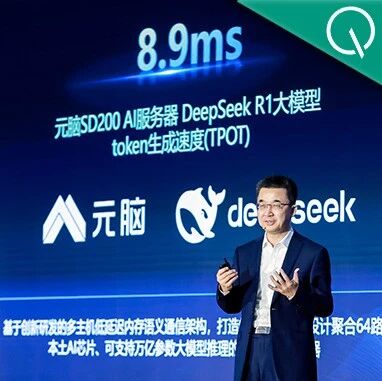
1元/百万token,8.9ms生成速度,Aengt落地“成本账”与“速度账”都要算丨ToB产业观察
Tai Mei Ti A P P· 2025-09-29 08:12
Core Insights - The cost of AI token generation can be reduced from over 10 yuan per million tokens to just 1 yuan through the use of Inspur's HC1000 AI server [2] - The response speed of AI systems is critical for their commercial viability, with a target of reducing latency from 15ms to 8.9ms [2][5] - The commercialization of AI agents hinges on three key factors: capability, speed, and cost, with speed being the most crucial for real-world applications [3][5] Cost and Speed - The average token generation speed for global API service providers is around 10-20 milliseconds, while domestic speeds exceed 30 milliseconds, necessitating innovations in underlying computing architecture [4] - In financial scenarios, response times must be under 10ms to avoid potential asset losses, highlighting the importance of speed in high-stakes environments [5] - The cost of tokens is a significant barrier for many enterprises, with the average cost per deployed AI agent ranging from $1,000 to $5,000, and token consumption expected to grow exponentially in the next five years [7][8] Technological Innovations - The DeepSeek R1 model achieves a token generation speed of just 8.9 milliseconds on the SD200 server, marking it as the fastest in the domestic market [5] - The architecture of AI systems must evolve to support high concurrency and large-scale applications, with a focus on decoupling computational tasks to enhance efficiency [9][10] - The HC1000 server employs a "decoupling and adaptation" strategy to significantly reduce inference costs, achieving a 1.75 times improvement in performance compared to traditional systems [10]
8.9ms,推理速度新记录!1块钱百万token,浪潮信息AI服务器加速智能体产业化
量子位· 2025-09-29 04:57
Core Viewpoint - The article discusses the advancements made by Inspur Information in AI computing infrastructure, specifically through the introduction of the Meta-Brain HC1000 and SD200 servers, which significantly reduce AI inference costs and improve processing speed, addressing key challenges in the commercialization of AI agents [2][43]. Group 1: Speed and Cost Reduction - The Meta-Brain HC1000 server reduces the cost of generating one million tokens to just 1 yuan, achieving a 60% reduction in single-card costs and a 50% reduction in system costs [26][27]. - The Meta-Brain SD200 server achieves an end-to-end inference latency of under 10 milliseconds, with a token output time of only 8.9 milliseconds, nearly doubling the performance of previous state-of-the-art systems [10][12]. - The combination of these servers provides a high-speed, low-cost computational infrastructure essential for the large-scale deployment of multi-agent collaboration and complex task inference [8][43]. Group 2: Technological Innovations - The Meta-Brain SD200 employs an innovative multi-host 3D Mesh architecture that integrates GPU resources across multiple hosts, significantly enhancing memory capacity and reducing communication latency [19][21]. - The server's communication protocol is simplified to three layers, allowing for direct GPU access to remote memory, which minimizes latency to the nanosecond level [21][22]. - The HC1000 server optimizes the inference process by decoupling different computational stages, improving resource utilization and reducing power consumption [39][40]. Group 3: Market Implications - The demand for tokens in AI applications is surging, with a 50-fold increase in token consumption for programming assistance over the past year, leading to an average monthly cost of $5,000 per deployed agent [30][31]. - The article emphasizes that as the complexity and frequency of tasks increase, the cost of tokens will become a bottleneck for large-scale deployment unless reduced significantly [34][35]. - The shift from general-purpose computing architectures to specialized AI computing systems is necessary to meet the growing computational demands of the AI agent era [46][50].