智能化+本土化

Search documents
速腾聚创斩获“近百万台”定点,日系车在华进入智能化本土落地期
Guan Cha Zhe Wang· 2025-12-10 11:07
Core Insights - RoboSense has secured a new mass production order from FAW Toyota for a well-known best-selling model, with a cumulative order scale approaching 1 million units over five years, and reported record lidar deliveries exceeding 150,000 units in November [1][15] Group 1: Localization Strategy - Japanese automakers are increasingly adopting a "localization" strategy in China, moving away from the traditional "global car" approach to introduce products tailored for the Chinese market with enhanced smart capabilities and localized configurations [3][4] - Companies like Nissan are launching models such as the N6, which emphasize local user needs and incorporate locally developed software and cloud services, reflecting a shift towards a more localized marketing and service strategy [6][8] Group 2: Collaboration with Local Suppliers - Japanese car manufacturers are forming deeper collaborations with local technology companies, including partnerships with domestic autonomous driving software and lidar manufacturers, indicating a shift in their operational strategy in China [6][8] - The collaboration with local suppliers is seen as essential for achieving cost efficiency and rapid iteration capabilities, which are critical for the mass production of smart vehicles [10][11] Group 3: Market Dynamics and Competitive Pressure - The decline in market share for Japanese brands in China has prompted a strategic shift towards more localized products and services to maintain competitiveness against German brands [9][10] - The rapid growth of smart connected vehicles in China, driven by policy support, has compressed market space for Japanese automakers, necessitating a reevaluation of their strategies [9][10] Group 4: Technological Integration - Japanese automakers are recognizing the importance of software-defined vehicles and are investing in both in-house development and external partnerships to enhance their technological capabilities [11][12] - The transition towards smart vehicle technology is seen as a critical step for Japanese brands to catch up in the competitive landscape of the Chinese automotive market [11][12] Group 5: Future Outlook - The recent moves by Japanese automakers towards deeper localization and collaboration with Chinese suppliers may mark a new milestone in their operations in China, potentially leading to improved competitiveness and market presence [15] - As more Chinese companies secure contracts in international automotive projects, the integration of local technology and cost solutions is expected to facilitate a more globalized industry landscape [15]





中国智造凭“智能化+本土化”双轮驱动赢得口碑 中国电摩开辟海外大市场
Yang Shi Wang· 2025-11-12 06:06
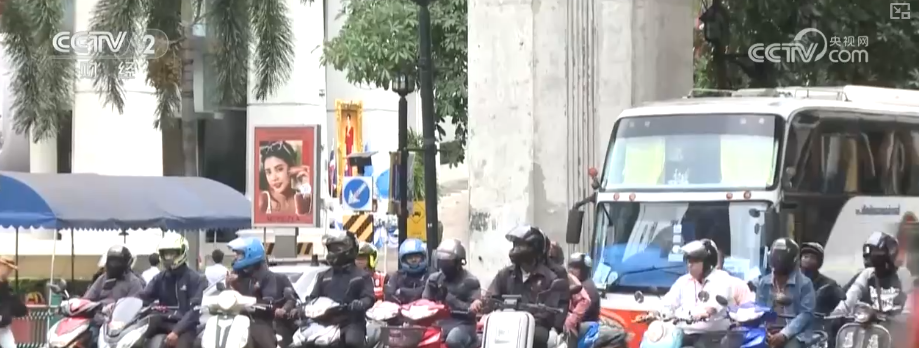
Core Viewpoint - Southeast Asia is experiencing a significant shift towards electric motorcycles due to severe traffic congestion and environmental concerns, presenting a lucrative opportunity for Chinese electric motorcycle manufacturers to expand their market presence [1][8]. Group 1: Market Dynamics in Thailand - Thailand faces major urban issues such as traffic congestion and parking difficulties, making electric motorcycles a practical and cost-effective transportation option for residents [3]. - The Thai government is actively promoting electric transportation, aiming for 30% of vehicle production to be zero-emission by 2030, supported by incentives like purchase subsidies and tax credits [8]. - Chinese electric motorcycle brands are increasingly popular among Thai consumers, with over 10 brands entering the market, achieving a market share exceeding 10% [9][8]. Group 2: Product Innovation and Localization - Chinese electric motorcycle companies are developing models tailored to local conditions, such as enhanced climbing performance for hilly terrains and improved durability for rainy seasons [6]. - Yadea's new factory in Thailand aims to produce 600,000 electric vehicles over the next three years, enhancing local service capabilities and reducing costs [6]. - The focus on product innovation includes features like GPS tracking and smartphone integration to meet consumer demands for safety and convenience [14]. Group 3: Market Opportunities in Vietnam - Vietnam has over 77 million motorcycles, predominantly fuel-powered, but new regulations banning fuel motorcycles in urban areas create opportunities for electric models [10][11]. - The introduction of policies encouraging electric vehicle use has led to a significant increase in customer traffic and sales in electric motorcycle stores [11]. - Chinese electric motorcycle brands have captured approximately 28% of the Vietnamese market, with sales nearly doubling year-on-year, reaching about 209,000 units in the first half of 2025 [14].