
电动摩托车

Search documents
两会中的电摩声音:给予电摩更多路权
高工锂电· 2026-03-04 11:29
Core Viewpoint - The article emphasizes the need for differentiated management of electric motorcycles (e-motorcycles) compared to traditional fuel motorcycles to better meet the demands of delivery services and reduce traffic congestion in urban areas [4][5]. Group 1: Industry Challenges - The limitations of the new national standard for electric bicycles (e-bikes) create a mismatch between the speed and performance required for delivery services and the regulations that restrict e-bikes to a maximum speed of 25 km/h [4]. - The ban on motorcycles in first-tier cities further restricts the options available for delivery personnel, leading to potential increases in traffic congestion due to low-powered vehicles [4]. Group 2: Recommendations from Representatives - During the Two Sessions, representatives suggested that electric motorcycles should be recognized separately from fuel motorcycles, allowing for more road rights and operational flexibility for delivery workers [5]. - A proposal was made to establish a green license plate system for e-motorcycles, aligning with national goals for green and low-carbon development while addressing the needs of new employment groups [5]. Group 3: Market Potential - If road rights for e-motorcycles are expanded, the market could shift from primarily serving delivery needs to broader commuting applications, potentially accelerating sales growth and increasing battery demand [5][10]. - The electric motorcycle market is seen as a new growth curve for two-wheeler companies, with projected sales for Yadea reaching 921,100 units by 2025, making it the top seller in the country [7]. Group 4: Battery Innovations and Standards - The article highlights the importance of battery innovations and the establishment of standardized testing protocols for e-motorcycle batteries, which are crucial for market expansion following the new regulations [8]. - The newly revised international standards for lithium-ion batteries used in e-motorcycles include 13 safety tests, ensuring better performance and safety under various conditions [8]. Group 5: Sales Projections - The projected sales for electric motorcycles in 2025 are estimated at 3.5062 million units, with a modest year-on-year growth of 1.14% and a penetration rate of approximately 16% for new energy vehicles [9]. - With the anticipated opening of road rights and advancements in battery technology, sales and battery shipments for e-motorcycles are expected to see significant growth by 2026 [10].


禁摩令下,电摩锂电池如何发展?
Xin Lang Cai Jing· 2026-02-24 05:39
Core Insights - The electric motorcycle market in China is experiencing a dual increase in inventory and exports, influenced by new national standards and the ban on gasoline motorcycles [2][24] - In 2025, the total sales of fuel and electric motorcycles are projected to be approximately 21.97 million units, with exports accounting for about 13.37 million units, representing 60% of total motorcycle exports [2][24] - The domestic sales of motorcycles are expected to decline by 3.45% year-on-year, while exports are anticipated to grow by 21%, highlighting the importance of overseas markets under the current ban on gasoline motorcycles [3][24] Electric Motorcycle Market Dynamics - The electric motorcycle segment is growing slowly due to policy constraints, with a slight increase in sales of 1.14% year-on-year, reaching 3.51 million units in 2025 [5][26] - The penetration rate of new energy in electric motorcycles is around 16%, while production is expected to reach 3.61 million units, a 6.03% increase year-on-year [5][26] - The production of electric motorcycles in December alone is projected to be 339,100 units, reflecting a month-on-month growth of 7% [5][26] Inventory and Production Strategies - The production exceeding sales in 2025 is attributed to manufacturers' strategies to stockpile inventory in anticipation of uncertainties brought by new national standards [6][27] - Manufacturers are preparing "over-standard vehicles" and electric motorcycles to meet the demands of users seeking longer range and commuting capabilities [7][28] Export Growth and International Market - The export growth of electric motorcycles is significant, with an 18.1% increase in 2025, indicating a trend of "blooming inside the wall and fragrant outside" [5][39] - Southeast Asia is identified as a major market for electric motorcycles, although initial purchase costs remain higher than gasoline motorcycles, and local acceptance of gasoline models is still strong [40][41] - In contrast, developed markets like Europe are more receptive to higher-priced electric motorcycles, supported by government incentives aimed at promoting sustainable transportation [42][43] Competitive Landscape and Technological Advancements - Key players in the electric motorcycle market include established brands like Yadea and Aima, as well as new entrants like Niu and Ninebot, focusing on high-performance and specialized products [15][29] - The demand for lithium batteries in electric motorcycles is increasing, with companies developing high-capacity battery solutions to meet performance requirements [36][38] - The combination of lithium batteries and new national standards is expected to reshape the two-wheeler market, with a focus on safety and performance [34][36]

禁摩令下,电摩锂电池如何发展?
高工锂电· 2026-02-23 09:56
Core Viewpoint - The electric motorcycle market in China is experiencing a dual increase in inventory and exports for 2025, influenced by new national standards and the ban on gasoline motorcycles, leading to a complex market dynamic [2][10]. Market Overview - In 2025, the total sales of gasoline and electric motorcycles are projected to be approximately 21.97 million units, with exports around 13.37 million units and domestic sales about 8.6 million units, indicating that exports account for 60% of total sales, surpassing domestic sales [3]. - Domestic sales of motorcycles are expected to decline by 3.45% year-on-year, while exports are anticipated to grow by 21%, highlighting the significance of overseas markets amid domestic restrictions [4]. Electric Motorcycle Segment - The electric motorcycle segment has shown slow growth due to policy constraints, with 2025 sales expected to reach 3.5062 million units, reflecting a mere 1.14% year-on-year increase, while the penetration rate of new energy is about 16% [6]. - Despite sluggish sales growth, production of electric motorcycles is projected to reach 3.6118 million units in 2025, marking a 6.03% increase year-on-year, with December alone seeing a production of 339,100 units, a 7% month-on-month increase [6]. Inventory and Production Dynamics - The production of electric motorcycles exceeding sales is attributed to manufacturers' strategies to stockpile inventory in response to uncertainties brought by new national standards [7]. - Manufacturers are preparing "over-standard vehicles" to meet the demand of users seeking longer range and commuting capabilities due to the new speed limit of 25 km/h imposed by the new standards [8]. Export Growth and Market Competition - The overall export data for motorcycles is strong, with electric motorcycle exports experiencing significant growth, reflecting domestic manufacturers' competitive positioning under the new standards [9]. - Major domestic electric motorcycle brands are actively participating in international exhibitions, showcasing new technologies and products, with a focus on commuter and off-road electric motorcycles [9]. New National Standards Impact - The new national standards are reshaping the demand landscape for two-wheeled vehicles, with a notable increase in interest for electric motorcycles as they offer better performance for long commutes compared to electric bicycles [10][11]. - The introduction of the new standards has led to a resurgence of lead-acid two-wheeled vehicles, regaining significant market share, indicating a shift in consumer preferences [13]. Lithium Battery Integration - The combination of lithium batteries and new national standards is seen as a promising avenue for electric motorcycles, with manufacturers focusing on lightweight, high-capacity, and high-safety batteries [15]. - Lithium batteries are positioned as superior alternatives to gasoline engines, with ongoing developments in battery technology aimed at enhancing performance and safety [16]. International Market Opportunities - Despite a modest growth rate of 1.14% in domestic electric motorcycle sales, exports are projected to grow by 18%, indicating a trend of "blooming within the walls" as domestic brands expand internationally [19]. - Southeast Asia represents a significant market for electric motorcycles, although challenges such as higher initial costs compared to gasoline motorcycles and existing consumer preferences for fuel-based options persist [20]. Strategies for Market Penetration - To achieve competitive pricing in international markets, manufacturers are focusing on local production and collaboration with local brands to mitigate the impact of decreasing export tax rebates [22]. - In contrast to Southeast Asia's price-sensitive market, developed markets like Europe are more receptive to higher-priced electric motorcycles, supported by government incentives aimed at promoting sustainable transportation [23]. Brand Positioning and Future Outlook - Chinese electric motorcycle brands are increasingly participating in European markets, with strategies ranging from affordable models to high-end offerings, enhancing brand recognition and market penetration [24]. - The evolving landscape of domestic regulations and standards will continue to influence the export dynamics of electric motorcycles, necessitating adaptive strategies from manufacturers [24].





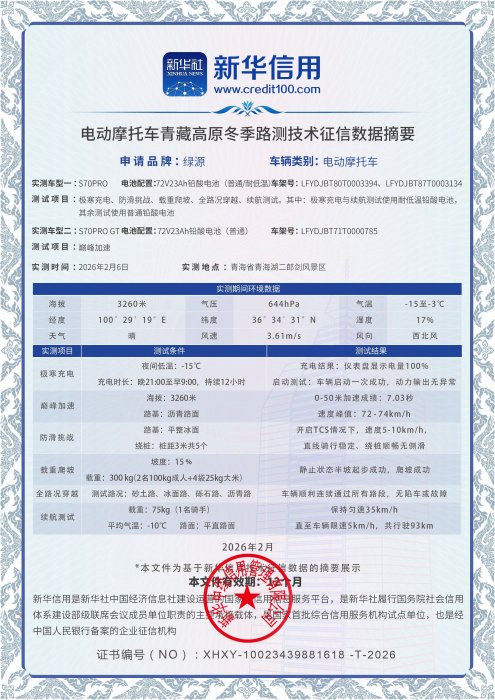
绿源电动摩托车完成青藏高原冬季极限环境测试 关键数据获新华信用技术征信记录
Xin Lang Cai Jing· 2026-02-08 09:17
Core Insights - The successful winter high-altitude extreme environment testing of Luyuan electric motorcycles was conducted at the Erlangjian Scenic Area of Qinghai Lake, Qinghai Province, under harsh conditions of approximately 3200 meters altitude and temperatures as low as -15°C [1][3] - The testing process was recorded by the Xinhua Credit platform, providing objective and credible third-party data to assess the product's adaptability to high-altitude conditions [1][3] Testing Performance - The testing included extreme cold charging, ice surface anti-skid, load climbing, and low-temperature endurance, with specific performance metrics recorded [1][2] - The vehicle successfully started after a full night of charging at -15°C, demonstrating stable control during slalom tests on ice, and could carry a load of 300 kg while completing a 15% slope start and climb [1][2] - In temperatures around -10°C, the vehicle achieved a range of over 90 kilometers [1][2] Technical Verification - The introduction of technical credit aims to transform traditional testing conclusions into standardized, verifiable data credit assets, enhancing trust in product performance claims [2][3] - This practice establishes a dynamic and traceable quality information verification mechanism, providing a new approach and reliable data sources for evaluating product quality in special environments [2][3] Industry Context - As the application of electric transportation tools expands into high-altitude and extreme cold environments, the authenticity of their performance has become a focal point for consumers and regulators [3] - The application of technical credit concepts in product testing provides a common basis for quality dialogue among stakeholders, promoting transparent and credible high-quality development in the industry [3]
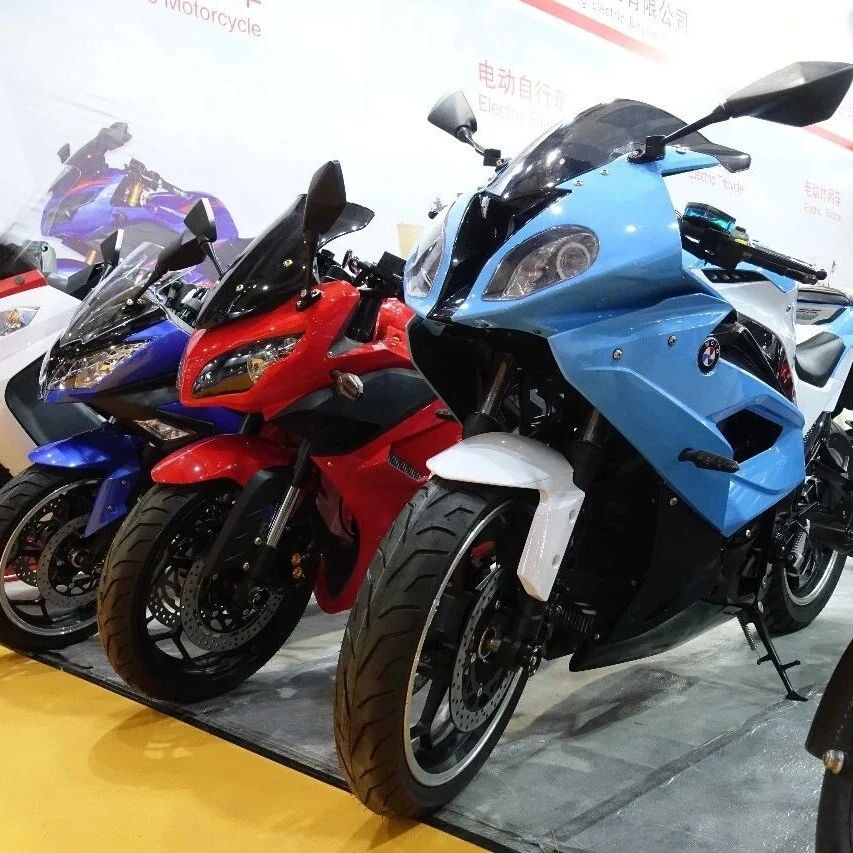
有AEB和雷达,还能自己买菜:无人驾驶电摩靠谱吗?
第一财经· 2026-01-22 03:22
Core Viewpoint - The article discusses the emergence of smart electric motorcycles, particularly focusing on the "Extreme Little Smart" model produced by Limama Vehicle Industry, which features autonomous driving capabilities and advanced safety technologies [3][4]. Group 1: Product Features and Innovations - The "Extreme Little Smart" electric motorcycle can achieve a maximum speed of 40 km/h in autonomous mode and is equipped with automotive-grade AEB active safety technology and millimeter-wave radar for collision risk prediction and obstacle detection [3]. - Users can summon the motorcycle via a dedicated app and plan automatic routes for tasks such as grocery shopping and package collection, similar to functionalities available in four-wheeled vehicles [3]. Group 2: Industry Trends and Challenges - The current stage of smart electric motorcycles focuses on human-machine interaction, with features like mileage tracking, keyless unlocking, and satellite positioning, but large-scale deployment of smart driving technology is still limited [4]. - Many companies possess technology for self-balancing and assisted driving, but these products are often not available for retail and are primarily used for marketing purposes [4]. - The high cost of smart driving components, such as radar and control systems, along with safety concerns regarding sudden maneuvers, hinder the widespread adoption of smart electric motorcycles [4]. Group 3: Market Outlook - According to the latest report by Zosi Automotive Research, the electric motorcycle industry is undergoing a critical phase of smart transformation, with the implementation of new national standards [5]. - The penetration rate of millimeter-wave radar in the two-wheeler sector is expected to exceed 18% by 2026, as leading brands explore advanced levels of automated driving assistance [5].
有AEB和雷达,还能自己买菜:无人驾驶电摩靠谱吗?
Di Yi Cai Jing· 2026-01-22 02:39
Company Insights - The electric motorcycle "Extreme Little Smart" produced by Limai Vehicle Industry can achieve autonomous driving at a maximum speed of 40 km/h and features advanced safety technologies such as AEB and millimeter-wave radar for collision risk prediction and obstacle avoidance [1] - Limai Vehicle Industry has delivered 10 units of the "Extreme Little Smart" to dealers, with plans for further mass production by 2026. The expected price is around 10,000 yuan, comparable to four-wheeled vehicles, but requires a motorcycle license [1] - A dealer indicated that the store has not yet purchased the "Extreme Little Smart" but plans to do so after the Spring Festival, although in limited quantities [1] Industry Trends - The electric motorcycle industry is undergoing a critical phase of intelligent transformation, with the implementation of new national standards for two-wheeled vehicles [3] - The industry is gradually establishing a grading standard for intelligent assessment, covering four dimensions: power systems, intelligent driving, communication systems, and human-machine interaction [3] - The penetration rate of millimeter-wave radar in the two-wheeled vehicle sector is expected to exceed 18% by 2026, with leading brands exploring advanced levels of automatic driving assistance [3] Market Challenges - Many companies possess self-balancing and assisted driving technologies for two-wheeled vehicles, but these products are not yet commercially available, often remaining as marketing gimmicks or experimental models [2] - The demand for intelligent driving features in two-wheeled vehicles is currently weak, and the high costs associated with the necessary components and redesigns make these vehicles expensive [2] - Concerns about the safety of intelligent driving two-wheeled vehicles persist, with industry representatives noting that sudden maneuvers can pose risks to riders [2]
英搏尔:拟900万元投资杭州驭风拓界取得其15%股权
Ge Long Hui· 2026-01-20 10:11
Group 1 - The company plans to invest 9 million RMB in Hangzhou Yufeng Tuo Jie Technology Co., Ltd., acquiring a 15% stake, which will not be consolidated into the company's financial statements [1] - The electric vehicle market in Southeast Asia is experiencing rapid growth, driven by short-distance commuting needs and changes in fuel costs, leading to increased demand for electric motorcycles [1] - Hangzhou Yufeng Tuo Jie will focus on the mid-to-high-end electric motorcycle market in Southeast Asia, emphasizing the development, production, and localized operation of high-performance and reliable electric motorcycles [1] Group 2 - Hangzhou Yufeng Tuo Jie currently has a registered capital of 28.8 million RMB, which will be increased to 60 million RMB [2] - After the capital increase, key stakeholders will include Xin Peng with 24.96% ownership, Jiang Guibin with 14.88%, Wei Biao with 8.16%, and others, including the company holding a 15% stake [2] - The capital increase will enhance the company's ability to penetrate the high-growth Southeast Asian terminal market with its mature power system products [1][2]

英搏尔(300681.SZ):拟900万元投资杭州驭风拓界取得其15%股权
Ge Long Hui A P P· 2026-01-20 09:53
Group 1 - The company plans to invest 9 million RMB in Hangzhou Yufeng Tuo Jie Technology Co., Ltd., acquiring a 15% stake, which will not be consolidated into the company's financial statements [1] - The electric vehicle market in Southeast Asia is experiencing rapid growth, driven by short-distance commuting needs and changes in fuel costs, leading to increased demand for electric motorcycles [1] - Hangzhou Yufeng Tuo Jie will focus on the mid-to-high-end electric motorcycle market in Southeast Asia, emphasizing the development, production, and localized operation of high-performance and reliable electric motorcycles [1] Group 2 - Hangzhou Yufeng Tuo Jie's registered capital is currently 28.8 million RMB, which will be increased to 60 million RMB [2] - After the capital increase, key stakeholders will include Xin Peng with 24.96% ownership, Jiang Guibin with 14.88%, Wei Biao with 8.16%, and the company will hold a 15% stake [2] - The investment by the company is part of a broader strategy to deepen its overseas expansion by leveraging its mature power system products in high-growth Southeast Asian markets [1][2]
数据惊人但“无可奉告”,“全球首款”可量产全固态电池公司独家回应
Di Yi Cai Jing Zi Xun· 2026-01-16 12:15
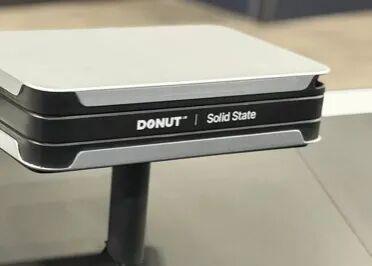
Core Viewpoint - DONUT LAB has introduced what it claims to be the world's first mass-producible all-solid-state battery, achieving significant milestones in energy density and fast charging capabilities [3][4]. Group 1: Battery Technology - The solid-state battery boasts an energy density of 400 watt-hours per kilogram and can be fully charged in just 5 minutes [3]. - It can endure up to 100,000 charging cycles with minimal capacity degradation and maintains over 99% capacity across a temperature range of -30°C to over 100°C [3]. - The company has not disclosed specific details about the solid electrolyte material system or manufacturing processes, citing confidentiality [4]. Group 2: Production Plans - DONUT LAB has set an initial production capacity of 1 gigawatt-hour (GWh) for this year, with plans to increase it to over 10 GWh by next year [4]. - The company has not clarified whether the initial 1 GWh will come from in-house production or through partnerships [4]. Group 3: Market Position and Competition - The battery technology does not contain rare earth elements or lithium, utilizing a different technological approach that allows for cost parity with lithium iron phosphate batteries while enabling rapid scaling [5]. - The battery is already integrated into Verge Motorcycles' electric motorcycles, with deliveries expected to start this year [5]. - The company anticipates that competitors will reverse-engineer the technology after the motorcycles are delivered, providing a window of approximately six months to capture market share [5]. Group 4: Future Validation - The market performance of the electric motorcycles, subsequent technical analysis post-disassembly, and the actual realization of production capacity will serve as critical initial validations for the claims made by DONUT LAB [6].
超45万亿元 去年我国进出口总值创历史新高
Zhong Guo Zheng Quan Bao· 2026-01-14 20:51
Core Insights - China's foreign trade achieved a record high of 45.47 trillion yuan in 2025, with a year-on-year growth of 3.8%, maintaining its position as the world's largest goods trader [1][6] - The export of high-tech products increased by 13.2%, contributing 2.4 percentage points to overall export growth [2] - The diversification of trade partners is evident, with trade relations established with 249 countries and regions, and a decrease in concentration among the top ten trading partners [4][5] Trade Performance - In 2025, exports reached 26.99 trillion yuan, growing by 6.1%, while imports totaled 18.48 trillion yuan, with a modest growth of 0.5% [1] - December 2025 saw a record monthly trade volume of 4.26 trillion yuan, marking a 4.9% year-on-year increase [1] - The import market remains robust, with China expected to be the world's second-largest import market for 17 consecutive years [5] High-Tech and Green Products - High-tech product exports, including specialized equipment and industrial robots, saw significant growth, with industrial robot exports increasing by 48.7% [2] - Green energy products, such as lithium batteries and wind turbines, also experienced substantial export growth, with increases of 26.2% and 48.7% respectively [2] Market Diversification - Trade with emerging markets is expanding, with notable growth in exports to ASEAN, Central Asia, and Africa [3][4] - The trade relationship with Europe remains strong, with over 50% of cosmetics and nearly 60% of automobiles imported from Europe, while exports of pharmaceuticals and industrial robots to Europe grew by over 20% [5] Future Outlook - The external environment for trade in 2026 is expected to be challenging, with global trade growth projected to slow down significantly [6] - Despite these challenges, China's institutional, market, and industrial advantages are expected to enhance its resilience in foreign trade [6]