服务本土化

Search documents
民航下半场:慢生长,远胜出
虎嗅APP· 2026-03-18 10:57
Core Viewpoint - The article discusses the challenges faced by the airline industry, particularly the issue of "involution" where airlines engage in price wars leading to reduced profitability and customer experience. Cathay Pacific stands out by focusing on quality and high-end services to maintain profitability and customer loyalty [2][3]. Group 1: Industry Challenges - The airline industry is experiencing structural difficulties characterized by "旺丁不旺财" (high passenger numbers but low profits), leading to a vicious cycle of price wars and declining service quality [2]. - The International Air Transport Association (IATA) highlights that airlines earn significantly less per passenger compared to other industries, emphasizing the need for airlines to find new profit sources beyond low ticket prices [2]. Group 2: Cathay Pacific's Performance - Cathay Pacific reported a net profit of HKD 10.828 billion for 2025, a 9.5% increase year-on-year, marking three consecutive years of profitability with cumulative net profits exceeding HKD 30 billion [2]. - The airline achieved a revenue of HKD 116.766 billion in 2025, reflecting an 11.9% year-on-year growth, and has maintained positive revenue growth for four consecutive years [3]. Group 3: Strategic Differentiation - Cathay Pacific differentiates itself through a focus on quality and high-end services rather than engaging in price competition, creating a competitive moat [5]. - The airline's dual-brand strategy has expanded its passenger network to over 100 destinations globally, with plans to add 20 new routes in 2025, including five new routes in mainland China [3][5]. Group 4: Investment in Quality - Cathay Pacific plans to invest over HKD 100 billion in 2024 for fleet upgrades, cabin products, and digital innovations, indicating a commitment to enhancing customer experience [7]. - The airline's in-flight service and passenger spending reached HKD 5.668 billion in 2025, a 35.8% increase year-on-year, showcasing its investment in service quality [9]. Group 5: Long-term Strategy - Cathay Pacific's long-term strategy emphasizes a balance between efficiency and quality, focusing on service standards and talent development post-pandemic [9]. - The airline has initiated a large-scale recruitment drive, aiming to hire around 3,000 new employees globally, with a focus on local talent in mainland China to enhance service localization [19]. Group 6: Digital Transformation - Cathay Pacific is advancing its digital transformation by establishing IT offices in mainland China and expanding its IT team to enhance global system development and support [19]. - The airline has implemented AI-driven tools for operational efficiency, including predictive maintenance and customer service enhancements, which are crucial for its long-term strategy [20]. Group 7: Future Outlook - As Cathay Pacific celebrates its 80th anniversary, it aims to strengthen its position as a leading airline by integrating more deeply into the mainland economy and enhancing its service offerings [18]. - The airline's focus on long-term investments in service, technology, and brand equity is seen as essential for navigating the cyclical nature of the airline industry [23].


2026中国车企欧洲本土化动真格
Zhong Guo Qi Che Bao Wang· 2026-02-04 08:04
Group 1 - The EU is considering extending anti-subsidy tariffs on Chinese electric vehicles to include hybrid vehicles due to the rapid increase in sales of Chinese plug-in hybrids in Europe [3][4] - In October 2023, the EU initiated an anti-subsidy investigation into Chinese electric vehicles, claiming they distort the European market due to unreasonable subsidies [3][4] - The EU's investigation could lead to additional tariffs on Chinese electric vehicles, with rates potentially reaching up to 35.3% for certain manufacturers [3][4] Group 2 - Chinese car manufacturers are accelerating local production in Europe, with companies like Chery, Xpeng, and GAC already establishing assembly operations [2][6] - BYD plans to start trial production at its Hungarian passenger car factory in Q1 2026, with full production expected in Q2 2026 [2][8] - The overall sales of Chinese plug-in hybrids in Europe are projected to grow significantly, with a 645% increase expected in 2025, capturing a market share of 14% [4][5] Group 3 - The local production strategy of Chinese car manufacturers is characterized by a comprehensive approach, including supply chain, R&D, and service localization [6][9] - Xpeng is establishing a localized supply chain team in Europe and has opened a R&D center in Munich to better align with local market demands [9][10] - BYD has set up its European headquarters in Budapest, focusing on sales, after-sales, and local vehicle design, indicating a commitment to the European market [9][10] Group 4 - GAC aims to achieve an overseas sales target of 250,000 units by 2026, with Europe being a key market for its expansion [10][11] - NIO is establishing user experience centers in Norway and Germany to enhance brand perception and service offerings in Europe [11] - Xpeng leads the European market in customer satisfaction with an 81% rating, surpassing Tesla, while NIO ranks seventh among traditional luxury brands [11]



邮轮巨头抢滩明年中国市场
Bei Jing Shang Bao· 2025-10-29 16:40
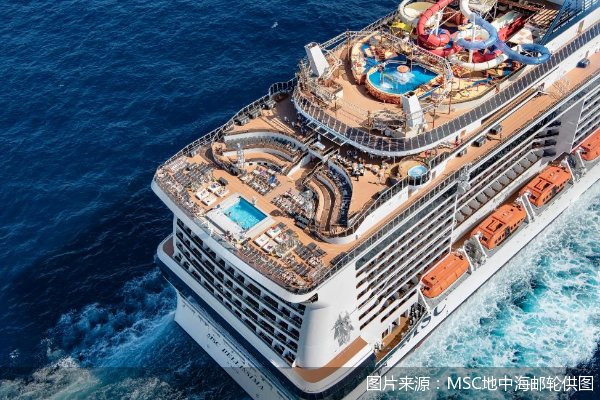
Core Insights - Major cruise companies are intensifying competition in the Chinese market for 2026, focusing on new routes, expanded destinations, and refined service offerings, marking a shift from broad growth to high-quality operations [1][4] Route Expansion - Viking Cruises is expanding its offerings with 14 river cruise routes and 5 ocean cruise routes, including a new Chinese service Mediterranean route and additional land tours to lesser-known destinations [2] - Royal Caribbean is maintaining its focus on East Asia while introducing new destinations, including Mount Fuji and Nagoya, alongside traditional ports like Tokyo and Osaka [2] - MSC Cruises is also increasing its presence in the Chinese market with 6 new autumn sailings from Shanghai [2] Target Demographics - The cruise industry is targeting various demographics, including families during peak holiday seasons and older adults seeking off-peak travel options, with new itineraries designed for these groups [2][3] - Royal Caribbean is launching short music-themed cruises aimed at young professionals looking for quick getaways [3] Service Localization - Cruise companies are competing in service localization, adapting to the consumption habits of Chinese tourists, such as early dining and entertainment preferences [3] - Viking Cruises is enhancing its digital services for older adults, providing a user-friendly WeChat mini-program for itinerary management and other practical features [4] Industry Trends - The cruise market is expected to become increasingly competitive, transitioning from price competition to value competition and innovation, reflecting a maturation phase in the industry [4] - The focus on localized services and high-quality development is anticipated to drive technological innovation and cultural integration within the cruise sector [4]
航线密集上新,邮轮巨头抢滩2026中国市场
Bei Jing Shang Bao· 2025-10-29 14:29
Core Insights - The cruise industry is shifting from extensive growth to refined, high-quality operations, with companies intensifying competition through new routes, expanded destinations, and tailored services for the Chinese market [1][6][9] Route Expansion - Multiple cruise giants are planning to introduce new routes for 2026, covering a wider range of destinations. Viking Cruises will expand from river to ocean routes, launching 14 river routes and 5 ocean routes, including a Chinese service Mediterranean route [3] - Royal Caribbean continues to focus on East Asia, operating the "Spectrum of the Seas" from Shanghai and Hong Kong, while adding new stops like Mount Fuji and Nagoya [5] Targeting Customer Segments - The cruise companies are competing for key travel periods, such as Chinese New Year and summer vacations, while also targeting silver-haired travelers and weekend vacationers. MSC Cruises plans to offer autumn voyages to attract these demographics [5][6] - Royal Caribbean is responding to the growing demand for short weekend getaways among young consumers by introducing music-themed short cruises [5] Service Localization - The competition has extended to service offerings, with cruise lines focusing on localizing services to meet the consumption habits of Chinese tourists. Royal Caribbean has tailored dining options on the "Spectrum of the Seas" to cater to Chinese guests [8] - Viking Cruises is addressing the needs of the silver-haired demographic by providing a user-friendly WeChat mini-program for itinerary management and essential services [9] Industry Trends - The cruise market is expected to become increasingly competitive, transitioning from price competition to value competition and model innovation. This reflects a maturation phase in the industry, emphasizing the importance of localized services and product innovation [6][9]