
未成年人网络司法保护

Search documents
向好友发不雅照算违法?新修订的治安管理处罚法解读
Yang Shi Xin Wen· 2025-12-23 23:28
Core Viewpoint - The revised "Public Security Administration Punishment Law of the People's Republic of China" will take effect on January 1, 2026, and recent media reports misinterpret that sending inappropriate photos or videos to friends will be illegal, which is not a new addition to the law [1][2]. Summary by Sections Legal Interpretation - Legal experts clarify that the act of sending inappropriate photos has been illegal since the original law was enacted in 2005, and the recent amendments do not introduce new prohibitions regarding private communications [2][3]. - The law's revision includes a change from "computer information network" to "information network" to reflect technological advancements, but this does not expand the scope of the law [2]. Public Reaction and Misunderstanding - The misinterpretation has sparked public debate, particularly regarding the distinction between "inappropriate" and "obscene," with experts noting that "inappropriate" is subjective and not legally defined [2][3]. - Concerns have been raised about the allocation of law enforcement resources to private interactions, questioning the practicality of reporting intimate exchanges between couples [3]. Key Amendments - The revised law emphasizes stricter penalties for distributing obscene materials involving minors, reflecting a significant focus on protecting underage individuals [4][5]. - The law aims to maintain social order and protect citizens' rights, indicating a shift towards a more balanced approach in law enforcement [6]. Legislative Context - The law serves as a "small criminal law" addressing behaviors that disrupt social order without constituting a crime, and it connects with the Criminal Law regarding the distribution of obscene materials for profit [4][6]. - The first article of the law has been adjusted to emphasize constitutional awareness, indicating a broader perspective on civil rights rather than merely punitive measures [6].
北京法院“典型案事例﹢23条指引”回应网络监护难题
Ren Min Wang· 2025-05-31 00:50
Group 1 - The core viewpoint of the news is the increasing need for online judicial protection for minors in Beijing, highlighted by the rising number of civil disputes related to online activities and the diverse methods of criminal offenses [1][2] - The Beijing Internet Court has resolved nearly 700 cases related to minors' gaming recharge and live streaming refund disputes over the past three years, with the highest single case amounting to 3.1 million yuan and an average case amount exceeding 80,000 yuan [1] - The Beijing High Court has established the first online family education guidance platform in the country, issuing over 300 family education responsibility notices and guidance orders to guardians who fail to effectively supervise their minors' online behavior [1] Group 2 - The newly released guidelines focus on enhancing parents' ability to manage their children's online activities, addressing issues such as preventing harmful information, responding to cyberbullying, and handling irrational consumption [2] - The guidelines include 23 specific recommendations and will be distributed through various channels, including the "Shouhu Future" platform, case hearings, and court open days, to assist parents in improving their online monitoring capabilities [2]
未成年人充值打赏“大额化”,北京互联网法院3年结案近七百件
第一财经· 2025-05-28 13:36
Core Viewpoint - The article highlights the increasing trend of underage individuals engaging in high-value online transactions, particularly in gaming and live streaming, raising concerns about their financial literacy and protection [2][3]. Group 1: Trends in Underage Online Spending - The number of cases related to underage gaming charges and live streaming tips has reached nearly 700, with the highest single case amounting to 3.1 million yuan and an average case value exceeding 80,000 yuan [2]. - There is a notable trend of younger consumers making larger transactions, exemplified by a case where a minor spent over 40,000 yuan in one night for a gaming item and another case where a minor tipped 80,000 yuan during a live stream [2][3]. Group 2: Judicial and Regulatory Responses - The Beijing Internet Court has established itself as the first internet juvenile court in the country, emphasizing the protection of minors in online environments [3]. - The court has introduced guidelines to promote online literacy and family education, focusing on preventing irrational spending among minors and encouraging responsible financial behavior [3][4]. Group 3: Practical Recommendations for Families - Families are advised to enhance account security management by safeguarding online accounts and payment passwords, regularly checking account activity, and utilizing "minor mode" features to set spending limits [3]. - Establishing family rules regarding internet usage is recommended, including creating a "family internet agreement" that outlines daily online time, content access, and device usage rules, along with a reward and punishment system to encourage compliance [3][4]. - Encouraging children to understand the value of money through practical experiences, such as using cash and participating in family budgeting discussions, is also suggested [4].

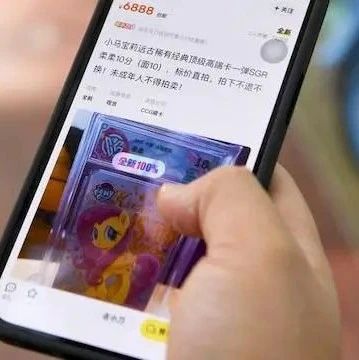
北京高院发布典型案例,未成年人花出去的这些钱可以要回来
Xin Jing Bao· 2025-05-28 09:47
Group 1 - The Beijing High People's Court released typical cases of judicial protection for minors online, focusing on network service contract disputes as Children's Day approaches [1] Group 2 - In the case of "Zhang Xiaomou vs. a gaming company," a minor used their mother's phone to download a game and charged over 100,000 yuan, but the gaming company failed to properly implement a real-name authentication mechanism for minors, leading to the court ruling the contract invalid and ordering a partial refund [2] - The court determined that the minor's large recharge behavior was inappropriate for their age and mental capacity, and the gaming company was found to have significant fault for not strictly enforcing the real-name registration for minor users [2] Group 3 - In the case of "Liu Xiaomou vs. a network technology company," a minor accessed a comic reading platform without parental knowledge, incurring charges of over 1,400 yuan for reading inappropriate content, leading to the court ruling the contract invalid and ordering a full refund [3] - The court emphasized the need to protect minors by ensuring that the content provided does not violate public order and morals, highlighting the negative impact of inappropriate content on minors' mental health and values [3]
未成年人充值打赏“大额化”,北京互联网法院3年结案近七百件
Di Yi Cai Jing· 2025-05-28 05:53
Core Viewpoint - The trend of underage consumers engaging in high-value transactions, particularly in gaming and live streaming, is increasingly concerning, with a significant rise in related legal cases [2][3] Group 1: Trends in Underage Spending - There is a noticeable trend of younger consumers making large payments, with cases involving refunds for underage gaming and live streaming payments reaching nearly 700, with the highest single case amounting to 3.1 million yuan and an average case value exceeding 80,000 yuan [2] - Specific examples highlight the severity of the issue, such as one case where a minor spent over 40,000 yuan in one night for a game item, and another where a minor tipped 80,000 yuan during a live stream due to misleading promotions [2] Group 2: Legal and Institutional Responses - The Beijing Internet Court, as the first internet juvenile court in China, emphasizes the protection of minors in online environments and has developed guidelines to address irrational spending among minors [3] - Recommendations include enhancing account security management, establishing family rules for internet use, and promoting financial literacy among children to foster responsible spending habits [3]