
未来产业定价体系

Search documents
申万宏源证券晨会报告-20260311
Shenwan Hongyuan Securities· 2026-03-11 00:29
Group 1: Economic Impact of "Spring Festival Displacement" - The "Spring Festival displacement" is expected to elevate economic data for January and February while suppressing March data, primarily affecting the supply side more than the demand side [9][10] - Historical analysis indicates that the "Spring Festival displacement" can cause significant fluctuations in quarterly economic data, with some years seeing changes of up to 40 percentage points [9] - This year's earlier return home phenomenon may amplify the impact of the "Spring Festival displacement," potentially increasing export growth by 8.4 percentage points in January and February while decreasing it by 18.6 percentage points in March [9][10] Group 2: Production and Export Trends - Production across upstream, midstream, and downstream sectors has shown improvement, with industrial production levels better than those at the end of December 2025 [9][10] - Export data for January and February indicates a significant recovery, with port cargo throughput increasing by 7.4 percentage points compared to December 2025 [9][10] - The internal demand shows a mixed performance, with consumer spending recovering while investment indicators display varied results [9][10] Group 3: Investment Outlook - Fixed investment growth is expected to improve compared to December 2025, although the rebound may be limited due to ongoing pressures in the real estate sector [11][12] - The decline in special refinancing bonds and the gradual formation of investments from policy financial tools are anticipated to support infrastructure investment [11][12] - Overall, the investment landscape remains cautious, with manufacturing investment constrained by previous profit declines and equipment renewal cycles [11][12] Group 4: Shipping and Transportation Industry Insights - The oil shipping market is experiencing high demand, with VLCC spot rates reaching historical highs, leading to increased orders in the shipbuilding sector [19][20] - The shipping market's high demand is expected to positively influence the overall shipbuilding market, with oil tankers becoming the primary new order source [19][20] - The second-hand ship prices have been rising for 13 consecutive months, indicating a potential upward trend in overall ship price indices [19][20] Group 5: Export Data Analysis - The customs data for January and February shows a significant increase in exports, with a year-on-year growth of 21.8%, driven by the "Spring Festival displacement" and improved external demand [22][23] - Labor-intensive industries such as textiles and furniture have seen substantial export rebounds, reflecting the direct impact of the "Spring Festival displacement" [22][23] - The outlook for exports remains positive, with expectations of sustained growth throughout the year despite potential declines in March due to the "Spring Festival displacement" effects [22][23]
【申万宏源策略】敢问梦想价值几何?——构建申万宏源策略“未来产业定价体系”
申万宏源证券上海北京西路营业部· 2026-03-05 02:12
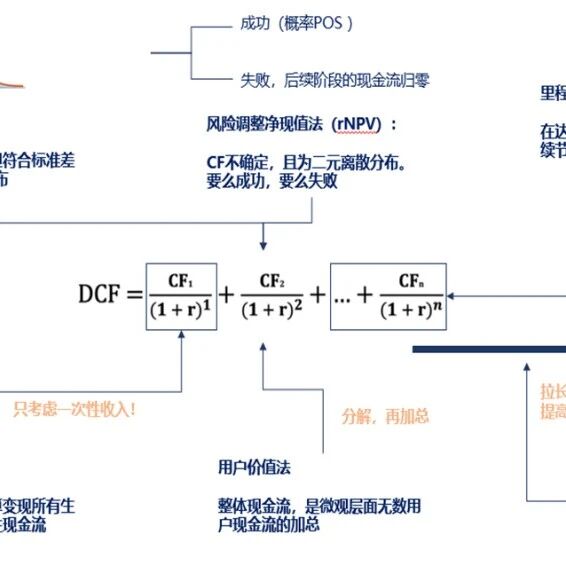
Core Viewpoint - The article discusses the ineffectiveness of traditional DCF models for valuing early-stage technology companies that are not yet profitable and have high uncertainty, proposing a "future industry pricing system" to standardize and replicate valuation methods for such firms [1]. Group 1: Future Industry Pricing Foundation - The foundation of future industry pricing consists of seven valuation sub-models, including absolute valuation models like real options, risk-adjusted NPV, milestone method, user value method, ecological niche valuation, and cost-based valuation, along with a relative valuation model [2]. - Each absolute valuation model has different implicit assumptions about future cash flows, with methods like real options assuming a continuous probability distribution of cash flows over time and space [3]. Group 2: Investor Behavior and Market Dynamics - The article categorizes investors into three types: industrial investors using cost-based methods for valuation during downturns, institutional investors focusing on high-frequency data with rNPV and user value methods, and visionary capitalists valuing long-term potential through real options and ecological niche methods [3]. - The fluctuation in stock prices reflects the varying valuation models employed by different investors, with market dynamics shifting between reality-based and dream-based valuations [3]. Group 3: Future Industry Pricing System Steps - The proposed pricing system involves three steps: selecting conservative, neutral, and optimistic valuation sub-models based on the company's context, setting pricing weights according to market temperature and investor behavior, and calculating the final valuation through weighted averages [4]. - The market temperature is categorized into nine levels, with investor risk appetite influencing the weight assigned to each model, particularly during market extremes [4][10]. Group 4: Case Studies - The article illustrates the application of the pricing system using SpaceX and OpenAI as examples, emphasizing the need for multi-faceted valuation approaches that consider different business lines and their respective life cycles [5][6]. - For SpaceX, the valuation of its Starlink business was anchored at $429.1 billion using comparable valuation methods, while its space computing business was valued at approximately $312.1 billion through real options, and the long-term Mars vision was assessed using cost-based methods [5]. - OpenAI's valuation was calculated using conservative, neutral, and optimistic models, resulting in a final valuation of $780.8 billion, closely aligning with its reported market valuation [6].

构建申万宏源策略未来产业定价体系:敢问梦想价值几何?
Shenwan Hongyuan Securities· 2026-03-03 08:09
Group 1: Valuation Models - The report introduces a "Future Industry Pricing System" to address the limitations of traditional DCF models for early-stage tech companies that are often unprofitable and have high uncertainty[3]. - Seven valuation sub-models are proposed, including Real Options Method, Risk-Adjusted NPV (rNPV), Milestone Method, User Value Method, Ecological Niche Valuation Method, Factor Cost Method, and Relative Valuation Method[3]. - The Real Options Method quantifies the value of management's choices in uncertain environments, treating uncertainty as an asset rather than a liability[14][19]. Group 2: Investor Behavior and Market Dynamics - The report categorizes investors into three types: industrial investors using Factor Cost Method for valuation, institutional investors focusing on high-frequency data with rNPV and User Value Method, and visionary capitalists valuing long-term potential with Real Options and Ecological Niche methods[3]. - Market temperature is divided into nine levels, influencing the weighting of valuation models based on investor sentiment, with optimistic models dominating during market peaks[4]. Group 3: Case Studies - SpaceX's valuation is segmented into three business lines: Starlink valued at $429.1 billion using comparable valuation, space computing at $312.1 billion using Real Options Method, and Mars exploration using Factor Cost Method[4]. - OpenAI's valuation ranges from $400 billion (conservative) to $1.28 trillion (optimistic), with a weighted final valuation of $780.8 billion closely aligning with market estimates[4].
构建申万宏源策略“未来产业定价体系”:敢问梦想价值几何?
Shenwan Hongyuan Securities· 2026-03-03 05:26
Group 1 - The report discusses the failure of traditional DCF models in valuing early-stage technology companies that are now entering the secondary market, highlighting their characteristics such as lack of profitability and high uncertainty [3][11] - A "Future Industry Pricing System" is proposed, which aims to provide standardized and replicable methods for valuing these companies through seven valuation sub-models [3][11] - The seven absolute valuation models include: Real Options Method, Risk-Adjusted Net Present Value (rNPV), Milestone Method, User Value Method, Ecological Niche Valuation Method, and Factor Cost Method, with Relative Valuation Method as the seventh [3][5] Group 2 - The Real Options Method quantifies the value of managerial flexibility in uncertain environments, allowing companies to make investment decisions based on market feedback [3][18] - The rNPV method incorporates a success rate factor to convert the probability distribution of future cash flows into a specific mathematical expectation, particularly useful in the biopharmaceutical sector [3][25] - The Milestone Method segments the long commercial exploration cycle into independent phases, allowing for valuation adjustments based on progress [3][29] Group 3 - The User Value Method estimates a company's overall value by summing the lifetime value of individual users and subtracting customer acquisition costs, particularly applicable in internet and SaaS businesses [3][34] - The Ecological Niche Valuation Method assesses a company's value based on its position within the broader ecosystem, considering factors like connectivity, control, and irreplaceability [3][38] - The Factor Cost Method establishes a valuation floor during capital downturns by evaluating the core production factors of early-stage companies, such as team value and intellectual property [3][43] Group 4 - The report outlines a systematic solution for the "Future Industry Pricing System" in three steps: selecting valuation sub-models for different scenarios, setting pricing weights based on market temperature, and calculating final valuations with adjustments [3][4] - The report provides case studies of SpaceX and OpenAI to demonstrate the application of the proposed valuation methods, showing how different business lines correspond to different sub-models [3][4][3] - For SpaceX, the valuation incorporates its various business lines, while OpenAI's valuation aligns closely with its market valuation, demonstrating the effectiveness of the proposed models [3][4]