机器人仿生皮肤

Search documents
智能早报丨黄仁勋造访台积电3nm产线索取产能;万华化学突破机器人“仿生皮肤”材料
Guan Cha Zhe Wang· 2025-11-10 02:11
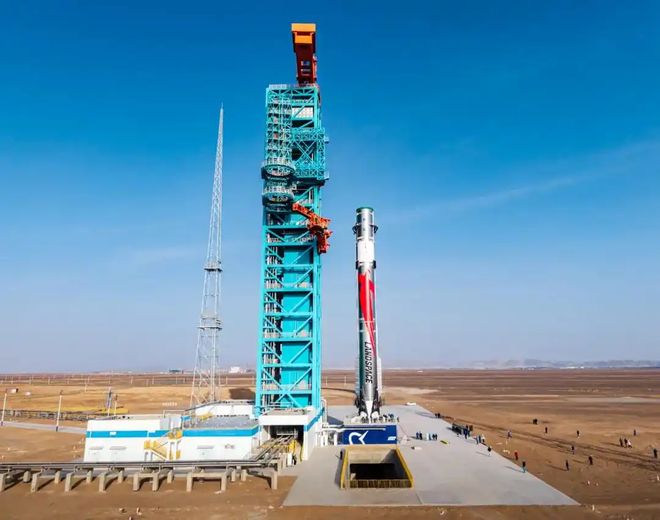
Group 1: Reusable Rocket Development - China's first liquid reusable rocket, Zhuque-3, is set to make its maiden flight in mid-November, marking a significant milestone in the country's commercial space sector [1][3] - Zhuque-3, developed by Landspace, is the world's first all-stainless steel liquid oxygen-methane rocket, with a length of 66.1 meters and a takeoff weight of approximately 570 tons [1] - The rocket has a low Earth orbit payload capacity of 21.3 tons and is designed for 20 reuses, aiming to reduce launch costs to below 20,000 yuan per kilogram, comparable to SpaceX's Falcon 9 [1] Group 2: Semiconductor Industry Collaboration - NVIDIA CEO Jensen Huang visited TSMC's 3nm production line to negotiate additional capacity for the Blackwell chip, highlighting the strong demand for advanced chips [4][5] - TSMC's current monthly production capacity at the 3nm line is 100,000 wafers, with plans to increase it to 160,000 wafers by 2026, primarily to supply NVIDIA [5] - Huang emphasized the strong demand for Blackwell chips, which include CPUs and networking devices, and confirmed that NVIDIA has requested additional capacity from TSMC [7] Group 3: Import Expo and Economic Cooperation - The 2025 Import Expo Shanghai Conference concluded successfully, attracting over 200 leaders from various sectors and more than 9,000 attendees [8][10] - The conference released over 60 significant outcomes, including reports and indices that reflect the long-term value of the Import Expo [10][11] - The event showcased China's commitment to open cooperation and mutual benefit, contributing to the economic recovery in the Yangtze River Delta region [11] Group 4: Solid-State Battery Industry Advancements - The 2025 Solid-State Battery Industry Annual Conference highlighted key breakthroughs in solid-state battery technology, with major companies like CATL and Ganfeng Lithium announcing production plans [12][13] - Recent research has led to innovations in solid-state battery design, enabling stable cycling at low temperatures and high current densities [12] - The industry is entering a critical phase of commercialization, driven by technological advancements and increased demand from automotive and robotics sectors [13] Group 5: Polyurethane Innovations for Robotics - Wanhua Chemical has received a patent for a high-rebound low-melting-point thermoplastic polyurethane, which could enhance the development of robotic "bionic skin" [14][15] - The patented material meets the core requirements for human-robot interaction, including flexibility, safety, and durability [14] - The market for polyurethane in robotics is expected to exceed 10 billion yuan by 2030, driven by advancements in material performance and cross-industry collaborations [15]



科股早知道:兼具机械支撑与柔性,该细分材料在构建机器人“仿生皮肤”方面或有巨大潜力
Tai Mei Ti A P P· 2025-11-09 23:53
Group 1 - The article highlights the potential of polyurethane materials in developing robotic "bionic skin," emphasizing the need for materials that are soft, biocompatible, and durable as humanoid robots become more prevalent in everyday settings [2] - WanHua Chemical has recently obtained a patent for a high-rebound, low-melting-point thermoplastic polyurethane elastomer, which aligns with the requirements for robotic skin [2] - Thermoplastic polyurethane (TPU) is noted for its excellent mechanical properties, including a wide hardness range, temperature resistance, and strong elasticity, making it suitable for flexible tactile sensors in humanoid robots [2] Group 2 - The solid-state battery industry is experiencing significant advancements, with multiple leading companies announcing mass production plans [3] - Recent research breakthroughs in solid-state lithium metal batteries have been reported, including a new anion regulation technology that addresses contact issues between electrolytes and lithium electrodes [3] - Major battery manufacturers, such as CATL and EVE Energy, are actively pursuing solid-state battery projects, while several automotive companies are also accelerating the integration of solid-state batteries into their vehicles [3]