机器人配送

Search documents
刘强东建议给技术垄断企业征暴利税 反哺养老、教育
Feng Huang Wang· 2025-11-07 06:41
Core Viewpoint - The future of work may drastically change, with employees potentially working only one day a week or even just one hour, and delivery services becoming fully automated through robotics [1] Group 1: Automation and Robotics - JD.com has replaced 90% of human labor in its sorting centers in Beijing with robots [1] - By April next year, JD.com plans to establish the world's first fully automated delivery station, featuring drones for aerial delivery and robotic vehicles for ground transport [1] - The delivery station will utilize robotic arms for loading goods from drones and autonomous vehicles [1] Group 2: Economic and Social Implications - Liu Qiangdong proposed imposing a 90% excess profit tax on monopolistic tech companies to fund social services such as pensions and education [1] - He emphasized that technological advancements should not lead to concerns about job security or fairness, suggesting a positive outlook for the future [1]

日本零售企业试点机器人送货上门服务
Sou Hu Cai Jing· 2025-10-25 13:33
Core Insights - In Japan, rising labor costs and increased demand for delivery services have led many large logistics companies and convenience stores to experiment with using robots for home delivery [1] - In a pilot area in western Tokyo, convenience stores have begun testing robot delivery services, with robots capable of delivering goods to over 25,000 residents within a 3-kilometer radius in an average of 20 minutes [1] - Approximately one-third of delivery services are now being chosen by users to be handled by robots, which helps alleviate the burden on human delivery personnel, especially during adverse weather conditions [1] Industry Developments - Several large logistics companies and retail enterprises in Japan are initiating pilot programs for robot delivery services [1] - Robots currently being tested possess visual recognition capabilities, allowing them to autonomously navigate complex environments and avoid obstacles, with each robot costing around 100,000 RMB [1] - The 3D laser radar used in these robots is sourced from a Chinese manufacturer, highlighting international collaboration in technology [2] Challenges - The widespread adoption of delivery robots in Japan faces two main challenges: the need for continuous improvement of sensory systems to adapt to Japan's narrow roads and complex urban environments, and the time required to cultivate public acceptance of robot usage [2] - Strict legal regulations in Japan also pose significant hurdles for testing and deploying delivery robots in various environments [2]

美国最大外卖巨头DoorDash押注配送机器人,行业变革暗潮汹涌
机器人大讲堂· 2025-10-14 09:04
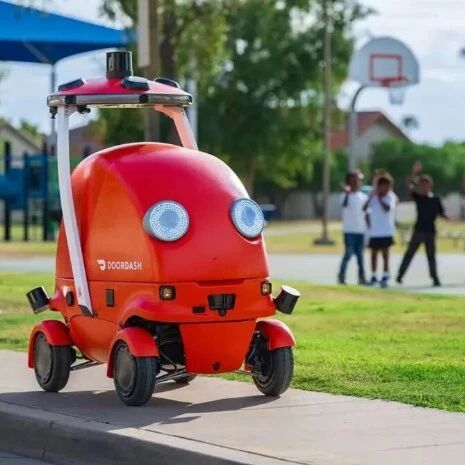
Core Viewpoint - DoorDash is initiating a robot delivery revolution in the U.S., aiming to reshape the global instant delivery industry by integrating robotics into its core operations [1][3]. Group 1: Company Developments - In October 2025, DoorDash launched its self-developed delivery robot, Dot, and entered a strategic partnership with Serve Robotics to scale robot delivery services in Los Angeles, with plans for nationwide expansion [3]. - DoorDash, founded in 2013, is the largest food delivery platform in the U.S., holding a 60% market share and achieving a market valuation exceeding $60 billion [3][4]. - The introduction of the DashPass subscription service in 2022 has attracted over 15 million members, expanding its operations to over 4,000 cities across the U.S., Canada, Australia, and parts of Europe by 2025 [5]. Group 2: Market Context - The global food delivery robot market is projected to reach $299 million by 2024, indicating significant growth potential for DoorDash's robot delivery operations [5]. - The increasing costs in the food service industry are driving the need for automation, with robot delivery costs being one-third of human labor costs, and DoorDash's pilot programs showing a 40% reduction in average delivery costs [8][9]. Group 3: Technology and Efficiency - Dot is designed to deliver various everyday items, capable of carrying up to 16 kg and traveling at speeds of 32 km/h, ensuring food freshness [7]. - The integration of SmartScale technology has reduced human labor costs by 80% and decreased order complaint rates by 62% [9]. - Serve robots optimize delivery routes using AI algorithms, achieving an average delivery time of just 18 minutes [9]. Group 4: Challenges and Barriers - Despite the promising outlook, the widespread adoption of delivery robots faces challenges, including technical limitations in extreme weather and complex terrains [11][12]. - Regulatory hurdles vary significantly across regions, complicating cross-regional operations for companies like DoorDash [12]. - The initial investment for robots is substantial, with costs around $100,000 per unit, which may deter small businesses from adopting this technology [12]. Group 5: Future Prospects - The evolution of delivery robots is part of a broader digital transformation in logistics, with the global market for delivery robots expected to reach billions of dollars [20]. - In China, daily delivery demand exceeds 300 million orders, and if 10% were handled by robots, the market could exceed 55 billion yuan annually [20]. - Innovations in technology and business models, such as robot leasing and data services, are expected to accelerate the profitability of robot delivery systems [18][20].

美股异动 | 将送货机器人引入DoorDash(DASH.US)平台 Serve Robotics(SERV.US)涨超20%
智通财经网· 2025-10-09 15:27
Core Viewpoint - Serve Robotics' stock price increased by over 20% following the announcement of a partnership with DoorDash to integrate delivery robots into the DoorDash platform [1] Group 1 - Serve Robotics will collaborate with DoorDash to introduce delivery robots for orders placed through the DoorDash platform [1] - Customers ordering from select stores and restaurants in Los Angeles may receive their orders via Serve Robotics' delivery robots [1] - There are plans to expand DoorDash's delivery service nationwide using Serve Robotics' technology [1]


将送货机器人引入DoorDash(DASH.US)平台 Serve Robotics(SERV.US)涨超20%
Zhi Tong Cai Jing· 2025-10-09 15:27
Core Viewpoint - Serve Robotics' stock price increased over 20% to $16.6 following the announcement of a partnership with DoorDash to integrate delivery robots into the DoorDash platform [1] Company Developments - Serve Robotics will collaborate with DoorDash to introduce delivery robots for orders placed through the DoorDash platform [1] - The partnership will initially focus on customers ordering from select stores and restaurants in Los Angeles, with plans to expand DoorDash's delivery services nationwide [1]
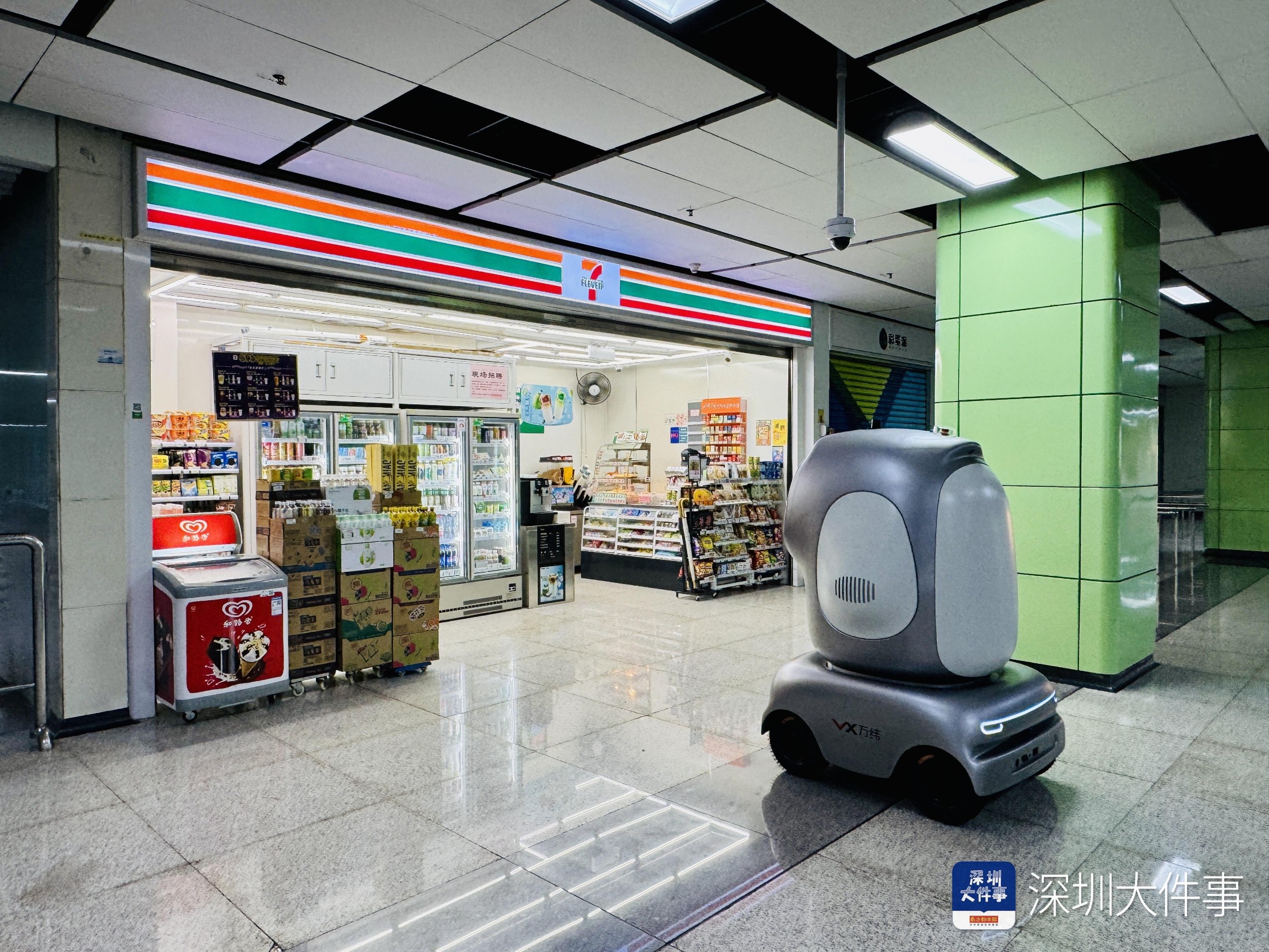
应用场景再上新,深圳机器人搭地铁“上岗”打工送货
Nan Fang Du Shi Bao· 2025-07-15 21:12
Core Insights - The collaboration between Shenzhen Metro Group and Vanke aims to enhance last-mile delivery through the use of robots in subway stations, specifically targeting the 7-Eleven convenience stores [1][3] - The project is currently in the testing phase, focusing on optimizing delivery routes during off-peak hours to improve efficiency and reduce costs [1][6] Group 1: Project Overview - The "Metro + Robot Delivery" project utilizes robots to autonomously plan optimal routes for delivering goods from 7-Eleven stores within the subway system [1] - The initiative addresses challenges faced by traditional delivery methods, such as high labor costs and inefficiencies during peak hours [3][6] Group 2: Technological Implementation - Vanke's logistics robots incorporate advanced technologies, including AI scheduling algorithms and panoramic laser radar, to enhance delivery efficiency [6] - The robots are designed to autonomously navigate subway environments, including using elevators and recognizing train arrivals, which streamlines the delivery process [6] Group 3: Market Context - The demand for local life services, such as "Metro + Retail," has been increasing alongside the expansion of the Shenzhen subway network [3] - 7-Eleven operates over 100 stores within the Shenzhen subway, catering to approximately 9 million passengers daily, highlighting the potential for enhanced service integration [3]