
机构中立原则

Search documents
特朗普为何提名凯文·沃什任美联储主席?对市场有何影响?
Sou Hu Cai Jing· 2026-02-02 06:28
Core Viewpoint - President Trump has announced Kevin Warsh as the next Federal Reserve Chairman, pending Senate approval, marking a significant shift in leadership after his previous choice of Jerome Powell [1][3]. Group 1: Background and Context - Trump previously selected Powell over Warsh for the Fed Chair position, a decision he later regretted, leading to his current choice of Warsh [3]. - The competition for the Fed Chair position was intense, with candidates including Kevin Hassett, Christopher J. Waller, and Rick Rieder, all of whom were considered top contenders at various times [3][4]. - Warsh has actively sought the Fed Chair position since Trump’s second term began, aligning his views more closely with Trump's economic policies, including criticism of Powell's slow interest rate cuts [3][4]. Group 2: Warsh's Background and Experience - Warsh has a diverse background in politics, business, and academia, currently serving as a partner at Duquesne Family Office and a visiting scholar at Stanford University [5][6]. - He has held significant positions, including serving as a special assistant to President George W. Bush and as a Federal Reserve Governor, where he was the youngest in history [6]. - His connections in the business and tech sectors are extensive, including ties to notable figures like Ronald Lauder and Peter Thiel, which may influence his approach to economic policy [7]. Group 3: Economic Policy Views - Warsh advocates for supply-side economic policies, emphasizing the importance of production capacity and the quality of labor and capital in driving economic growth [8]. - He proposes reforms in tax policy, regulatory clarity, and trade policy to enhance economic growth, moving away from protectionism to encourage U.S. exports [9][10]. - His views on trade have evolved to support Trump's tariff policies, indicating a shift in his stance on international trade [10]. Group 4: Critique of the Federal Reserve - Warsh has been a vocal critic of the Federal Reserve's recent policies, particularly under Powell, arguing that the Fed has strayed from its core responsibilities [11][12]. - He believes that the Fed's expansive role has undermined its independence and contributed to high inflation, which he attributes to policy missteps rather than external factors [12]. - His proposed reforms focus on reducing the Fed's balance sheet and narrowing its functions to restore credibility and focus on price stability [13][14].

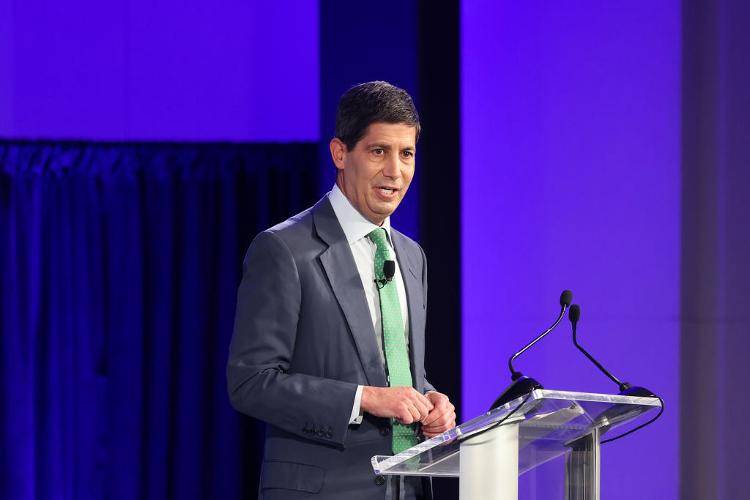
下一任美联储主席的头号候选人变了?沃什有何来头?
Sou Hu Cai Jing· 2025-12-16 12:56
Core Viewpoint - The next Federal Reserve Chair candidate is under intense competition, with Kevin Walsh emerging as the top contender according to President Trump's statements, while Kevin Hassett's chances have significantly decreased [1] Group 1: Candidate Profiles - Kevin Walsh is a prominent figure with a background in Wall Street and has served as the youngest Federal Reserve Governor in history [2] - Walsh has strong connections with notable investors like Peter Thiel and Marc Andreessen, which have influenced his investment strategies, including in cryptocurrencies [2] - His educational background includes a degree from Stanford University and a JD from Harvard Law School, and he has held significant roles in both the Bush administration and the Federal Reserve [2] Group 2: Criticism of Current Federal Reserve Policies - Walsh has been a vocal critic of current Federal Reserve Chair Jerome Powell, arguing that the Fed has failed in its dual mandate of managing interest rates and maintaining transparency [3] - He attributes the high inflation in the U.S. to policy missteps by the Federal Reserve rather than external factors like the pandemic or geopolitical tensions [3] - Walsh believes that the Fed's role has expanded unnecessarily, leading to a dilution of its core mission and independence [4] Group 3: Proposed Policy Changes - Walsh advocates for a "contraction" approach for the Federal Reserve, emphasizing the need to reduce its balance sheet and refocus on its primary function of price stability [5] - He argues that the Fed's extensive asset purchases since the 2008 financial crisis have distorted market dynamics and that it should revert to its original boundaries post-crisis [5] - Walsh suggests that the Fed should adopt an "institutional neutrality principle" to avoid taking stances on social and political issues unless they directly threaten its core mission [5][6]