量化宽松

Search documents
资金面继续向宽,债市大幅走强
Dong Fang Jin Cheng· 2026-03-31 12:21
Report Summary 1. Investment Rating The provided text does not mention the industry investment rating. 2. Core View On March 30, the liquidity continued to loosen, with major repo rates declining; the bond market rallied significantly; the convertible bond market corrected following the equity market, with most convertible bond issues falling; yields on U.S. Treasuries across all tenors generally declined, and yields on 10-year government bonds of major European economies also generally declined [1][2]. 3. Summary by Directory 3.1 Bond Market News - **Domestic News** - The Ministry of Finance reported that in 2025, the number of local government financing platforms and the scale of implicit debt decreased significantly. It also strengthened the management of the whole process of replacing existing implicit debt and was "zero-tolerant" of new implicit debt [4]. - The State Administration for Market Regulation required efforts to prevent and control "involution-style" competition in key industries and fields such as platform economy, photovoltaic, lithium batteries, and new energy vehicles [5]. - In 2025, the six major state-owned banks achieved year-on-year growth in both revenue and net profit attributable to shareholders, with a total net profit of 1.42 trillion yuan. Their asset sizes also increased steadily [6]. - **International News** - Fed Chairman Powell's dovish remarks eased market concerns, and traders began to bet on a small probability of a rate cut this year [7]. - **Commodities** - International crude oil futures prices continued to rise, while NYMEX natural gas futures prices turned down. WTI May crude oil futures rose 3.25% to $102.88 per barrel, and Brent May crude oil futures rose 0.18% to $112.78 per barrel. Spot gold rose 0.22% to $4,503.88 per ounce, and NYMEX May natural gas futures prices fell 6.33% to $2.886 per million British thermal units [8]. 3.2 Liquidity - **Open Market Operations** - On March 30, the central bank conducted 269.5 billion yuan of 7-day reverse repurchase operations at a fixed interest rate, with a net injection of 261.5 billion yuan after 8 billion yuan of reverse repurchases matured [10]. - **Funding Rates** - On March 30, the liquidity continued to loosen, and major repo rates declined. DR001 fell 0.67bp to 1.311%, and DR007 fell 1.05bp to 1.429% [11]. 3.3 Bond Market Dynamics - **Interest Rate Bonds** - **Spot Bond Yield Trends** - On March 30, the bond market rallied significantly. The yield of the 10-year Treasury bond active issue 250022 fell 0.80bp to 1.8100%, and the yield of the 10-year CDB bond active issue 250220 fell 1.75bp to 1.9530% [14]. - **Bond Tendering** - Information on the tendering of several bonds, including the 1-year, 3-year, and 10-year bonds, is provided, including the issue scale, winning yield, and other details [15]. - **Credit Bonds** - **Secondary Market Transaction Abnormalities** - On March 30, the trading prices of 3 industrial bonds deviated by more than 10%. "H1 Vanke 04" fell more than 10%, "22 Vanke MTN004" fell more than 38%, and "H1 Vanke 02" rose more than 86% [15]. - **Credit Bond Events** - Multiple companies announced events such as debt repayment uncertainties,逾期有息负债, bond payment arrangement adjustments, and issues related to bond fundraising use and information disclosure [16]. - **Convertible Bonds** - **Equity and Convertible Bond Indexes** - On March 30, the three major A-share indexes showed mixed performance. The convertible bond market corrected following the equity market, with the CSI Convertible Bond Index, Shanghai Stock Exchange Convertible Bond Index, and Shenzhen Stock Exchange Convertible Bond Index falling 0.93%, 0.89%, and 0.98% respectively. Most convertible bond issues fell [18]. - **Convertible Bond Tracking** - On March 30, KeMa Technology's application for issuing convertible bonds was approved by the CSRC [20]. - **Overseas Bond Markets** - **U.S. Bond Market** - On March 30, yields on U.S. Treasuries across all tenors generally declined. The 2-year U.S. Treasury yield fell 6bp to 3.82%, and the 10-year U.S. Treasury yield fell 9bp to 4.35%. The yield spread between the 2-year and 10-year U.S. Treasuries narrowed by 3bp to 53bp, and the yield spread between the 5-year and 30-year U.S. Treasuries widened by 2bp to 94bp [21][22]. - **European Bond Market** - On March 30, yields on 10-year government bonds of major European economies generally declined. The 10-year German government bond yield fell 6bp to 3.04%, and the 10-year government bond yields of France, Italy, and Spain fell 8bp, 8bp, and 4bp respectively [24]. - **Price Changes of Chinese Dollar Bonds** - Information on the daily price changes of Chinese dollar bonds as of the close on March 30 is provided, including the yields and price changes of various bonds [26].
黄金瀑布式下跌,底部在哪?
财富FORTUNE· 2026-03-23 13:04
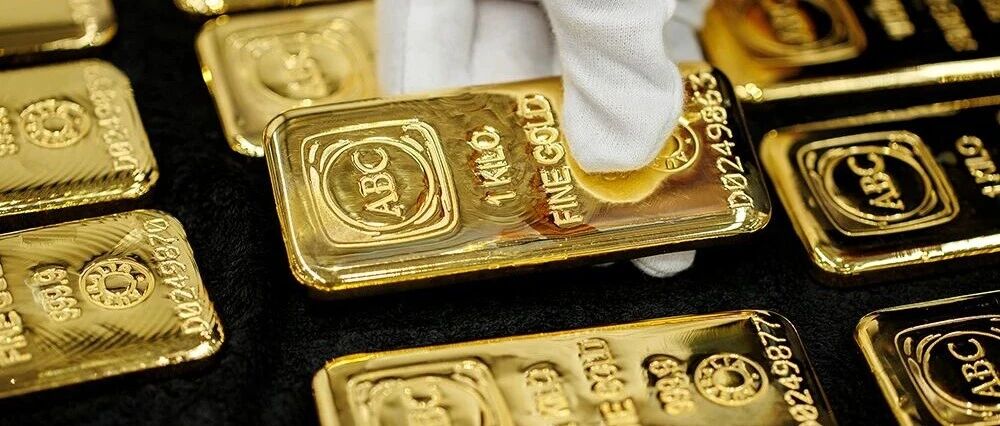
Core Viewpoint - The article discusses the recent decline in gold prices, highlighting that even gold, traditionally seen as a safe-haven asset, is being sold off in the face of liquidity tightening and rising interest rates. This situation is exemplified by Poland's central bank planning to sell part of its gold reserves to raise $13 billion for defense spending, indicating a shift in how even sovereign entities are managing their assets under financial pressure [1][5][9]. Group 1: Market Dynamics - Gold has historically served as a hedge against the dollar's credit, but confidence in the dollar is waning due to rising U.S. fiscal deficits and debt ceiling crises, suggesting a long-term bullish trend for gold [3]. - The escalation of geopolitical conflicts in the Middle East, which typically boosts gold prices, did not lead to expected gains; instead, gold prices fell sharply following a hawkish signal from the Federal Reserve [3][4]. - Central banks globally are adopting a hawkish stance, leading to a systematic increase in global risk-free interest rates, which negatively impacts gold as a zero-yield asset [4]. Group 2: Liquidity and Interest Rate Impact - The pressure on the market is shifting from "interest rate shock" to "liquidity shock," where high interest rates expose vulnerabilities in the economy and financial institutions, prompting entities to sell gold for cash [5][9]. - Poland's recent decision to sell gold reserves, despite being a major gold buyer, reflects the reality that even sovereign institutions prioritize liquidity over holding gold for its potential safe-haven value [5][8]. Group 3: Historical Context and Future Outlook - Historical precedents show that liquidity crises can lead to significant declines in gold prices, as seen in March 2020 when gold dropped from $1,700 to around $1,450 due to market panic [6]. - The article outlines three phases of the current gold price decline: the initial interest rate shock, the ongoing liquidity shock, and the potential for a future phase of quantitative easing (QE) that could reignite gold's appeal [7]. - The conditions for a large-scale QE, which would mark a true buying opportunity for gold, are not yet in place, as the market awaits a shift in policy from the Federal Reserve [7].

固收-供给冲击与滞胀交易-是2022还是2011
2026-03-20 02:27
Summary of Conference Call Records Industry or Company Involved - The analysis focuses on the macroeconomic environment in China and draws comparisons with the U.S. economic situation in 2011, particularly in the context of inflation and monetary policy. Core Points and Arguments 1. **Current Macroeconomic Environment**: The current macroeconomic environment in China is more comparable to the U.S. in 2011, characterized by "weak recovery + credit repair + external supply shock inflation," rather than the "overheating/cooling" scenario of 2022 [1][2][3]. 2. **Monetary Policy Priorities**: The experience from 2011 indicates that when facing fiscal tightening and inflation contradictions, central banks tend to prioritize monetary easing to counteract the economic weakening caused by fiscal policies [1][3]. 3. **Market Trading Logic**: In major economies, markets tend to first trade inflation concerns before shifting focus to recession worries, guided by clear monetary easing stances from central banks [1][5]. 4. **Core Risk Factors**: The primary risk currently is the potential for monetary "decoupling" and loss of central bank credibility. However, the underlying credit of the Renminbi is solid, making the risk of monetary decoupling very low [1][7]. 5. **Comparison with 2022**: The comparison of the current situation with 2022 is deemed inappropriate due to significant differences in macroeconomic backgrounds between the U.S. and China. In 2022, the U.S. was in an overheating state, while China faced credit contraction [2][3]. 6. **Historical Reference**: The macroeconomic environment of the U.S. in 2011 serves as a more relevant reference for analyzing the current situation in China, as both were in a "credit repair" phase following significant economic disruptions [3][4]. 7. **Market Performance Differences**: In 2011, China experienced a "stagflation kill everything" scenario with poor performance in both stocks and bonds, while the U.S. market showed more complexity with a bond bull market and mixed stock performance despite external supply shocks [4][5]. 8. **Monetary Policy Stance**: The Federal Reserve maintained a loose monetary policy in 2011 despite high inflation, believing that inflation was temporary due to structural weaknesses in the economy and stable long-term inflation expectations [6]. 9. **Current Market Risks**: The greatest risk in the current market is not merely inflation or external shocks but the risk of monetary decoupling, which could lead to a loss of confidence in central bank policies and potential monetary crises [7]. Other Important but Possibly Overlooked Content - The analysis emphasizes the importance of understanding the underlying economic structures and policies when comparing different time periods and markets, highlighting that external factors must be interpreted through the lens of internal economic conditions [5][6].
史无前例!美国要亲自下场“操盘”原油期货,美财长贝森特要“重操旧业”?
美股IPO· 2026-03-06 00:51
Core Viewpoint - The U.S. Treasury is considering unprecedented intervention in the crude oil futures market to curb soaring oil prices caused by Middle East conflicts, specifically targeting the near-term futures contracts to stabilize market panic [1][3][9] Group 1: U.S. Treasury Intervention - The intervention aims to influence price expectations rather than utilizing physical oil supplies, with potential actions including selling near-term futures and buying long-term contracts [3][7] - A senior White House official indicated that measures could be announced as early as March 5, with details remaining undisclosed to avoid preempting the Treasury's announcement [3] - The intervention is a response to a nearly 21% surge in U.S. crude oil futures since the outbreak of conflict with Iran, raising concerns about inflation due to increased fuel costs [3][10] Group 2: Market Reactions and Analyst Opinions - Analysts express skepticism about the effectiveness of the Treasury's intervention, suggesting that its impact is limited by the actual supply disruptions in the market [9] - John Paisie from Stratas Advisors noted that while the intervention might deter speculative trading temporarily, it does not address the underlying supply issues, particularly the significant impact of the closure of the Strait of Hormuz [9] - Other analysts, including Tony Sycamore and Ed Meir, highlighted the risks associated with the intervention, questioning how the Treasury would manage potential losses if prices continue to rise [9] Group 3: Historical Context and Precedents - Although the intervention in the oil futures market is unprecedented, the U.S. government has previously used financial tools to stabilize markets, such as during the 2008 financial crisis and through the Exchange Stabilization Fund (ESF) [8] - The ESF has a history of supporting the market during crises, with total assets reaching $220.85 billion as of January 31 [8] Group 4: Market Activity and Hedging Strategies - The crude oil derivatives market has seen a surge in trading activity, with U.S. producers engaging in record levels of hedging transactions amid rising prices [10][11] - Producers are locking in future sales profits through forward contracts, leading to a significant increase in the price spread between near-term and long-term contracts [11] - Consumers, including airlines, are also recognizing the importance of hedging strategies in the current volatile market environment [11]

2026 Market Outlook Commentary
Etftrends· 2026-03-05 16:14
Economic Outlook - The U.S. economy is expected to grow by 3.0% in 2026, supported by fiscal and monetary stimulus, including the One Big Beautiful Bill (OBBBA) which is projected to boost real GDP by 0.6–0.9% [1][2] - The Federal Reserve is anticipated to cut overnight rates 2–3 times in 2026, with the 10-year Treasury note yield expected to remain between 3.5% and 4.5% [1][5] - The economy showed strong growth in 2025, with a 3.8% growth in Q2 and a 4.3% growth in Q3, although a government shutdown is expected to lower Q4 growth [1][2] Market Performance - The S&P 500 is projected to reach a year-end target of 7700 in 2026, representing a 12.5% gain from its 2025 close [1][5] - In 2025, the S&P 500 achieved a double-digit percentage gain of 17.86%, marking the third consecutive year of such gains [1][2] - The market has seen broad-based gains, with U.S. stocks, international stocks, and fixed income all performing well [1][2] Labor Market - The unemployment rate has increased to 4.5% from 4.1% in June 2025, with only 87,000 jobs created in the latter half of the year [2][3] - Factors contributing to a cooling labor market include immigration policies, tariff uncertainties, and productivity gains from AI [2][3] Manufacturing Sector - The ISM Manufacturing Index has been in contraction for 35 of the past 37 months, indicating a prolonged downturn [2][3] - Expectations of fiscal and monetary stimulus suggest that the manufacturing sector may enter expansion territory early in 2026 [3] Investor Sentiment - Investor sentiment remains cautious despite strong market performance, with a significant amount of cash in money market funds reaching a record $7.6 trillion [4][5] - The American Association of Individual Investors (AAII) sentiment poll indicated excessive pessimism in 2025, with only 19 of 52 weeks showing more bullish than bearish sentiment [4][5] Earnings Growth - Earnings growth is expected to be the primary driver for stock prices in 2026, with S&P 500 earnings per share forecasted to rise 15.6% to $313.84 [5][6] - The forward P/E ratio for the S&P 500 is currently at 22.1, indicating elevated valuations, particularly for large-cap stocks [5][6] International Markets - International markets are trading at a significant discount compared to the U.S., with the MSCI ACWI ex-U.S. Index forward P/E being 30% less than that of the S&P 500 [5][6] - Given the valuation differences and a weaker U.S. dollar, developed and emerging international markets may be poised for outperformance [5][6] Federal Reserve Policy - The Federal Reserve's dovish stance is expected to support risk assets, with recent rate cuts and a commitment to maintaining liquidity [5][6] - The potential appointment of a new Federal Reserve Chair could introduce volatility, as historical trends show challenges for new chairs [5][6]

当金价达到8000美元时,美联储资产欠款表才能重新平衡,这是拯救美国金融的唯一出路
Sou Hu Cai Jing· 2026-02-28 04:16
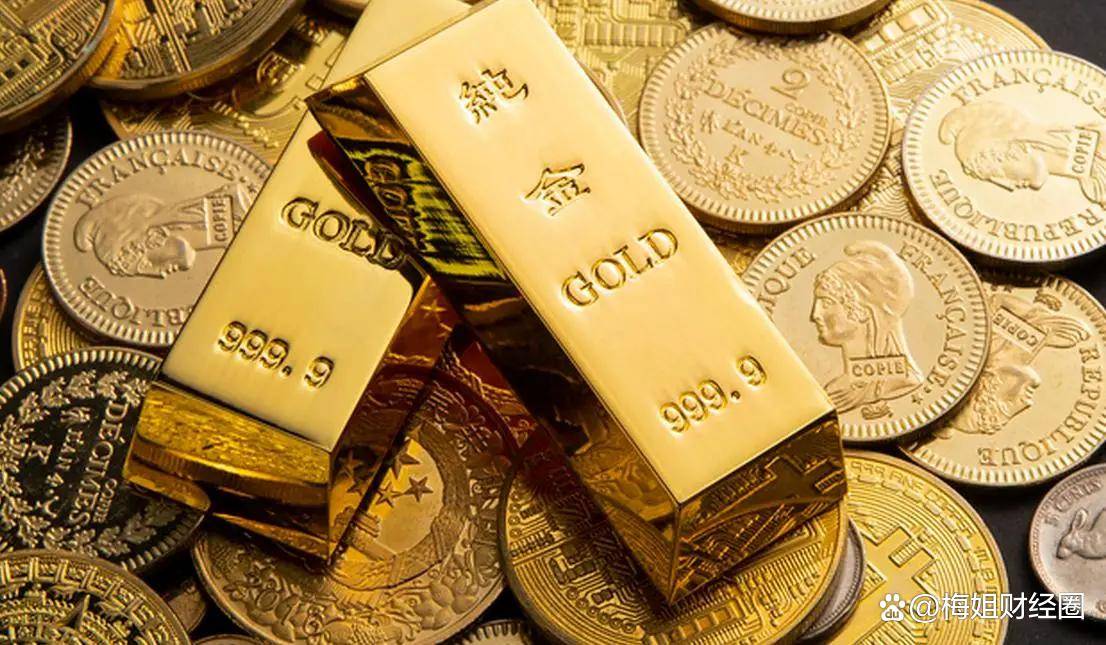
Core Viewpoint - A hedge fund manager, Daniel Oliver, argues that gold prices must rise to $8,000 per ounce for the U.S. financial system to stabilize, based on historical data and the current state of the Federal Reserve's balance sheet [1][3] Group 1: Federal Reserve and National Debt - The Federal Reserve's balance sheet peaked at nearly $9 trillion due to multiple rounds of quantitative easing in response to the 2008 financial crisis and the 2020 pandemic [3] - The U.S. national debt has surpassed $38.5 trillion, with projections indicating that by 2036, the federal government will spend $2.1 trillion annually just to pay interest on this debt, more than double the current amount [3] - Oliver suggests that the actual debt burden is significantly higher when considering future liabilities like Medicare and Social Security, indicating that conventional repayment methods are no longer viable [3][5] Group 2: Private Credit Market Risks - Oliver highlights that the current financial system's risks have shifted to the private credit market, particularly in over-leveraged private equity, differing from the 2008 crisis which was primarily housing-related [5] - UBS analysts warn that rapid advancements in artificial intelligence could disrupt traditional business models, potentially leading to a 15% default rate in the private credit market, equating to hundreds of billions in unrecoverable loans [6] Group 3: Gold Market Dynamics - The physical precious metals market is undergoing structural changes, with manufacturers hoarding silver due to supply chain concerns, reducing the available supply in the market [6][8] - Banks are tightening credit conditions for gold refineries, requiring more collateral, which limits the processing of physical gold and creates bottlenecks in the supply chain [8] - Oliver calculates that to maintain the historical "gold ratio" of one-third of central bank reserves to total assets, gold would need to reach approximately $8,000 per ounce, and $12,000 per ounce to achieve a one-half ratio [8][9] Group 4: Current Gold Price Trends - Recent spot gold prices have been rising, reaching around $5,187 per ounce as of February 27, 2026, with market participants closely monitoring Federal Reserve monetary policy and signs of stress in the private credit market [11] - Gold is evolving from a mere investment hedge to a "pressure gauge" reflecting the scale of debt and credit in the financial system, with Oliver's $8,000 price point serving as a significant indicator of underlying pressures [11]
多品牌手机涨价超千元,玛莎拉蒂母公司巨亏1800亿 | 财经日日评
吴晓波频道· 2026-02-28 00:30
Group 1: European Central Bank Financial Performance - The European Central Bank (ECB) reported a loss of €1.3 billion (approximately $1.5 billion) for 2025, significantly reduced from the record loss of €7.9 billion in the previous year [2] - The ECB stated that it can continue to operate effectively despite the losses, and the funding gap will remain on its balance sheet to offset future profits [2] - The ECB expects to return to profitability either this year or in 2027, depending on future key interest rates, exchange rates, and the composition of its balance sheet [2][3] Group 2: Smartphone Price Increases in China - The Chinese smartphone industry is set to experience a comprehensive price increase starting March 2026, with new models expected to rise by at least ¥1,000 [4] - Market research firm Counterpoint Research predicts that the average price of new smartphones in China will increase by 15% to 25% compared to 2025 models [4] - Factors contributing to the price increase include rising costs of storage chips and AI chip demand, alongside higher costs for core components like screens and batteries [5] Group 3: Meizu's Strategic Shift - Meizu announced the suspension of its domestic smartphone hardware development projects, opting to seek third-party hardware partners while maintaining existing operations [6] - The company aims to transition from a hardware-focused strategy to one driven by AI software products, leveraging its Flyme ecosystem [6][7] - Following its acquisition by Geely, Meizu's shift reflects a strategic decision to prioritize software development in the AI era [6][7] Group 4: Netflix's Acquisition Withdrawal - Netflix announced its withdrawal from the bidding for Warner Bros. Discovery's film and streaming assets, ending its competition with Paramount [8] - Warner Bros. reported a 5.6% decline in revenue for Q4 2025, with adjusted EBITDA down 20% [8] - The market reacted positively to Netflix's decision, as it alleviated concerns about the potential debt burden from the acquisition [8][9] Group 5: Stellantis Financial Losses - Stellantis reported a net loss of €22.3 billion (approximately ¥180.2 billion) for 2025, primarily due to restructuring costs [10] - The company's net revenue for 2025 was €153.5 billion, a slight decrease of 2% year-on-year [10] - Despite the losses, Stellantis showed signs of recovery in the latter half of 2025, with a 10% increase in net revenue and an 11% rise in global shipments [10][11] Group 6: Luckin Coffee's Revenue Growth - Luckin Coffee reported a total net revenue of ¥49.288 billion for the fiscal year 2025, a 43% increase year-on-year [12] - The company opened 8,708 new stores in 2025, bringing the total to 31,048, a 39% increase [12] - Despite revenue growth, the fourth quarter showed a decline in net profit, attributed to rising costs and increased competition in the delivery market [12] Group 7: South Korean Stock Market Performance - The KOSPI index in South Korea has risen nearly 50% year-to-date, with a 130% increase over the past 12 months [13] - Major companies like Samsung Electronics and SK Hynix have seen significant stock price increases, contributing to the overall market performance [13] - Analysts have raised their target for the KOSPI index, citing government reforms and the AI-driven chip industry boom as key factors [13][14] Group 8: A-Share Market Trends - The A-share market showed mixed performance, with the Shanghai Composite Index rising by 0.39% [15] - Market sentiment has shifted towards "price increase" themes, with significant gains in metals and resource sectors [15][16] - The market is beginning to reassess the sustainability of growth in previously high-performing sectors, focusing on the impact of price increases on future earnings [16]

21评论丨关注沃什时代的两个超预期风险
Sou Hu Cai Jing· 2026-02-27 22:33
Core Viewpoint - The appointment of Kevin Walsh as the Federal Reserve Chairman, despite his previous opposition to quantitative easing, creates a controversial dynamic between the White House's push for rate cuts and Walsh's hawkish tendencies, leading to uncertainty in market expectations regarding future monetary policy direction [1][3]. Group 1: Short-term Alignment and Long-term Conflict - The White House and Walsh share a short-term alignment on the need for interest rate cuts, with Walsh now supporting a reduction of the federal funds target rate to around 3% [3]. - Despite this short-term agreement, there exists a fundamental long-term conflict regarding the Federal Reserve's independence and mission, with Walsh advocating for a narrow focus on price stability, contrasting with the White House's broader goals of fiscal expansion and job stimulation [4][5]. Group 2: Market Implications and Policy Framework - The upcoming June meeting will be a critical test for Walsh's policy framework, with expectations for a potential 25 basis point rate cut and a detailed explanation of his "balance sheet reduction + rate cut" strategy [4]. - If Walsh's framework is implemented, it could lead to a steepening of the yield curve, benefiting short-duration U.S. Treasuries and bank stocks, while long-duration Treasuries may face pressure [4][7]. Group 3: Risks and Future Outlook - The potential for a significant economic or financial crisis during Walsh's tenure could exacerbate the existing conflicts, as the government may demand aggressive monetary support, which Walsh may resist due to his aversion to balance sheet expansion [5][6]. - Investors should monitor the initial months of Walsh's chairmanship for signs of policy consistency, with a focus on the June and September meetings to assess the viability of his proposed framework [7].

欧洲央行连续第三年亏损
Huan Qiu Wang· 2026-02-27 02:25
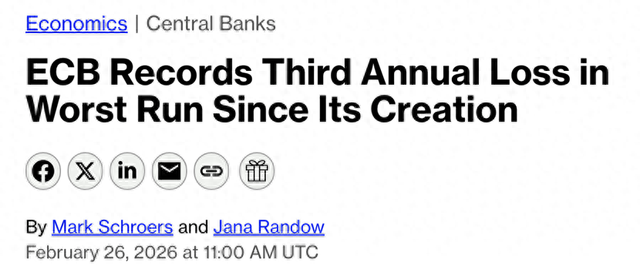
Core Viewpoint - The European Central Bank (ECB) has reported a loss for the third consecutive year, marking the worst financial record since its establishment, primarily due to the ongoing impacts of crisis-era policies [1][5]. Financial Performance - The ECB announced a loss of €1.3 billion (approximately $1.5 billion) for 2025, a significant reduction from the historical high loss of €7.9 billion in 2024 [2][6]. - The ECB anticipates a return to profitability in 2026 or 2027, contingent on key interest rates, exchange rate trends, and the scale and structure of its balance sheet [2][6]. - The primary cause of the losses is the current interest expenses exceeding the interest income from bonds purchased during a low-interest environment [2][6]. Monetary Policy and Strategy - The ECB reiterated that the losses do not affect its operational effectiveness, although some policymakers have called for more cautious future asset purchase plans [2][6]. - There are concerns that continued losses may necessitate government capital injections, potentially impacting the independence of the central bank [2][6]. - The ECB has retained all policy tools, including quantitative easing, but future operations may be more cautious due to financial risks and asset bubbles [2][6]. Financial Arrangements - The ECB plans to retain the funding gap in its balance sheet for 2025 to offset future profits, and it will not distribute profits to member central banks this year [2][6]. Market Impact - The financial situation of the ECB is influenced by fluctuations in the global gold and foreign exchange markets, with the value of its gold holdings increasing by 46% to nearly €60 billion due to rising gold prices [3][7]. - The ECB has seen a decline in its reserves of USD, JPY, and CNY, primarily due to the depreciation of the USD and JPY [3][7]. - In the first quarter of 2025, the ECB sold USD assets, generating a profit of €909 million, which was fully reinvested into JPY assets [3][7].
日本前央行行长黑田东彦呼吁加息、收紧财政政策
Hua Er Jie Jian Wen· 2026-02-25 08:11
Core Viewpoint - Former Bank of Japan Governor Haruhiko Kuroda emphasizes the need for continued interest rate hikes and tighter fiscal policies as Japan's economic conditions improve significantly [1][3]. Group 1: Monetary Policy - Kuroda predicts that the Bank of Japan may raise interest rates approximately twice each year in 2026 and 2027, gradually moving the current policy rate towards a neutral level [1]. - He suggests that the current policy rate of 0.75% could be increased to around 1.5% to 1.75% over the next few years, given the robust economic growth and rising wage levels [3]. - Kuroda highlights that the macroeconomic environment has shifted from deflation and a strong yen to inflation and a weak yen, necessitating a tightening of both fiscal and monetary policies [3]. Group 2: Fiscal Policy - Kuroda expresses concern over Prime Minister Fumio Kishida's expansionary fiscal policies, including significant government spending and a two-year suspension of the 8% sales tax on food, which he believes could exacerbate inflationary pressures [4]. - He warns that increasing government spending solely to alleviate living costs may be counterproductive, potentially leading to higher bond yields [4]. Group 3: Currency and Exchange Rates - Kuroda notes that the current level of the yen may be "slightly weak" based on Japan's recent economic growth, price trends, and economic competitiveness [7]. - He acknowledges that while foreign exchange interventions can influence the yen's value in the short term, their long-term effectiveness is uncertain [7]. Group 4: Communication Strategy - Kuroda supports a more subdued communication strategy for the Bank of Japan, contrasting with the aggressive approach during his tenure, as the current environment does not require such drastic measures [9]. - He agrees with the current Governor Kazuo Ueda's approach of maintaining subtlety and ambiguity in policy statements, which is deemed appropriate during this transitional period [9].