
机构市

Search documents
为何中企抢滩新加坡上市?除了规则简化,还有80%机构资金与直通纳斯达克的野心
Sou Hu Cai Jing· 2026-01-08 02:26
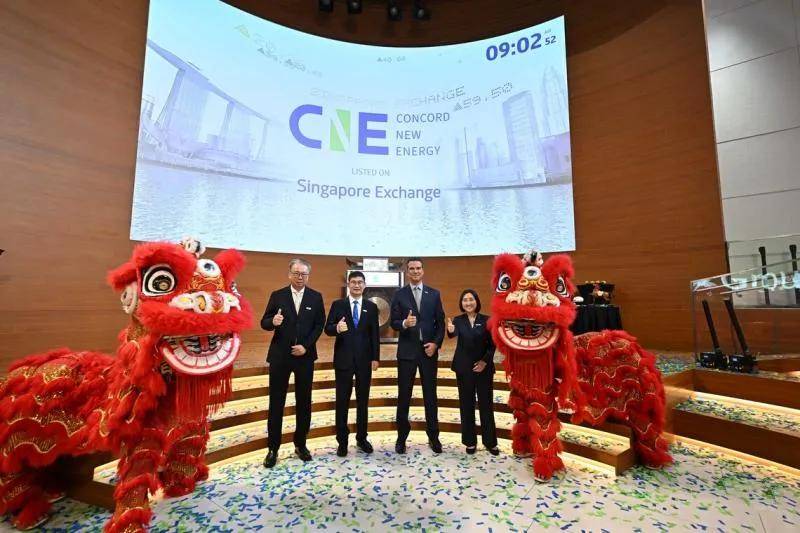
Core Viewpoint - The listing of Xiehe New Energy on the Singapore Exchange marks a strategic move for the company, aiming to enhance its international presence without raising new funds through this secondary listing [1][2]. Group 1: Company Overview - Xiehe New Energy, established in 1997, has relocated its headquarters to Singapore in 2023 and focuses on renewable energy, with wind power contributing 80% and solar power 15% to its revenue for the first half of the fiscal year 2025 [2]. - The company’s stock price rose by 9% on its debut at the Singapore Exchange, closing at 0.061 SGD, while its stock price fell by 1.47% on the Hong Kong Stock Exchange on the same day [1][2]. Group 2: Market Context - The Singapore Exchange has undergone significant regulatory changes, lowering the profit test threshold for mainboard listings from 30 million SGD to 10 million SGD, allowing more high-growth potential companies to list [4][5]. - The shift in regulatory focus from "audit-based" to "disclosure-based" is designed to reduce compliance costs for companies and provide investors with more information for decision-making [5]. Group 3: Strategic Importance of Singapore - Singapore serves as a crucial hub for the internationalization of Chinese companies, with over 100 Chinese enterprises having listed on the Singapore Exchange since 1997 [6]. - The cultural environment in Singapore, with a 70% Chinese population, facilitates easier adaptation for Chinese entrepreneurs, making it an ideal platform for expanding into Southeast Asia and global markets [6]. Group 4: Investor Landscape - The Singapore stock market is characterized by a dominant presence of institutional investors, managing over 60 billion SGD in assets, which provides stable long-term funding for companies like Xiehe New Energy [8][9]. - This investor base is particularly beneficial for renewable energy companies that require sustained financing [9]. Group 5: Listing Process and Costs - Companies can choose between two main paths for listing on the Singapore Exchange: the mainboard for mature companies and the Catalist board for high-growth companies without strict financial metrics [10]. - The Singapore Exchange offers a direct listing framework specifically for Chinese companies, streamlining the approval process and enhancing listing efficiency [10]. Group 6: Future Ambitions - The Monetary Authority of Singapore has announced plans to establish a "dual listing bridge" connecting the Singapore Exchange with NASDAQ, allowing eligible companies to list in both markets with a single set of offering documents [11][12]. - This initiative aims to facilitate access to capital and liquidity for companies with Asian backgrounds and global ambitions, with a target launch in mid-2026 [11][12][13].

机构市比散户市更“牛”
Bei Jing Shang Bao· 2025-08-25 16:06
Group 1 - The current market trend is driven by institutional investors rather than retail investors, indicating a more rational and sustainable investment decision-making process [1][2] - A-share market indices have shown significant movement, with the Shanghai Composite Index approaching 3900 points and trading volume exceeding 3 trillion yuan, highlighting the characteristics of an institutional market [1] - The fundamental difference between institutional and retail markets lies in investment philosophy, with institutions focusing on macro policy research and industry trends, leading to clear investment logic [1][2] Group 2 - Core investment targets in the current market include high-dividend assets like bank stocks and new productivity companies represented by chip stocks, reflecting a re-evaluation of quality assets amid an "asset shortage" [1][2] - The market capitalization changes of individual stocks, such as the dominance of major banks and the increasing share of hard-tech companies, illustrate the mainstream investment logic of the institutional market [1] - Institutional investors are characterized by long-term funding sources and strict risk control models, favoring value investment and long-term holding strategies, which contributes to the stability of major indices [2] Group 3 - The institutional market provides opportunities for traditional industries to transition by investing in emerging sectors, enhancing capital efficiency and supporting industry upgrades [3] - The ongoing optimization of market resource allocation favors technology assets, benefiting both primary and secondary markets within the technology industry [3] - The process of "institutionalization" in the A-share market is accelerating, with a preference for a "slow bull" market rather than a "fast bull," positioning the institutional market as the optimal choice [3]
【西街观察】机构市比散户市更“牛”
Bei Jing Shang Bao· 2025-08-25 12:43
Core Viewpoint - The current market trend is driven by institutional investors rather than retail investors, indicating a more rational and sustainable investment approach [1][2][3] Group 1: Market Characteristics - The A-share market is experiencing a significant rally, with the Shanghai Composite Index approaching 3900 points and trading volume exceeding 3 trillion yuan [1] - There is a clear distinction between institutional and retail markets, with institutional investors focusing on macro policies and industry trends, leading to a more defined investment logic [1][2] - The current market features two main categories of core assets: high-dividend bank stocks and chip stocks representing new productive forces [1] Group 2: Investment Behavior - Institutional investors dominate with long-term capital, adhering to strict risk control and investment discipline, favoring value investment and long-term holdings [2] - Retail investors tend to engage in speculative trading, leading to significant volatility and a lack of sustainable performance in the market [2] - The performance of small-cap and underperforming stocks has lagged behind the broader market, indicating a shift towards more institutional-like investment strategies [2] Group 3: Capital Market Dynamics - The institutional market provides opportunities for traditional industries to transition by investing in emerging sectors, enhancing capital efficiency [3] - The optimization of market capital allocation favors technology assets, benefiting both primary and secondary markets in the tech industry [3] - The process of "institutionalization" in the A-share market is accelerating, supported by policy guidance and market choices, promoting a "slow bull" rather than a "fast bull" market [3]