杀猪盘诈骗

Search documents
美 DC 反诈专案组累计冻结扣押超 5.8 亿美元涉“杀猪盘”加密资产
Xin Lang Cai Jing· 2026-02-27 15:22
Core Insights - The newly established "Fraud Center Strike Force" in Washington D.C. has frozen or seized over $580 million in cryptocurrency assets linked to Southeast Asian "pig butchering" scam networks [1] - These networks primarily operate in Myanmar, Cambodia, and Laos, using social engineering tactics to lure victims into purchasing cryptocurrency and directing them to fraudulent investment websites and applications [1] - The prosecutors have stated their intention to pursue asset forfeiture legally and aim to return the funds to the victims as much as possible [1]
“350克黄金还在,我的手都在抖!”
Huan Qiu Shi Bao· 2026-02-05 06:53
Core Viewpoint - The article highlights a recent case of telecom network fraud in Wuxi, Jiangsu, where a woman was about to deliver 350 grams of gold for a fraudulent investment scheme, emphasizing the importance of police intervention in preventing such scams [1][6][10]. Group 1: Fraud Mechanisms - The fraud involved a "pig butchering" scheme where the perpetrator posed as a CEO of a listed company, enticing the victim into a seemingly profitable investment project [7][9]. - The scammer encouraged the victim to download an investment app, promising quick returns, which led the victim to believe in the legitimacy of the investment [7][10]. - The fraudster used tactics such as creating a sense of urgency and claiming high profits while emphasizing the need for secrecy in the investment process [9][10]. Group 2: Police Intervention - The police acted swiftly to intercept the victim before she could complete the transaction, successfully safeguarding the 350 grams of gold [9][10]. - Following the intervention, the police provided educational outreach to the victim, helping her recognize the fraudulent nature of the scheme [10]. Group 3: Warning Signs and Prevention - The article outlines several warning signs of investment fraud, including requests for large cash or gold deliveries under various pretexts, such as "paying fees" or "investing" [10][11]. - It advises businesses and delivery services to be vigilant when handling large orders of valuable items, especially if the details are vague or the behavior of the sender is suspicious [11]. - The police encourage immediate reporting of suspicious activities to authorities to aid in fraud prevention efforts [11].


网恋女友“离世”,遗产指定给男友……香港破获新型“杀猪盘”
Mei Ri Jing Ji Xin Wen· 2026-02-03 22:30
Group 1 - The article discusses a scam operation in Hong Kong known as "killing pig" scam, where victims are deceived into believing they are in a relationship with a fictitious person, leading to financial losses totaling 44 million HKD over 16 months [1] - A police operation named "Mou Gong" resulted in the arrest of 682 suspects involved in various crimes, including fraud and money laundering, with a total amount of 620 million HKD involved in 580 cases [3] - The scam group operated from an office disguised as a live-streaming company, using fake profiles on dating apps to lure victims, while the actual conversations were conducted by male members of the group [5] Group 2 - The scam group utilized a sophisticated money laundering operation, involving over 200 bank accounts and cryptocurrency platforms to clean the illicit funds, making it difficult for law enforcement to trace the money [6] - The police discovered significant assets during the operation, including 1 million HKD in cash, luxury watches, fine wines, and jewelry valued over 6 million HKD [5] - The money laundering group had been active since October 2024, assisting the scam group in cleaning 44 million HKD of criminal proceeds [9]
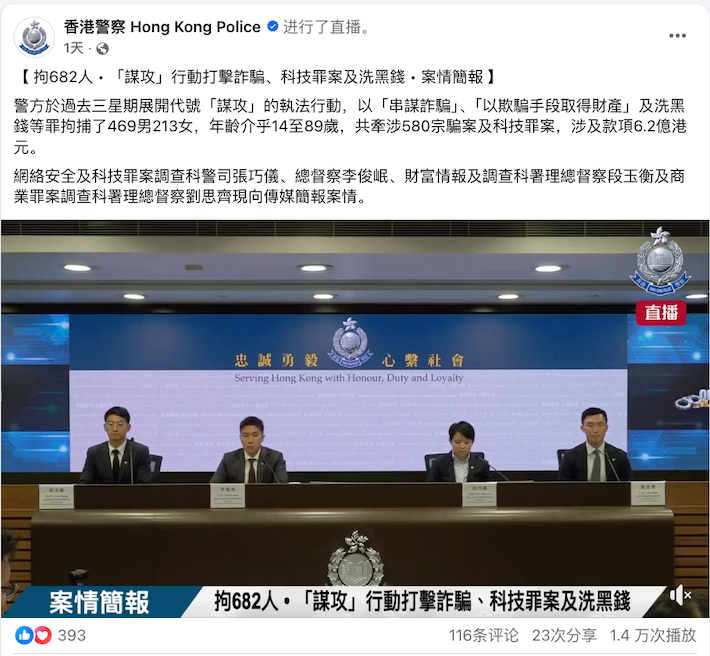
网恋女友“离世”,有遗产指定给男友……香港破获新型“杀猪盘”,314人被骗4400万港元,有人还被骗两次
Mei Ri Jing Ji Xin Wen· 2026-02-03 16:20
Group 1 - A new type of scam known as "pig butchering" has defrauded 314 victims in Hong Kong over the past 16 months, resulting in a total loss of 44 million HKD [1] - The scam involves victims being manipulated into believing they are in a relationship with a fictitious young woman, leading to financial exploitation through fake inheritance claims [1] - Victims are subjected to a second round of fraud, where scammers impersonate law enforcement to extract additional fees under the pretense of recovering lost funds [1] Group 2 - Hong Kong police recently conducted an operation named "Mou Gong," resulting in the arrest of 682 suspects linked to various crimes, including fraud and money laundering, with a total value of 620 million HKD involved [3] - The police dismantled the "online romance" scam group and a related money laundering operation, arresting 11 individuals, including key members of the scam [3][5] - The scam group operated from an office disguised as a legitimate business, using fake identities on dating apps to lure victims, while a male member of the group communicated with victims [5] Group 3 - The money laundering operation utilized over 200 bank accounts to transfer illicit funds, employing fake identities to open accounts on overseas cryptocurrency platforms for laundering purposes [6] - The laundering process involved multiple layers of transactions, combining physical and virtual currencies, making it difficult for law enforcement to trace the funds [6] - Since December of the previous year, the money laundering group has assisted the scam group in laundering 44 million HKD in criminal proceeds [9]
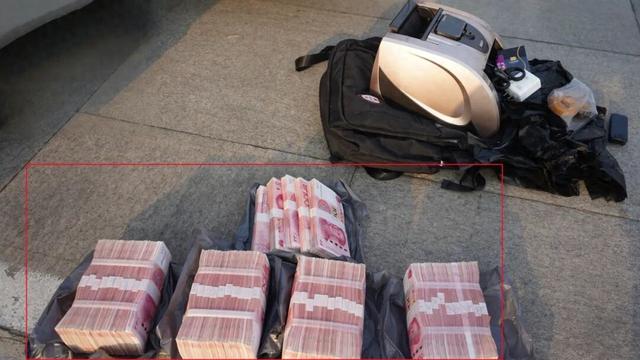
两名“车手”直播取款过程,被警方当场抓获!
Xin Lang Cai Jing· 2026-01-31 13:19
Core Insights - The article highlights a successful police operation in Dongying, Shandong Province, where authorities intercepted 450,000 yuan (approximately 67,000 USD) from a victim of a "pig-butchering" scam, leading to the arrest of two individuals acting as "runners" for the scammers [1][10]. Group 1: Scam Operation Details - Scammers utilized portable live-streaming cameras to monitor and direct the "runners" during the withdrawal and transfer of funds, allowing them to maintain control over the operation [1][7]. - The "runners" were instructed to place live-streaming cameras on their bodies and in their vehicles to ensure real-time interaction with the scammers, who could quickly sever communication if they sensed police intervention [1][7]. - After successfully withdrawing the funds, the "runners" were directed to deposit the money into various bank accounts and purchase virtual currencies, facilitating rapid fund dispersal [1][10]. Group 2: Victim's Experience - The victim, identified as Ms. Zhao, was lured into the scam through a romantic relationship with an individual posing as a high-ranking executive, who manipulated her into making significant investments under the guise of guaranteed returns [3][5]. - Zhao initially invested 100,000 yuan (approximately 15,000 USD) in gold and later transferred an additional 450,000 yuan (approximately 67,000 USD) based on the scammer's assurances of daily returns [3][4]. Group 3: Police Response and Prevention - The police received an alert about Zhao's large cash withdrawal and quickly identified her as a victim of the "pig-butchering" scam, leading to a coordinated response to prevent the transfer of funds [4][5]. - The operation involved collaboration between cybercrime units and anti-fraud centers, showcasing an effective model for combating telecom and online fraud by integrating online and offline strategies [10]. - In 2025, the Dongying police successfully intercepted over 6 million yuan (approximately 900,000 USD) and 1,240 grams of gold through similar operations, demonstrating the effectiveness of their approach [10].
男子曝姐姐被困缅甸新园区近一年半:每天工作18小时,完不成任务就挨打
Xin Lang Cai Jing· 2026-01-30 06:15
Core Viewpoint - A man is seeking help for his sister, who has been trapped in a new scam park in Myanmar for over a year and a half, where she is forced to work 18 hours a day under threat of violence [1] Group 1: Situation Overview - The Myanmar government has announced the demolition of all illegal buildings used for telecom fraud and gambling in the KK scam park, but a larger and more secretive new park, "Qingsong Park," has been under construction for a year, capable of accommodating 3,000 people [1] - The sister, referred to as "Xiaoqin," was lured to Thailand for a high-paying job but was instead taken to Myanmar, where she has been held captive and forced into scam operations [1] Group 2: Personal Impact - Xiaoqin's family is in a difficult financial situation, with her father suffering from mental illness and requiring constant care, while her mother and brother work outside the home with limited savings [1] - The family has considered paying a ransom to secure her release, but the demands are high, with intermediaries asking for 150,000 yuan (approximately 22,000 USD), which the family cannot afford [1] Group 3: Operational Details - Inside the park, Xiaoqin is coerced into participating in "pig butchering" scams, where she must work long hours to add potential victims through various social media platforms [1] - The scale of the park has reportedly expanded from around 1,000 to approximately 3,000-4,000 people, indicating a growing operation [1]
网恋男友要买官?复合型电诈骗局又升级!
Xin Lang Cai Jing· 2026-01-30 06:14
Group 1 - The article discusses a complex scam involving a fraudster who deceived a woman into believing he was a high-ranking official, claiming he needed money to secure a police position [1][5] - The scammer initially built trust through romantic interactions on a video platform, eventually fabricating a story about spending 860,000 yuan to "buy" a police deputy position and requesting an additional 160,000 yuan [1][3] - The police identified this case as a combination of "pig-butchering" scams and extortion, highlighting the elaborate nature of the fraud [5] Group 2 - The police emphasized that scammers often create sophisticated online identities to gain victims' trust, leading to financial exploitation through various schemes such as investment or job promotions [7] - Recent trends in telecom fraud show that scammers are continuously updating their tactics, using absurd narratives like "paying for official positions" to exploit individuals' unfamiliarity with public service selection processes [7][9] - Authorities reiterated that promotions within the civil service follow strict regulations and cannot be secured through informal means, urging individuals to seek help from law enforcement when encountering such situations [9]

部分线上交友平台乱象调查
Xin Lang Cai Jing· 2026-01-21 17:29
Core Viewpoint - The rise of online dating platforms among young people is driven by the need for efficient emotional matching and lower trial costs, but it also brings risks such as scams and safety concerns due to the anonymity of users [1][4][8]. Group 1: Online Dating Trends - Young people are increasingly using online platforms for emotional connections, with features like voice chat and live interactions becoming popular [2][3]. - The average age of first marriage in China is 29.38 years for men and 27.95 years for women, indicating a shift in dating dynamics and increased reliance on online platforms due to limited offline social circles [2][3]. - Users appreciate the ability to filter potential matches based on specific criteria, which empowers them to take a more active role in their dating lives [3]. Group 2: Risks and Challenges - The prevalence of scams, such as "pig butchering" schemes, highlights the risks associated with online dating, where users may be manipulated into financial loss [5][6]. - Some platforms have mechanisms that encourage users to engage in deceptive practices, such as sending automated messages under the guise of genuine interest, leading to a loss of trust [6][8]. - The lack of effective age verification and user identity checks exposes minors to potential dangers, raising concerns about their safety in online dating environments [7][9]. Group 3: Regulatory Recommendations - There is a call for stronger regulatory measures, including mandatory real-name verification and improved information auditing to protect users from fraud and enhance platform accountability [8][9]. - Platforms should be encouraged to provide value-driven interactions rather than profit-driven models that exploit users' emotional needs [8][9]. - A proposal exists to create public welfare-oriented dating platforms to mitigate the risks associated with commercialized dating services [9].
完美男友?温柔陷阱!
Xin Lang Cai Jing· 2026-01-21 10:20
Core Insights - The article highlights the increasing prevalence of online scams, particularly those involving fraudulent romantic relationships, where scammers create false identities to exploit victims emotionally and financially [2][3][4] Group 1: Case Studies of Scams - A woman in Hangzhou was targeted by a scammer posing as a successful engineer who promised to transfer 8 million yuan for a joint home purchase, requiring her to pay a 5,000 yuan "fee" first [2][3] - The police intervened after detecting suspicious activity, but the victim initially refused to believe she was being scammed, demonstrating the emotional manipulation involved [2][4] - Another victim, a woman in Shanghai, was approached by someone claiming to be a neighbor, leading to a relationship where she eventually lost 680,000 yuan after being convinced to invest in a fraudulent platform [5][7] Group 2: Scamming Techniques - Scammers often use detailed scripts to build trust with victims, including sharing personal stories and creating a false sense of intimacy [8][12] - The "six-step" process of scams includes finding targets, gaining trust, encouraging investments, and ultimately disappearing after the victim has invested significant amounts [10][11][13][14][15] - Scammers frequently use obscure chat applications to maintain communication, creating a false sense of security and exclusivity around their investment opportunities [8][9]

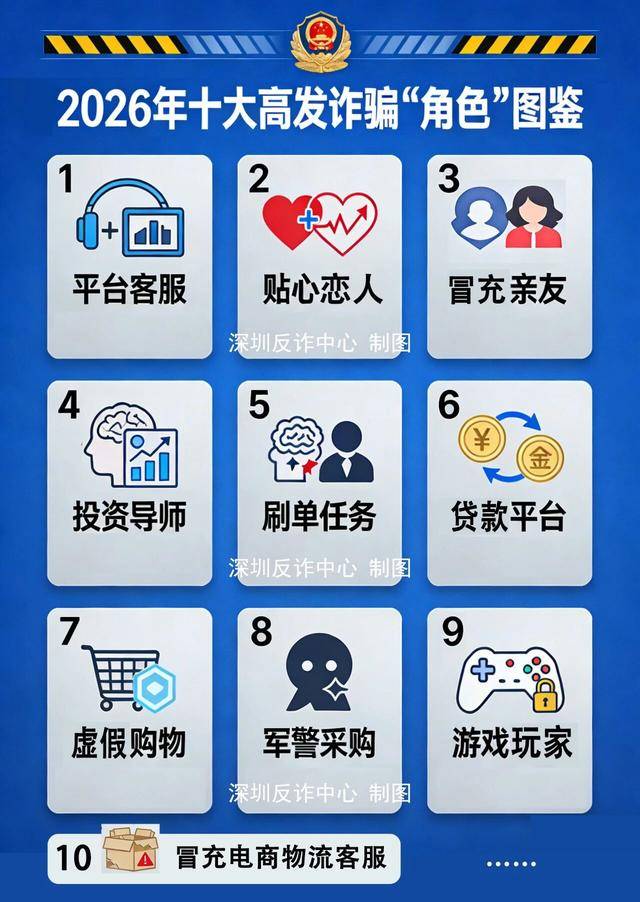
一线城市高发!骗子最喜欢扮演这10种人
Sou Hu Cai Jing· 2026-01-20 11:40
Core Viewpoint - The Ministry of Foreign Affairs has issued a warning about scammers impersonating the "12308 consular protection hotline," urging the public to be cautious and verify any suspicious calls [1] Group 1: Types of Scams - Impersonation of "Platform Customer Service" is one of the most common scams, where scammers pose as customer service representatives from platforms like Douyin, WeChat, and Alipay, threatening automatic charges to induce victims to share personal information and download malicious software [3] - Scammers impersonate "Close Lovers" or "Successful Individuals," using emotional manipulation to build trust before leading victims to fraudulent investment opportunities, commonly known as "pig-butchering" scams [4] - Impersonation of "Leaders, Friends, or Weibo Contacts" involves scammers using stolen social media accounts or AI-generated voices to request urgent money transfers under false pretenses [5] - Scammers posing as "Investment Mentors" or "Financial Experts" promote fake investment opportunities with promises of zero risk and high returns, often showcasing fabricated profit screenshots [6] - "Order Brushback" scams involve victims being lured into completing tasks for refunds, only to be manipulated into making larger investments under false pretenses [7] - Impersonation of "Loan Platforms" or "Credit Institutions" involves scammers claiming to help with credit issues or loan approvals, demanding upfront fees that are never legitimate [8] - Scammers post "Fake Shopping" or "Special Ticket Offers" on second-hand platforms, enticing victims to conduct transactions outside of secure platforms [9] - Impersonation of "Military or Police Personnel" involves scammers posing as officials to solicit payments for fake procurement needs [10] - Scammers masquerade as "Game Players" or "Game Customer Service," enticing victims with offers related to in-game transactions that lead to further scams [11] - Impersonation of "E-commerce Logistics Customer Service" involves scammers claiming issues with products and offering refunds to extract money from victims [12]