投资诈骗

Search documents
邮寄电饭煲藏2块金条被拦截 女子将80克黄金藏电饭锅寄给网友
Xin Lang Cai Jing· 2026-02-08 13:24
Core Viewpoint - The article highlights a recent case of fraud involving a woman who was lured into mailing gold hidden in a rice cooker, emphasizing the risks associated with online investment schemes and the importance of police intervention in preventing such scams [1] Group 1: Fraud Cases - A woman in Nanjing was intercepted by police while mailing a rice cooker that contained two gold bars worth nearly 100,000 yuan (approximately 14,000 USD) [1] - The woman, identified as Zhang, was persuaded by an individual claiming to be a high-ranking executive at a securities company to send approximately 80 grams of gold as part of a high-return investment scheme [1] - Another case involved a woman who was instructed by an online investment teacher to deliver 50,000 yuan (approximately 7,000 USD) in cash to a garbage station [1] Group 2: Police Warnings - Police have issued warnings that any requests for sending cash or gold through offline methods are indicative of scams [1] - The article advises vigilance against high-return investment schemes and cash-back fraud tactics [1]
手机不是“提款机” 这些套路要看清(服务窗)
Ren Min Ri Bao· 2026-02-06 02:31
Core Viewpoint - The article highlights the increasing prevalence of financial scams targeting the elderly, particularly during the festive season, and emphasizes the need for awareness and protective measures against such fraudulent schemes. Group 1: Types of Scams - A typical case involves an elderly man who was persuaded to withdraw 130,000 yuan for a high-yield investment project, which turned out to be a scam [1][2] - Another case involved a fraudulent elderly care investment scheme where 95 elderly individuals were defrauded of nearly 7 million yuan under the guise of purchasing care beds with guaranteed returns [3] - A social media scam targeted an elderly woman who lost over 200,000 yuan to a con artist posing as a wealthy investor, showcasing the emotional manipulation involved in such scams [5] Group 2: Warning Signs and Advice - Authorities warn that investment apps and internal investment groups are often traps designed to lure victims with promises of high returns [2] - The article advises elderly individuals to be cautious of offers that seem too good to be true, such as guaranteed high returns on investments, and to consult family members before making financial decisions [3][4] - It is recommended that elderly individuals limit their social media activity and protect personal information to avoid falling victim to scams [6] Group 3: Preventive Measures - The article outlines common scam tactics, including fake loan offers, investment schemes, and phishing attempts, urging individuals to remain vigilant [7][8] - It emphasizes the importance of not clicking on suspicious links or providing personal information to unknown contacts [9][10] - The article suggests installing anti-fraud apps and reporting any suspicious activity to authorities promptly [12]
手机不是“提款机” 这些套路要看清
Xin Hua Wang· 2026-02-05 23:41
Core Insights - The article highlights the increasing prevalence of financial scams targeting the elderly as the year-end approaches, emphasizing the need for awareness and protection against various fraudulent schemes [1][2]. Group 1: Types of Scams - A typical scam involves promising high returns on investments, where victims are lured into withdrawing large sums of money for "high-yield investment projects" that ultimately lead to financial loss [1][2]. - Another scam involves fraudulent retirement home investments, where individuals are promised guaranteed returns and premium services, but the reality is that the companies are not legally compliant and have financial issues [3]. - Emotional scams are also prevalent, where scammers pose as caring individuals on social media to build trust before leading victims into investment schemes, resulting in significant financial losses [4][5]. Group 2: Warning Signs and Advice - Authorities warn that terms like "stable, high-yield, high-return" are common phrases used in investment scams, and individuals should be cautious of unknown investment apps and groups [2][3]. - It is advised that elderly individuals should consult family members before making any financial decisions, especially those involving investments [3]. - The article suggests that individuals should be wary of unsolicited messages and interactions on social media, as they can lead to scams [5]. Group 3: Prevention Strategies - The article outlines several strategies to prevent falling victim to scams, including avoiding clicking on suspicious links, not sharing personal information, and being skeptical of offers that seem too good to be true [6][7][8]. - It emphasizes the importance of using official channels for reporting scams and seeking help, such as contacting local authorities or using dedicated anti-fraud hotlines [2][10].
奶粉罐里藏黄金 搜索记录暴露投资骗局
Yang Shi Xin Wen Ke Hu Duan· 2026-02-04 07:02
Core Insights - The article highlights a case of investment fraud where a woman, Ms. Fan, was misled into sending 80 grams of gold hidden in a milk powder can to a scammer under the pretense of an investment opportunity [2][3][4]. Group 1: Fraud Detection and Prevention - Police received a fraud alert and intervened when they noticed Ms. Fan's unusual search history related to hiding gold in milk powder cans and money laundering [2][3]. - Upon investigation, the police found that Ms. Fan had downloaded a fake investment app and was instructed by a scammer to send gold to "exchange for profits" [4][5]. Group 2: Characteristics of Investment Scams - The article describes common tactics used in investment scams, such as enticing victims with small returns to lower their guard and encouraging them to send valuable items under the guise of investment [5][6]. - It warns that any request for valuable items under the pretext of "investment," "guarantee," or "collateral" is likely a scam [4][5].
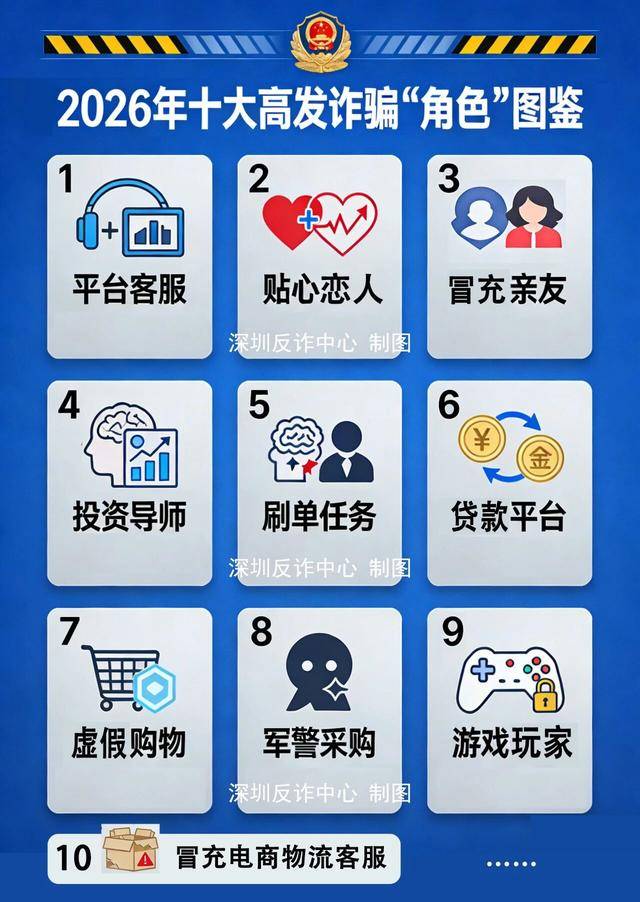
一线城市高发!骗子最喜欢扮演这10种人
Sou Hu Cai Jing· 2026-01-20 11:40
Core Viewpoint - The Ministry of Foreign Affairs has issued a warning about scammers impersonating the "12308 consular protection hotline," urging the public to be cautious and verify any suspicious calls [1] Group 1: Types of Scams - Impersonation of "Platform Customer Service" is one of the most common scams, where scammers pose as customer service representatives from platforms like Douyin, WeChat, and Alipay, threatening automatic charges to induce victims to share personal information and download malicious software [3] - Scammers impersonate "Close Lovers" or "Successful Individuals," using emotional manipulation to build trust before leading victims to fraudulent investment opportunities, commonly known as "pig-butchering" scams [4] - Impersonation of "Leaders, Friends, or Weibo Contacts" involves scammers using stolen social media accounts or AI-generated voices to request urgent money transfers under false pretenses [5] - Scammers posing as "Investment Mentors" or "Financial Experts" promote fake investment opportunities with promises of zero risk and high returns, often showcasing fabricated profit screenshots [6] - "Order Brushback" scams involve victims being lured into completing tasks for refunds, only to be manipulated into making larger investments under false pretenses [7] - Impersonation of "Loan Platforms" or "Credit Institutions" involves scammers claiming to help with credit issues or loan approvals, demanding upfront fees that are never legitimate [8] - Scammers post "Fake Shopping" or "Special Ticket Offers" on second-hand platforms, enticing victims to conduct transactions outside of secure platforms [9] - Impersonation of "Military or Police Personnel" involves scammers posing as officials to solicit payments for fake procurement needs [10] - Scammers masquerade as "Game Players" or "Game Customer Service," enticing victims with offers related to in-game transactions that lead to further scams [11] - Impersonation of "E-commerce Logistics Customer Service" involves scammers claiming issues with products and offering refunds to extract money from victims [12]

女子取240万元“给外甥当彩礼”,外甥蒙了:根本没对象!
Xin Lang Cai Jing· 2026-01-11 15:10
Core Insights - A woman in Taizhou, Zhejiang attempted to withdraw 2.4 million yuan for her nephew's wedding, raising suspicions among bank staff who alerted local anti-fraud police [1] - The police investigation revealed that the woman's nephew was unaware of any engagement, indicating a potential scam [1] Group 1 - The woman was convinced by a "friend" to withdraw cash for a "high-return investment" to be handed over to a "special person" [3] - After extensive persuasion by police over five hours, the woman finally acknowledged she had been scammed [3] - The police set a trap for the scammer, leading to the arrest of a man who was part of the fraud ring, successfully recovering the 2.4 million yuan [3] Group 2 - Authorities warn the public to be cautious of any requests for large cash withdrawals or offline payments for investments, advising verification before proceeding [4] - The police encourage individuals to ask more questions and verify information, and to contact emergency services if necessary [4]
女子取240万“给外甥当彩礼”,民警苦劝5小时
Xin Lang Cai Jing· 2026-01-10 15:25
Group 1 - A woman in Taizhou, Zhejiang, almost fell victim to a scam involving a request to withdraw 2.4 million yuan for her nephew's wedding expenses [1][3] - Bank staff noticed inconsistencies in the woman's story, leading them to suspect she was being scammed, prompting them to alert local police [3][4] - After extensive discussions with the woman, police confirmed that her nephew had no engagement and was unaware of the situation, leading to a successful intervention [3][4] Group 2 - The police decided to let the woman continue communicating with the scammer, which led to the arrest of a man who was part of the scam operation, responsible for collecting the cash [4] - The operation successfully prevented the loss of 2.4 million yuan, highlighting the importance of vigilance against large cash withdrawals for investments [4][6] - Authorities advise the public to be cautious of any requests for large cash withdrawals or offline payments for investments, recommending verification before proceeding [6]
I took my friend’s advice to invest my $180K nest egg in a foreign savings firm. All my money is gone. What can I do?
Yahoo Finance· 2026-01-10 13:00
Core Insights - Investment scams in the U.S. are increasing, with a reported 25% rise in losses from 2023 to 2024, totaling $5.7 billion lost by consumers last year [1] Group 1: Scam Mechanisms - Investment scams lure victims by promising high returns on unique opportunities that are often presented as exclusive [4][6] - Scammers utilize various tactics, including advertisements, free events, and financial advice, to capture attention and build trust [6] - The actual investments can range from cryptocurrencies to real estate, with scammers often showcasing fabricated success stories to entice further investment [7] Group 2: Case Study - A specific case illustrates the risk: Michael, a 46-year-old warehouse supervisor, lost nearly $180,000 after being convinced by a friend to invest in a foreign firm promising double-digit returns [2][3] - The firm later faced liquidity issues and collapsed, revealing that it had engaged in high-risk, unregulated investments [3] Group 3: Regulatory Response - The FTC is actively monitoring evolving scam tactics and is committed to protecting consumers from fraud [5]
太子集团陈志被押解回国!太子银行进入清算程序:停止新增业务,贷款人仍需按时还款
Mei Ri Jing Ji Xin Wen· 2026-01-08 10:14
Group 1 - Chen Zhi, the head of a major cross-border gambling and fraud crime syndicate, was successfully repatriated from Cambodia to China with the support of Cambodian authorities [1] - The crime syndicate is suspected of multiple offenses including operating casinos, fraud, illegal business operations, and concealing criminal proceeds [1] - The Chinese Ministry of Public Security plans to publicly announce the first batch of wanted members of Chen Zhi's crime group and urges criminals to surrender for leniency [1] Group 2 - Prince Bank, one of Cambodia's largest commercial banks, is undergoing liquidation following a loss of public trust due to sanctions imposed by the UK and US on the Prince Group [2] - The Cambodian National Bank has appointed Morison Kak & Associates to oversee the liquidation process, which includes halting all new banking operations and account openings [2] - Customers with existing accounts can still withdraw funds, but must continue to meet their loan repayment obligations [2] Group 3 - The Prince Group has been accused by US authorities of large-scale investment fraud and money laundering, with a request to seize approximately $15 billion in Bitcoin assets held by Chen Zhi [3] - Following sanctions from the US and UK, other countries, including South Korea, have begun investigations into the Prince Group's activities [4] - South Korean banks have frozen assets related to the Prince Group, with transactions exceeding 197 billion Korean Won (approximately 1.5 million USD) reported [4] Group 4 - Singaporean authorities have seized six properties and other financial assets belonging to Chen Zhi and the Prince Group, valued at over 1.5 million Singapore Dollars (approximately 8.2 million RMB) [4]
现场视频:太子集团陈志被押解回国!太子银行进入清算程序:停止新增业务,贷款人仍需按时还款
Mei Ri Jing Ji Xin Wen· 2026-01-08 09:54
Group 1 - Chen Zhi, the founder of Prince Group, was apprehended and repatriated to China for leading a major cross-border gambling and fraud syndicate [1] - The Cambodian authorities have initiated legal actions against Chen Zhi and his associates, with plans to publicly pursue the group's key members [1] - Prince Bank, one of Cambodia's largest commercial banks, is undergoing liquidation due to a loss of public trust following sanctions from the UK and US governments [3][5] Group 2 - The Cambodian National Bank has appointed Morison Kak & Associates to oversee the liquidation process of Prince Bank, halting all new banking operations [5] - Following the sanctions, the Prince Group is accused of large-scale investment fraud and money laundering, with US authorities seeking to confiscate approximately $15 billion in Bitcoin assets held by Chen Zhi [5] - South Korean banks have frozen assets related to the Prince Group, with transactions exceeding 197 billion KRW (approximately 1.5 million USD) reported [7] Group 3 - In Singapore, authorities have seized six properties and other financial assets belonging to Chen Zhi and the Prince Group, valued at over 1.5 million SGD (approximately 8.2 million RMB) [10] - The Prince Group has publicly denied all allegations, claiming the investigations are baseless and questioning the motives behind the asset confiscation [5]