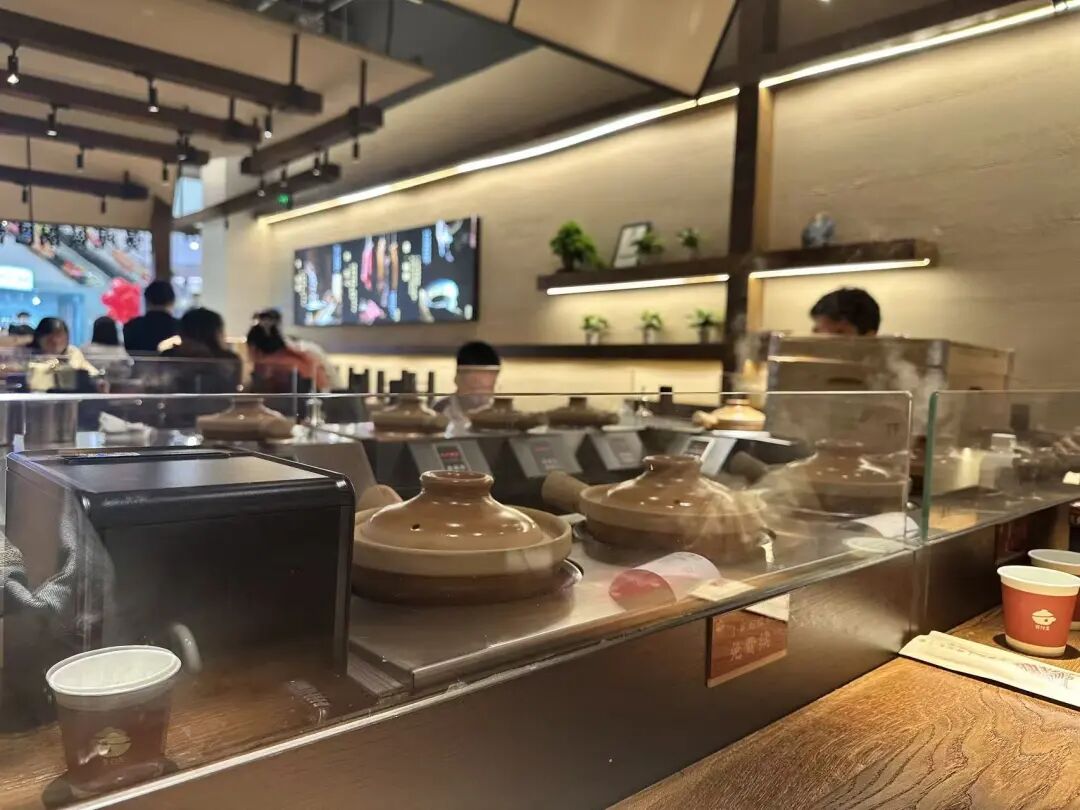
板前模式

Search documents
汉堡肉搭配米饭的日系快餐,为什么可以在国内迅速开店?|声动早咖啡
声动活泼· 2026-03-13 10:08
Core Viewpoint - The article discusses the rapid expansion and unique business model of "Meat Rice," a restaurant chain that combines hamburger patties with rice, which has gained popularity in China and is backed by the Japanese company, Monogatari Group [4][5]. Expansion and Market Strategy - "Meat Rice" opened its first store in Shanghai in 2022 and has since expanded to 67 locations across 35 cities in China, including major cities like Beijing and Hong Kong, as well as international markets like Thailand and Singapore [3][4]. - The peak daily table turnover rate for "Meat Rice" reached 22 times, indicating high customer demand and operational efficiency [3][4]. - Monogatari Group aims to triple its overseas store count by 2030 and increase overseas sales from 4% to 14% of total revenue, with "Meat Rice" being a key driver of this growth [5]. Unique Business Model - "Meat Rice" was developed specifically for the overseas market, differing from Monogatari Group's traditional Japanese restaurant models [5]. - The restaurant offers a unique dining experience with a focus on affordability, featuring a price point of around 70 yuan per meal, while maintaining a sense of ceremony through on-site cooking [6][8]. - The menu is simplified to a single meal structure of "hamburger patty + rice + soup + broccoli," which streamlines operations and reduces complexity in the kitchen [8]. Consumer Engagement and Trust - The restaurant emphasizes transparency in its food preparation process, showcasing fresh ingredients and cooking methods to build consumer trust, particularly regarding meat quality [6][9]. - The design of the restaurant space is optimized for efficiency, with a U-shaped bar and high seating capacity, allowing for a pleasant dining experience while maximizing space utilization [9]. Challenges and Market Position - Despite its success, "Meat Rice" faces challenges such as low barriers to entry for competitors and potential issues with customer retention as the novelty of the dining experience may wear off [10][11]. - The brand's focus on high-density urban areas may limit future expansion opportunities, although there is still potential for approximately 100 additional locations in China [11].


2025年餐饮行业热门赛道盘点报告
Hong Can Chan Ye Yan Jiu Yuan· 2026-03-05 01:30
Investment Rating - The report does not explicitly provide an investment rating for the restaurant industry in 2025 Core Insights - The restaurant industry in China is projected to reach a revenue of 5.8 trillion yuan in 2025, with a year-on-year growth of 3.2%. The growth rate is slowing down, indicating a shift from expansion-driven growth to a more rational focus on efficiency and quality [3][10] - Popular products in the restaurant sector are emerging rapidly, with items like butter rice cakes and corn egg tarts gaining significant traction on social media platforms [3][29] - Six major trends in restaurant models are identified, including "experience and scene innovation," "efficiency and cost optimization," and "social and value empowerment," which are reshaping consumer dining experiences [3][36] Summary by Sections Industry Overview - The restaurant industry is experiencing steady growth, with a focus on brand innovation and the emergence of popular concepts. The market is transitioning to a more rational growth phase, emphasizing efficiency and quality [5][10] - The revenue for limited-scale restaurants is expected to reach 1.63 trillion yuan, growing by 2.0% year-on-year [3][10] Popular Products - The report highlights a variety of trending products, including butter rice cakes, Thai milk tea, and stinky tofu hot pot, which have gained popularity through social media [3][29] - The peak popularity of certain products on platforms like Douyin (TikTok) has reached over 200 million views [29][30] Popular Models - Six key models are identified in the restaurant industry, including: - "Beautiful Rice" focusing on aesthetic presentation and social media appeal [37][39] - "Mountain Wild" emphasizing natural ingredients and a relaxed dining atmosphere [46][47] - "Store-in-Store" models that allow brands to test new concepts with lower risk [48][54] - "Large Store" models that shift focus from product sales to experiential and brand value [55][57] - "Board-Front" models that enhance consumer interaction through visible cooking processes [58][60] - "Self-Service" models that are expanding in various dining categories [61][63] Popular Categories - Strong growth is observed in categories such as black duck pot, Jiangxi stir-fry, and local noodle dishes, driven by supply chain advantages and consumer demand for regional flavors [3][64][66] - The Jiangxi stir-fry segment is particularly notable, with a 287.5% increase in related business registrations in 2025, indicating a shift towards standardization and branding [66][70] - The vegetarian food segment is also rapidly developing, with over 4,000 vegetarian restaurants and a market size of approximately 8 billion yuan by 2025 [71]
排队3小时,又一表演型餐饮爆火
36氪· 2026-02-12 00:00
Core Viewpoint - The article discusses the emerging "front-cooking model" in the restaurant industry, which enhances customer experience through transparency and interaction during food preparation, potentially becoming a significant trend in 2026 [8][20]. Group 1: Definition and Expansion of Front-Cooking Model - The front-cooking model originated from Japanese cuisine, where chefs prepare food in front of customers, allowing them to witness the cooking process [9]. - This model has expanded beyond high-end Japanese restaurants to various dining categories, including Chinese cuisine, fast food, and snacks, with multiple establishments adopting this format in cities like Guangzhou and Chengdu [10][15]. - Brands like "Bozai Huang" and "Gan Shi Ji" are implementing this model, with plans for significant expansion and transformation of their outlets to enhance customer engagement [13][16]. Group 2: Consumer Engagement and Emotional Value - The front-cooking model significantly enhances consumer engagement by making the cooking process visible, addressing modern consumers' desire for quality and emotional connection [22][23]. - This model aligns with the growing trend against pre-prepared meals, as consumers express a preference for fresh, visible cooking processes [22]. - The emotional value derived from direct interaction with chefs and the cooking process is a key selling point, moving beyond traditional restaurant experiences [23]. Group 3: Operational Efficiency and Challenges - The front-cooking model improves operational efficiency by allowing chefs to serve food directly to customers, reducing labor costs and increasing table turnover rates [26][27]. - However, the model presents challenges in terms of kitchen layout and staff training, requiring a high level of operational standardization and employee skill [31][33]. - The model is not universally applicable, as it may not suit large chains focused on efficiency, but rather is better for experiential flagship stores [36]. Group 4: Market Trends and Future Potential - The success of the front-cooking model may depend on broader market trends, such as the rise of the "one-person meal" market, which has yet to fully develop in China [40]. - As consumer preferences shift towards quality experiences, the front-cooking model could see significant growth if it aligns with changing dining habits [40]. - Ultimately, the model represents a shift in the restaurant industry towards prioritizing ingredient quality, craftsmanship, and customer experience [41].
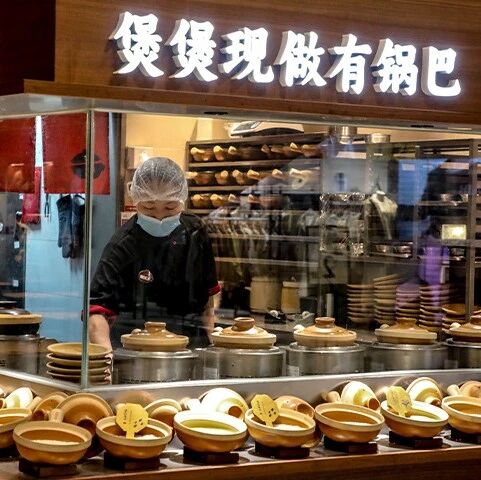
人均10+元,“板前快餐”席卷全国
3 6 Ke· 2025-12-08 12:13
Core Insights - The article discusses the rising popularity of the "板前" (front-of-counter) dining model in Chinese fast food, which is inspired by Japanese culinary practices and aims to enhance customer experience and operational efficiency [1][8]. Group 1: Market Trends - The "板前" model has been widely adopted across various fast food categories, with brands like "煲仔皇" and "捏捏虎" successfully implementing this approach to attract customers [2][4]. - In 2022, a surge in brands utilizing open kitchen concepts for items like hamburgers led to increased consumer interest and long queues in cities such as Shanghai and Guangzhou [2][4]. - "煲仔皇" plans to convert over 200 locations to the "板前" model within the next 18 months, highlighting the trend's potential for growth [4]. Group 2: Consumer Demand - The "板前" model addresses consumer desires for fresh ingredients and transparency in food preparation, allowing customers to witness the cooking process firsthand [9][11]. - The dining experience is enhanced by the visibility of food preparation, which builds trust and satisfaction among consumers [9][11]. - The model caters to the growing trend of solo dining, providing a comfortable environment for individuals without the need for shared tables [12][15]. Group 3: Operational Efficiency - The "板前" model improves table turnover rates by optimizing seating arrangements, allowing for higher customer throughput [12][15]. - By eliminating the need for waitstaff to deliver food from the kitchen, the model streamlines operations and enhances service speed [12][15]. - The design of the "板前" setup allows for better space utilization and a more efficient service process, which can lead to increased revenue [12][15]. Group 4: Challenges and Considerations - The shift to a "板前" model requires higher standards for hygiene and operational transparency, as kitchen practices are now visible to customers [17]. - The focus should remain on food quality and taste, rather than merely the novelty of the dining experience, to ensure customer retention and satisfaction [18][20]. - Brands must balance the appeal of the "板前" experience with consistent food quality and service efficiency to avoid potential pitfalls [20].