
核电重启

Search documents
试验故障!日本最大核电站重启搁浅,再次引发安全疑虑
第一财经· 2026-01-20 12:39
Core Viewpoint - Tokyo Electric Power Company (TEPCO) has abandoned the plan to restart the Kashiwazaki-Kariwa Nuclear Power Plant Unit 6 due to a malfunction during a control rod extraction test, which is a prerequisite for the reactor's restart [3][4][5] Group 1: Restart Controversy - The restart of the Kashiwazaki-Kariwa Nuclear Power Plant has sparked widespread attention and controversy in Japan, with local councils approving the restart but facing significant public opposition [7][8] - A budget of approximately 7.3 billion yen has been approved by the Niigata Prefectural Assembly to enhance safety measures, including communication facilities and earthquake risk monitoring systems [7] - Despite financial investments and safety assurances, about 60% of local residents believe the conditions for restarting the plant have not been met, and nearly 70% are concerned about TEPCO's operational capabilities [8] Group 2: Nuclear Energy Policy - As of January 14, 2026, 13 reactors across 7 nuclear power plants in Japan have resumed operation, while 20 reactors remain offline [9] - The Japanese government aims to increase the share of nuclear energy in the power structure from 8.5% in 2023 to 20% by 2040, indicating a consensus on the need to restart nuclear facilities [9] - Prime Minister Sanna Marin is a strong proponent of nuclear energy, advocating for the development of advanced nuclear technologies and the construction of next-generation nuclear reactors to achieve energy self-sufficiency [10] Group 3: Challenges Ahead - Japan faces challenges in managing spent fuel and nuclear waste, with ongoing projects for recycling nuclear fuel facing delays and local government skepticism regarding waste disposal sites [11]

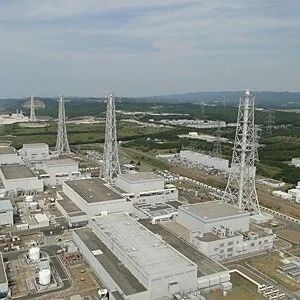
试验故障!日本最大核电站重启搁浅,再次引发安全疑虑
Di Yi Cai Jing· 2026-01-20 06:21
Core Viewpoint - Tokyo Electric Power Company (TEPCO) has postponed the restart of the Kashiwazaki-Kariwa Nuclear Power Plant Unit 6 due to a malfunction during a control rod withdrawal test, raising concerns among local residents about safety and operational capabilities [1][5]. Group 1: Restart Plans and Delays - TEPCO announced the delay of the restart originally scheduled for October 20, as a control rod withdrawal test revealed a failure in the anti-withdrawal function [1]. - The Kashiwazaki-Kariwa Nuclear Power Plant, with a total capacity of approximately 8.212 million kilowatts, is Japan's largest nuclear power plant and has been offline since 2012 following the Fukushima disaster [1]. Group 2: Local Sentiment and Opposition - Despite significant financial investments by the government and TEPCO, local residents remain skeptical about the safety of the nuclear plant, with protests occurring prior to the vote on its restart [5]. - A survey indicated that 60% of local residents believe the conditions for restarting the plant have not been met, and nearly 70% are concerned about TEPCO's operational capabilities [5]. Group 3: Government Support and Financial Commitments - The Niigata Prefectural Assembly approved a supplementary budget of approximately 7.3 billion yen to enhance safety measures and infrastructure for the nuclear plant's restart [4]. - TEPCO has committed to investing 100 billion yen in Niigata Prefecture over the next decade to gain local support for the plant's restart [4]. Group 4: Broader Energy Strategy - Japan's energy policy aims to increase the share of nuclear power from 8.5% in 2023 to 20% by 2040, with a noticeable acceleration in the restart of nuclear facilities [6]. - Prime Minister Sanna Takagi advocates for nuclear power as a means to reduce dependence on foreign energy and achieve carbon neutrality, with the restart of Unit 6 expected to enhance power supply capacity in the Tokyo area by approximately 2% [7].
算力之争,电力为王:聚焦美国AI能源革命核心赛道
GOLDEN SUN SECURITIES· 2025-12-03 08:22
Group 1: AI's Impact on US Electricity Demand - The overall electricity consumption growth rate in the US is relatively low, with a projected total electricity consumption of 41,104 billion kWh in 2024, reflecting a year-on-year increase of 2.5% [13] - The electricity elasticity coefficient for the US is expected to be 0.77 in 2024, indicating a long-term trend of decreasing energy consumption per unit of GDP, with a compound annual growth rate (CAGR) of only 0.38% from 2008 to 2024 [18] - The share of electricity consumption from data centers in the US has been increasing, reaching 4.4% in 2023, with a significant rise from 1.9% in 2018 [23] Group 2: Supply Side Dynamics - Natural gas is currently the primary source of electricity generation in the US, with a projected share of 43% in 2024, while coal and nuclear power are on a downward trend [29] - The installed capacity growth rates for various energy sources in 2024 are projected as follows: coal (-2.3%), natural gas (-0.2%), nuclear (2.9%), solar (34.1%), and wind (10.5%) [24] - Recent policies have shifted from supporting renewable energy to tightening regulations, particularly affecting solar and wind energy projects [36] Group 3: Future Projections for Data Center Electricity Demand - By 2028, US data center electricity consumption is expected to range between 325-580 TWh, accounting for 6.7%-12% of total US electricity consumption [42] - The compound annual growth rate for data center electricity demand in the US is projected to be around 23% from 2024 to 2030, with an expected total consumption of 606 TWh by 2030 [52] - The additional power capacity required for data centers by 2030 is estimated to be between 9-100 GW, depending on growth scenarios [58] Group 4: Regional Disparities and Challenges - Data centers are highly concentrated in states like Virginia, Texas, and California, leading to significant regional disparities in electricity load, with Virginia's data centers consuming 25.6% of the state's total electricity [71] - The current electricity supply system is a major source of data center outages, with power system failures accounting for 52% of global data center incidents [76] - The interconnection capacity of regional power grids in the US is insufficient to match the growing electricity load, particularly in the eastern regions driven by AI data centers [86]



南风股份(300004) - 300004南风股份投资者关系管理信息20250717
2025-07-18 10:35
Group 1: Company Overview and Financial Performance - The company has seen significant growth in the nuclear power sector, with revenue from this area accounting for 46.66% of total revenue in 2024, a year-on-year increase of 67.24% [1] - The gross margin for the nuclear power sector in 2024 is reported at 34.95%, while the gross margins for the industrial and civil construction, and subway tunnel sectors range between 20% and 30% [1] Group 2: Order Status and Market Outlook - The company currently has a substantial number of orders on hand and sufficient production capacity, actively participating in bidding for nuclear power projects [2] - It is anticipated that 6-8 nuclear power units will be approved for development in China each year, indicating a positive growth period for the nuclear sector [2] - The company has undertaken over 30 subway ventilation projects across major cities, highlighting a broad market outlook for subway infrastructure [2] Group 3: International Expansion and Strategic Plans - The company is exploring overseas business opportunities through a dual strategy of "partnering for overseas expansion" and "independent overseas expansion" [2] - Future updates on international ventures will be disclosed in compliance with regulatory requirements [2] Group 4: Shareholder Engagement and Profit Distribution - As of December 31, 2024, the company has negative distributable profits, which does not meet the conditions for profit distribution [3] - The company is considering the use of capital reserves to offset losses, in line with the latest Company Law regulations [3] Group 5: Subsidiary Developments - The subsidiary, Southern Additive, has been supported through a recent acquisition and capital increase to enhance its 3D printing services [4] - Southern Additive is currently executing a limited number of orders and is engaged in multiple rounds of sample testing for clients [4] Group 6: 3D Printing Service Characteristics - The 3D printing services offered by Southern Additive feature high design flexibility, rapid customization, high precision, and environmental friendliness, positioning the company well in a growing market [4] - The company is equipped to print with various materials, including titanium alloys, pure copper, stainless steel, and high-temperature alloys, aiming to capitalize on the expanding 3D printing market [4]
