
核能综合利用

Search documents
中国广核20260326
2026-03-26 13:20
Summary of China General Nuclear Power Corporation (CGN) Conference Call Company Overview - **Company**: China General Nuclear Power Corporation (CGN) - **Industry**: Nuclear Power Key Points Installed Capacity and Performance - By the end of 2025, CGN's operational and under-construction nuclear power capacity will reach 56.06 GW, a 58.6% increase from 2020 [2][3] - The average capacity factor of the 28 operational units is approximately 93%, achieving zero unplanned outages [2][4] Financial Performance - In 2025, CGN's revenue is projected to be approximately 75.697 billion RMB, with a net profit attributable to shareholders of about 9.765 billion RMB, impacted by a decline in market electricity prices [2][9] - The average debt financing cost decreased to 2.5%, down 53 basis points year-on-year [2][10] - The operating cash flow for 2025 is expected to be 94.034 billion RMB, a 4% decrease, while net cash flow from operating activities is projected to be 29.071 billion RMB, down 20.1% [9][10] Market Dynamics - The proportion of market-based electricity sales is expected to rise to 56.2% in 2025, with an average tax-inclusive electricity price of approximately 0.3531 RMB/kWh, a decrease of about 0.034 RMB/kWh [2][4] - The company plans to actively expand its market share by securing more electricity quotas through market strategies [4][6] Capital Expenditure and Dividends - Capital expenditure for 2025 is projected at 37.548 billion RMB, with an upward trend expected as construction peaks [2][11] - The dividend payout ratio for 2025 is approximately 44.47%, with a proposed dividend of 0.086 RMB per share, maintaining a stable and predictable dividend policy [2][4] Industry Trends and Future Outlook - The national plan aims to double nuclear power capacity to 110 GW by 2030, with CGN expected to secure approvals for at least 4 new units annually [2][3] - The company is focusing on technological innovation, including the HPR1,000 reactor design and the development of fourth-generation lead-cooled fast reactors [2][5][19] Environmental, Social, and Governance (ESG) Practices - In 2025, CGN's electricity generation is estimated to reduce carbon emissions by approximately 2.15 million tons [6][7] - The company emphasizes talent development and community engagement, integrating ESG principles into its strategic planning [6][7] Nuclear Fuel and Supply Stability - Despite rising uranium prices, CGN has sufficient uranium reserves and is implementing measures to ensure long-term supply stability, including expanding mining operations and utilizing market mechanisms [15][20] Regulatory and Policy Environment - The company is actively engaging in policy advocacy to recognize nuclear energy as a green energy source, which is crucial for market positioning and compliance with environmental standards [16][17] Future Challenges and Strategies - CGN anticipates challenges in financing due to the increasing capital expenditure required for new projects, but plans to leverage market conditions for favorable financing options [17][18] - The company is exploring diverse applications of nuclear energy, including heating and desalination, to enhance revenue streams [18][19] This summary encapsulates the critical insights from the conference call, highlighting CGN's operational performance, financial metrics, market strategies, and future outlook within the nuclear power industry.

中广核电力20260326
2026-03-26 13:20
Summary of China General Nuclear Power Corporation (CGN) Conference Call Industry Overview - The conference call focused on the nuclear power industry in China, particularly the developments and strategies of China General Nuclear Power Corporation (CGN) as it aligns with national energy goals and market dynamics. Key Points Installed Capacity and Targets - By the end of 2025, CGN aims to have an operational and under-construction installed capacity of 56.06 million kilowatts, with a projection to double this to 110 million kilowatts by 2030 [2][5] - The company has the resource reserve to approve four new units annually [2] Financial Performance - In 2025, CGN expects revenue of approximately 75.697 billion yuan, a year-over-year decrease of 4.11%, and a net profit attributable to shareholders of about 9.765 billion yuan, down 9.9% [2][14] - The decline in profit is attributed to a decrease in market electricity prices in Guangdong and Guangxi, with an average tax-inclusive electricity price dropping by 0.034 yuan per kilowatt-hour [2][9] Electricity Trading - Market-based electricity trading is projected to account for 56.2% of total electricity sales in 2025, an increase of 5.3 percentage points from the previous year [2][9] - The unified settlement price for Hongyanhe Nuclear Power is set at 0.3798 yuan per kilowatt-hour [2][17] Operational Efficiency - CGN achieved zero unplanned outages across its 28 operational units, with an average utilization hour of 7,767 hours [2][8] - The average overhaul period for major repairs has been reduced to under 40 days, with 85% of WANO indicators meeting world-class standards [2][8] Cost and Dividends - The average debt financing cost is expected to decrease to 2.5% in 2025, down 53 basis points [2][14] - CGN plans to maintain a dividend payout ratio of 44.47% in 2025, with a proposed dividend of 0.086 yuan per share [2][6] Research and Development - CGN has invested over 19.33 billion yuan in R&D over the past five years, focusing on the optimization of the "Hualong One" design and advanced reactor types [2][4] - The company has applied for 2,031 patents, with 1,196 granted [2][11] Strategic Development and Market Opportunities - CGN is positioned to leverage national policies to support the nuclear energy sector, aiming to meet the "14th Five-Year Plan" and "15th Five-Year Plan" goals [2][5] - The company is exploring the integration of nuclear energy with heating and gas supply, with ongoing projects in various regions [2][10][28] Future Plans and Goals - For 2026, CGN plans to continue expanding its market development, ensuring the safe operation of existing units, and increasing participation in electricity market trading [2][12] - The company anticipates a rise in capital expenditures as it prepares for the construction of additional units [2][25] Nuclear Safety and Management - All operational units have maintained a clean safety record, with no significant incidents reported [2][7] - The average capacity factor for operational units is approximately 93% [2][8] Regulatory and Market Dynamics - The introduction of price difference contracts in Liaoning and Guangxi is expected to influence future pricing strategies [2][17][18] - CGN is actively engaging in discussions regarding the potential for nuclear energy to be recognized as a green energy source [2][23] Conclusion - CGN is strategically positioned to capitalize on the growing demand for nuclear energy in China, with a focus on operational efficiency, financial stability, and innovative research and development initiatives. The company is committed to maintaining a robust dividend policy while navigating the evolving regulatory landscape and market conditions.
山东两会|超千亿核电新账本:山东如何跑通商业路径?
Jing Ji Guan Cha Wang· 2026-01-29 01:15
Core Insights - Shandong Province is advancing its nuclear power development strategy, focusing on integrating nuclear energy into heating solutions, marking a shift from traditional electricity generation to a comprehensive energy service model [2][3][26] - The province aims to exceed 13 million kilowatts of operational nuclear capacity and provide heating for 200 million square meters by 2030, establishing a significant nuclear energy industry cluster valued at 500 billion [3][23] Group 1: Nuclear Energy Development - The Shandong government has outlined plans to construct the Haiyang Nuclear Power Phase III and expand clean heating projects, indicating a strategic shift towards nuclear energy applications beyond electricity [2][3] - The Haiyang Nuclear Power Station has initiated the world's first commercial nuclear heating project, "Warm Nuclear No. 1," which extends the nuclear energy supply chain into urban heating networks [2][3][17] Group 2: Economic Viability and Challenges - The cost of nuclear heating is comparable to that of coal and natural gas, with a projected savings of approximately 60 million yuan per heating season for a heating area of 5 million square meters [8][15] - Challenges include the need for standardized design and construction practices, as well as effective cross-regional coordination and profit-sharing mechanisms [4][22] Group 3: Business Model Innovation - A collaborative business model involving nuclear power plants, government platforms, long-distance pipeline companies, and heating companies is being developed to ensure the sustainability of nuclear heating [9][10] - The model aims to balance the interests of various stakeholders, including government, nuclear enterprises, and users, while maintaining stable pricing for residents [15][24] Group 4: Technological and Operational Developments - The integration of nuclear heating has led to technological advancements, such as the successful adaptation of AP1000 turbine technology for heating purposes, which has improved energy efficiency [7][18] - The Shandong nuclear power market features diverse technological routes, which, while fostering innovation, also present challenges in standardization and operational efficiency [18][19] Group 5: Future Directions and Policy Initiatives - The provincial government is exploring new financing mechanisms and collaborative models to attract private investment into nuclear projects, aiming to alleviate financial pressures on state-owned enterprises [20][25] - Future strategies include establishing a provincial-level coordination body to address cross-regional challenges and promote standardized practices in nuclear energy utilization [25][26]

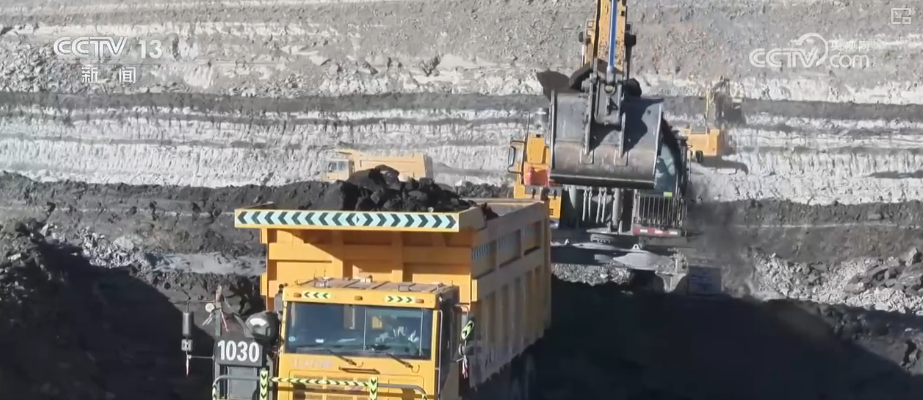
保供企业坚守一线筑牢“防冻线” 为千家万户享受零碳温暖夯实能源“压舱石”
Yang Shi Wang· 2026-01-26 08:49
Core Viewpoint - The extreme cold weather in Inner Mongolia and Heilongjiang has posed significant challenges to energy supply, prompting local energy companies to enhance their operational readiness to ensure heating for households during winter [1][3]. Energy Supply Challenges - The temperature has dropped below -40°C in some areas, creating a severe test for energy supply [3]. - National Energy Investment Group's Baiyinhuamon East Coal Mine has entered a supply guarantee mode, maintaining over 95% equipment utilization and ensuring high coal stock levels to meet winter demands [3]. Operational Readiness - The production department of the Hweicheng Thermal Power Plant in Inner Mongolia has implemented 24-hour monitoring and inspections of heating facilities to ensure stable operations during the cold snap [5]. - The Shen Dong Coal Mine has established a comprehensive supply guarantee system, focusing on stable underground production and smooth surface operations [6]. Coal Production Efficiency - The coal mining team at the Shen Dong Coal Mine is utilizing intelligent simulation technology to optimize coal cutting processes, achieving a daily average output of over 15,000 tons with a 98% equipment uptime [12]. - The team emphasizes safety and efficiency, contributing to energy supply stability despite challenging working conditions [13]. Transportation and Logistics - The Hohhot Railway Bureau has enhanced coal transportation capabilities, ensuring over 420,000 tons of coal are transported daily to meet electricity demands across 29 provinces [15]. - The coal transportation system has implemented measures to prevent freezing, ensuring smooth operations during the cold weather [16]. Clean Energy Initiatives - The use of clean energy for heating is increasing, with the city of Rongcheng in Shandong utilizing nuclear energy for the first time this winter, following similar initiatives in Haiyang and Rushan [17]. - The "Warm Nuclear No. 1" project employs a unique heat transfer method, providing stable heating to residents while ensuring safety [19]. - This project has a heating capacity of approximately 270 megawatts, covering an area of 6.75 million square meters and benefiting nearly 300,000 residents [21][23].
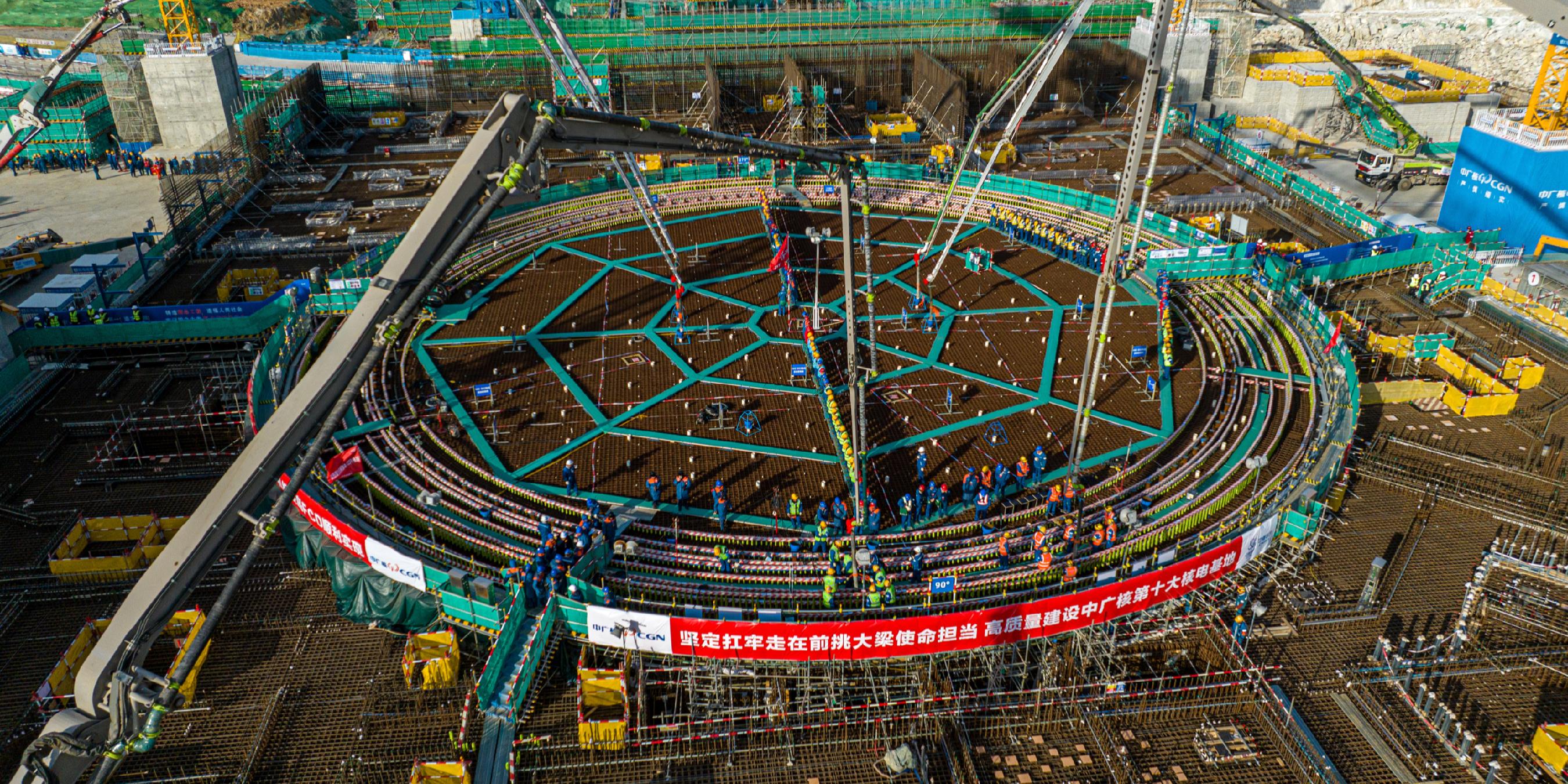
全球首个双堆耦合核能综合利用项目开建
Zhong Guo Neng Yuan Wang· 2026-01-16 09:30
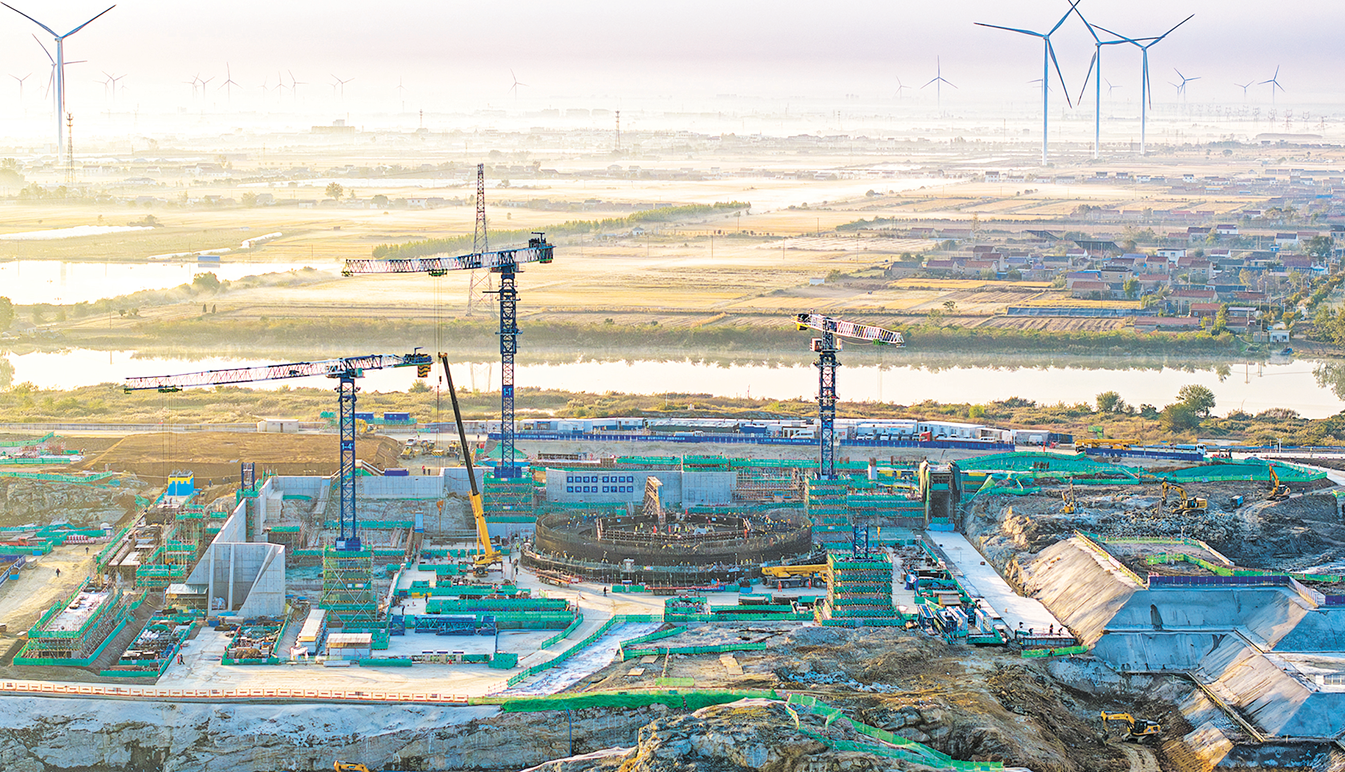
Core Viewpoint - The China National Nuclear Corporation (CNNC) has made significant progress in the comprehensive utilization of nuclear energy, marking the start of construction for the first nuclear power unit during the 14th Five-Year Plan, which integrates nuclear energy with the petrochemical industry, providing a replicable low-carbon transition model for high-energy-consuming industries globally [1][3]. Group 1: Project Overview - The Jiangsu Xuwei Nuclear Heating Power Plant is the world's first project to couple pressurized water reactors with high-temperature gas-cooled reactors, and it is also the first commercial promotion project for high-temperature gas-cooled reactors [3]. - The project will primarily focus on industrial heating while also supplying electricity, utilizing China's independently developed third-generation nuclear technology "Hualong One" and fourth-generation high-temperature gas-cooled reactor technology [3]. - The first phase of the project plans to construct two "Hualong One" units and one high-temperature gas-cooled reactor unit, which will supply 32.5 million tons of industrial steam annually and generate over 11.5 billion kilowatt-hours of electricity [3]. Group 2: Environmental Impact - Upon completion, the project is expected to reduce the consumption of standard coal by 7.26 million tons and cut carbon dioxide emissions by 19.6 million tons annually, supporting the green transition of the petrochemical industry in the Yangtze River Delta region [3]. - The CNNC currently operates 27 nuclear power units and has 18 units under construction or awaiting approval, with a total installed capacity of 46.859 million kilowatts [4]. - The company aims to achieve a cumulative clean energy grid-connected electricity generation of 230.747 billion kilowatt-hours by 2025, actively promoting regional heating, industrial steam/cooling supply, seawater desalination, nuclear hydrogen production, and isotope production [4].

全球首个双堆耦合核能综合利用项目开工!为何将三代与四代核电技术相结合?
Yang Guang Wang· 2026-01-16 03:06
Core Viewpoint - The Jiangsu Xuwei Nuclear Heating Power Plant, utilizing a combination of "Hualong One" pressurized water reactor and high-temperature gas-cooled reactor technologies, marks a significant shift in China's nuclear energy strategy from primarily electricity generation to diversified energy supply, including industrial heating and other applications [1][5][8] Group 1: Project Overview - The first unit of the Jiangsu Xuwei Nuclear Heating Power Plant began concrete pouring on January 16, 2023, indicating the start of the main construction phase [1] - The project includes two "Hualong One" units and one high-temperature gas-cooled reactor, with the first unit expected to be operational by 2030 [2][3] - Upon completion, the plant will supply 32.5 million tons of industrial steam annually and generate over 11.5 billion kilowatt-hours of electricity, significantly reducing coal consumption and CO2 emissions [2][3] Group 2: Technological Innovation - The project is the world's first large-scale coupling of nuclear energy with the petrochemical industry, designed to meet the high energy demands of the Lianyungang petrochemical industrial base [3][4] - The combination of "Hualong One" and high-temperature gas-cooled reactor technologies allows for the provision of high-quality steam at temperatures up to 460 degrees Celsius, enhancing the efficiency of industrial processes [4][5] - This innovative approach aims to address the energy needs of various industrial sectors, particularly in the petrochemical industry, which requires substantial amounts of steam for production [3][4] Group 3: Economic and Environmental Impact - The project is expected to significantly contribute to the green transformation of the petrochemical industry in the Yangtze River Delta region by providing reliable and clean energy [8] - The integration of nuclear energy into industrial applications is seen as a solution to the energy supply gap in high-demand sectors, promoting a shift towards low-carbon energy sources [5][8] - The successful implementation of this project could position China as a leader in advanced energy systems and zero-carbon development models, enhancing its international influence [8]
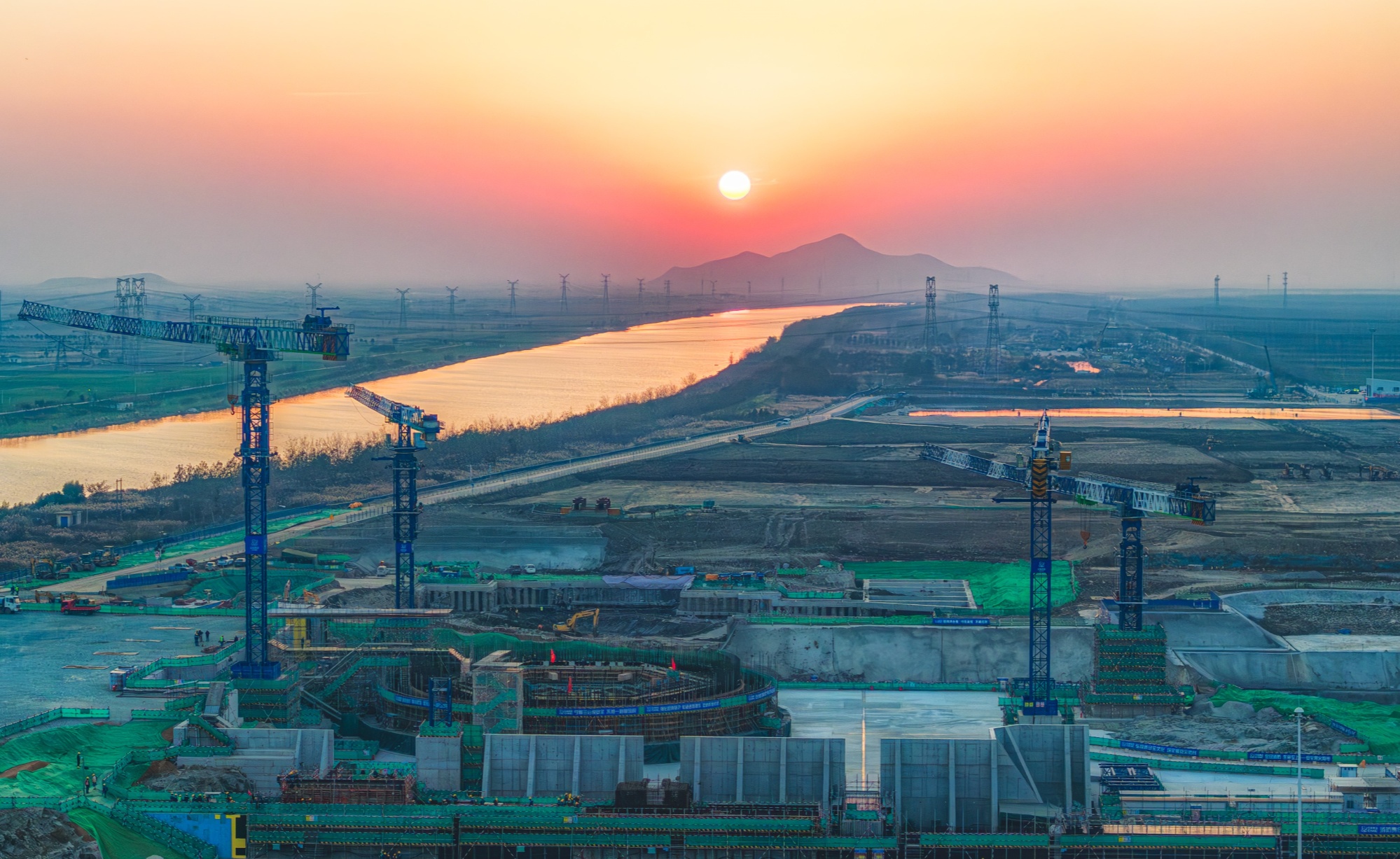
全球首个!中国核电站为石化基地“打气”
Huan Qiu Wang· 2026-01-15 22:40
Core Viewpoint - The Jiangsu Xuwei Nuclear Heating Power Plant, initiated by China National Nuclear Corporation (CNNC), represents the first nuclear power unit to commence construction in 2023, aiming to couple nuclear energy with the petrochemical industry for enhanced energy efficiency and carbon neutrality [1][5]. Group 1: Project Overview - The Xuwei Nuclear Heating Power Plant is the world's first large-scale coupling project of nuclear energy and petrochemicals, designed to provide steam for the petrochemical industry while generating electricity [1][6]. - The project will supply 6.5 million tons of steam annually, meeting 70% of the steam demand for the Lianyungang petrochemical industrial base [5][6]. - The first phase includes two Hualong One reactors and one high-temperature gas-cooled reactor, expected to produce over 11.5 billion kWh of electricity and reduce coal consumption by 7.26 million tons annually [5][8]. Group 2: Environmental Impact - The carbon footprint of nuclear steam is 1/600 that of coal-fired steam and 1/100 that of natural gas steam, significantly contributing to carbon reduction efforts [5][6]. - The project is projected to reduce CO2 emissions by 19.6 million tons annually, alongside substantial reductions in sulfur dioxide and nitrogen oxides [5][6]. Group 3: Technological Innovation - The project employs a unique operational model combining Hualong One and high-temperature gas-cooled reactors, allowing for flexible energy output based on industrial heating needs [8][9]. - It features advanced safety designs, ensuring that the reactors can naturally cool without human intervention, addressing global nuclear safety concerns [9][10]. Group 4: Industry Implications - The project is expected to set a benchmark for nuclear energy applications, potentially expanding into other energy-intensive sectors such as metallurgy, papermaking, and seawater desalination [10][11]. - The integration of nuclear heating technology is anticipated to drive the development of high-temperature alloys and other advanced materials, enhancing the entire nuclear energy supply chain [10][11]. Group 5: Global Influence - The combination of Hualong One and high-temperature gas-cooled reactors is positioned as a new "business card" for China's nuclear energy sector, appealing to both developing and developed nations seeking to modernize their energy systems [12]. - This project is expected to enhance China's international competitiveness in nuclear technology and establish it as a leader in zero-carbon energy solutions [12].
电投产融:百万千瓦级压水堆核电机组普遍配套建设一定规模的制氢系统
Zheng Quan Ri Bao Wang· 2026-01-13 09:14
Core Viewpoint - The company Electric Power Investment Corporation (000958) is actively exploring the integration of hydrogen production and seawater desalination with its nuclear power projects, leveraging the capabilities of its CAP1000 and CAP1400 reactor models [1] Group 1: Hydrogen Production - The CAP1000 and CAP1400 nuclear reactor models are designed to support hydrogen production systems, primarily for internal equipment hydrogen supply [1] - These reactors can utilize stable and clean base-load power to enable water electrolysis for hydrogen production, integrating with established PEM electrolysis technologies [1] Group 2: Seawater Desalination - The CAP1000 and CAP1400 models also possess the capability to implement seawater desalination using membrane or thermal methods [1] - The company plans to adapt its nuclear energy applications to meet the economic and social development needs of specific project locations [1]

电投产融:公司打造了“海阳核电核能综合利用”创新品牌,建成投运了包括“暖核一号”在内的一批核能综合利用创新示范项目
Zheng Quan Ri Bao Zhi Sheng· 2025-12-17 12:11
Core Viewpoint - The company is advancing its nuclear technology with the "Guohe No. 1" (CAP1400), which is a large advanced pressurized water reactor with a single unit power of 1.5 million kilowatts, representing China's largest self-designed nuclear power technology [1] Group 1: Technology and Innovation - The "Guohe No. 1" technology is based on the introduction and absorption of third-generation passive pressurized water reactor technology, featuring independent intellectual property rights [1] - The company emphasizes a "passive" safety design concept in its nuclear technology [1] Group 2: Comprehensive Utilization of Nuclear Energy - The Shandong Nuclear Power, part of the assets to be injected, is pioneering large pressurized water reactor heat and power generation research and practice, focusing on the utilization of residual heat from nuclear power plants and local clean heating needs [1] - The company has established an innovative brand for comprehensive nuclear energy utilization, including projects like "Warm Nuclear No. 1" [1] Group 3: Future Plans and Compliance - The company will conduct careful research and demonstration regarding the specific implementation plans and timelines for comprehensive utilization based on strategic development, technical economic feasibility, and local demand [1] - The company commits to advancing related work in compliance with laws and regulations, ensuring proper information disclosure [1]
国家能源局:将稳步提高核能在能源消费中的比重
Zhong Guo Xin Wen Wang· 2025-12-05 12:37
Core Viewpoint - China's nuclear power is advancing towards global leadership with a focus on safety, innovation, and increasing its share in energy consumption [1][2] Group 1: Development Strategy - The development strategy of China's nuclear power emphasizes safety as the top priority while promoting continuous construction of nuclear projects to boost the upstream and downstream supply chain [1] - China has achieved a complete transition from second-generation to third-generation nuclear technology, with 67 out of 112 approved and under construction nuclear reactors utilizing third-generation or higher technology, representing 60% [1] Group 2: Technological Advancements - China's nuclear technology comprehensive index has maintained the global first position for nine consecutive years, with 43% of the globally rated top units in 2024 being from China [1] - The world's first land-based commercial modular small reactor, "Linglong One," is set to be operational by 2026, showcasing China's ongoing technological iteration and optimization in nuclear power [1] Group 3: Industry Competitiveness - China is the only country that has continuously built nuclear power plants for over 30 years, developing the largest pool of nuclear professionals globally and possessing the most competitive nuclear industry supply chain [1]