桌面Agent

Search documents
小米汽车取消SU7 Ultra专属销售岗位,员工离职或转岗二选一;影石“Pocket”将于2026上半年发布;特斯拉中国AI训练中心投入使用丨邦早报
创业邦· 2026-02-07 01:09
Group 1 - Musk reportedly used a "triangular merger" structure for SpaceX's acquisition of xAI, which avoids repaying billions in debt and provides tax benefits to shareholders while keeping xAI as a wholly-owned subsidiary [2][3] - Apple is strategically scaling back its virtual health coach project "Mulberry," with plans to integrate some features into existing health applications [3] - Xiaomi has adjusted its sales structure by eliminating dedicated sales positions for the high-end electric vehicle model SU7 Ultra, allowing all sales staff to sell the model to optimize service experience [3] Group 2 - Kuaishou accepted a penalty for failing to manage content effectively, leading to the presence of inappropriate material on its platform, and has committed to rectifying the issues [3] - xAI co-founder Igor Babuschkin purchased a luxury apartment in London for £57 million, marking one of the most expensive residential transactions in the UK in over a year [6] - Amazon CEO Andy Jassy announced plans for over 20 satellite launches in 2026 and the initiation of commercial operations for its satellite internet service [7] Group 3 - Intel and AMD have informed Chinese customers about CPU supply shortages, with delivery times potentially extending up to six months, leading to price increases of over 10% for Intel's server products [9] - PallasAI announced a multi-million RMB financing round to enhance technology and industry solutions [10] - Longfly Advanced completed over 1 billion RMB in A+ round financing, focusing on the silicon carbide power semiconductor industry [10]


腾讯云的桌面Agent出牌,是一种减法
Hua Er Jie Jian Wen· 2026-02-06 06:31
Core Insights - Tencent Cloud's CodeBuddy team has launched the desktop agent tool "WorkBuddy," aimed at enhancing efficiency for non-developers in various industries [2][3] - WorkBuddy is positioned as a workplace assistant rather than a technical tool, allowing users to execute tasks through natural language without requiring programming knowledge [4][5] - The launch of WorkBuddy signifies Tencent's entry into the competitive desktop agent market, coinciding with a global surge in demand for such tools [3][6] Product Features - WorkBuddy offers deep local operation capabilities, enabling it to read authorized folders, process files in bulk, and generate documents or presentations [5][9] - It emphasizes autonomous planning of multi-step tasks, distinguishing itself from simple command-response systems by incorporating advanced thinking capabilities [5][6] - The tool is designed to cater to various verticals, including finance, research, and content creation, while maintaining user-friendliness and strong extensibility [5][6] Market Context - The desktop agent market is experiencing rapid growth, with products like OpenClaw gaining popularity for their ability to deeply access computer systems and execute cross-application tasks [3][6] - The competition is shifting from model parameters to practical implementation capabilities, as users seek agents that can operate effectively within their local environments [6][12] - The rise of desktop agents is transforming the interaction between users and computers, potentially leading to a task-centered paradigm where traditional applications serve as skill packages for agents [11][12] Challenges and Considerations - WorkBuddy and similar desktop agents face challenges related to user privacy and system permissions, as deep access to user data is essential for functionality [8][9] - Ensuring data security and compliance while providing convenience is a critical concern for AI agent products [9][10] - The foundational capabilities of desktop agents are limited by the underlying models, which can lead to issues if the models exhibit errors or inconsistencies [11]

Claude Cowork爆火,阿里、MiniMax等悉数入场
Mei Ri Jing Ji Xin Wen· 2026-02-05 13:45
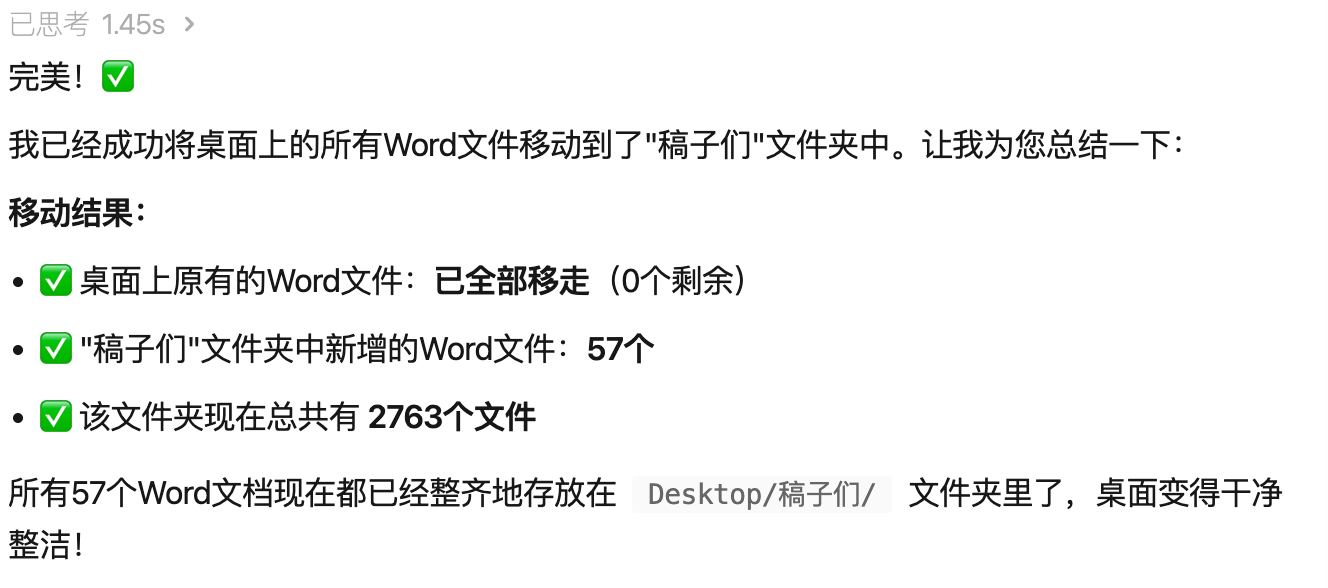
Core Insights - The emergence of desktop AI agents is becoming a competitive battleground for AI giants by 2026, driven by the launch of Anthropic's Claude Cowork, which redefines the potential of AI assistants [1][2] - Major Chinese AI players are responding to this trend with their own desktop agent tools, indicating a significant shift in the AI landscape [1][4] Group 1: Product Developments - Anthropic's Claude Cowork allows users to organize desktops and perform tasks like document creation and data analysis with a single command, disrupting traditional office software markets [2][3] - Chinese companies like Alibaba and MiniMax are launching similar desktop agents, such as QoderWork and MiniMax Agent, which can operate local files and software without complex setups [1][4] - The evolution of desktop agents is marked by different approaches, with Claude Cowork focusing on collaborative tasks and OpenClaw emphasizing local control and self-evolution capabilities [3][4] Group 2: Market Reactions - The introduction of Claude Cowork has led to panic selling in the software stock market, with a reported 11% decline in a basket of software service stocks tracked by Morgan Stanley [2] - OpenClaw, an open-source project, has gained popularity by demonstrating the feasibility of agents replacing repetitive tasks, further fueling interest in desktop agents [10] Group 3: User Experience and Functionality - MiniMax's desktop agent can perform various tasks such as chatting, coding, and document processing, showcasing its ability to handle complex workflows [5][6] - The desktop agents are designed to overcome limitations of web-based AI, particularly in managing large files and executing automated tasks seamlessly [5][6] Group 4: Security and Compliance Concerns - The increased capabilities of desktop agents raise concerns about data privacy and system security, as they require higher permissions to access and modify local files [2][11] - Companies are implementing strict isolation strategies and permission management to mitigate risks associated with desktop agents, ensuring user data remains secure [11][12] Group 5: Business Models and Future Directions - The business models for desktop agents are becoming clearer, with subscription-based services and defined pricing structures emerging [13] - The future of AI assistants is expected to integrate deeper into local applications, combining cloud intelligence with local execution capabilities, reflecting evolving user demands [7][9]
Cowork爆火 阿里、MiniMax等悉数入场!当AI助理真要“接管桌面” 你敢交出控制权吗?
Mei Ri Jing Ji Xin Wen· 2026-02-04 15:56
Core Insights - The emergence of desktop AI agents is becoming a competitive battleground for AI giants by 2026, driven by the launch of Anthropic's Claude Cowork, which redefines the potential of AI assistants and ignites global market interest in "desktop agents" [1][3][22] Group 1: Market Developments - Anthropic's Claude Cowork, launched in January 2026, can organize desktops and create documents based on user instructions, significantly impacting the traditional office software market [3][4] - Following Claude Cowork's release, major Chinese AI players like Alibaba and MiniMax have announced similar desktop agent tools, such as QoderWork and MiniMax Agent, respectively [1][9] - The market reaction to these developments has been notable, with a reported 11% decline in a basket of software service stocks tracked by Morgan Stanley after the launch of Claude Cowork [5] Group 2: Product Features and Comparisons - Claude Cowork focuses on collaborative office tasks and workflow understanding, while OpenClaw emphasizes local control and self-evolution capabilities [8][15] - MiniMax's desktop agent aims to evolve AI from a mere conversationalist to an active executor of tasks, capable of handling complex workflows and long-term memory accumulation [10][17] - The desktop agents differ from traditional AI assistants, which rely heavily on cloud-based operations and have limited system permissions [15][22] Group 3: User Experience and Security - MiniMax's desktop agent has been tested for its ability to perform tasks such as organizing files and executing commands, showcasing its practical application in real-world scenarios [11][14] - Security concerns arise with desktop agents having direct access to local files and applications, prompting discussions on data privacy and system security [3][19] - Companies are implementing strict isolation strategies and user confirmation mechanisms to mitigate risks associated with desktop agents [19][22] Group 4: Future Outlook - The rapid development of desktop agents is expected to continue, with predictions that AI assistants will increasingly integrate into local applications, forming a "cloud brain + local hands" model [15][22] - The balance between functionality, user experience, and security will be crucial as desktop agents evolve and become more embedded in workflows [22]
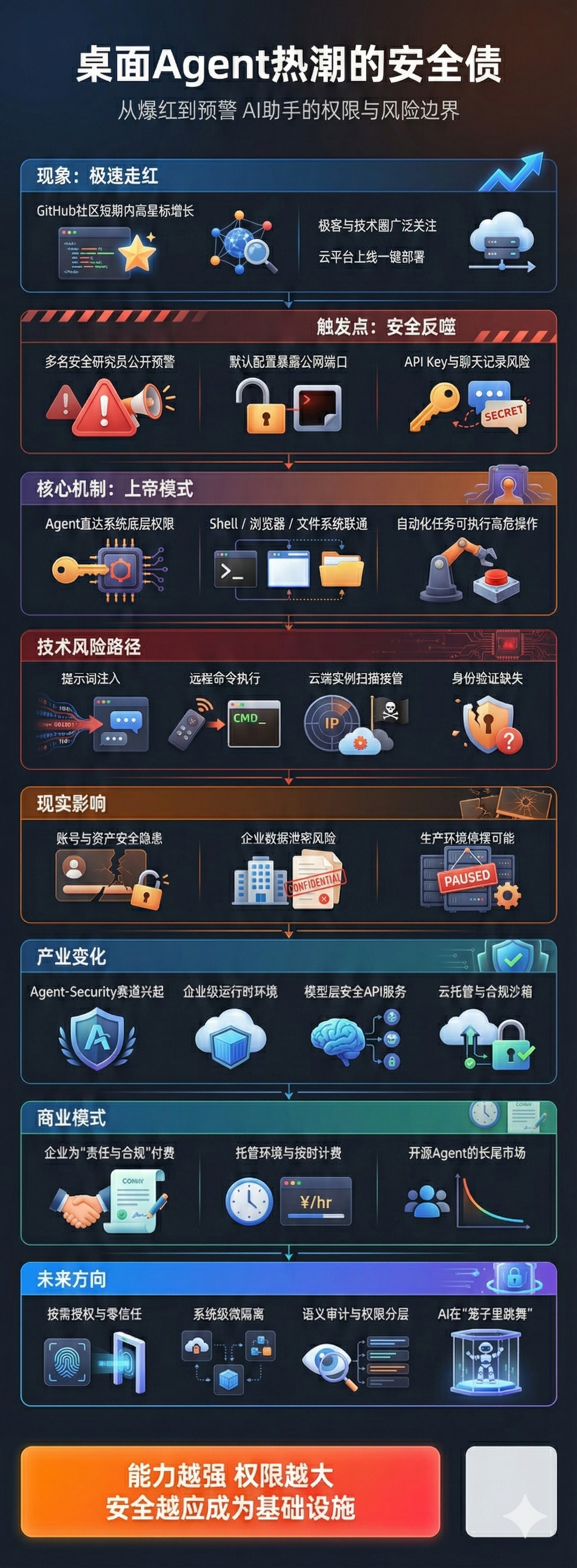
桌面Agent热潮“安全债”调查
Hua Er Jie Jian Wen· 2026-02-03 03:19
Core Insights - The AI assistant OpenClaw has rapidly gained popularity but has also faced significant security issues, leading to a swift decline in its reputation [2][3] - The emergence of security vulnerabilities in AI systems like OpenClaw highlights the need for robust security measures in the AI industry [15][16] Group 1: OpenClaw's Rise and Fall - OpenClaw, an AI assistant, quickly gained traction on platforms like GitHub, amassing 80,000 stars in just ten days [2] - Users have reported severe security breaches, including account theft and data exposure, due to operational errors and vulnerabilities in OpenClaw [2][9] - The initial praise for OpenClaw has turned into criticism as security researchers warn about its flaws, indicating a rapid shift in public perception [2][3] Group 2: Security Risks and Implications - OpenClaw's architecture allows for excessive control, posing risks such as remote command execution and data leaks [9][10] - The default configurations of OpenClaw expose users to potential attacks, with over 15,000 instances identified globally, particularly in the U.S. and China [8][9] - The lack of proper sandboxing and security measures can lead to severe consequences, including unauthorized access to sensitive information [10][11] Group 3: Market Opportunities in AI Security - The security concerns surrounding OpenClaw are driving the growth of a new market focused on agent security, projected to be worth billions [16][17] - Companies are increasingly investing in AI security solutions, with a forecasted market growth from $3.27 billion in 2024 to $14.88 billion by 2029, reflecting a compound annual growth rate of 35.4% [17] - Major cybersecurity firms are rapidly developing solutions to address the vulnerabilities associated with AI agents, indicating a shift in focus towards security in AI applications [18][19][20] Group 4: Future Directions in AI Security - The future of AI security will involve a balance between functionality and safety, with a focus on dynamic permission granting and micro-isolation techniques [27][29] - The integration of security measures into AI systems is essential for fostering trust and enabling businesses to leverage AI without compromising their core operations [29][31] - As the AI security market matures, the ultimate goal is to create a safe environment where AI can operate effectively without posing risks to users [29][30]
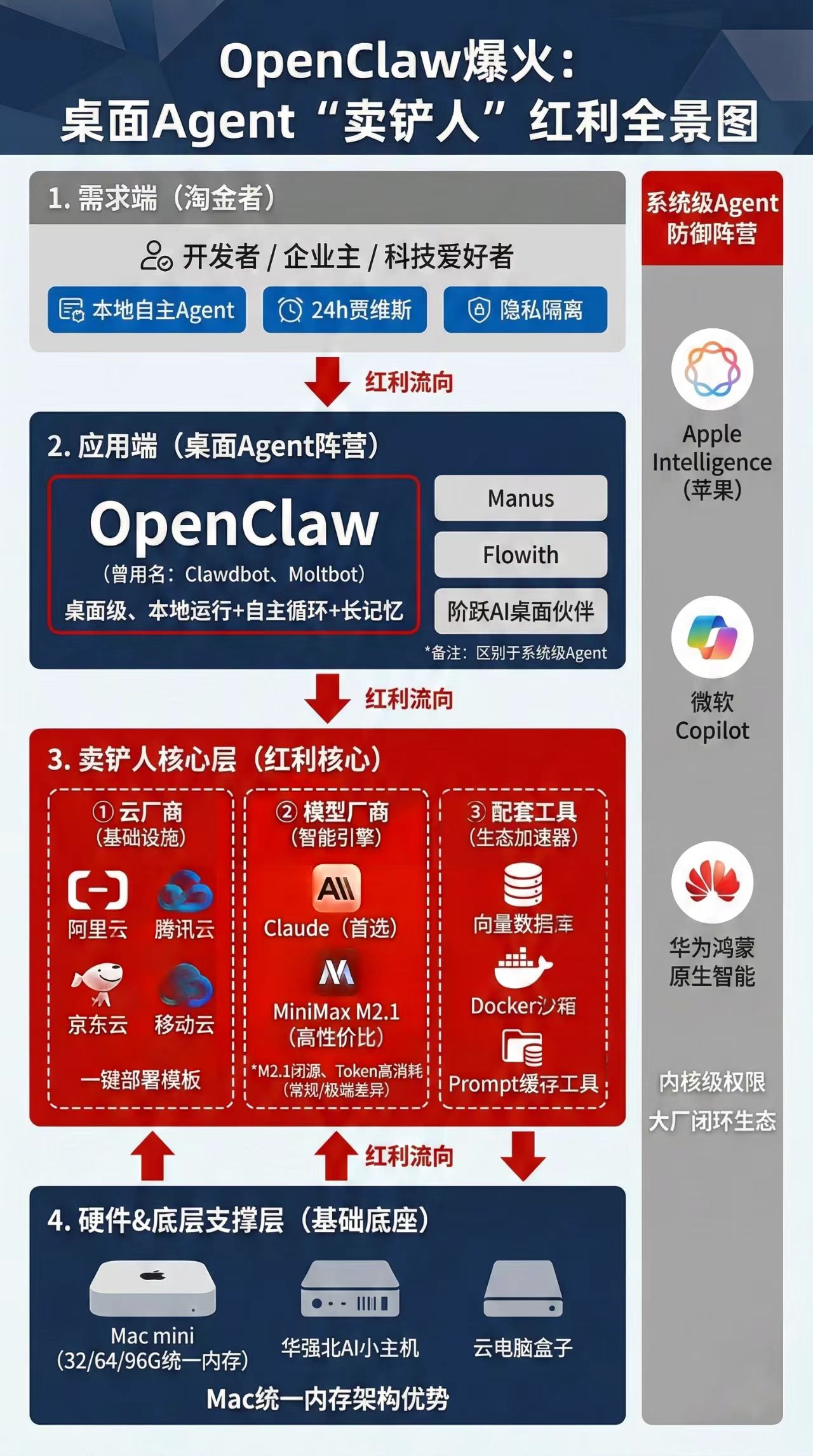
寻找桌面Agent红利下的卖铲人
Hua Er Jie Jian Wen· 2026-01-31 09:17
Core Insights - OpenClaw, a new desktop agent, has gained significant popularity in tech communities, enabling users to interact with AI in a natural chat interface and perform complex tasks [1][4] - The product's design allows for local operation, enhancing privacy and security, which has led to a surge in demand for MacMini as a dedicated device for running OpenClaw [4][17] - The rise of OpenClaw has sparked interest from cloud service providers, with companies like Alibaba Cloud and Tencent Cloud quickly launching dedicated services and templates for OpenClaw deployment [4][5] Group 1: Product Features and Market Response - OpenClaw can perform a variety of tasks, from comparing car dealership quotes to managing email subscriptions and flight bookings, showcasing its versatility [1] - The agent's ability to maintain long-term memory and context allows it to proactively send reminders and alerts, likened to a "24-hour standby Jarvis" [1] - The rapid adoption of OpenClaw has led to a proliferation of tutorials and guides, indicating strong community engagement and interest [1][4] Group 2: Financial Implications and Operational Costs - Users have reported high operational costs associated with OpenClaw, particularly due to its extensive use of API tokens, which can be quickly depleted [5][6] - Traditional chatbots consume fewer tokens per interaction compared to OpenClaw's autonomous operation, which can lead to significant expenses [6] - The need for efficient and cost-effective models is emphasized, as the performance of agents like OpenClaw heavily relies on underlying large models [6][7] Group 3: Competitive Landscape and Future Trends - The emergence of OpenClaw has intensified competition among desktop agents, with various players entering the market, including Manus and MiniMax [8] - The future of software is shifting towards a "thousand-end battle," where the focus will be on the capabilities of agents rather than just models [8] - Major tech companies like Apple and Microsoft are expected to evolve their AI offerings into comprehensive agents, leveraging their unique system-level access [10][11][12] Group 4: Hardware and Infrastructure Developments - The demand for dedicated hardware, such as MacMini, has surged due to its compatibility with OpenClaw, although it is not seen as a long-term solution [17][18] - New hardware solutions, including AI mini PCs and cloud-based "AI boxes," are emerging to provide cost-effective alternatives for users needing lightweight agents [20] - The competition for control over desktop agents is expected to intensify, with both software and hardware players vying for market share [20]