楼市挤泡沫

Search documents
新年看房记①|寻房大半年,深圳500万元预算刚需的纠结
Mei Ri Jing Ji Xin Wen· 2026-01-01 14:44
Core Viewpoint - The Shenzhen real estate market is currently experiencing a critical observation window, with potential buyers like Chen Lei facing challenges in finding suitable properties within their budget, reflecting broader trends among first-time homebuyers in the region [1][2][10]. Group 1: Market Dynamics - The supply of residential properties in Shenzhen has decreased significantly, with a reported 34.6% year-on-year decline in new residential supply, totaling 36,641 units in 2025 [10][13]. - The market is witnessing a shift in strategy from developers, moving away from aggressive pricing and high-volume sales to a more balanced approach, which helps stabilize the market [13]. - The demand for new properties remains strong, but the supply is diminishing, leading to a potential market bottoming out [10][13]. Group 2: Buyer Behavior - First-time homebuyers like Chen Lei are struggling with budget constraints and the need for suitable living conditions, often finding that properties within their price range are located in less desirable areas [2][8]. - Chen Lei's experience is indicative of many buyers who are caught between the desire for better locations and the reality of limited options within their financial means [8][10]. - The ongoing adjustments in the market are causing buyers to reconsider their decisions, with many waiting for clearer signals before committing to purchases [9][10]. Group 3: Price Trends - New property prices have shown little change over the past six months, with some new launches even seeing price increases, while second-hand properties have generally decreased in price [10][13]. - Specific examples include the Pengchen Yunzhu project, where a mid-high floor unit is priced at approximately 5.6 million yuan per square meter, reflecting the current pricing landscape [4][6]. - The market is characterized by a structural differentiation, with high-end properties performing well while the demand for affordable housing remains weak [13].


楼市大局已定!2026年的房价,已出现4个迹象
Sou Hu Cai Jing· 2025-11-08 20:24
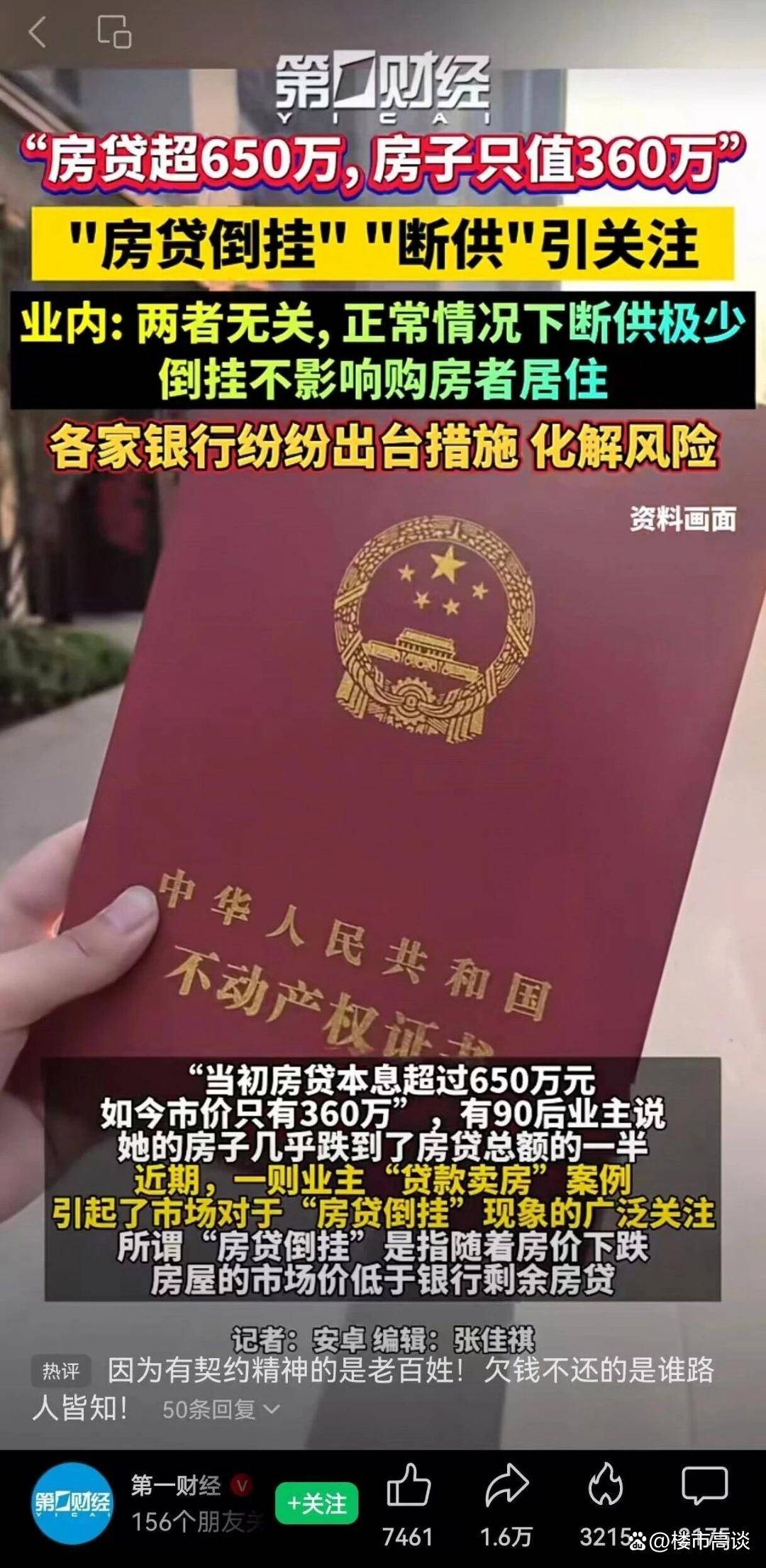
Group 1 - The core issue of the real estate market is the phenomenon of "mortgage inversion," where homeowners owe more on their mortgages than their properties are currently worth, leading to a trend of "selling loans" [1][3] - A significant increase in "mortgage inversion" cases has been observed, with a reported 3.7% of properties in major cities classified as negative assets, doubling from the previous year [3] - Banks are implementing measures to mitigate risks associated with mortgage inversion, such as extending repayment periods and temporarily halting principal repayments [3] Group 2 - The current market is characterized by the "deflation of bubbles," where the decline in property prices is seen as a correction of inflated values rather than a total market collapse [5][7] - Certain core areas in cities like Beijing and Shanghai have shown slight price increases, indicating that properties with intrinsic value based on location and amenities are less affected by the downturn [7] - Properties that were previously overvalued due to speculation are experiencing significant price drops, with some luxury properties losing over 40% of their value [7] Group 3 - Various government policies aimed at stabilizing the market have been enacted, including lowering down payment requirements and reducing mortgage interest rates, but the effectiveness of these measures is questioned [7][9] - A report indicates that the majority of household wealth is tied up in real estate, leading to a lack of confidence in future income and reluctance to take on long-term mortgages [9] Group 4 - The real estate market is expected to remain in a "bottoming" phase, with only structural stabilization anticipated in 2026, particularly in core urban areas [9][11] - Maintaining cash flow is emphasized as crucial for financial stability, with a growing trend of increased savings rates among residents indicating a shift towards prioritizing liquidity over property ownership [11] - The overarching message is that true security comes from financial resilience rather than property ownership, as the market continues to face challenges [11]