
楼市结构性分化

Search documents
业主“抱团保价”,只是最后的倔强
虎嗅APP· 2025-11-27 00:00
Core Viewpoint - The article discusses the current state of the real estate market in Shanghai, highlighting a disconnect between optimistic pricing by homeowners and the actual market conditions, indicating a potential long-term adjustment phase in the housing market [3][11]. Group 1: Shanghai Real Estate Market - Recent listings in Shanghai show homeowners pricing 93 square meter apartments around 14.6 million yuan, leading to speculation about a "price defense" strategy among sellers [3][4]. - Media reports clarify that the similar pricing among homeowners is not a coordinated effort but rather individual decisions influenced by previous listings [4][5]. - The new housing market in Shanghai shows resilience, with new home prices rising 0.3% month-on-month and 5.7% year-on-year in October, while the overall year-to-date increase is 5.8% [6][7]. Group 2: Divergence in Housing Types - In contrast, the second-hand housing market in Shanghai is underperforming, with prices dropping 0.9% month-on-month and 3.4% year-on-year in October, indicating a potential lag in recovery compared to new homes [6][7]. - The average listing price in a specific community was reported at 15.74 million yuan per square meter, significantly higher than the previous transaction average of 13.51 million yuan, suggesting unrealistic pricing expectations among sellers [7]. Group 3: Broader Market Trends - The article notes that while Shanghai's real estate market remains relatively strong compared to other cities, many second and third-tier cities are experiencing significant downturns [8]. - For instance, in Hangzhou, new home prices increased by 0.1% month-on-month and 4% year-on-year, but the second-hand market is still declining, with a 0.3% month-on-month drop and a 2.4% year-on-year decrease [8][10]. Group 4: Long-term Market Outlook - The article emphasizes that the current economic cycle is different from previous ones, suggesting a prolonged adjustment period rather than a quick recovery, which requires homeowners to adjust their expectations accordingly [11][12]. - It advises individuals to prepare for potential financial constraints and to reassess their spending and investment strategies in light of the new market realities [15][16].

刚刚!合肥房价涨了!
Sou Hu Cai Jing· 2025-11-15 14:54
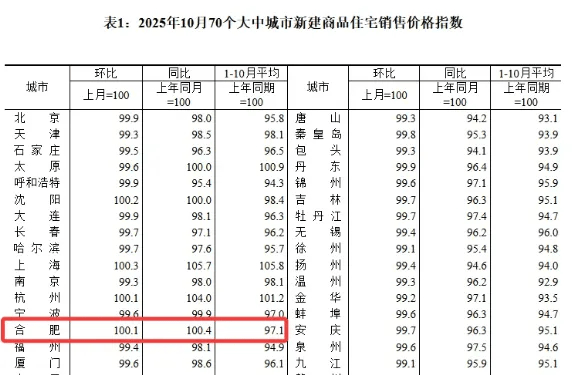
Core Viewpoint - The report from the National Bureau of Statistics indicates a mixed performance in the real estate market of Hefei, with new home prices showing slight recovery while second-hand home prices continue to face downward pressure [1][6]. Group 1: Hefei Real Estate Market Performance - In October, Hefei's new home prices increased by 0.1% month-on-month and 0.4% year-on-year, marking the first positive year-on-year growth in recent times [1][6]. - The second-hand home market in Hefei saw a month-on-month decline of 0.7% and a year-on-year drop of 6.5%, indicating ongoing challenges [1][6]. - Overall, the Hefei real estate market is experiencing a structural differentiation trend, with new homes stabilizing while second-hand homes are still adjusting [2][6]. Group 2: Trends in Other Cities - As of November 11, several cities have reported significant increases in second-hand home transaction volumes, with Beijing seeing a 143% month-on-month increase [6]. - Other cities like Shanghai and Xiamen also reported substantial increases of 98% in second-hand home transactions, indicating a broader market recovery [6]. - The overall market activity is gaining attention from various media outlets, highlighting a resurgence in real estate transactions across multiple cities [6]. Group 3: Price Adjustments in Hefei - There has been a noticeable increase in the number of "price-increasing listings" in Hefei's second-hand home market, with some sellers raising their asking prices [12]. - Specific properties in Hefei have seen significant price hikes overnight, with increases ranging from 15 million to 122 million yuan for various units [13].
上海楼市迎新考验!超3.2万套新房即将解禁上市
Sou Hu Cai Jing· 2025-10-18 14:49
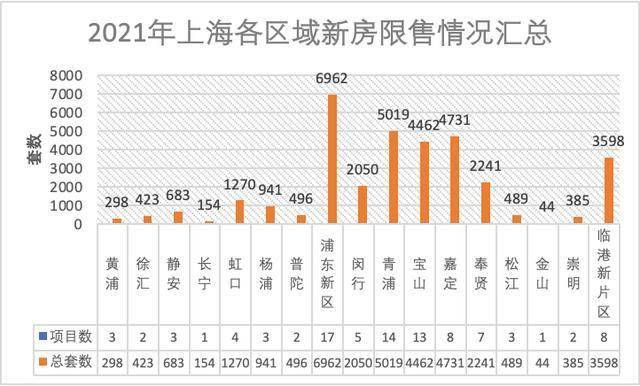
Core Insights - In 2021, Shanghai implemented a "points system" for the sale of commercial housing, imposing a five-year sales restriction on properties with a subscription rate exceeding 130% [1] - An estimated 125,000 new homes will be released from restrictions in Shanghai between 2026 and 2028, with approximately 32,400 units expected to enter the market in 2026 [2] - The release of these restricted properties is not evenly distributed, with significant concentrations in areas such as Lingang, Xujing, and Tangzhen [3] Market Dynamics - The current Shanghai real estate market is experiencing structural differentiation, contrasting with the previous market frenzy when the sales restriction policy was introduced [5] - Luxury property prices in core areas continue to rise, while inventory in suburban regions is accumulating; the secondary housing market is shifting towards "price for volume" strategies [6] Regional Analysis - The Dahongqiao area, particularly Xujing, will see a significant increase in listings, with about 10,800 units expected to be released in 2026, alongside 16,000 new homes [8] - Lingang, as a core area of the free trade zone, has seen most of its restricted properties acquired by talent, but new home sales are now reliant on discounts and promotions [10] - Core districts like Huangpu and Jing'an will have around 3,769 units released, which is only 11% of the total, indicating that even with the release, the price structure is unlikely to be affected [11] Market Projections - The release of properties in certain areas may double the number of listings, potentially pressuring landlords to lower prices for quicker transactions [12] - Despite the anticipated release of 32,400 units, the overall market is projected to maintain a "volume increase, price stability" trend, with secondary home transactions expected to reach 280,000 units in 2025 [12] - Shanghai has proactively implemented policies to stimulate demand ahead of the supply increase, including easing purchase restrictions and increasing loan limits, aiming to release approximately 150,000 potential homebuyer demands [12]
上海楼市2025上半年总结及全年展望
2025-07-11 01:05
Summary of Shanghai Real Estate Market Conference Call Industry Overview - The conference call focuses on the Shanghai real estate market in the first half of 2025, highlighting significant structural differentiation within the market, with core areas performing well while outer regions face ongoing challenges [1][3][5]. Key Points and Arguments Market Performance - In the first half of 2025, the Shanghai real estate market showed a notable increase in the sales of new homes, with a sales rate of 53%, up by 6 to 7 percentage points compared to the second half of 2024 [2]. - The average transaction price for new homes reached 52,000 yuan per square meter, a year-on-year increase of 2%, while prices in the inner ring reached 160,000 yuan per square meter, reflecting a 7% increase [2]. - The second-hand housing market experienced a downturn, with transaction volumes not breaking through previous levels, and the price index falling back to January 2020 levels [1][12]. Land Auction Market - The land auction market in Shanghai was highly competitive in the first half of 2025, with total transaction amounts reaching 150.6 billion yuan, a significant year-on-year increase [8]. - The auction model shifted from fully market-driven to more non-public bidding, with core area land prices remaining stable or increasing [9][10]. New and Second-Hand Housing Supply - New housing supply and transaction volumes both declined significantly, with supply down 37% and transactions down 43% year-on-year, yet the average price of new homes continued to rise to 80,000 yuan per square meter [11]. - The second-hand housing market faced pressure, with prices potentially facing further declines due to policy expectations and national price trends [12][13]. Major Real Estate Companies - Key players in the Shanghai real estate market included Poly, China Merchants, and China Resources, with China Overseas potentially lagging due to conservative investment strategies [14]. - Poly and China Merchants demonstrated strong performance across various projects in both central and peripheral areas [14]. Product Development Trends - The trend in product development is moving towards refinement, with high-end properties featuring advanced materials and designs, such as large glass facades and enhanced landscaping [4][15]. - Full-furnished garages and high efficiency in space utilization are becoming standard in new high-end developments [16]. Policy Outlook - The likelihood of new policies impacting the Shanghai real estate market in the second half of 2025 appears low, with a retreat in policy expectations compared to the previous year [6][19]. - The necessity for loosening purchase restrictions is not strong, as other cities have not seen positive feedback from similar measures [6]. Market Dynamics - The luxury market in central Shanghai remains robust, driven by asset allocation needs, with properties priced above 50 million yuan accounting for 80% of such sales nationwide [21][22]. - Different price segments attract distinct buyer profiles, with high-end buyers focusing on asset security and location, while mid-range buyers often have self-use needs [23]. Future Considerations - The overall market is expected to continue facing pressures, particularly in the second-hand market, with potential price corrections anticipated [12][13]. - The importance of property management is increasing, especially for high-end clients, impacting the value retention of both new and second-hand properties [18]. Additional Important Insights - The rental yield for renovated old neighborhoods has reached 2.5 to 3, indicating strong demand in these areas [24]. - The projected sales ranking for Shanghai's residential market by the end of 2025 is expected to remain stable, with Poly, China Merchants, and China Resources leading [25]. - Some projects have seen improved profit margins, while others, particularly in outer regions, face higher marketing costs and lower profitability [26].