欧盟对俄能源制裁

Search documents
欧洲议会批准到2027年逐步停止进口俄罗斯天然气的计划!引发热议!
Sou Hu Cai Jing· 2025-12-17 15:08
Group 1 - The European Parliament approved a phased plan to halt imports of Russian natural gas by the end of 2027, with 500 votes in favor, 120 against, and 32 abstentions [2] - The plan aims to stop imports of Russian liquefied natural gas (LNG) by the end of 2026 and pipeline gas by September 2027, reflecting the EU's commitment to reduce energy dependence since the Ukraine war [2] - As of October this year, Russian natural gas accounted for 12% of the EU's total imports, a significant decrease from 45% before the Ukraine conflict, although some countries like Hungary, France, and Belgium still import Russian gas [2] Group 2 - The EU Council decided to indefinitely freeze Russian assets within the EU, facilitating the use of frozen Russian assets to fund Ukraine [3] - The Russian Central Bank has filed a lawsuit in Moscow arbitration court seeking compensation of over 18 trillion rubles (approximately 1.6 trillion yuan) from the European Clearing Bank, which holds a large amount of frozen Russian assets [3]


绕开欧盟禁令?匈牙利土耳其签协议,俄气直通匈牙利有戏
Sou Hu Cai Jing· 2025-12-09 10:14
Core Viewpoint - Hungary has secured a crucial agreement with Turkey to ensure the transit of Russian natural gas, which challenges the EU's energy sanctions against Russia and provides Hungary with a lifeline in its energy crisis [1][4]. Group 1: Hungary's Energy Dependency - Hungary relies heavily on Russian energy, with 74% of its natural gas and 86% of its oil coming from Russia. This year alone, 7.5 billion cubic meters of gas have been transported from Turkey to Hungary, accounting for nearly 40% of its total gas demand [3]. - The EU is planning to implement new sanctions against Russian energy, including a gradual ban on pipeline imports of Russian gas starting in September 2027 and a ban on Russian crude oil by the end of the year, which poses a significant threat to Hungary's energy structure [3]. Group 2: Political Maneuvering - The agreement with Turkey is seen as a key step in Hungary's strategy to counter EU sanctions. Turkey's neutral position allows it to facilitate Russian gas transport while avoiding some sanctions risks [4]. - Hungary's Prime Minister, Viktor Orbán, has expressed strong opposition to the EU's sanctions, claiming they are illegal and violate EU values. He has warned that if the sanctions are enforced, energy costs for Hungarian households could triple [3][4]. Group 3: International Relations and Implications - Orbán's recent agreement with the U.S. provides Hungary with a "no-penalty" assurance regarding its energy imports from Russia, granting Hungary a unique position within the Western sanctions framework [2][6]. - The collaboration with Turkey effectively adds a "double insurance" to Russian gas transport, allowing Hungary to reduce its dependence on the EU's energy network [6]. - The situation highlights the EU's dilemma, as it has not provided alternative solutions for energy-dependent member states like Hungary, potentially leading to a breakdown of the EU's sanctions system if other countries follow Hungary's lead [6].
欧盟对俄能源禁运遇挫:德国私购俄天然气,内部制裁分歧加剧引争吵
Sou Hu Cai Jing· 2025-09-29 03:26
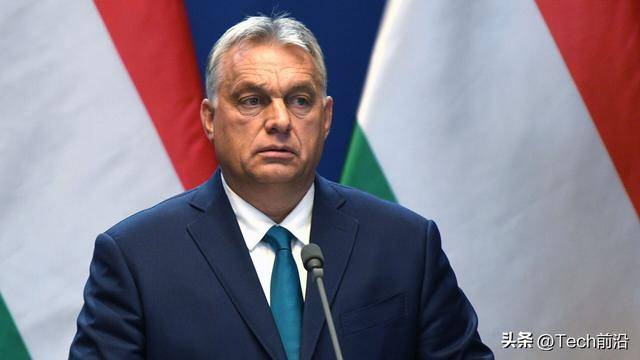
Group 1 - The European Union (EU) is facing internal contradictions regarding its sanctions on Russian energy, with Germany reportedly continuing to purchase Russian natural gas despite public commitments to ban it by the end of 2026 [2][3] - Hungary's Prime Minister, Viktor Orbán, criticized the sanctions as ineffective and harmful to the economy, highlighting the rising natural gas prices in Europe, which are significantly higher than in the US [2][3] - The sanctions have led to a decline in competitiveness for EU factories reliant on energy, with some relocating or shutting down, while Russia's GDP has reportedly increased by nearly 4% during the same period [3] Group 2 - The EU is considering new sanctions to formally prohibit Russian oil exports through the Druzhba pipeline to Germany and Poland, but these countries have already ceased imports, rendering the sanctions largely symbolic [3][4] - The internal discord within the EU is evident, as member states struggle to agree on sanctions, with Hungary's opposition posing a significant hurdle [4] - The situation raises questions about the future cohesion of the EU's so-called "sanction alliance," as member states may follow Germany's lead in circumventing sanctions [4]

油品:柴油带动炼厂利润上行,关注欧盟最新制裁细节
Sou Hu Cai Jing· 2025-07-28 02:27
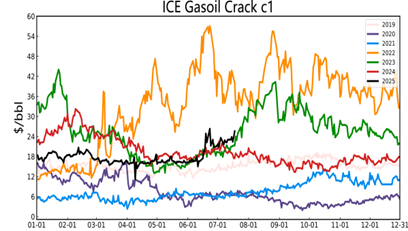
Core Viewpoint - Recent fluctuations in oil prices have been observed, with a significant increase in diesel profits since June, leading to the highest comprehensive profits for European and American refineries this year [1] Supply and Demand Dynamics - Global supply is increasing as OPEC enters a production increase phase and non-OPEC production gradually ramps up, leading to a stockpiling cycle [1] - The near-term European diesel market remains tight due to various factors, with refinery operating rates expected to be revised upwards for Q3 [1] - Diesel consumption in Europe has seen a decline of 80,000 barrels per day (1.7%) in April, while non-road diesel demand has increased by 160,000 barrels per day (15.7%) [10] Refinery Closures and Capacity - In 2023, European and American refineries are facing closures totaling 800,000 barrels per day, with several refineries already shut down or planned for closure [10] - A power outage in the Iberian Peninsula led to the forced shutdown of over 1.5 million barrels per day of refining capacity [10] Import Trends - As of the third week of July, European diesel imports remain 500,000 barrels per day lower than the same period last year, primarily due to low loading volumes from the Middle East [11] - The EU's new sanctions against Russia will impact approximately 300,000 barrels per day of diesel imports, tightening supply further [12] Market Outlook - The current low inventory levels and unreturned imports suggest a favorable medium-term outlook for European diesel, although short-term uncertainties remain [13] - The overall oil market is expected to remain in a fluctuating state, with refinery operating expectations revised upwards due to high diesel profits, despite an overall surplus in crude oil [14]