母女关系

Search documents
东亚女儿,不想再做妈妈的「精神老公」了
后浪研究所· 2026-02-06 06:11
Core Viewpoint - The article explores the complex emotional dynamics between daughters and their mothers, particularly in single-parent families, highlighting how daughters often become emotional support systems for their mothers, leading to a distorted mother-daughter relationship [5][7][19]. Group 1: Emotional Dependency - Daughters often take on the role of their mothers' emotional support, becoming "spiritual husbands" or "emotional mothers," which can lead to feelings of suffocation and loss of personal identity [7][19]. - The article describes how daughters like Xiaoye and Chengxi feel responsible for their mothers' happiness, often sacrificing their own emotional needs in the process [6][12]. - The emotional burden can manifest in various ways, including daughters feeling like they are the adults in the relationship, while their mothers behave like children [9][10]. Group 2: Impact on Personal Development - The deep emotional ties can hinder the daughters' ability to develop independent identities, leading to struggles with self-expression and personal relationships [12][17]. - Chengxi's experience illustrates how the pressure to maintain her mother's emotional stability affected her own mental health and social interactions [12][24]. - The article notes that these dynamics can shape the daughters' future relationships, making them wary of emotional dependency in partners [19][20]. Group 3: The Process of Detachment - As daughters grow older, the need to establish boundaries becomes crucial, often leading to a painful process of emotional detachment from their mothers [26][27]. - Xiaoye and Li Mi both seek to reduce their emotional dependency on their mothers, with Li Mi actively controlling the frequency of their communication [26][28]. - Chengxi's journey towards detachment involves confronting her mother and sharing her own struggles, which ultimately leads to a shift in their relationship dynamics [28][29]. Group 4: Transformation of Relationships - The article highlights that as daughters begin to assert their independence, the mother-daughter relationship can evolve, with mothers starting to rely on their daughters for support [29][30]. - Chengxi's relationship with her mother transforms from one of dependency to mutual support, indicating a significant shift in their emotional dynamics [30][31]. - The narrative concludes with a sense of hope, as mothers begin to recognize their daughters' needs and adjust their behaviors accordingly, fostering a healthier relationship [29][30].


她刺破的母职真相,多少东亚家庭都难以逃脱
3 6 Ke· 2025-09-24 00:45
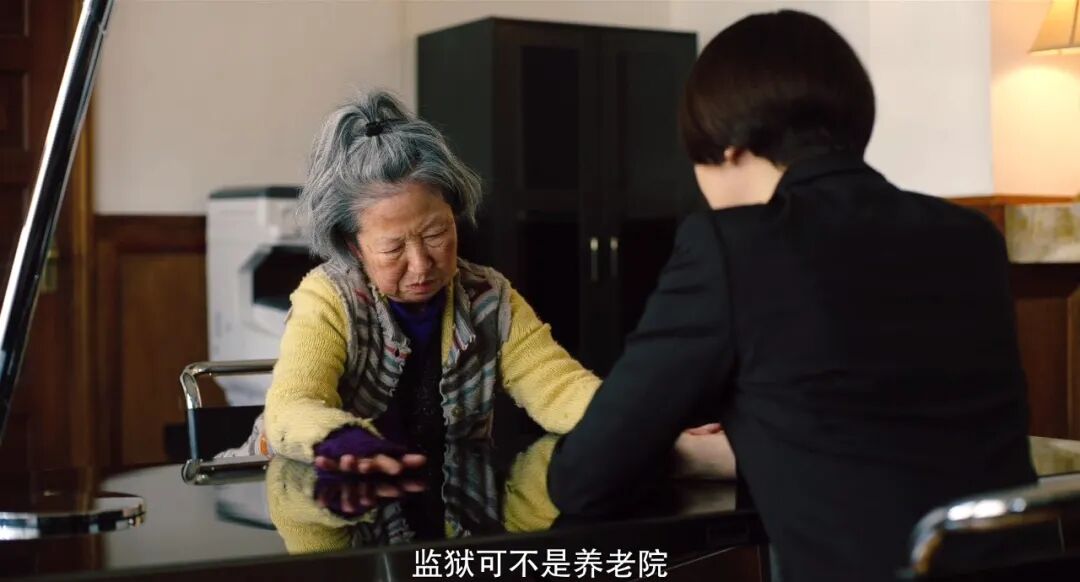
Core Viewpoint - The novels by Li Ting explore the complexities of mother-daughter relationships, addressing societal pressures and expectations placed on mothers, particularly in the context of aging, declining birth rates, and the treatment of special needs children [1][3][12]. Group 1: Themes and Concepts - The narrative of "Water in the Central Island" presents a dystopian future where elderly care facilities are repurposed for children, highlighting the societal shift in focus from the elderly to the younger generation [1][3]. - The protagonist, a resident of a nursing home, faces eviction as the facility transforms into a children's home, reflecting the harsh realities of societal expectations on motherhood [1][3]. - The author emphasizes the lack of a perfect mother, suggesting that societal pressures can lead to severe consequences for mothers who fail to meet expectations, termed "maternal punishment" [12][15]. Group 2: Personal Reflections and Inspirations - Li Ting's inspiration for her characters comes from real-life interactions with elderly individuals in nursing homes, exploring themes of memory, abandonment, and self-preservation [2][6]. - The author reflects on her own experiences as a mother and daughter, revealing the emotional complexities and generational conflicts inherent in these relationships [10][11]. - The narrative draws parallels between the author's life and the fictional experiences of her characters, particularly in the context of cultural differences between Chinese and Japanese family dynamics [10][24]. Group 3: Societal Commentary - The novels critique the societal tendency to prioritize children over the elderly, as seen in the character's experiences and the broader implications of declining birth rates and aging populations [3][12]. - The author discusses the emotional toll of societal scrutiny on mothers, where their worth is often judged based on their parenting abilities, leading to feelings of inadequacy and guilt [12][15]. - The narrative suggests that genuine emotional connections between mothers and children are more valuable than societal expectations, advocating for a focus on love and understanding rather than perfection [27].
314亿次讨论背后,中国式母女关系正在短视频里“破冰”
3 6 Ke· 2025-05-12 00:50
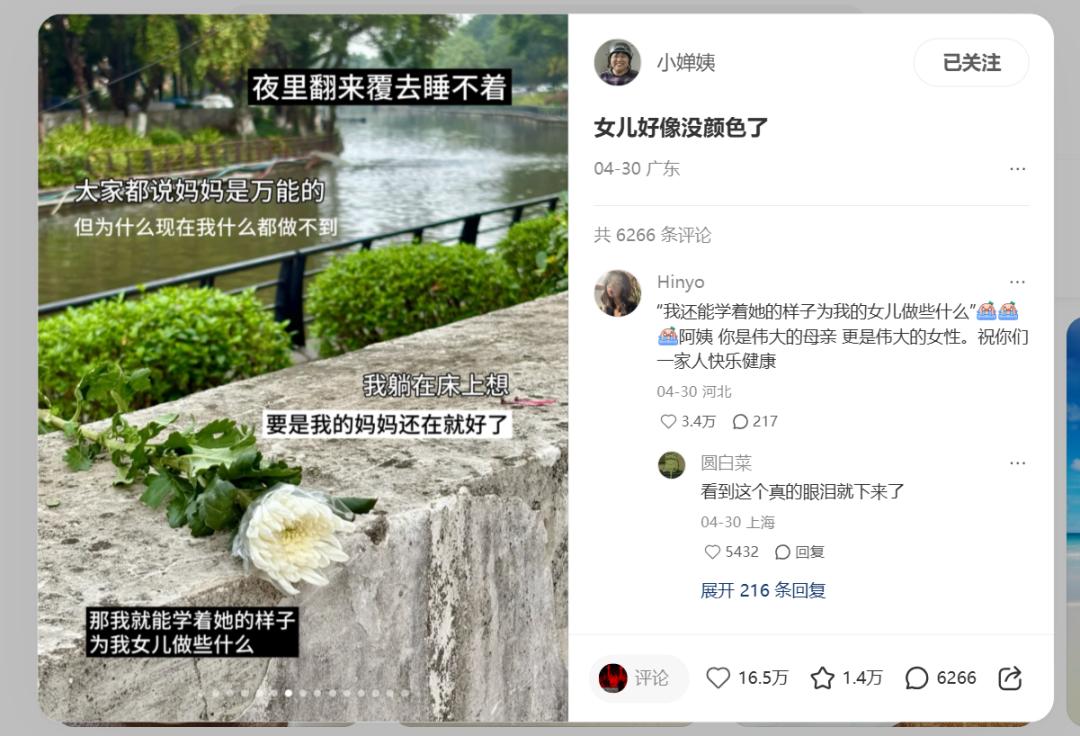
Core Insights - The article discusses the evolving dynamics of mother-daughter relationships, particularly in the context of social media and content creation, highlighting a shift from traditional narratives of conflict to themes of healing and understanding [3][30][40] Group 1: Social Media Trends - The topic of "mother-daughter daily life" has garnered significant attention on platforms like Douyin, with over 314.51 billion views and nearly 850,000 related posts in the past two years [4][19] - New content creators are redefining mother-daughter narratives, moving away from themes of control and trauma towards more relatable and healing interactions [4][30] Group 2: Content Creation and Engagement - The rise of "internet mothers" showcases a new idealized narrative where mothers and daughters share a bond characterized by mutual support and understanding [6][19] - Popular content includes themes of food exchange and daily life, with creators like "没事吃点饭" and "小婵姨" gaining substantial engagement, including 20.6 million likes on a specific video [11][38] Group 3: Cultural Shifts - The article notes a cultural shift in how mother-daughter relationships are perceived, with a growing desire for authentic dialogue and connection rather than conflict [30][32] - Commercial partnerships are emerging around these narratives, indicating a market opportunity for brands to engage with this evolving relationship dynamic [38][40]