
汉字文化

Search documents
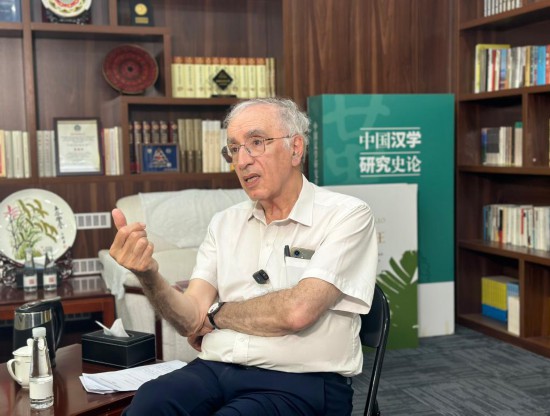
东西问·马年说马丨“汉字叔叔”解“马”:一“马”奔驰三千年
Xin Lang Cai Jing· 2026-02-17 13:16
Core Perspective - The article discusses Richard Sears, known as "Uncle Hanzi," and his exploration of the evolution of the Chinese character for "horse" (马), highlighting its historical significance and cultural implications over three millennia [3][4][5]. Group 1: Historical Evolution of the Character "马" - The earliest depiction of "马" was found in oracle bone script from the Shang Dynasty, representing a side view of a horse, indicating its domestication and importance in rituals and warfare [5]. - During the Qin Dynasty, the character transformed into a more abstract form in small seal script, reflecting the standardization of writing initiated by Emperor Qin Shi Huang, which prioritized efficiency in communication [6]. - The character evolved into the regular script (楷书), maintaining its structure while becoming more common in literature and art during the Tang and Song dynasties, symbolizing the integration of horse culture into everyday life [7]. - The modern simplified character "马" has lost its detailed features, representing a shift towards educational accessibility in the 20th century, illustrating the transition of Chinese culture from mysticism to modernity [8]. Group 2: Cultural Significance and Cross-Cultural Comparisons - Sears draws parallels between the character "马" and its representations in different cultures, such as the Trojan Horse in Greek mythology, which symbolizes deception, contrasting with the horse's role in the ancient Tea Horse Road as a symbol of trust and exchange [10]. - The character "马" encapsulates diverse narratives, from warfare to trade, showcasing its multifaceted meanings across civilizations [10]. - Sears emphasizes the importance of his work in digitizing ancient Chinese characters, making them accessible globally, and fostering cross-cultural understanding [12].

讲好汉字故事 2026长沙—台湾汉字艺术文化交流共创计划将启
Xin Lang Cai Jing· 2026-02-13 09:02
Group 1 - The "2026 Changsha-Taiwan Chinese Character Art and Cultural Exchange Co-Creation Plan" will officially launch on February 15, inviting people from both sides of the Taiwan Strait who love traditional Chinese culture to participate in a cultural event that will last until May 1 [1] - The event is initiated by the Hunan Songdan Chinese Character Art Museum and encourages diverse participants, including families, teachers, and community groups, to engage in various artistic expressions such as seal carving, calligraphy, poster design, and digital art [1][2] - The event aims to deeply explore the cultural connotations behind Chinese characters, showcasing the richness and vitality of traditional Chinese culture [1] Group 2 - Participants can register through the "I Changsha" city image website, where they are required to document their creative process related to Chinese characters in the form of short videos and images [2] - A multi-tiered reward mechanism is established to recognize outstanding creations and active participation, with winners receiving provincial honor certificates and opportunities for exhibitions and workshops in Changsha [2][3] - The event will also provide opportunities for award-winning authors to collaborate with the museum on cultural projects and exhibitions, while guiding individuals will receive "Excellent Guidance Award" certificates and be recommended for official cultural exchange projects [3]
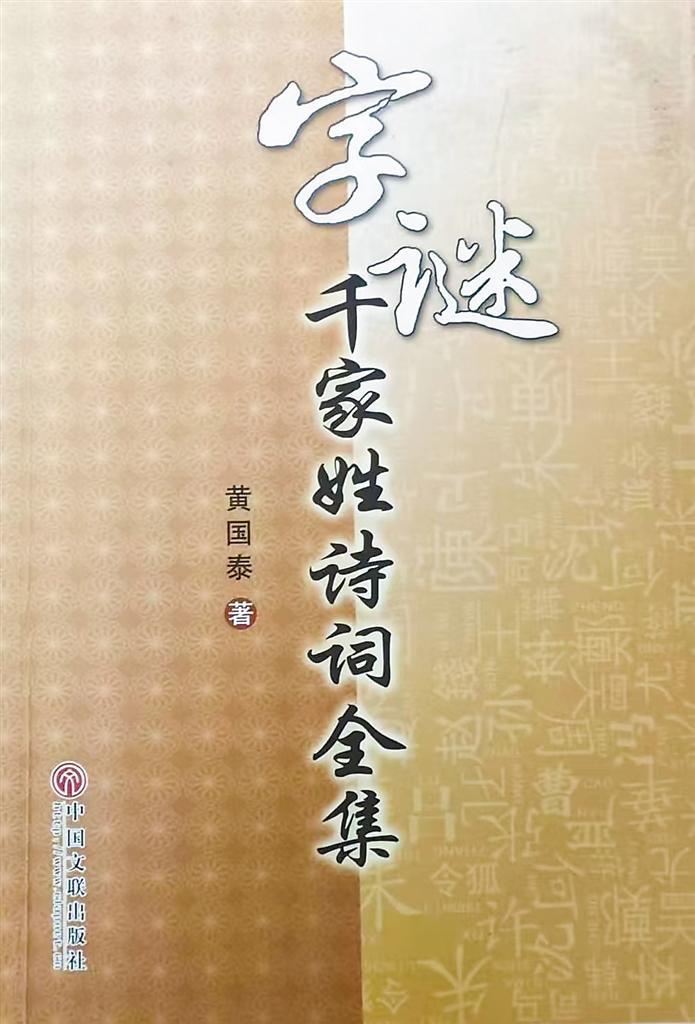
中华姓氏皆有韵
Xin Lang Cai Jing· 2026-02-03 04:21
Core Viewpoint - The article discusses the creation and significance of the book "Riddles: Complete Collection of Surnames in Poetry," which combines traditional Chinese culture with modern riddle-making techniques, emphasizing the depth and beauty of Chinese characters and surnames [4][5][6]. Group 1: Book Overview - The book consists of 680 pages, featuring riddles based on 1,890 surnames, with a focus on the cultural richness of Chinese surnames [5][6]. - It includes various poetic forms and techniques to create riddles, showcasing the author's dedication and extensive research over six years [6][7]. Group 2: Cultural Significance - The work highlights the importance of surname culture in Chinese education, tracing its roots back to classical texts like "Hundred Family Surnames" and "Thousand Character Classic" [4][5]. - The author aims to connect traditional culture with modern education, making the study of Chinese characters engaging and enjoyable for younger generations [7]. Group 3: Riddle Techniques - The book employs diverse riddle-making methods, including direct reference to character strokes, associative imagery, and literary allusions, enhancing the educational value of the riddles [6][7]. - Examples from the book illustrate how historical figures and literary works are integrated into the riddles, enriching the cultural context and making learning more interactive [6][7].
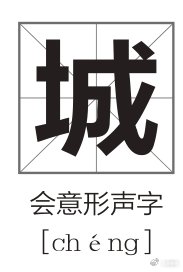
每周学一个汉字:城
Xin Lang Cai Jing· 2026-01-11 14:08
Group 1 - The term "城" originally refers to city walls, indicating the concept of urban areas and their surrounding rural regions, as seen in phrases like "万里长城" (the Great Wall) and "城市" (city) [6] - The character's evolution shows a simplification in its representation, with the left side changing to "土" (earth) while the right side remains unchanged, reflecting its historical significance [6] - The term has expanded to encompass specialized markets or large service entities, often named with "城," such as "图书城" (book city) and "美食城" (food city) [6] Group 2 - "城隍" specifically refers to the deity guarding the city walls and moats, with historical roots in local governance and community respect, often represented by a loyal figure chosen by the people [6]
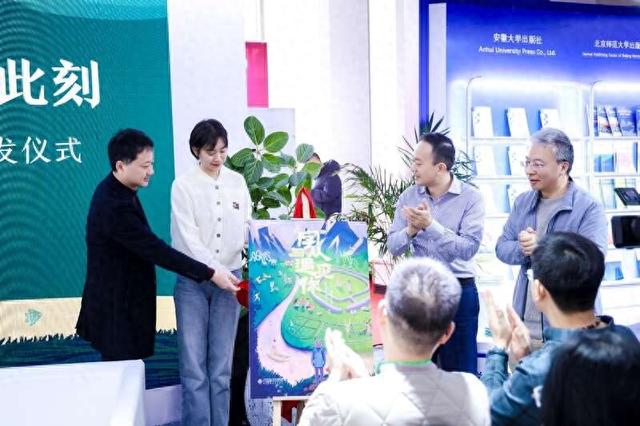
《“字”从遇见你》:让“高冷”的甲骨文走进千家万户
Xin Lang Cai Jing· 2026-01-10 04:04
Core Viewpoint - The book "字从遇见你" aims to make the study of oracle bone script more accessible to the general public, allowing more Chinese people to understand the cultural significance behind Chinese characters and feel the tangible warmth of civilization [1]. Group 1: Book Overview - The book is published by Beijing Normal University Press and focuses on the development of Chinese characters, featuring 25 interesting characters presented in a novel format, including rap interpretations for younger audiences [3]. - The book serves as a supplement and expansion to an original documentary, adding knowledge points to enhance understanding [3]. Group 2: Cultural Significance - Professor Yan Zhibin emphasizes the deep connections between ancient script research and modern life, illustrating how ancient characters influence contemporary historical understanding [3]. - The example of "宁王" being identified as "文王" through comparative studies of unearthed documents highlights the evolution of character forms and the resilience of Chinese characters from ancient times to the digital age [3]. Group 3: Creative Presentation - Director Yang Dingkun notes that both the documentary and the book underwent significant creative reworking to adapt to audience changes, incorporating elements like comics and animations to convey the cultural essence of Chinese characters effectively [5]. - The creative approach has received positive feedback, demonstrating the effectiveness of modern expressions in engaging audiences [5].
探寻“马”字背后的文化密码
Su Zhou Ri Bao· 2026-01-04 00:54
Group 1 - The "Chaiyuan Wenyin" cultural lecture series aims to enhance literary literacy among youth and promote local Suzhou culture through a series of themed activities [2] - The second lecture featured renowned writer and Chinese character culture expert Zhu Mengyi, who engaged young reporters with a lesson on the cultural significance of the character "horse" [1] - Zhu Mengyi's approach included interactive questions that sparked curiosity among the young participants, highlighting the relationship between dragons and horses in Chinese culture [1] Group 2 - The event was held at the Suzhou Education Museum, showcasing the historical significance of the venue in Suzhou's educational memory [1] - The collaboration between Suzhou Daily and Suzhou Education Museum leverages quality resources to support cultural education initiatives [2] - Participants expressed a deep appreciation for the beauty of Chinese characters and the richness of Chinese culture following the lecture [1]
台湾新竹文字特展邀市民探索汉字故事
Xin Hua She· 2025-12-08 01:52
Group 1 - The core theme of the news is the launch of a special exhibition in Hsinchu, Taiwan, focusing on the art and evolution of Chinese characters, aiming to engage the public and enhance understanding of the cultural significance of these characters [1][2] - The exhibition features various works from Taiwanese calligraphers, including seal carvings and calligraphy pieces, showcasing the historical trajectory of Chinese characters through different mediums such as inscriptions, writing, and printing [1] - Concerns are raised about the declining writing skills among Taiwanese students, with a volunteer expressing that current educational policies may lead to a further decrease in students' understanding and ability to write Chinese characters [2] Group 2 - The exhibition will run until January 18, 2026, and will include activities such as movable type printing experiences, providing interactive learning opportunities for visitors [3]
法国汉学家白乐桑与汉字的半世纪情缘
Xin Hua She· 2025-12-03 01:04
Core Perspective - The article highlights the deep connection between French sinologist Bai Lesang and Chinese characters, emphasizing his lifelong dedication to promoting Chinese language and culture in France [3][4][5]. Group 1: Bai Lesang's Background and Contributions - Bai Lesang, born in 1950, has over fifty years of experience with the Chinese language and is a key figure in Sino-French cultural education cooperation [3][4]. - He was the first Chinese language supervisor for the French Ministry of National Education and has witnessed the growth of Chinese language education in France, with nearly a thousand schools offering Chinese courses [3][4]. - Bai's journey with the Chinese language began in a Parisian restaurant, where he was captivated by Chinese characters, leading him to study Chinese at Paris VIII University in 1969 [4][5]. Group 2: Cultural Insights and Aesthetic Appreciation - Bai Lesang views Chinese characters as not just a writing system but as a cultural memory and a "poetic" existence, expressing a deep appreciation for Chinese poetry and idioms [5][6]. - He finds beauty in the structure of Chinese characters, particularly enjoying the character "我" (I), which he has practiced in calligraphy to appreciate its aesthetic value [5][6]. - Bai has traveled to China hundreds of times since the 1970s, deepening his understanding of Chinese culture and its connection to Chinese characters [6][7]. Group 3: Promotion of Chinese Culture in France - Bai Lesang has initiated cultural events such as the first Paris Chinese Character Festival in 2019, aimed at allowing people to experience the beauty of Chinese characters firsthand [6][7]. - He has documented unique Chinese calligraphy forms, such as "地书" (ground calligraphy), and shared them in France to enhance local understanding of Chinese character aesthetics [6][7].
大兴区拟新增两家“类博物馆”
Xin Jing Bao· 2025-11-19 01:56
Core Insights - The article discusses the recent approval of two "quasi-museum" institutions in Daxing District, Beijing, which are now recognized as important cultural dissemination platforms [1] Group 1: Quasi-Museum Developments - The Beijing Municipal Bureau of Cultural Heritage has conducted a centralized acceptance inspection for various district applications, resulting in the approval of the Beijing Hongwen Boya Thangka Museum and the Beijing Zhongyuan Hanzi Cultural Museum after necessary improvements [1] - Currently, there are a total of seven "quasi-museums" in Daxing District, contributing significantly to local cultural communication [1] Group 2: Beijing Hongwen Boya Thangka Museum - Located in Weishanzhuang Town, the museum focuses on the intangible cultural heritage of Thangka art, showcasing its creation process, thematic evolution, and cultural integration [1] - The museum houses a significant collection of Thangka artworks, ranking among the top in Beijing, and serves as a vital resource for studying Tibetan culture and the exchange between Tibetan and Han cultures [1] - The museum enhances national identity through the introduction of cultural and creative products and various experiential activities [1] Group 3: Beijing Zhongyuan Hanzi Cultural Museum - Situated within the China Calligraphy Institute, this museum specializes in Hanzi culture and calligraphy, featuring over a hundred exhibits [1] - The museum presents the evolution of Chinese characters through seven styles, including oracle bone script and regular script, arranged chronologically to illustrate the development of Hanzi culture [1] - It aims to preserve and promote the profound heritage of Chinese character culture through its exhibits [1]
感受汉字魅力 促进民心相通
Ren Min Ri Bao· 2025-09-21 22:41
Core Viewpoint - The "China-Thailand Family" event celebrating the 50th anniversary of diplomatic relations between China and Thailand, along with the first Bangkok Chinese Character Art Festival, successfully showcased Chinese culture and fostered cultural exchange between the two nations [1][2]. Group 1: Event Overview - The event took place at Chulalongkorn University in Bangkok and included exhibitions, lectures, roundtable forums, and hands-on activities, attracting thousands of participants from various Thai universities and government departments [1]. - Activities such as wood movable type printing, Huzhou brush writing, and Chinese character puzzles allowed Thai participants to experience the charm of Chinese culture firsthand [1]. Group 2: Cultural Significance - The festival featured over a hundred Chinese character art pieces created by artists from both China and Thailand, showcasing the evolution of Chinese characters from oracle bone script to seal script and regular script, highlighting their artistic and philosophical depth [1]. - The "Chinese Character Spirit, Thai Craftsmanship" cultural and creative exhibition received positive feedback, demonstrating the integration of traditional culture with modern design through products like Huzhou brushes, silk, and jewelry [2]. Group 3: Future Prospects - The event is seen as a significant achievement in cultural exchange and cooperation, with expectations to enhance mutual understanding and friendship between the peoples of China and Thailand [2]. - Initiatives such as the "China-Thailand Youth Huzhou Study Program" and the "Twin Cities Future Plan" were promoted, indicating ongoing efforts to strengthen ties between the two countries [2].