汽车市场结构性调整

Search documents
2月车市迎结构性调整:吉利独破20万辆,比亚迪海外销量首超国内
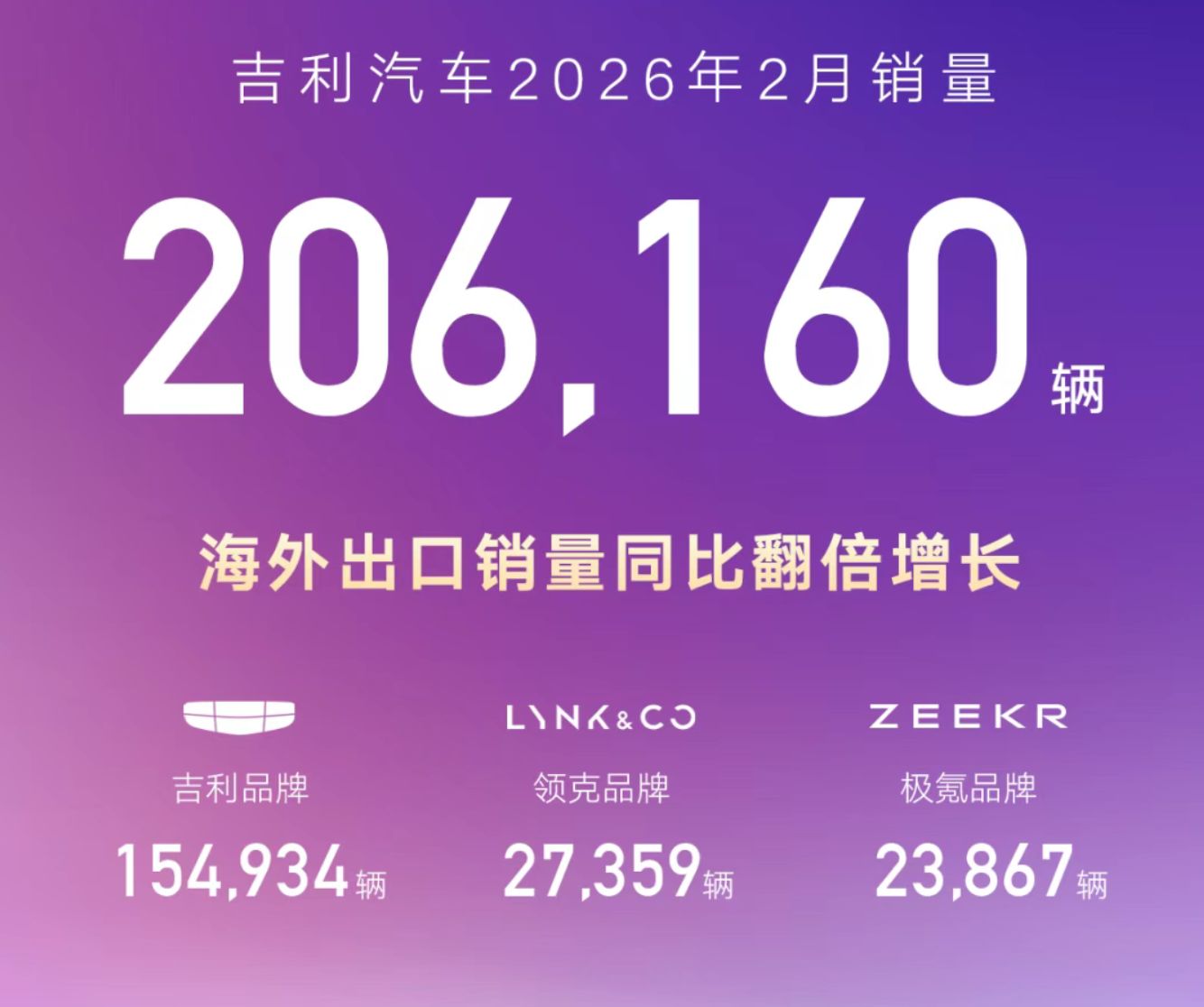
Mei Ri Jing Ji Xin Wen· 2026-03-02 10:21
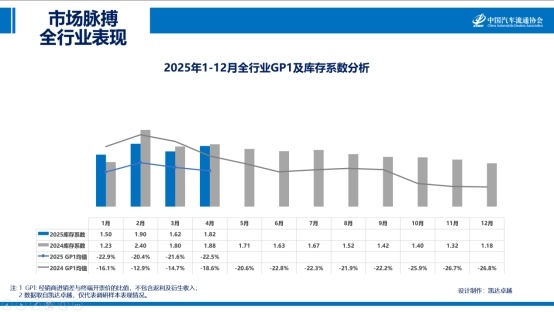
Core Insights - The automotive market is experiencing a significant decline in sales during the Chinese New Year period, with many dealerships reporting low customer traffic and minimal transactions [1][6] - A majority of dealers, 76.8%, indicated that February sales did not meet their expectations, reflecting a challenging market environment [1][6] Group 1: Sales Performance - Among traditional automakers, only a few companies, including Geely, BYD, Chery, Great Wall, SAIC, and Dongfeng Honda, have reported their February sales figures [2] - Geely's sales exceeded 200,000 units in February, reaching 206,200 units, a slight increase of 1% year-on-year [3] - BYD's February sales were 190,200 units, while SAIC's sales for domestic brands (excluding joint ventures) were 187,000 units [3] - Chery's sales reached 160,800 units, and Great Wall's sales were 72,600 units, showing a year-on-year decline of 6.79% [3] Group 2: Export Trends - BYD's overseas sales surpassed 100,000 units in February, marking a year-on-year increase of 41.4%, and for the first time, exceeded domestic sales [5] - Chery's export volume was 124,900 units, also reflecting a year-on-year growth of 41.5% [5] Group 3: Market Competition - The automotive industry is facing intensified competition, with executives from Changan and SAIC-GM Wuling warning of a complex competitive environment ahead [7] - Many joint venture brands have not released their February sales data, indicating a cautious outlook on short-term market trends [6][7] - Joint venture brands are responding to market pressures with significant discounts, such as Buick and Honda offering price cuts of up to 100,000 yuan [7][8] Group 4: Promotional Strategies - Some joint venture brands, including Dongfeng Honda and GAC Honda, have released their February sales data, with GAC Toyota reporting 41,800 units sold, driven by models like Camry and Highlander [8] - Dongfeng Honda achieved sales of 17,600 units, a year-on-year increase of 10.1%, largely due to low sales figures in the previous year [8] - Zhengzhou Nissan reported sales of 4,531 units, a significant year-on-year increase of 57.5%, with a notable rise in new energy vehicle sales [9]


油电竞争共存,汽车行业将迎结构性重塑
Bei Jing Shang Bao· 2025-12-19 12:28
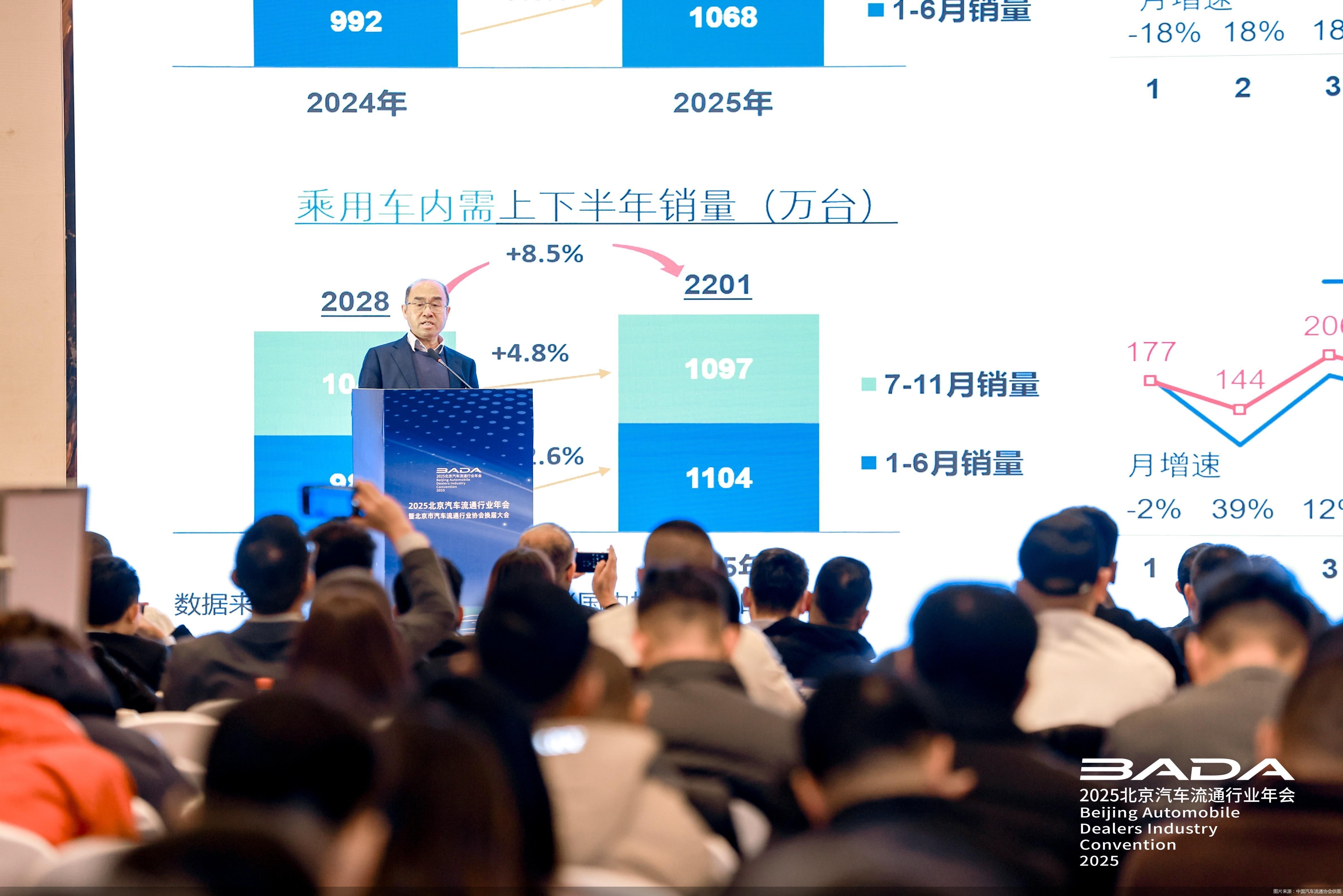
Core Insights - The automotive market in China is transitioning from rapid growth to a phase of structural adjustment and high-quality transformation, with key themes including ecological coexistence of fuel and electric vehicles, brand restructuring, and global strategic upgrades [1] Market Overview - China's automotive sales are projected to reach 24.4 million units by 2025, marking a historical high, driven by vehicle scrappage and replacement policies. However, a decline in sales growth is noted, with terminal sales dropping by 4.4% from July to November and a significant 20% decrease in December [4] - For 2026, the automotive market is expected to stabilize due to macroeconomic stability and policy optimization, with structural changes anticipated during the 14th Five-Year Plan [4] Energy Structure Transformation - By 2025, the penetration rate of new energy vehicles (NEVs) is expected to reach 52.7%, a significant increase from 4.4% in 2018. The market is projected to evolve towards a 30% fuel vehicle and 70% electric vehicle ratio by around 2030, driven by product improvement, the rising share of the post-95 generation in car purchases, and deep integration of smart technology [4][5] Brand Restructuring - The market share of domestic brands has risen to 64.3%, with expectations to exceed 65% for the year. By 2030, the market is anticipated to shift to a 30% joint venture and 70% domestic brand ratio, influenced by GDP growth, electrification, and intense market competition [5] - Currently, 75 out of every 100 domestic brand vehicles are NEVs, compared to only 6 out of 100 for joint venture brands, highlighting a significant difference in transformation pace [5] Global Strategic Upgrades - Domestic brands currently account for 16% of overseas sales, projected to rise to 30% by 2030, with a distribution of 30% overseas and 70% domestically. Chinese electric vehicles are performing well in emerging markets, with 55 out of every 100 sold in regions like ASEAN and Latin America originating from China [6] - The transformation in the automotive market presents both challenges and opportunities, particularly for dealers who can leverage product iteration and overseas market expansion for growth [6] Dealer Challenges and Opportunities - Automotive dealers face survival challenges amid economic pressures and industry transformation, emphasizing the importance of service as a foundation for survival. Companies are encouraged to embrace new energy and integrate into the new energy sales service system while utilizing new technologies like artificial intelligence for innovative marketing strategies [6]
2025中国汽车流通行业百强排行榜即将发布
Huan Qiu Wang· 2025-05-16 07:44
Group 1 - The 2025 China Automobile Dealer Conference will be held from May 21 to 23 in Chengdu, focusing on the release of the "Top 100 Rankings of China's Automobile Circulation Industry" based on total annual revenue as the core evaluation metric [1] - The rankings are being released in conjunction with the 15th anniversary of their establishment and will introduce the "Automobile Dealer Group Performance Assessment Model" (PAM) for the first time, which reconstructs the evaluation standards of enterprise competitiveness through a multi-dimensional indicator system [1][3] - The top 100 enterprises have an annual revenue scale of nearly 2 trillion yuan, selling approximately 10 million vehicles annually, covering nearly 10,000 service outlets, and creating over 400,000 jobs [1] Group 2 - The automotive market is currently undergoing structural adjustments, with a report indicating that the gross profit margin for new car business is expected to continue declining, with a decrease of 6.8 percentage points in January 2025 compared to the same period [3] - The conference will also report on the progress of the "Automobile Dealer Exit Mechanism," which includes proposals for regulatory revisions such as expanding the definition of dealers and strengthening supplier information disclosure obligations [3] - The PAM model introduces 12 core indicators, including profitability, operational efficiency, and customer satisfaction, utilizing an industry quadrant positioning method for visual analysis of enterprise competitiveness, serving as a data support tool for industry policy formulation [3]