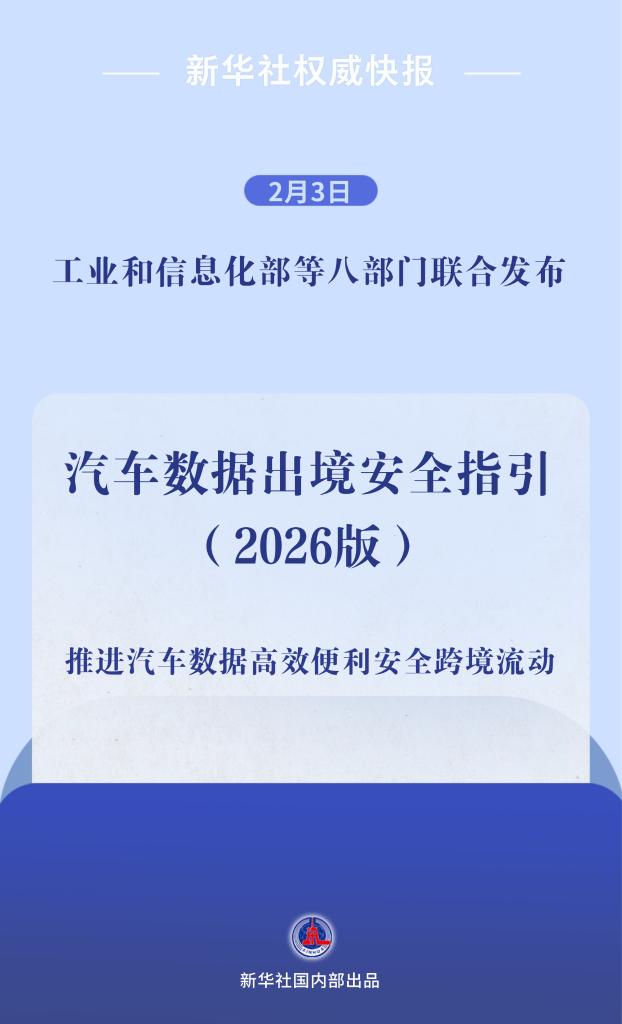
汽车数据出境安全

Search documents
【行业政策】一周要闻回顾(2026年2月2日-2月8日)
乘联分会· 2026-02-09 08:37
Core Viewpoint - The article discusses the release of the "Automotive Data Export Security Guidelines (2026 Edition)" by the Ministry of Industry and Information Technology, aimed at ensuring safe and efficient cross-border data flow in the automotive industry while complying with national data security laws [3][5]. Group 1: Purpose of the Guidelines - The guidelines are designed to implement the decisions of the Central Committee and the State Council regarding the establishment of a safe and efficient data cross-border flow mechanism [5]. - They aim to enhance the convenience of automotive data export, clarify management methods, and promote orderly cross-border data flow to support high-quality development in the automotive industry [5]. - The guidelines also reflect China's approach to global data cross-border cooperation, particularly in the automotive sector [5]. Group 2: Main Content of the Guidelines - The guidelines consist of four main parts: general provisions, important data determination, data export processes, and security protection requirements [6]. - General provisions outline the conditions for data export security assessment and the types of contracts required for personal information export [6]. - Important data determination focuses on typical business scenarios in the automotive industry, detailing rules for identifying important data [6]. - The data export process specifies requirements for identifying, managing, and assessing important data during export activities [6]. - Security protection requirements guide automotive data processors in establishing comprehensive data export security capabilities [10]. Group 3: Implementation and Future Steps - The Ministry of Industry and Information Technology plans to promote the guidelines through training, data identification, enhancing security levels, and international cooperation [11]. - Continuous tracking and adjustment of important data determination rules will be conducted to keep pace with industry developments [9]. - The guidelines will facilitate a more efficient and secure international automotive data flow framework [11].


新版汽车数据出境安全指引发布 不要求企业提供数据本身
Ren Min Ri Bao· 2026-02-04 22:06
Core Viewpoint - The Ministry of Industry and Information Technology, along with seven other departments, has issued the "Automotive Data Export Security Guidelines (2026 Edition)" to enhance the security and efficiency of cross-border automotive data flow [1] Group 1: Guidelines Overview - The guidelines outline the management methods and applicable conditions for automotive data export activities, introducing nine exemption scenarios [1] - Important data determination rules are specified for various business scenarios, including research and development, manufacturing, automated driving, software upgrades, and connected operations [1] Group 2: Data Protection Requirements - The guidelines require companies to provide specific characteristics of important data and personal information intended for overseas transmission, including data type, industry involved, and scale, without needing to disclose the data itself [1] - Protection requirements are proposed in areas such as management systems, technical safeguards, log management, and emergency response [1] Group 3: Ongoing Adjustments - The Ministry of Industry and Information Technology emphasizes the need for timely adjustments to important data determination rules in response to the rapid development of new technologies and business models in the automotive industry [1] - Continuous tracking and research will be conducted by the Ministry in collaboration with relevant departments to update the guidelines as necessary [1]
汽车早报|现代汽车1月销量同比减少1% 丰田汽车将在巴西设立生物燃料实验室
Xin Lang Cai Jing· 2026-02-04 00:38
Group 1: Automotive Data Regulations - The Ministry of Industry and Information Technology and seven other departments issued the "Automotive Data Export Security Guidelines (2026 Edition)" which outlines conditions under which automotive data processing entities must comply when exporting data outside of China [1] Group 2: Automotive Sales Performance - Geely's Star Yue L reported sales of 25,066 units in January [1] - Jiangling Motors announced January sales of 26,800 units, representing a year-on-year increase of 25.59% [1] - Qianli Technology reported a significant year-on-year increase of 162.79% in January automotive sales, totaling 7,119 units [2] - Hyundai's total sales decreased by 1% year-on-year to 307,699 units in January, while Kia's sales increased by 2.4% to 245,557 units [2] - Kia's sales in the U.S. reached 64,502 units in January, marking a 13% year-on-year increase [4] Group 3: Automotive Recalls - Chrysler is recalling 80,620 units of the Jeep Grand Cherokee due to potential issues with rear coil springs that may detach while driving [3] Group 4: Strategic Partnerships - ZF Group signed a long-term supply agreement with BMW for passenger car transmission systems, with a contract value in the billions of euros, effective until the end of the 2030s [5] Group 5: Semiconductor Industry Insights - NXP Semiconductors reported that its automotive business contributed over half of its revenue in Q4 2025, with total revenue of $3.34 billion and automotive revenue of $1.88 billion, reflecting a year-on-year growth of 4.8% [7] - NXP's executive highlighted that Chinese automotive companies are the most active players in the implementation of AI technologies [6][7]
车企进入“体系出海”新阶段 汽车数据出境安全指引筑牢合规底座、降低跨境风险
Yang Shi Wang· 2026-02-03 09:48
Core Viewpoint - The release of the "Automotive Data Export Security Guidelines (2026 Edition)" aims to establish an efficient, convenient, and secure mechanism for the cross-border flow of automotive data in China [1][2]. Group 1: Guidelines Overview - The guidelines target various scenarios including automotive R&D, manufacturing, automated driving, software upgrades, and connected operations, detailing important data identification rules [1]. - The guidelines emphasize conducting security assessments for data exports and establishing standard contracts for personal information exports to enhance data protection levels [1][2]. Group 2: Industry Context - The global digital economy and industrial cooperation are increasingly intertwined, leading to stricter governance on cross-border data flow [2]. - By 2025, China's automotive production and sales are expected to exceed 34 million units, with exports surpassing 7 million units, highlighting the growing importance of automotive data as a key production factor [2]. Group 3: Data Export Categories - The guidelines apply to three categories of automotive data export behaviors: 1. Data collected and generated during domestic operations being transmitted abroad 2. Data stored domestically but accessible by foreign entities 3. Activities involving the processing of personal information of domestic individuals abroad, in compliance with the Personal Information Protection Law [4][5]. Group 4: Importance of the Guidelines - The guidelines provide a clear framework for automotive data processing entities, which include manufacturers, suppliers, telecom operators, and service providers, ensuring compliance with the new regulations [5]. - The introduction of 27 categories and 51 items of important data and corresponding identification rules is a significant step towards supporting the international expansion of Chinese automotive enterprises [5]. Group 5: Policy Implications - The guidelines are designed not only as regulatory constraints but also as enabling policies that balance safety and development needs, facilitating compliance for Chinese automotive companies going abroad [7].
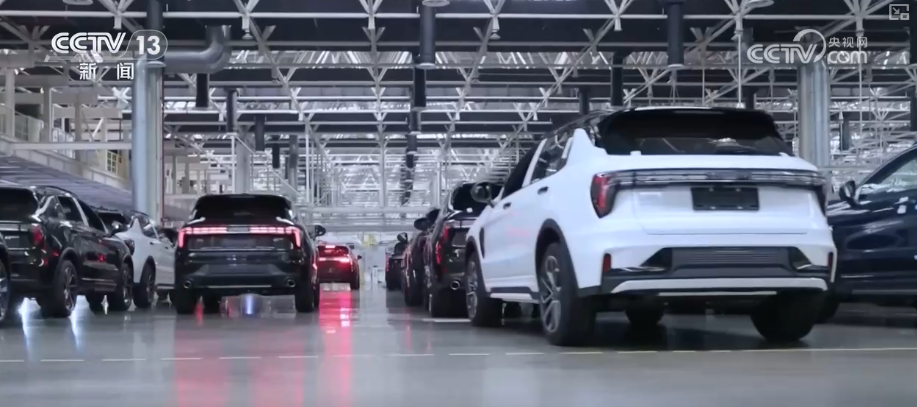
八部门联合印发《汽车数据出境安全指引(2026版)》
Bei Jing Shang Bao· 2026-02-03 09:29
Core Viewpoint - The Ministry of Industry and Information Technology, along with seven other departments, has issued the "Automotive Data Export Security Guidelines (2026 Edition)" to enhance data security for automotive data exports [1] Group 1: Overview of the Guidelines - The guidelines focus on various scenarios including automotive research and design, manufacturing, automated driving, software upgrades, and connected operations [1] - They detail important data determination rules and outline methods for conducting data export security assessments and establishing standard contracts for personal information exports [1] Group 2: Key Focus Areas - The guidelines address three types of automotive data export behaviors: 1. Transmission of data collected and generated during domestic operations to overseas entities 2. Situations where data exists domestically but can be accessed or exported by foreign organizations or individuals 3. Activities involving the processing of personal information of domestic individuals overseas in compliance with the Personal Information Protection Law of the People's Republic of China [1] Group 3: Compliance Requirements - The guidelines align with the National Cyberspace Administration's "Data Export Security Assessment Declaration Guidelines (Third Edition)" and require companies to provide specific characteristics of important data and personal information intended for overseas transmission during the declaration process [1]
工信部、国家网信办、国家发改委、国家数据局、公安部、自然资源部、交通运输部、市场监管总局联合印发通知
券商中国· 2026-02-03 08:54
Core Viewpoint - The release of the "Automotive Data Export Security Guidelines (2026 Edition)" aims to establish an efficient, convenient, and secure mechanism for the cross-border flow of automotive data in China [1][2]. Group 1: Overview of the Guidelines - The guidelines focus on various scenarios including automotive research and design, production, automated driving, software upgrades, and connected operations, detailing important data determination rules and safety assessment processes for data export [2][4]. - The guidelines are applicable to automotive data processors providing data to entities outside of China, covering three main categories of data export behavior [4]. Group 2: Categories of Data Export Behavior - The first category involves transferring data collected and generated during domestic operations to overseas [5]. - The second category pertains to data that, while stored domestically, can be accessed or exported by foreign organizations or individuals [5]. - The third category includes activities involving the processing of personal information of domestic individuals outside of China, in accordance with the Personal Information Protection Law [5]. Group 3: Importance of Automotive Data - With the global digital economy and industrial cooperation deepening, countries are increasingly strengthening governance over cross-border data flow [3]. - By 2025, China's automotive production and sales are expected to exceed 34 million units, with exports surpassing 7 million units, highlighting the significance of automotive data as a key production factor [3]. - A high-level autonomous driving test vehicle can generate up to 10TB of data daily, indicating the high frequency and rigidity of data generated across the entire automotive industry chain [3]. Group 4: Implications for Automotive Enterprises - The guidelines introduce a clear identification rule for "important data," specifying 27 categories and 51 items of important data along with corresponding determination rules [5]. - The introduction of these guidelines is closely related to the international expansion of Chinese automotive enterprises, which will further support their overseas operations and international business layout [5].
工信部等八部门联合发布安全指引 规范三类汽车数据出境行为
智通财经网· 2026-02-03 08:39
Core Viewpoint The Ministry of Industry and Information Technology and eight other departments have issued the "Automotive Data Export Security Guidelines (2026 Edition)" to regulate the management of automotive data export activities, enhance data security protection, and provide specific rules for identifying important data and protection requirements. Group 1: Overview of the Guidelines - The guidelines aim to implement various laws and regulations, including the Data Security Law and the Personal Information Protection Law, to facilitate safe cross-border data flow while ensuring data security [2][4]. - The guidelines detail the management methods and applicable conditions for automotive data export activities, including nine exemption scenarios for data export [1][5]. Group 2: Data Export Management - Automotive data processors must declare a data export security assessment if they provide important data or exceed certain thresholds for personal information exports, such as providing data for over 1 million individuals [5][6]. - Exemptions from declaring data export security assessments include scenarios where data is collected and generated outside China and then processed domestically before being exported [7][8]. Group 3: Important Data Identification - The guidelines specify important data categories based on various business scenarios, including research and development, production, automated driving, software upgrades, and connected operations [11][19]. - Specific rules for identifying important data include criteria related to national key projects, export control lists, and sensitive information [12][13]. Group 4: Data Export Process - The data export process includes steps such as identifying important data, conducting security assessments, signing standard contracts for personal information export, and obtaining certification for personal information export [45][46]. - The guidelines emphasize the need for automotive data processors to establish pre-protection, monitoring, and post-disposal capabilities for data export security [1][5].

新华社权威快报 | 瞄准高效便利安全 新版汽车数据出境安全指引发布
Xin Hua She· 2026-02-03 08:32
Core Viewpoint - The Ministry of Industry and Information Technology, along with eight other departments, has released the "Automotive Data Export Security Guidelines (2026 Edition)" to enhance the efficiency, convenience, and security of automotive data cross-border flow [4]. Group 1: Guidelines Overview - The guidelines outline the management methods and applicable conditions for automotive data export activities [4]. - Nine categories of exemption scenarios are specified, targeting various business contexts such as research and development, manufacturing, automated driving, software upgrades, and connected operations [4]. - Important data determination rules are detailed, along with protective requirements to guide automotive data processors in conducting data export activities in a standardized manner [4].
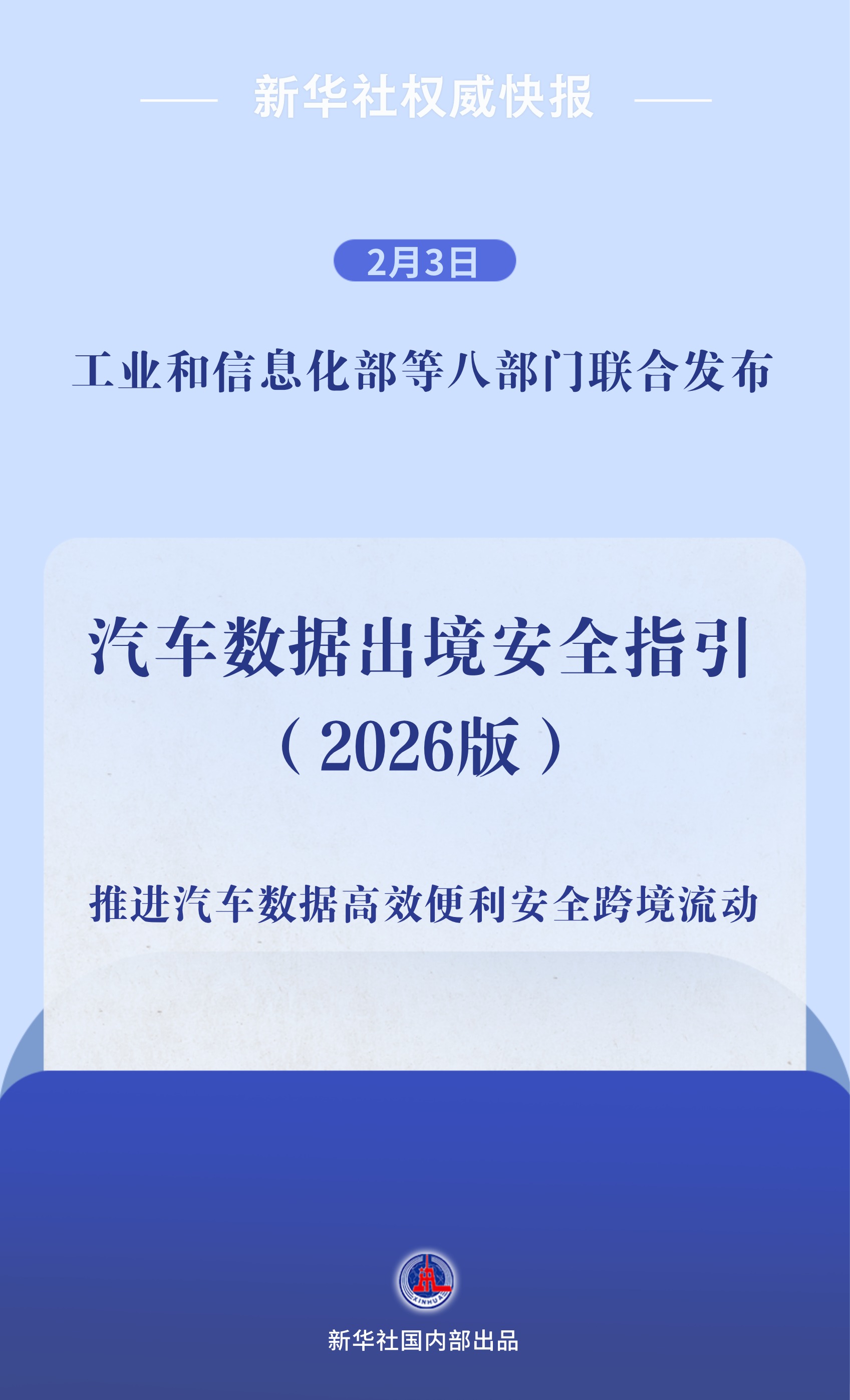
《安全指引》聚焦三类汽车数据出境行为
Xin Lang Cai Jing· 2026-02-03 08:28
Core Viewpoint - The Ministry of Industry and Information Technology, along with eight other departments, has issued the "Automotive Data Export Security Guidelines (2026 Edition)" to regulate the export of automotive data from China [1] Group 1: Guidelines Overview - The guidelines apply to automotive data processors providing automotive data to entities outside of China [1] - There are three main categories of data handling outlined in the guidelines: 1. Data collected and generated during domestic operations being transmitted abroad 2. Data residing in China but accessible for querying, downloading, or exporting by foreign organizations or individuals 3. Activities involving the processing of personal information of domestic individuals abroad, in compliance with the Personal Information Protection Law of the People's Republic of China [1]
新华社权威快报丨瞄准高效便利安全 新版汽车数据出境安全指引发布
Xin Hua Wang· 2026-02-03 08:17
Core Viewpoint - The Ministry of Industry and Information Technology, along with eight other departments, has released the "Automotive Data Export Security Guidelines (2026 Edition)" to enhance the efficiency, convenience, and security of automotive data cross-border flow [6]. Group 1: Guidelines Overview - The guidelines outline the management methods and applicable conditions for automotive data export activities [6]. - Nine categories of exemptions are specified, targeting various business scenarios such as research and development, production, automated driving, software upgrades, and connected operations [6]. - Important data determination rules are detailed, along with protective requirements to guide automotive data processors in conducting data export activities [6]. Group 2: Objectives and Implications - The initiative aims to improve the convenience of automotive data export while ensuring data security protection levels [6]. - The guidelines serve as a framework for standardizing data export practices within the automotive industry [6].