汽车网络安全

Search documents
一场看不见的汽车战争
汽车商业评论· 2025-12-15 23:06
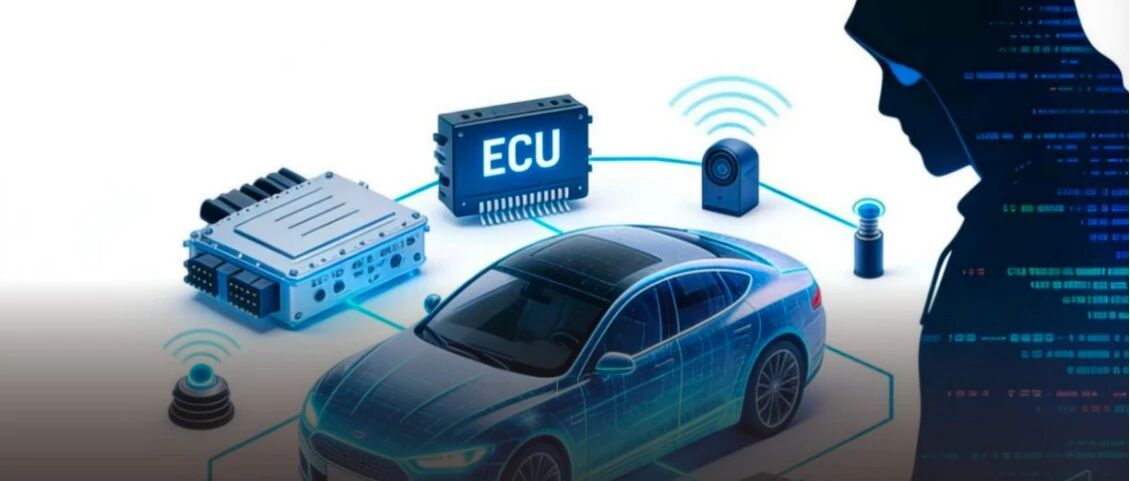
Core Viewpoint - The automotive industry is facing a significant shift towards software-related issues, with software defects now accounting for a substantial portion of vehicle recalls, indicating a systemic risk that must be addressed through enhanced cybersecurity measures and a holistic approach to safety [7][15][19]. Group 1: Software-Related Recalls - In 2024, the total number of vehicles recalled globally due to software issues is projected to reach 13.4 million, which is over four times the number from 2023, representing 46% of all recalls [7][15]. - The ratio of recalls due to software defects is now nearly equal to that of traditional mechanical design defects, highlighting the growing importance of software safety in the automotive sector [7][15]. Group 2: Cybersecurity and Systemic Risks - The transition towards "new four modernizations" in the automotive industry, including electrification and connectivity, has expanded the attack surface for vehicles, necessitating urgent exploration of cybersecurity measures [7][9]. - Experts emphasize the need for a comprehensive, system-wide approach to automotive cybersecurity, integrating security from the ground up in the development process rather than as an afterthought [10][12]. Group 3: AI and Future Challenges - AI is seen as both an enabler and a potential source of unforeseen challenges in automotive cybersecurity, with the rapid evolution of AI technologies posing risks that are not yet fully understood [18][19]. - The integration of AI into automotive systems requires a reevaluation of existing security frameworks, as traditional methods may not adequately address the complexities introduced by AI [54][56]. Group 4: OTA Security Measures - Companies are implementing various strategies to ensure the security of Over-The-Air (OTA) updates, including dual backup systems and real-time user feedback during the update process [40][44]. - The balance between user experience and safety is critical, with companies prioritizing safety over convenience when necessary [41][44]. Group 5: Collaboration and Testing - Collaboration with third-party security firms for testing and validation is common, as companies recognize the need for external expertise in identifying vulnerabilities [50][51]. - Continuous testing and updates are essential for maintaining security throughout the vehicle's lifecycle, akin to regular health check-ups for humans [55].




挖过特斯拉漏洞的黑客,来堵汽车的窟窿
汽车商业评论· 2025-12-10 23:07
Core Viewpoint - The article emphasizes the critical importance of cybersecurity in the automotive industry, particularly in the context of smart vehicles, highlighting the need for proactive security measures and the integration of AI in addressing vulnerabilities [4][10][21]. Group 1: Cybersecurity Challenges - The automotive industry faces significant cybersecurity challenges, including complex security designs, vulnerabilities in development and testing, and insufficient agility in security operations [20][21]. - The industry consensus is that there is no absolute security solution, and the key lies in the responsiveness to vulnerabilities and the efficiency of remediation efforts [21]. Group 2: Company Insights - The company, Dogan Technology, has established itself as a leader in cybersecurity, having discovered vulnerabilities in major systems like Tesla and Apple, and emphasizes a hacker's mindset in its approach to security [8][18]. - The founder, Li Jun, highlights the difficulties faced by startups in the cybersecurity space, particularly in expanding into markets like the U.S. due to geopolitical factors [6][18]. Group 3: Security Design and AI Integration - The article discusses the necessity of front-loading security design in automotive systems to avoid high costs and unresolvable issues later in the lifecycle [10][26]. - AI is positioned as a crucial tool for analyzing attack paths and optimizing security measures, allowing for targeted defenses at critical points [10][41]. Group 4: Lifecycle Approach to Security - The company advocates for a full lifecycle approach to cybersecurity, integrating design, testing, and operational phases to ensure continuous improvement and adaptation to new threats [44][49]. - The use of advanced modeling and AI is proposed to enhance the security design process, enabling a systematic and comprehensive analysis of potential vulnerabilities [29][40].

冒充极氪团队“学习”,这家车企真这么荒唐?
汽车商业评论· 2025-10-12 23:08
Core Viewpoint - The article discusses an incident where BYD's security team allegedly impersonated Geely's Zeekr team to obtain sensitive information about a cybersecurity product, raising questions about corporate ethics and competition in the automotive industry [4][5][11]. Group 1: Incident Overview - BYD's security team posed as members of Geely's Zeekr team to request information about DefenseWeaver, an AI-driven automotive cybersecurity analysis software [4]. - The impersonators initiated contact through official channels, conducted a detailed online meeting, and subsequently went silent after obtaining information [4][5]. - After the incident, BYD representatives provided vague explanations and did not acknowledge any wrongdoing [4]. Group 2: Industry Context - The incident reflects a competitive environment in the Chinese automotive sector, where companies may resort to unethical practices to gain technological advantages [11][12]. - BYD reported significant financial growth, with a revenue of 777.1 billion yuan and a net profit of 40.25 billion yuan in 2024, suggesting that the company has resources for legitimate R&D [11]. - The competitive landscape has intensified, with Geely's sales increasing by 126% in the first half of 2025, indicating a shrinking market share for BYD [14]. Group 3: Ethical Concerns - The article raises critical questions about BYD's corporate culture and the ethical standards expected of its employees [17]. - Comments from industry insiders suggest that such behavior may stem from internal pressures to innovate and compete effectively [11][12]. - The incident has sparked discussions about the need for suppliers to protect their intellectual property in a highly competitive market [12][17].



路畅科技:获得ISO/SAE 21434网络安全体系认证证书
Zheng Quan Shi Bao Wang· 2025-08-06 12:04
Core Viewpoint - Luochang Technology has obtained the ISO/SAE 21434 automotive cybersecurity certification from DEKRA, enhancing its credibility in the automotive industry [1] Group 1 - Luochang Technology announced the achievement of the international ISO/SAE 21434 automotive cybersecurity system certification [1]