洗浴文化

Search documents
来辽宁泡温泉 花样多到你想不到
Xin Lang Cai Jing· 2026-01-03 22:19
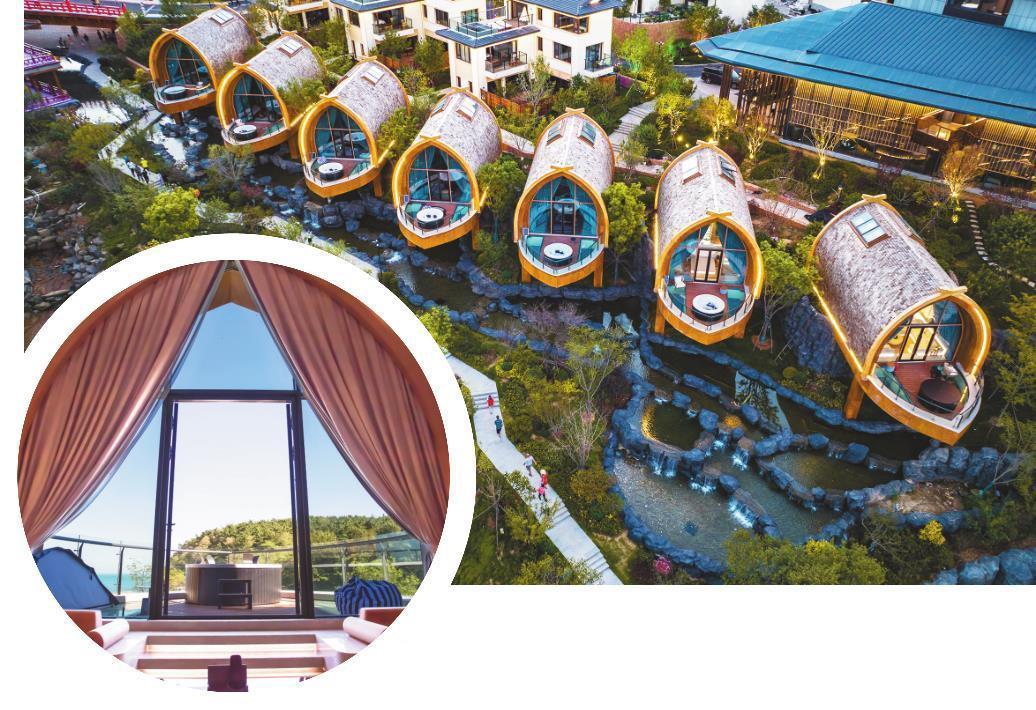
Core Insights - The article highlights the growing popularity and diversity of the bathing and hot spring industry in Northeast China, particularly in Shenyang and Dalian, as a response to winter tourism and consumer demand for unique experiences [3][4][5]. Group 1: Industry Overview - The bathing industry in Shenyang has over 1,300 operating entities, with 52 enterprises exceeding 5,000 square meters, showcasing a significant scale and variety in services [4]. - The "bathing+" model integrates various sectors such as dining, accommodation, wellness, entertainment, and business, catering to a wide range of consumer demographics from children to business professionals [4][6]. Group 2: Consumer Experience - Shenyang's bathing culture is characterized by family-friendly facilities and services, making it a popular destination for leisure and relaxation, with visitors expressing a desire to return for more experiences [4][5]. - Dalian offers a unique winter experience with its hot springs, allowing visitors to enjoy the contrast of warm baths while viewing the sea, enhancing the appeal of winter tourism [5][6]. Group 3: Health and Wellness - The Tanggangzi hot spring in Anshan is noted for its therapeutic mud treatments, which are popular among visitors seeking relief from chronic conditions, indicating a trend towards health-focused tourism [7][8]. - The hot spring water in Tanggangzi is described as medical-grade, with an average temperature of 72°C, highlighting its therapeutic benefits [8].

中国“澡都”,到底在哪里?
3 6 Ke· 2025-12-29 02:50
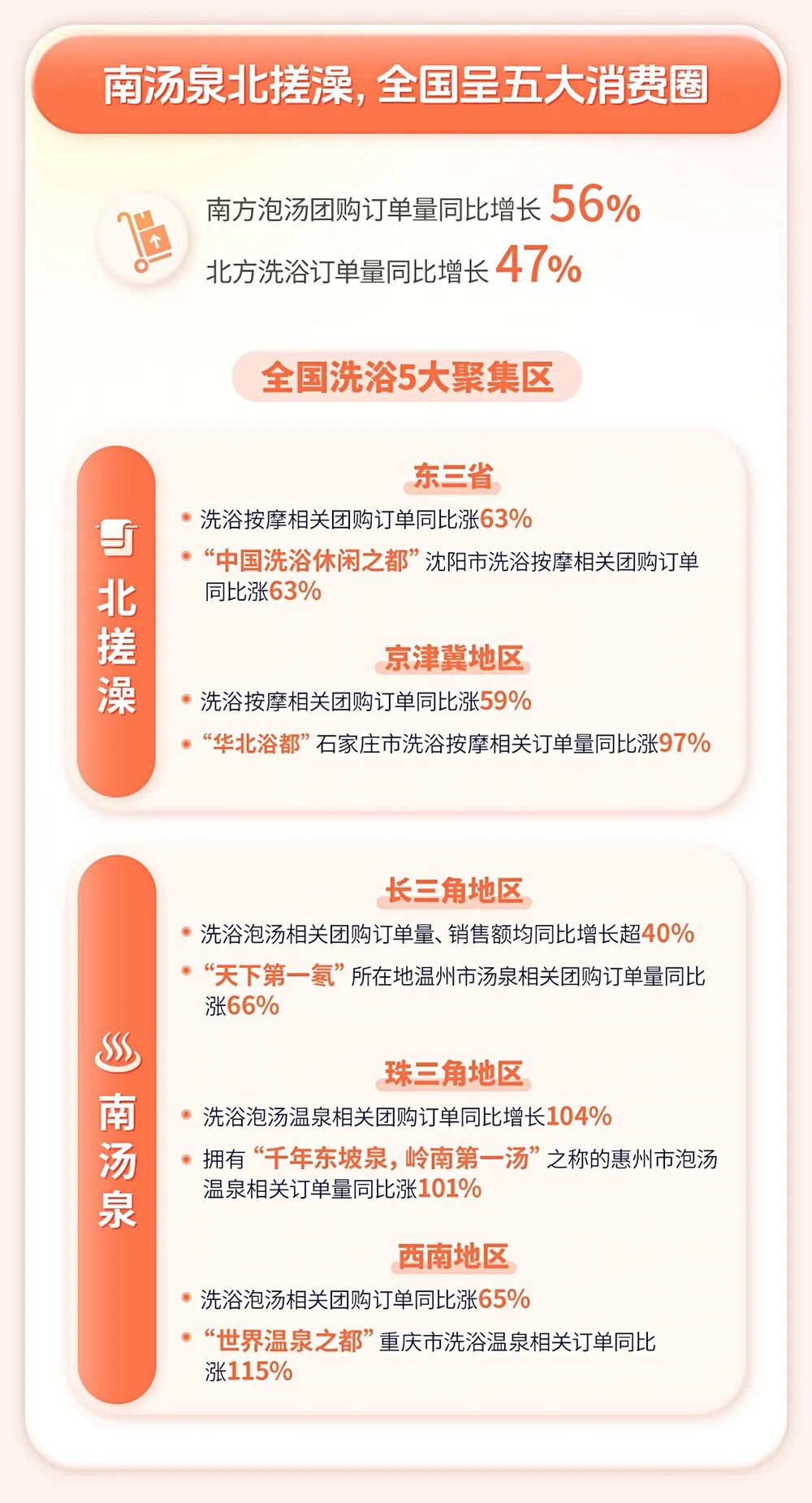
Core Insights - The bathing culture in China is experiencing a nationwide surge in popularity, moving beyond its traditional roots in Northeast China to become a common leisure activity across the country [2][5][6] - The demographic of bathhouse patrons is shifting, with a significant increase in younger consumers, particularly those born in the 1990s and 2000s, who are redefining the industry [9][11] Group 1: Industry Trends - The bathing industry is witnessing a remarkable growth in consumer interest, with Douyin's report indicating a 38% increase in group purchase orders and a 50% rise in sales [2][5] - The top five cities for bathing consumption, based on group purchase order volume, are Zhengzhou, Xi'an, Beijing, Shanghai, and Hangzhou, indicating a shift in consumer preferences beyond the Northeast [5][6] - Northern and Southern regions exhibit distinct consumption patterns, with Northern consumers favoring scrubbing baths and Southern consumers preferring hot springs [6][7] Group 2: Demographic Shifts - The primary consumer base for bathing services is now dominated by individuals aged 31 to 40, accounting for 37% of total orders, while those aged 24 to 30 make up 29% [9] - The fastest-growing demographic in terms of order volume is the 18 to 23 age group, with a growth rate of 55%, indicating a significant influx of younger consumers into the bathing market [9][11] - Young consumers are not only increasing the number of patrons but are also introducing new demands and experiences, transforming the traditional bathing industry into a multifaceted leisure space [11][13] Group 3: Service Evolution - Bathing centers are evolving to offer a variety of services that cater to diverse consumer needs, including dining options, social spaces, and wellness treatments [10][11] - The concept of "bathing + X" is gaining traction, with services expanding to include activities like e-sports, family-friendly options, and seasonal packages [13] - The traditional notion of bathing as merely a cleansing activity is being replaced by a more holistic approach that emphasizes relaxation, social interaction, and wellness [11][14]
中国“澡都”,到底在哪里?
虎嗅APP· 2025-12-27 10:30
Core Viewpoint - The article discusses the rising popularity of bathing culture across China, highlighting a shift from a regional preference in the Northeast to a nationwide trend, with significant growth in both participation and spending in the bathing industry [4][6][7]. Group 1: National Bathing Trend - There is a noticeable increase in the enthusiasm for bathing across various regions in China, with a marked rise in customer traffic at bathing centers compared to previous years [6]. - According to Douyin's recent report, the number of group purchase orders related to bathing has increased by over 38% year-on-year, with sales revenue rising by 50% [7]. - The bathing industry is expanding beyond its traditional Northeast stronghold, becoming a common leisure activity for people across the country [7][11]. Group 2: Regional Differences - The top five cities with the highest willingness to spend on bathing are Zhengzhou, Xi'an, Beijing, Shanghai, and Hangzhou, indicating a balanced interest from both northern and southern regions [11]. - Northern consumers prefer "scrubbing" as a bathing method, with group purchase orders for scrubbing in Northeast China increasing by 63%, while the southern regions favor "soaking" in hot springs, with Chongqing seeing a staggering 115% growth in related orders [11][12]. Group 3: Changing Demographics - The demographic of bathing consumers is shifting, with a significant increase in younger customers, particularly those aged 18-23, whose order volume has surged by 55% [17]. - The primary consumer groups now include individuals aged 31-40 (37% of total orders) and 24-30 (29% of total orders), indicating that the post-90s generation is becoming a dominant force in the bathing market [17][18]. Group 4: Evolving Consumer Preferences - Younger consumers are reshaping the bathing industry by introducing new demands and experiences, transforming bathing from a mere relaxation activity into a social and multi-functional experience [18]. - Bathing centers are evolving to offer a variety of services, including dining, socializing, and even business meetings, catering to a broader range of customer needs [18][19]. Group 5: Seasonal Consumption Patterns - The winter season has become a peak time for bathing, with many consumers incorporating it into their regular winter routines as a way to combat the cold [21][22]. - Douyin's initiatives have streamlined the process of finding and booking bathing services, enhancing consumer experience and driving increased participation in the bathing economy [22].