
海南自由贸易港法

Search documents
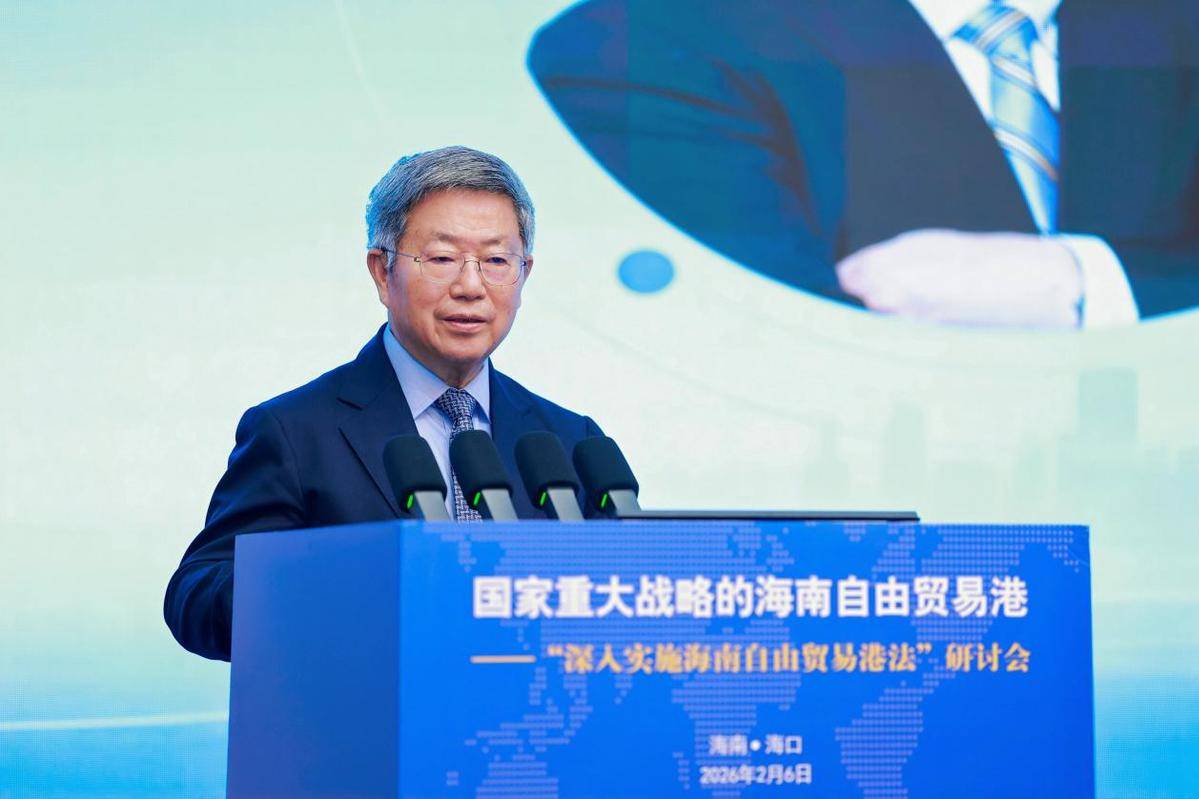
迟福林:海南自由贸易港是国家在海南建立的自由贸易港
Sou Hu Cai Jing· 2026-02-06 12:01
Core Viewpoint - The Hainan Free Trade Port is recognized as a significant national strategy, essential for forming a collaborative effort among various stakeholders in its development [3][4]. Group 1: Strategic Importance - The Hainan Free Trade Port serves as a crucial open gateway for China, aligning with national strategic needs and regional economic integration [3]. - It aims to connect China with key markets, particularly those involved in the RCEP, and enhance China's global influence [3]. - The port is positioned to support the South China Sea's cooperative governance and serve as a strategic platform for the China-ASEAN blue economy [3]. Group 2: Collaborative Mechanisms - Strengthening coordination at the national level is necessary to ensure the effective implementation of major policies related to the Hainan Free Trade Port [4]. - There is a need for Hainan to actively engage with key provinces and cities in China to foster collaborative development [4]. - Policies and institutional innovations should be driven by enterprise needs, with a focus on improving the well-being of local residents [4]. Group 3: Legislative Framework - The implementation of the Hainan Free Trade Port Law is critical, as it represents the highest level of openness and serves as a foundational legal framework for the port's development [4][5]. - The law's execution has shown significant gaps, necessitating a concerted effort to align with the strategic goals set forth [4]. Group 4: Recommendations for Implementation - Establishing a leadership mechanism for the Hainan Free Trade Port's development is essential for effective collaboration [5]. - There should be a focus on granting Hainan greater autonomy in reform and opening-up initiatives [5]. - A robust administrative system is needed to ensure efficient implementation of policies [5]. - Recommendations include conducting a national legislative meeting to discuss the execution of the Hainan Free Trade Port Law and establishing a supervisory mechanism for its implementation [5].

海南自由贸易港法是可持续发展重要“压舱石”
Hai Nan Ri Bao· 2026-01-19 01:57
Core Viewpoint - The Hainan Free Trade Port Law serves as a crucial "ballast stone" for sustainable development, providing a stable legal environment that encourages long-term investment from both domestic and international investors [1][2]. Group 1: Progress and Achievements - The first step of the Hainan Free Trade Port has been executed effectively, achieving the goal of closing the island to external trade by December 18, 2025, and implementing the policy of "opening up the first line, controlling the second line, and allowing freedom within the island" [2][3]. - Hainan's practices are seen as a model for high-level national openness, balancing security and openness while laying a legal foundation for international economic and trade rules [2][3]. Group 2: Legal Framework and Implementation - The Hainan Free Trade Port Law establishes a core institutional framework for the construction of the free trade port, providing a long-term stable institutional environment for investors [3]. - It creates a mechanism for implementation that involves central coordination, departmental support, and provincial execution, ensuring that open policies progress in a legal manner while reducing arbitrary enforcement [3]. Group 3: Focus Areas for Improvement - The law addresses key investor concerns such as fair competition, intellectual property protection, and dispute resolution, aligning with international high-standard economic and trade rules [3]. - Emphasis is placed on transforming common international rule requirements into localized legal systems to create a trustworthy legal ecosystem that aligns with international standards [4][5]. Group 4: Legal Services and Talent Development - The establishment of a high-quality legal service area is crucial for attracting investors, ensuring that their rights are protected and that they receive timely legal remedies [5][6]. - The development of a talent pool tailored to the needs of the Hainan Free Trade Port is essential, focusing on training professionals who understand both Chinese law and international regulations [6][7]. Group 5: Attracting International Talent - To attract and retain top international legal, arbitration, and financial regulatory talent, a systematic talent ecosystem must be created, providing platforms for high-end business practices and ensuring a stable and transparent legal environment [7].
《自贸港“大家”谈》第十五期今日播出
Hai Nan Ri Bao· 2026-01-18 01:24
Group 1 - The core viewpoint emphasizes the significant role of the Hainan Free Trade Port Law as a "ballast stone" for sustainable development and investor confidence in Hainan's free trade port [1] - Hainan's practices serve as a model for the country's high-level opening-up, showcasing effective implementation of international high-standard economic and trade rules [1] - The construction of a legal service area under the Hainan Free Trade Port Law is identified as a critical measure for attracting long-term investments [1] Group 2 - The program "Free Trade Port 'Big Talk'" is produced under the guidance of various governmental bodies and will be broadcasted across multiple platforms [2]
深入实施海南自由贸易港法 护航政策落地实施
Xin Lang Cai Jing· 2026-01-13 19:50
Core Points - The construction of Hainan Free Trade Port has entered a new phase of closure operation, aiming to implement the Hainan Free Trade Port Law as a legal guarantee for the overall plan of the port's construction [1] - The Hainan Free Trade Port Law is characterized as the "basic law" for the port's construction, a "high-level opening law," and an "authorization law" [1] Group 1: Implementation of Core Policies - The key to implementing the Hainan Free Trade Port Law is to accelerate the landing of core policies such as "zero tariffs, low tax rates, and simplified tax systems" [2] - Currently, 74% of the imported goods in Hainan Free Trade Port are under "zero tariffs," with a goal to continuously upgrade this policy [2] - The transition from specific industry tax incentives to a universal low tax rate system is required, expanding the scope of beneficiaries [2] Group 2: Legal Arrangements for Policy Implementation - Establishing a legal framework for the core policy landing mechanism, allowing policies to be implemented after filing [3] - The law supports the innovation and specification of policies under the basic principles of higher laws, particularly regarding the "special area system" for customs supervision [3] - The Hainan Free Trade Port Law will coordinate with other existing laws, ensuring its priority in case of inconsistencies [3] Group 3: Institutional Opening and Trade - Hainan Free Trade Port aims to become a new high ground for institutional opening, focusing on service trade development to boost domestic demand and consumption [4] - By 2035, the service trade's share is expected to rise from 14.6% in 2024 to over 20%, aligning with global averages [4] - The law mandates a negative list management system for cross-border service trade, with a dynamic adjustment mechanism for the list [5] Group 4: Legislative Authority and Reform - The Hainan Free Trade Port Law grants legislative authority to Hainan, which needs to be clearly defined to enhance its legislative effectiveness [7] - A timely authorization mechanism is necessary to meet the demands of Hainan's development [9] - The law emphasizes the need for administrative and judicial reforms to create an efficient management system and enhance international credibility [9][10]
党员、干部以法治思维和法治方式破解难题
Ren Min Ri Bao· 2025-11-21 02:33
Group 1 - The core viewpoint emphasizes the importance of advancing the rule of law in national governance and addressing challenges through legal thinking and methods [1][2][20] - The construction of a socialist rule of law state is a key goal for the 14th Five-Year Plan, highlighting the need for comprehensive legal governance [1][3] - The introduction of the Private Economy Promotion Law aims to eliminate barriers to private sector development and ensure fair market competition [2][3] Group 2 - The National Development Planning Law draft emphasizes public participation and the necessity of adhering to legal procedures in the formulation and implementation of national development plans [4][5] - The law aims to ensure a stable and predictable environment for economic and social development through legal frameworks [5][6] - The establishment of a legal basis for the Hainan Free Trade Port reflects the integration of reform and legal governance [6][7] Group 3 - The implementation of the revised Supervision Law enhances the legal framework for anti-corruption efforts and the accountability of public officials [6][7] - The focus on grassroots governance through legal education and the promotion of "legal literate" individuals in rural areas aims to resolve local disputes effectively [9][10] - The exploration of ecological compensation mechanisms demonstrates the application of legal frameworks to address environmental issues [10][11] Group 4 - The emphasis on urban governance through legal means aims to address long-standing issues, such as inadequate sanitation facilities in urban areas [11][12] - The introduction of tailored occupational injury protections for new employment forms reflects the adaptation of legal frameworks to modern labor market challenges [12][13] - The integration of socialist core values into legal construction aims to enhance societal norms and legal compliance [14][15] Group 5 - The need for leadership to enhance their ability to apply legal thinking in governance is highlighted as crucial for effective law-based governance [15][16] - The implementation of new regulations aims to prevent corruption and ensure fair enforcement of laws [19][20] - The overall approach emphasizes the necessity of using legal frameworks to address complex governance challenges and enhance national stability [19][20]