简税制

Search documents
以财政工作“稳”和“进”助力自贸港建设“成”与“势”
Xin Lang Cai Jing· 2026-01-29 16:41
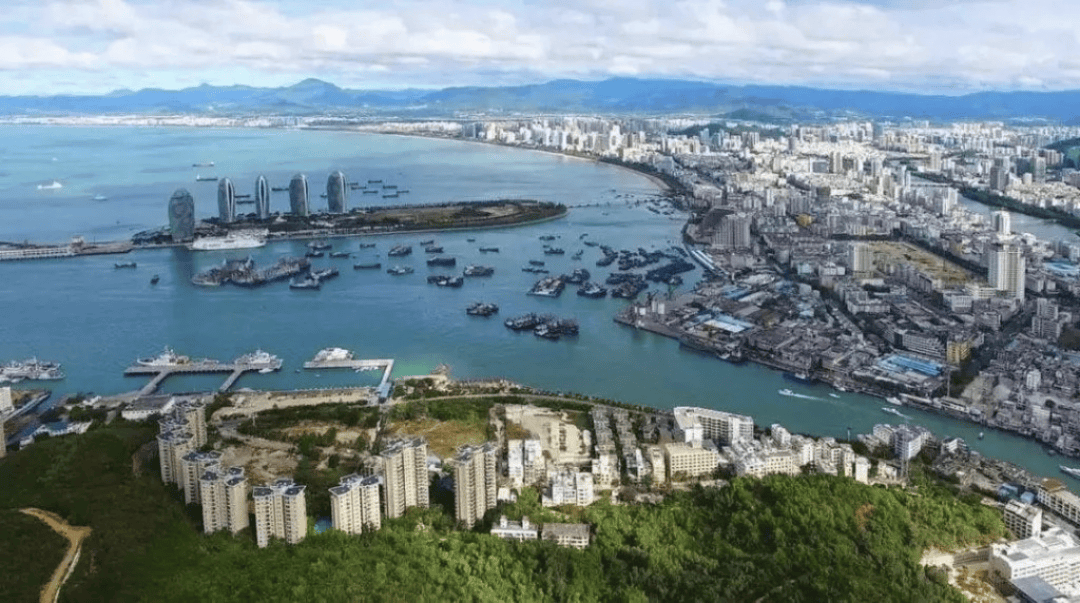
Core Viewpoint - The provincial government aims to support the construction of the free trade port by focusing on "stability" and "progress" in fiscal work, with specific strategies outlined for both aspects [2] Group 1: Stability - Financial stability is crucial, with efforts to cultivate local revenue sources and secure transfer payments and subsidies from higher authorities [2] - The implementation of zero-based budgeting reform across the province will be initiated to break the rigid expenditure patterns [2] - Risk control measures will be enhanced, ensuring the three guarantees: salary, operational continuity, and basic livelihood are maintained, alongside a careful execution of the government's debt management plan [2] Group 2: Progress - There will be an active expansion of domestic demand through a combination of fiscal and financial policies aimed at boosting consumption and investment, including personal consumption loan interest subsidies [2] - More precise support will be provided for the construction of the "45432" modern industrial system [2] - Following the closure of customs operations, the tax system construction of the free trade port will continue, with a current zero-tariff level of 74%, aiming to reduce the taxable goods list and increase the zero-tariff level to 90% with a simplified tax system to lower corporate tax burdens [2]

海南自贸港:中国开放“压力测试”下的机遇与挑战——专访香港资深金融界家刘梦熊
Sou Hu Cai Jing· 2026-01-26 03:16
Core Insights - The strategic significance of Hainan Free Trade Port (FTP) is highlighted as a testing ground for "institutional opening" and aims to be a key gateway for reform and opening-up, connecting domestic and international markets [2][3] Policy Benefits - The policy package for international investors includes "zero tariffs, low tax rates, simplified tax systems, and facilitation," with specific measures such as exemption from tariffs on imported production equipment, a reduced corporate income tax rate of 15% for encouraged industries, and tax exemptions for high-end talent [3] Development Path - The construction of Hainan FTP will follow a three-step approach: preparation for closure by 2025, full policy implementation from 2025 to 2035, and achieving a high-level FTP with significant international influence post-2035 [3] Unique Advantages - Hainan's unique advantages include its status as the only region combining "FTP + Economic Special Zone + Ethnic Autonomy," which provides greater reform autonomy and a strategic position for risk management and market access [3] Internal and External Challenges - Internal challenges include a weak industrial base, a shortage of high-end talent, and complex regulatory issues related to closure operations, while external challenges involve differentiating from strong neighboring regions like the Guangdong-Hong Kong-Macao Greater Bay Area and ASEAN Free Trade Area [3][4] External Observations - To attract international giants, it is crucial to address their concerns regarding the business environment, ideological promotion, and judicial independence [4] - The interlinkage with Hong Kong is emphasized, where Hong Kong's stability can enhance foreign confidence in Hainan FTP, while instability could undermine it [4] Collaborative Opportunities - Hainan should focus on collaboration with the Guangdong-Hong Kong-Macao Greater Bay Area for industrial synergy and infrastructure connectivity, as well as deepen cooperation with ASEAN to leverage RCEP rules for trade and cultural exchanges [4] Conclusion - The success of Hainan FTP is seen as a critical test of China's commitment to opening up in a complex international environment, relying not only on favorable policies but also on the depth of institutional innovation and alignment with international practices [4]
深入实施海南自由贸易港法 护航政策落地实施
Xin Lang Cai Jing· 2026-01-13 19:50
Core Points - The construction of Hainan Free Trade Port has entered a new phase of closure operation, aiming to implement the Hainan Free Trade Port Law as a legal guarantee for the overall plan of the port's construction [1] - The Hainan Free Trade Port Law is characterized as the "basic law" for the port's construction, a "high-level opening law," and an "authorization law" [1] Group 1: Implementation of Core Policies - The key to implementing the Hainan Free Trade Port Law is to accelerate the landing of core policies such as "zero tariffs, low tax rates, and simplified tax systems" [2] - Currently, 74% of the imported goods in Hainan Free Trade Port are under "zero tariffs," with a goal to continuously upgrade this policy [2] - The transition from specific industry tax incentives to a universal low tax rate system is required, expanding the scope of beneficiaries [2] Group 2: Legal Arrangements for Policy Implementation - Establishing a legal framework for the core policy landing mechanism, allowing policies to be implemented after filing [3] - The law supports the innovation and specification of policies under the basic principles of higher laws, particularly regarding the "special area system" for customs supervision [3] - The Hainan Free Trade Port Law will coordinate with other existing laws, ensuring its priority in case of inconsistencies [3] Group 3: Institutional Opening and Trade - Hainan Free Trade Port aims to become a new high ground for institutional opening, focusing on service trade development to boost domestic demand and consumption [4] - By 2035, the service trade's share is expected to rise from 14.6% in 2024 to over 20%, aligning with global averages [4] - The law mandates a negative list management system for cross-border service trade, with a dynamic adjustment mechanism for the list [5] Group 4: Legislative Authority and Reform - The Hainan Free Trade Port Law grants legislative authority to Hainan, which needs to be clearly defined to enhance its legislative effectiveness [7] - A timely authorization mechanism is necessary to meet the demands of Hainan's development [9] - The law emphasizes the need for administrative and judicial reforms to create an efficient management system and enhance international credibility [9][10]
海南自贸港封关蝶变 高水平对外开放启新篇
Xin Lang Cai Jing· 2026-01-02 19:31
Core Viewpoint - The establishment of the Hainan Free Trade Port (FTP) marks a significant step in China's commitment to high-level opening-up and serves as a new gateway for international trade and investment, with a focus on creating a more open and competitive economic environment [2][3][4]. Group 1: Policy Implementation and Goals - The Hainan FTP will implement a policy framework characterized by "open on the first line, controlled on the second line, and free within the island," aiming for zero tariffs, low tax rates, and simplified tax systems [3][4]. - By 2025, the initial establishment of a policy system focusing on trade and investment facilitation is expected, with a more mature system by 2035, ultimately aiming to create a high-level FTP with significant international influence by the mid-21st century [4][5]. Group 2: Economic Impact and Growth - The first week of the FTP's operation saw the addition of 1,972 new foreign trade registered enterprises, and over 30,000 new registered customs units since 2025, reflecting a growth of over 40% [7]. - The adjustment of the duty-free shopping policy has expanded the eligible items to 47 categories, resulting in a shopping amount of 1.1 billion yuan, with increases of 54.9% in spending and 34.1% in the number of shoppers during a specific week [7]. Group 3: Customs and Trade Facilitation - The customs supervision of "zero tariff" imports exceeded 400 million yuan in value during the first week of operation, with significant expansions in the range of goods eligible for zero tariffs [8][9]. - The number of zero-tariff product categories will increase from 1,900 to approximately 6,600, covering about 74% of all goods, which is a 53% increase compared to before the FTP's operation [8][9]. Group 4: Strategic Positioning and Regional Cooperation - The FTP is positioned as a key platform for deepening openness and resource allocation in the context of a unified national market, enhancing international connections and cooperation opportunities, particularly with neighboring countries [5][6]. - The policy changes are expected to attract global resources and promote the development of service, tourism, and digital trade sectors in Hainan, shifting the focus from tourism consumption to trade, manufacturing, and logistics [5][6].
封关运作 擘画中国特色自贸港新蓝图
Xin Lang Cai Jing· 2025-12-28 00:55
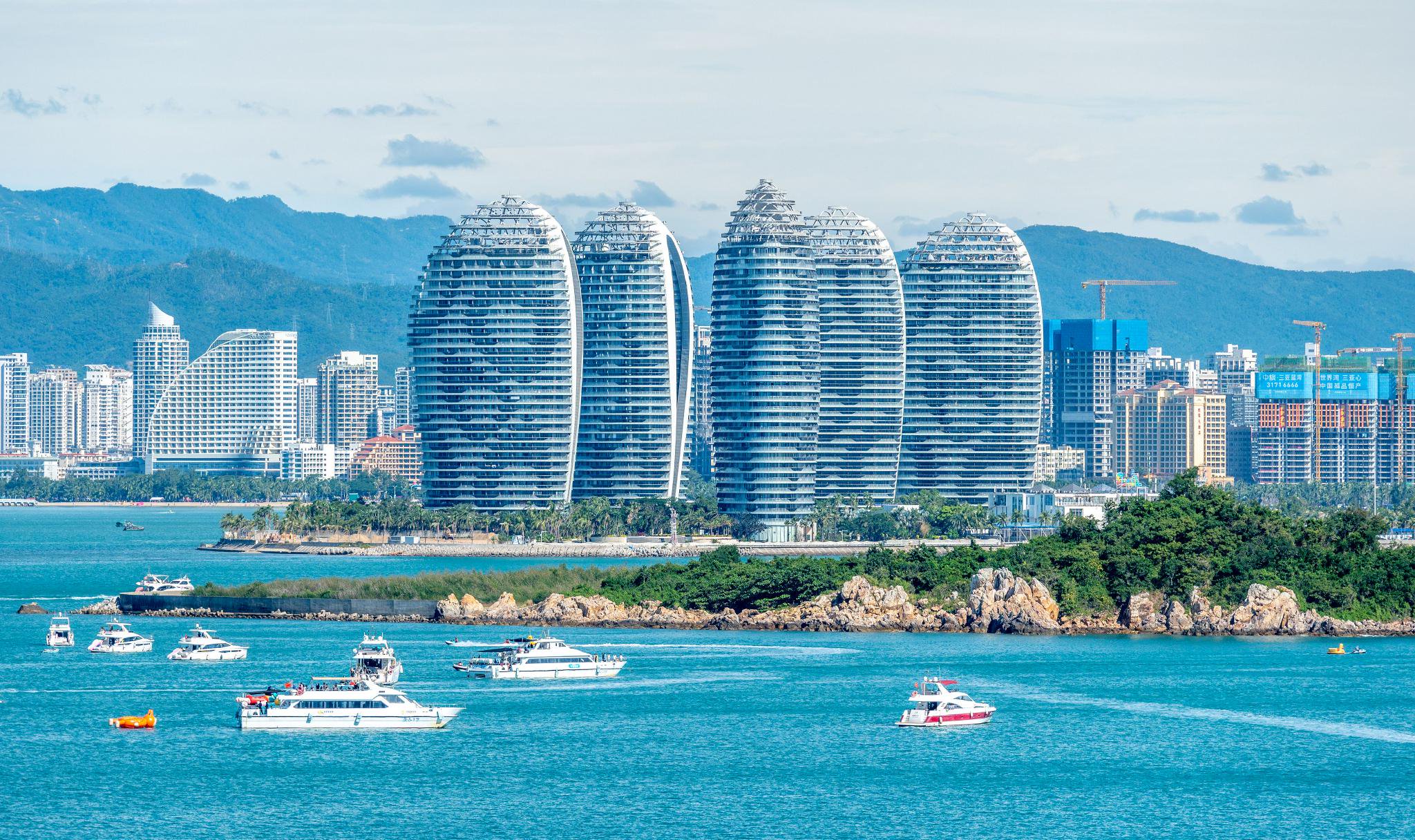
Core Insights - The establishment of Hainan Free Trade Port is a significant decision by the Central Committee aimed at deepening reform and opening up in the new era, focusing on self-initiated, unilateral, and institutional openness [1][4] - The full island closure of Hainan Free Trade Port on December 18, 2025, marks a milestone in Hainan's development and a significant event in China's reform and opening-up process, showcasing China's commitment to high-level openness [2] Strategic Goals - Hainan Free Trade Port aims to become a crucial gateway for China's new era of openness, adapting to new trends in the changing economic landscape and playing a pivotal role in China's high-level opening strategy [2] - It is positioned as an important base for China-ASEAN comprehensive strategic cooperation, with a 36.8% year-on-year increase in direct investment from China to ASEAN in 2024, of which 8.5% is through Hainan Free Trade Port [2] Trade and Investment - Hainan Free Trade Port is set to connect with the RCEP market, with 40% of its foreign trade and 50% of its foreign direct investment directed towards RCEP regions in 2024 [3] - The port will leverage zero-tariff policies in conjunction with RCEP to enhance trade and investment flows, focusing on aligning market rules and service systems with RCEP member countries [3] Blue Economy and Maritime Cooperation - Hainan Free Trade Port is envisioned as a strategic platform for the China-ASEAN blue economy, addressing the need for cooperative governance in the South China Sea, where over 50,000 vessels pass annually [3] - The port aims to facilitate cooperation in marine industries, green development, maritime security, and cultural exchanges between China and ASEAN [3] Policy Implementation - The core policies of Hainan Free Trade Port include "zero tariffs, low tax rates, and simplified tax systems," which will gradually be implemented post-closure to enhance the business environment [7] - The port will also focus on reducing the foreign investment negative list and implementing more open visa policies to facilitate global access [7][8] Legal Framework - The legal framework will support the implementation of core policies, adapting to international trade rules and promoting reforms in service trade, digital trade, and intellectual property protection [8] - The port's development is a major national strategy personally planned and promoted by President Xi Jinping, emphasizing that closure is not isolation but an expansion of openness [8]
海南自贸港高水平开放锚定“八新”目标
Xin Lang Cai Jing· 2025-12-25 05:03
Core Insights - The official launch of the Hainan Free Trade Port's full island closure operation on December 18, 2025, marks a significant milestone in China's high-level opening-up strategy and the development of the Hainan Free Trade Port [1] Institutional Developments - The full island closure will implement a new institutional arrangement of "one line open, two lines controlled, and free flow within the island," enhancing the free movement of goods, capital, personnel, and information [1] - This arrangement aims to position Hainan as a high-level open gateway for international trade, investment, and talent flow, while also providing practical experience for domestic free trade port construction [1] Policy Enhancements - The "zero tariff" policy will expand significantly to cover approximately 6,600 tax items, accounting for 74% of all goods, thereby reducing operational costs for enterprises and facilitating industrial restructuring [2] - The policy will also lower market access thresholds for all eligible market entities on the island, creating a more free and convenient production and trading environment [2] - A comprehensive policy system characterized by "zero tariffs, low tax rates, and simplified tax systems" will be optimized, including tax reductions and simplified tax administration [2] Economic and Industrial Growth - Hainan Free Trade Port aims to enhance its policy system to align with high-level free trade standards, improving trade and investment liberalization and facilitating a globally leading business environment [3] - The port will focus on optimizing its economic structure, promoting the development of tourism, modern services, high-tech industries, and tropical agriculture towards clustering and high-end directions [3] Technological Innovation - Hainan will establish a multi-level technological innovation system, focusing on key areas such as seed industry, deep sea, and aerospace, to integrate technological innovation with industrial development [4] Regional Development - The port will integrate deeply with major national regional strategies, promoting urban coordination and balanced regional development, injecting new momentum into the comprehensive development of the island [4] Environmental and Social Progress - Hainan will advance green development and ecological civilization, aiming to become an international model for ecological protection and sustainable development [5] - The port will enhance public service systems to improve residents' income and quality of life, ensuring that all citizens benefit from the development of the free trade port [5] Security and Future Industries - Hainan will strengthen risk prevention and social governance to ensure a stable environment for the construction of the free trade port, which is essential for industrial upgrades and high-quality development [5] - The port will strategically position itself in emerging industries such as biomanufacturing, hydrogen energy, and brain-computer interfaces, aiming to secure a competitive edge in global markets [5]
海南三亚“十五五”规划建议:用足用好“零关税、低税率、简税制”和放宽贸易管理措施等制度安排
Zheng Quan Shi Bao Wang· 2025-12-23 01:50
Core Viewpoint - The Sanya Municipal Committee has proposed recommendations for the 15th Five-Year Plan, emphasizing the orderly advancement of Free Trade Port construction and the removal of barriers to factor mobility [1] Group 1: Free Trade Port Development - The plan aims to promote the free flow, efficient allocation, and accelerated aggregation of various production factors [1] - It emphasizes the smooth transition and efficient connection of closure policies [1] - Continuous upgrades to port infrastructure and significant optimization of the business environment at ports are highlighted [1] Group 2: Policy Implementation - The implementation of the "Five Freedoms and One Safety" open policy is a priority, focusing on systematic thinking and classified strategies [1] - The plan aims to maximize the benefits of "zero tariffs, low tax rates, simplified tax systems," and relaxed trade management measures [1] - Expansion of the core policy benefits, such as the 30% value-added processing exemption from tariffs for domestic sales, is emphasized [1]
迟福林:海南自贸港是“最高水平开放形态”
2 1 Shi Ji Jing Ji Bao Dao· 2025-12-22 07:51
Core Viewpoint - The Hainan Free Trade Port officially commenced full island closure operations on December 18, marking a significant step in China's highest level of open economy [1] Policy Framework - The core policy framework of the Hainan Free Trade Port includes "zero tariffs, low tax rates, and simplified tax systems," with plans to implement zero tariffs comprehensively, except for a few goods [1] - There is an emphasis on expanding low tax rate policies to a broader range of goods and simplifying value-added tax, consumption tax, and vehicle purchase tax [1] Strategic Positioning - Hainan is positioned as a strategic hub in China's cooperation with the RCEP region, leveraging its geographical advantages to cover 21 countries and regions in Asia within a 4-hour flight, representing about 47% of the global population and approximately 30% of the world's GDP [1] - The focus areas for Hainan include: - Accelerating the development of an international tourism consumption center to enhance domestic market demand [1] - Utilizing tropical resources and ecological advantages to establish a processing and storage trading base for agricultural products aimed at ASEAN [1] - Leveraging deep-sea, breeding, and aerospace resources to develop new productive forces in collaboration with mainland marine research institutions and enterprises [1]
海南概念股再度密集涨停!
Jin Rong Shi Bao· 2025-12-22 06:51
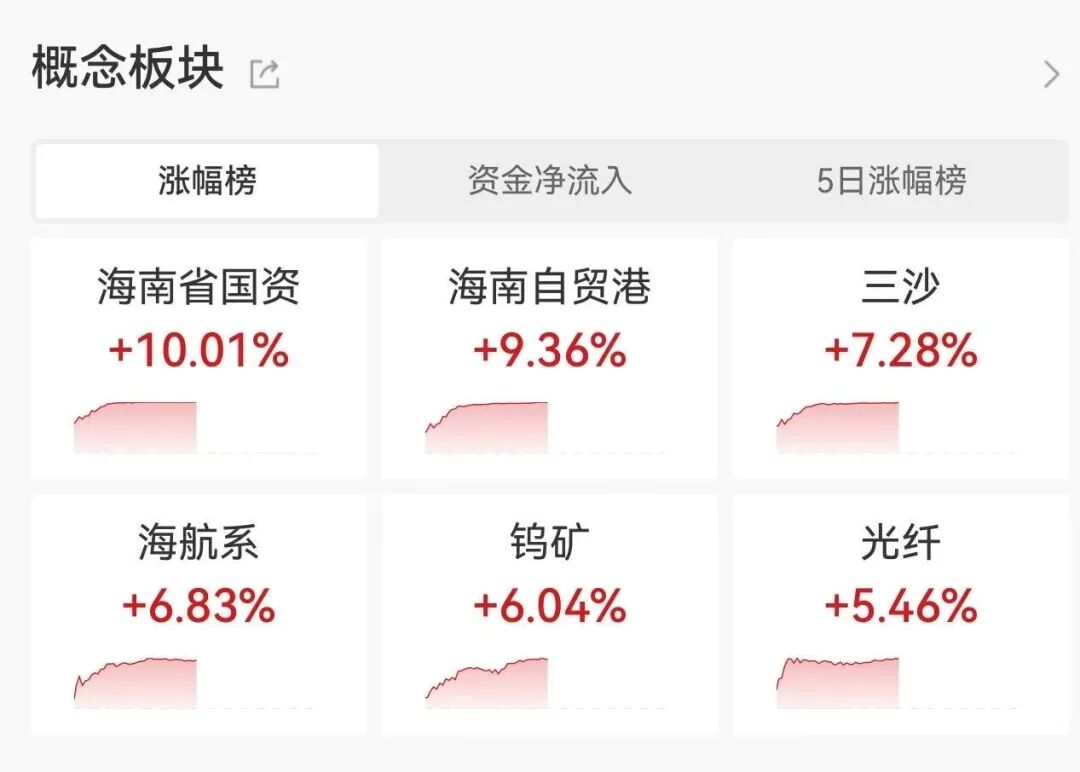
Group 1 - The core viewpoint of the news is the strong performance of Hainan's state-owned assets and free trade port sectors following the implementation of new policies aimed at enhancing trade and consumption in the region [1][3]. - Hainan's state-owned assets and free trade port sectors saw significant gains, with respective increases of 10.01% and 9.36% by midday, while the shipping and trade industries also performed well with a rise of 2.11% [1]. - The launch of the Hainan Free Trade Port on December 18 introduced a policy framework characterized by "one line open, two lines controlled, and free movement within the island," which is expected to stimulate consumption [3]. Group 2 - The policy changes include an increase in the proportion of zero-tariff goods from 21% to 74%, expanding the range to 6,600 tax items, which covers major production equipment and raw materials [3]. - Analysts believe that the release of policy dividends will create new growth opportunities for the retail sector, particularly with the expansion of the zero-tariff goods list [3][4]. - Data from Sanya's Commerce Bureau indicates that the first day of the closure saw duty-free sales reach 118 million yuan, while Haikou Customs reported 360 million yuan in zero-tariff imports, primarily consisting of crude oil and aviation equipment [3]. Group 3 - The reduction in operational costs and improved efficiency from the new policies are expected to enhance the cost structure of businesses and increase market activity [4]. - The tourism sector is anticipated to benefit significantly, with rising consumer travel intentions leading to increased flight searches and bookings for destinations like Haikou and Sanya [4]. - Flight booking data for the upcoming Spring Festival indicates a 130% year-on-year increase for Haikou and an 80% increase for Sanya, suggesting a robust recovery in tourism consumption [4].




海南正式封关:既是红利,也有风险,这取决于……
Sou Hu Cai Jing· 2025-12-22 03:08
Core Insights - The official launch of Hainan's zero-tariff and low-tax policy marks a significant step towards higher levels of openness, but it poses both opportunities and risks for policymakers, entrepreneurs, and residents [3][5] - The success of Hainan's free trade zone will depend on its ability to transition from a policy-driven economy to one that fosters industrial growth and innovation [5][9] Industry Challenges - Hainan's economic structure is characterized by a weak industrial base, primarily reliant on agriculture and low-end tourism, lacking a robust manufacturing sector [7][9] - The risk of "deindustrialization" looms if Hainan attempts to bypass traditional manufacturing in favor of high-end services without a solid industrial foundation [7][9] Economic Opportunities - The introduction of a 30% value-added tax exemption for processing and manufacturing presents a unique opportunity to revitalize Hainan's economy by attracting high-value industries [9][11] - Potential growth sectors include luxury goods assembly, biomedicine, and advanced technology, leveraging Hainan's unique geographical and regulatory advantages [11][15][17] Strategic Positioning - Hainan must transform from a geographical outlier to a functional hub by creating a platform for international trade and logistics, similar to Dubai's model [19][22] - The implementation of the "seventh freedom" in aviation could enhance Hainan's connectivity and attractiveness for international logistics [22][25] Consumption and Market Differentiation - Hainan's tourism strategy must evolve beyond low-cost offerings to focus on unique privileges and high-value experiences that cannot be found elsewhere in China [35][37] - Key areas for differentiation include healthcare, education, data access, airspace management, and cultural experiences, which can attract both domestic and international consumers [37][38][40][42][45] Future Outlook - Hainan faces a complex challenge of overcoming its geographical disadvantages, avoiding homogeneous competition, and preventing industrial hollowing [47] - The future success of Hainan will hinge on integrating high-level open policies with its unique resources, aiming for a transformation from a policy landscape to a thriving industrial ecosystem [47]