
消除贫困

Search documents
马斯克断言未来可以不工作,AI解决所有?
Sou Hu Cai Jing· 2025-11-21 01:20
Group 1 - Musk claims that AI and robots will eliminate poverty and free humans from forced labor within twenty years, although this may only be feasible in certain regions of the U.S. [2] - Musk envisions future job roles as hobbies, suggesting that the monetary system will become obsolete due to an abundance of resources, with physical resources being the only limitation [3] - Musk's statements are backed by the announcement of a partnership between xAI and a Saudi state-owned company to build a 500 MW data center, which will integrate NVIDIA's hardware ecosystem [3][4] Group 2 - Musk predicts that humanoid robots will become a larger industry than smartphones, with significant demand in the industrial sector, indicating a transformation in production relationships [4] - Concerns exist regarding the equitable distribution of resources and the adaptability of society to technological changes, as the concentration of capital and technology in AI could exacerbate wealth inequality [4][5] - The real challenge lies in creating a fair distribution mechanism for technological benefits, rather than the mere existence of technology itself [5]



东西问·中国学丨查尔斯·奥努奈居:研究中国,也是在思考非洲的未来
Zhong Guo Xin Wen Wang· 2025-10-19 07:40
Core Insights - The primary focus of the Nigeria China Research Center is on the concept of Chinese-style modernization, emphasizing that modernization does not equate to Westernization and can be tailored to a country's specific conditions [5][6] - The successful poverty alleviation efforts in China serve as a significant lesson for African nations, demonstrating that absolute poverty can be eradicated, which has influenced many African governments to adopt similar policies [5][6] - China's win-win approach to international relations is highlighted as a crucial concept, contrasting with the traditional zero-sum mindset, and aligns with Nigeria's support for various Chinese global initiatives [6][8] Research Focus - The center prioritizes the study of Chinese-style modernization, which is seen as a path that allows nations to achieve development based on their unique circumstances rather than imitating others [5] - The eradication of poverty is a key area of interest, with the center noting that many African countries are now implementing poverty reduction strategies inspired by China's success [5][6] - The center also emphasizes the importance of understanding China's historical and cultural context to fully grasp the essence of its development model [8][9] International Relations - The center advocates for a shift from a zero-sum perspective in international relations to a more inclusive, win-win approach, which has gained traction in Africa [6][11] - Nigeria's early support for China's global governance initiatives reflects a shared vision for a fairer and more inclusive international system [6][11] - The center recognizes the need for deeper engagement and understanding between Africa and China, promoting localized research and dialogue to counter existing biases [13][11] Academic Collaboration - There is a call for more localized research institutions in Africa to better articulate China's narrative in a culturally relevant manner [13] - The center is working with various institutions to integrate Chinese studies into educational curricula, aiming to foster a more accurate understanding of China among African youth [13] - Events like the World China Studies Conference are seen as beneficial for advancing discussions on China-Africa relations [13]

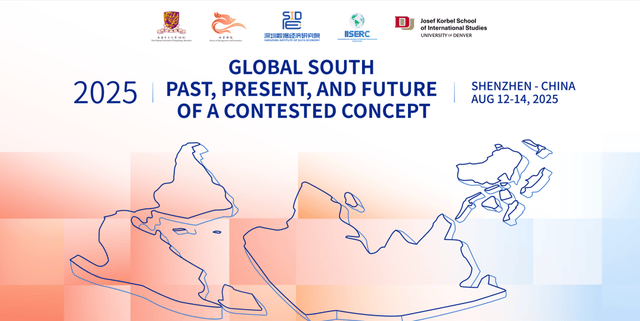
2025“全球南方:过去、现在与未来”国际学术会议在港中大(深圳)顺利举行
Sou Hu Cai Jing· 2025-08-28 06:36
Core Insights - The conference "Global South: Past, Present, and Future" was held from August 11 to 14, 2025, co-hosted by various academic institutions, focusing on the challenges and development paths faced by Global South countries [2][4] - Scholars from multiple countries, including China, Brazil, India, Argentina, Zambia, Morocco, and the United States, participated in discussions on key issues related to political and economic development in the Global South [2][4] Group 1 - The conference featured four sub-forums focusing on Latin America, South Asia, Africa, and East Asia, addressing topics such as poverty alleviation, financial equality, new industrialization, and sustainable development [2] - Keynote speeches were delivered by prominent academics, emphasizing the increasing importance of Global South countries in the global geopolitical landscape and the need for innovative academic research [4][6] Group 2 - Discussions highlighted the multifaceted influence of Global South countries, examining historical, economic, political, and social dimensions, while also addressing challenges such as environmental responsibilities and geopolitical competition [7] - The re-industrialization process and the transformation of global governance in Global South countries were identified as irreversible trends, with a call for enhanced civil exchanges and consideration of the economic and social effects of financial cooperation [7]
中拉论坛:合作与多边主义的胜利
人民网-国际频道 原创稿· 2025-05-15 09:34
Core Points - The China-Latin America and Caribbean Forum (CLACF) has evolved significantly over the past decade, with President Xi Jinping highlighting its growth from a "tender seedling" to a "tall tree" [1][2] - The forum aims to foster a community of shared destiny between China and Latin America, emphasizing the importance of continuous nurturing and cooperation among participating countries [1][2] Group 1: Five Major Projects - The first project, the Unity Project, captures the fundamental significance of the forum [2] - The second project, the Development Project, advocates for an open and cooperative international environment as a foundation for shared prosperity [2] - The third project, the Civilization Project, emphasizes building unbreakable bonds of friendship through cultural exchange [2] - The fourth project, the Peace Project, focuses on solidifying the foundation for common prosperity [2] - The fifth project, the People's Heart Project, aims to expand new dimensions of cultural exchange [2] Group 2: Strategic Importance - The core value of the forum lies in replacing confrontation with dialogue and promoting win-win cooperation instead of zero-sum games, thereby fostering a culture of peace and friendship [2] - The development of the forum is not only a strategic necessity to address geopolitical challenges but also an essential guarantee for creating a favorable international environment for all countries [2] - The partnership between China, with over 1.4 billion people, and Latin America, with 650 million people, is expected to have a significant impact on the world [2]