深度伪造视频

Search documents
美媒:“屏幕一代”应学习辨别深伪视频
Huan Qiu Shi Bao· 2025-12-29 22:57
Core Viewpoint - The article discusses the challenges faced by educators in teaching the "screen generation" critical thinking skills to navigate social media and artificial intelligence (AI) content, emphasizing the need for improved digital literacy education in schools [1][2][3]. Group 1: Challenges in Education - Many social media platforms in the U.S. have ineffective content moderation policies, leading to the viral spread of misinformation and a decline in trust among individuals [2]. - A survey conducted by a nonprofit organization revealed that 80% of 1,110 teenagers encountered conspiracy theories on social media, yet only 40% received media literacy education in school [2]. Group 2: Educational Initiatives - California education officials plan to establish specific standards for enhancing students' digital literacy by late 2026, with educators like Valerie Ziegler leading the charge [3]. - Ziegler and her peers are integrating nonprofit curricula and updating existing courses to include AI-related content, focusing on practical classroom exercises to help students verify information [3]. Group 3: Student Experiences and Legislative Actions - Students are becoming more aware of the nuances in AI-generated content, with some recognizing flaws that help distinguish real from fake videos [4]. - Policymakers are increasingly addressing the need for digital literacy courses, with at least 25 states approving legislation to introduce social media literacy classes, although many new regulations lack enforcement mechanisms [4].
Sora 2数手指翻车,奥特曼成第一批“受害者”,被AI玩成最惨打工人
3 6 Ke· 2025-10-02 07:13
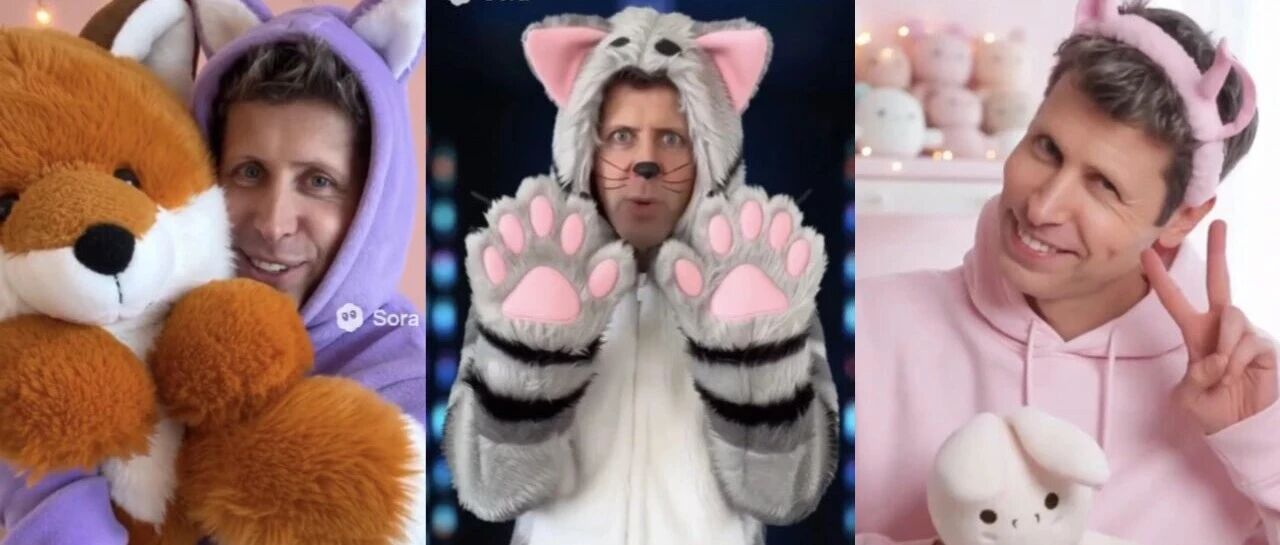
Core Points - The article discusses the challenges faced by AI video generation models, particularly Sora 2 and Veo3, in accurately counting fingers while verbally counting numbers [1][2][6] - OpenAI's new social media application, Sora, has generated mixed reactions, with some users enjoying the quirky AI-generated content featuring Ultraman, while others express concerns about the implications of deepfake technology [8][11][13] - OpenAI researchers have voiced their concerns regarding the ethical implications of releasing Sora, balancing the excitement of technological advancements with the potential risks associated with deepfake videos [13][14][15] Group 1: AI Video Generation Challenges - Sora 2 and Veo3 failed to accurately count fingers while verbally counting, even after refining the prompt used for testing [1][2][6] - Users have created various tests for the AI models, including simulating water pouring into a glass, which Sora 2 performed well but still had minor flaws [6] Group 2: User Reactions to Sora - The AI-generated videos featuring Ultraman have led to a mix of amusement and concern among users, with some finding the content entertaining while others worry about the implications of deepfake technology [8][10][11] - Ultraman's portrayal in these videos has sparked discussions about the potential misuse of AI-generated content and copyright issues [11] Group 3: OpenAI Researchers' Concerns - OpenAI researchers have expressed their worries about the ethical implications of Sora's release, emphasizing the need for responsible AI development [13][14] - The balance between showcasing innovative technology and adhering to a non-profit mission has been a topic of debate among OpenAI staff [15][16]


Sora 2数手指翻车,奥特曼成第一批「受害者」,被AI玩成最惨打工人
机器之心· 2025-10-02 06:19
Core Viewpoint - The article discusses the performance and limitations of AI video generation models, particularly focusing on Sora 2 and its ability to accurately represent counting with fingers, highlighting the challenges and humorous outcomes of such tests [2][4][8]. Group 1: AI Model Performance - Sora 2 was tested with a prompt to count from 1 to 10 using fingers, but it failed to match the verbal count with the displayed fingers, showcasing a discrepancy in its output [2][3]. - Previous tests with another model, Veo3, also resulted in incorrect counting, indicating a consistent issue across different AI models when interpreting ambiguous prompts [4][8]. - A more specific prompt was suggested to improve accuracy, but even with this refinement, both Sora 2 and Veo3 still failed to perform correctly [6][8]. Group 2: Cultural Impact and Trends - The article notes that AI-generated videos featuring popular characters like Ultraman have become a trend, with humorous and bizarre scenarios being created, leading to a new form of entertainment [10][14]. - There is a growing trend of incorporating Pikachu into various movie titles, reflecting the playful and creative use of AI in media [14]. - OpenAI's Sora application has sparked discussions about copyright and the ethical implications of using well-known characters in AI-generated content, raising concerns among researchers [15][16]. Group 3: OpenAI's Position and Concerns - OpenAI's CEO, Sam Altman, expressed the need for funding to support AI research while balancing the development of consumer applications like Sora [20]. - Some OpenAI researchers have voiced concerns about the implications of releasing Sora, questioning whether it aligns with the organization's non-profit mission [18][19]. - The dual nature of technological advancement is highlighted, with a focus on the need for responsible development of AI applications to avoid past mistakes in the industry [21].