港口集群化协同

Search documents
财经聚焦丨持续刷新纪录 港口“晴雨表”折射我国经济发展活力
Xin Hua She· 2026-01-04 14:40
Core Insights - China's ports are experiencing record-breaking cargo and container throughput, showcasing the country's robust port development despite global trade uncertainties [3][4] Group 1: Port Performance - Ningbo-Zhoushan Port's annual container throughput exceeded 40 million TEUs for the first time, making it the third port globally to reach this milestone [2] - Shandong Port Qingdao's annual cargo throughput surpassed 700 million tons, achieving this milestone 15 days earlier than in 2024 [2] - Tianjin Port's annual container throughput exceeded 23.29 million TEUs, also reaching this figure 17 days ahead of 2024 [2] - In the first 11 months of 2025, China's total port cargo throughput reached 1.675 billion tons, a year-on-year increase of 4.4%, while container throughput reached 320 million TEUs, up 6.6% [3] Group 2: Infrastructure and Technological Advancements - Continuous improvement in infrastructure, such as the completion of major container port areas at Ningbo-Zhoushan, supports the growth in container volumes [3] - Qingdao Port initiated 15 major projects in 2025, increasing terminal capacity by 16 million tons and expanding yard area by 1.46 million square meters [3] - The implementation of smart logistics systems at ports like Tianjin and Shanghai has significantly enhanced operational efficiency [3] Group 3: Market Expansion and Trade Dynamics - Chinese ports are expanding into emerging markets, with new routes established to regions such as Africa and the Middle East [4] - The demand for high-value goods and clean energy products is closely linked to the increase in port throughput [4] - In the first 11 months, China's exports of electromechanical products reached 14.89 trillion yuan, a year-on-year increase of 8.8%, accounting for 60.9% of total exports [4] Group 4: Inland Port Development - The Yangtze River Delta port cluster is evolving, with significant improvements in inland ports like Suzhou and Xu Zhou, which have seen substantial increases in cargo and container throughput [5] - Inland ports are benefiting from enhanced infrastructure and lower transportation costs compared to road and rail, leading to increased cargo volumes [8][9] - Multiple provinces are incorporating inland waterway development into their 14th Five-Year Plan, aiming to strengthen the national high-grade waterway network [9]

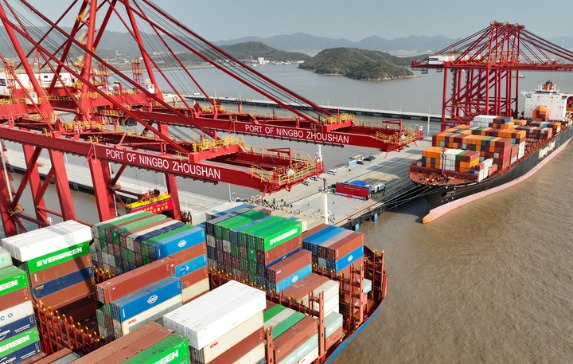
财经聚焦丨持续刷新纪录,港口“晴雨表”折射我国经济发展活力
Xin Hua Wang· 2026-01-04 14:09
Core Insights - China's ports are demonstrating robust growth in cargo and container throughput, with several ports setting new records despite global trade uncertainties [3][6][10] Group 1: Port Performance - Ningbo-Zhoushan Port achieved an annual container throughput of over 40 million TEUs, becoming the third port globally to reach this milestone [1] - Shandong Port Qingdao surpassed 700 million tons in annual cargo throughput, achieving this 15 days ahead of 2024 [1][3] - Tianjin Port exceeded 23.29 million TEUs in annual container throughput, reaching this figure 17 days earlier than in 2024 [1][3] Group 2: Growth Metrics - In the first 11 months of 2025, China's total port cargo throughput reached 1.675 billion tons, a year-on-year increase of 4.4%, while container throughput reached 320 million TEUs, up 6.6% [3][4] - The growth in port throughput is attributed to the increasing demand for high-value goods and clean energy products [6][10] Group 3: Infrastructure and Technology - Continuous improvement in infrastructure is evident, with the completion of major container port areas at Ningbo-Zhoushan and new projects at Qingdao Port enhancing capacity [3][4] - The implementation of smart logistics systems at ports like Tianjin and Shanghai has significantly improved operational efficiency [4] Group 4: Market Expansion - Chinese ports are expanding into emerging markets, with new shipping routes established to Africa and the Middle East, enhancing international trade connections [6][10] - The development of the Yangtze River and other inland waterways is improving transportation efficiency and supporting domestic and international trade [9][10] Group 5: Future Outlook - The ongoing evolution of port functions and the establishment of port clusters are expected to enhance China's economic capabilities and trade competitiveness [6][10] - Multiple provinces are focusing on improving inland waterway transport as part of their development plans, which aligns with national strategies to lower logistics costs and enhance transportation networks [10]

财经聚焦|持续刷新纪录,港口“晴雨表”折射我国经济发展活力
Xin Hua She· 2026-01-04 14:04
Core Insights - China's ports are experiencing record-breaking cargo and container throughput, showcasing the country's robust port development despite global trade uncertainties [1][3][5] Group 1: Port Performance - As of December 2025, Ningbo-Zhoushan Port's annual container throughput exceeded 40 million TEUs, making it the third port globally to reach this milestone [1] - Shandong Port Qingdao's annual cargo throughput surpassed 700 million tons, achieving this 15 days ahead of 2024's schedule [1] - Tianjin Port's container throughput exceeded 23.29 million TEUs, also ahead of the 2024 timeline by 17 days [1][3] Group 2: Growth Metrics - In the first 11 months of 2025, China's total port cargo throughput reached 16.75 billion tons, a year-on-year increase of 4.4%, while container throughput reached 320 million TEUs, up 6.6% [3][5] - The growth in port throughput is closely linked to the stable demand for high-value goods and clean energy products [5] Group 3: Infrastructure Development - Significant infrastructure improvements have been made, including the establishment of major container port areas at Ningbo-Zhoushan and new projects at Qingdao Port that will increase throughput capacity by 16 million tons [3][5] - Automation and smart logistics systems are being implemented, enhancing operational efficiency at ports like Tianjin and Shanghai [3] Group 4: Market Expansion - Chinese ports are expanding into emerging markets, with new shipping routes established to Africa and the Middle East, reflecting the resilience and vitality of China's foreign trade [5] - The export of electromechanical products reached 14.89 trillion yuan, a year-on-year increase of 8.8%, accounting for 60.9% of total exports [5] Group 5: Inland Port Development - Inland ports are also seeing growth, with cargo throughput increasing by 5.7%, outpacing coastal ports by 2 percentage points [5][7] - Investments in inland waterway infrastructure are being prioritized in various provinces, enhancing the efficiency of domestic logistics and supporting the dual circulation strategy [7]