内循环与外循环

Search documents
习近平: 加快新型能源体系建设,推动新增用电主要由新能源发电满足
Xin Hua She· 2026-02-16 07:15
Group 1 - The article emphasizes the importance of domestic demand as a driving force for economic growth, advocating for the construction of a strong domestic market and the implementation of measures to boost consumption and investment [1][2][3] - It highlights the need for innovation-driven development, focusing on technology innovation to lead industrial upgrades and the establishment of international technology innovation centers in key regions [2][3] - The article calls for deepening reforms to enhance the vitality of high-quality development, including the establishment of a unified national market and the promotion of state-owned enterprise reforms [2][3][4] Group 2 - The article stresses the importance of external openness and multi-field cooperation, aiming to enhance domestic and international dual circulation and promote trade and investment integration [3][4] - It outlines the necessity for coordinated development, promoting urban-rural integration and regional collaboration, while ensuring food security and stable income for farmers [3][4][5] - The article advocates for a comprehensive green transition, focusing on carbon reduction, pollution control, and the development of a new energy system [4][5] Group 3 - The article emphasizes the need to prioritize people's livelihoods, implementing policies to stabilize employment and improve access to education and healthcare [4][5][6] - It highlights the importance of risk management, particularly in the real estate market and local government debt, advocating for targeted measures to stabilize these sectors [5][6]
财经聚焦丨持续刷新纪录,港口“晴雨表”折射我国经济发展活力
Xin Hua Wang· 2026-01-04 14:09
Core Insights - China's ports are demonstrating robust growth in cargo and container throughput, with several ports setting new records despite global trade uncertainties [3][6][10] Group 1: Port Performance - Ningbo-Zhoushan Port achieved an annual container throughput of over 40 million TEUs, becoming the third port globally to reach this milestone [1] - Shandong Port Qingdao surpassed 700 million tons in annual cargo throughput, achieving this 15 days ahead of 2024 [1][3] - Tianjin Port exceeded 23.29 million TEUs in annual container throughput, reaching this figure 17 days earlier than in 2024 [1][3] Group 2: Growth Metrics - In the first 11 months of 2025, China's total port cargo throughput reached 1.675 billion tons, a year-on-year increase of 4.4%, while container throughput reached 320 million TEUs, up 6.6% [3][4] - The growth in port throughput is attributed to the increasing demand for high-value goods and clean energy products [6][10] Group 3: Infrastructure and Technology - Continuous improvement in infrastructure is evident, with the completion of major container port areas at Ningbo-Zhoushan and new projects at Qingdao Port enhancing capacity [3][4] - The implementation of smart logistics systems at ports like Tianjin and Shanghai has significantly improved operational efficiency [4] Group 4: Market Expansion - Chinese ports are expanding into emerging markets, with new shipping routes established to Africa and the Middle East, enhancing international trade connections [6][10] - The development of the Yangtze River and other inland waterways is improving transportation efficiency and supporting domestic and international trade [9][10] Group 5: Future Outlook - The ongoing evolution of port functions and the establishment of port clusters are expected to enhance China's economic capabilities and trade competitiveness [6][10] - Multiple provinces are focusing on improving inland waterway transport as part of their development plans, which aligns with national strategies to lower logistics costs and enhance transportation networks [10]


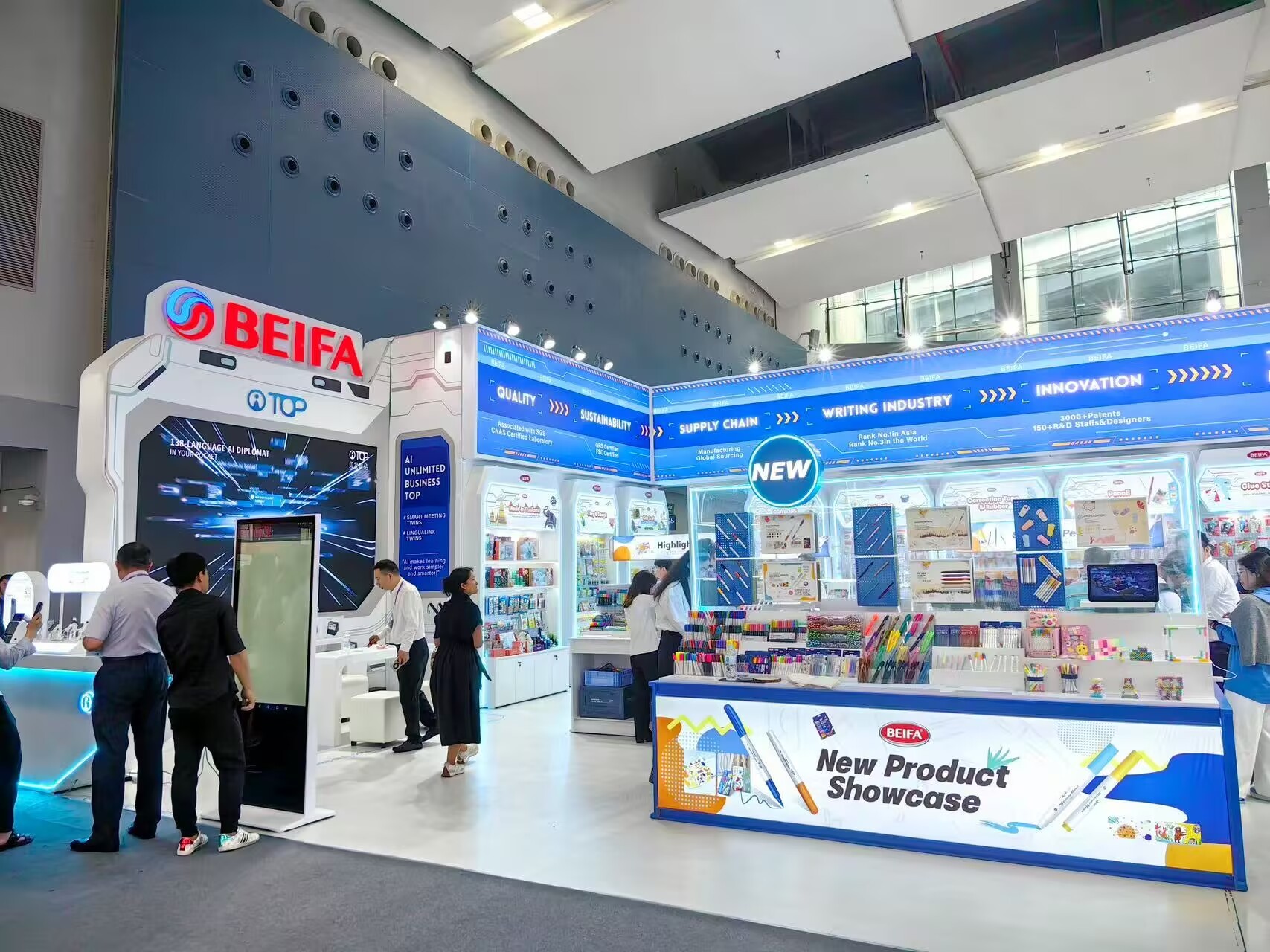
对话“亚洲笔王”贝发集团董事长邱智铭:公司有能力,也有信心化解“对等关税”影响
Mei Ri Jing Ji Xin Wen· 2025-05-04 13:08
Core Viewpoint - The 137th China Import and Export Fair (Canton Fair) has seen a vibrant atmosphere despite the "May Day" holiday, with a notable shift in foreign buyer demographics, as European and American clients decrease while buyers from other countries increase [1][2] Group 1: Impact of Tariffs - The U.S. "reciprocal tariffs" have not dampened the spirits of Chinese exhibitors or foreign buyers, but there are subtle changes in buyer composition [1] - The China Foreign Trade Center announced a 50% reduction in booth fees for export exhibitors to help foreign trade enterprises cope with external risks [1] - Beifa Group, a major stationery exporter, reports that the U.S. market accounts for nearly 30% of its revenue and acknowledges the impact of tariffs but remains confident in overcoming these challenges [2][5] Group 2: Beifa Group's Strategy - Beifa Group's revenue structure shows that 85% comes from foreign trade, with equal distribution among Europe, the U.S., and developing countries [2] - The company has implemented a "5+1" strategy to mitigate tariff impacts, focusing on strengthening domestic manufacturing, enhancing production capacity in Vietnam, and developing manufacturing centers in Egypt and Nigeria [4] - Beifa Group's chairman emphasizes the importance of global market expansion, particularly in developing countries, as a significant growth area [8] Group 3: Innovation and Product Development - Beifa Group has introduced AI-integrated products at the Canton Fair, attracting interest from over 20 countries, indicating a successful entry into the AI market [9] - The company aims to combine traditional stationery with AI applications, enhancing its competitive edge in the market [9][10] - Beifa Group's international brand center aims to establish 60 brand centers globally by 2028, targeting significant market penetration in developing regions [8]