源头防控

Search documents
贵州一新规明确:野生动物致害要补偿 超载要调控
Yang Guang Wang· 2026-01-18 03:25
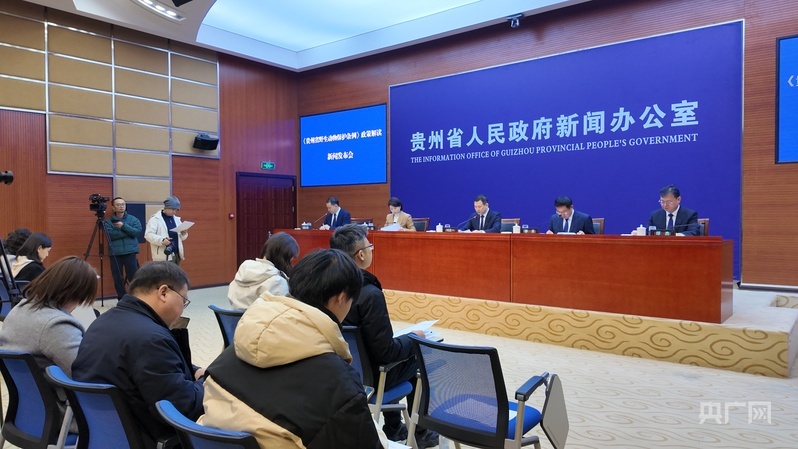
Core Viewpoint - The Guizhou Provincial Wildlife Protection Regulations will take effect on January 1, 2026, aiming to balance ecological protection with public safety and interests [1]. Group 1: Source Prevention - The regulations emphasize source prevention by implementing a "scientific control" mechanism to address wildlife population issues that exceed environmental carrying capacity, thereby reducing conflicts between wildlife and human activities [2]. - Measures such as translocation and scientific hunting will be legally adopted to manage wildlife populations [2]. Group 2: Financial Support - The regulations mandate that local governments at the county level and above include wildlife protection funding in their fiscal budgets to support damage compensation and related activities [2]. - Compensation will be provided for injuries and property losses caused by protected wildlife, as well as for significant damages caused by other terrestrial wildlife [2]. Group 3: Risk Sharing - The regulations introduce a market-based solution for risk sharing by allowing local governments to promote wildlife damage compensation insurance through insurance companies [2]. - The initiative encourages organizations and individuals to purchase commercial insurance for wildlife damage, aiming to alleviate financial pressure on the government and reduce individual risks, thus achieving a win-win situation for ecological protection, public interests, and market participation [2].

建立长效治理机制,让溶洞不再沦为“垃圾洞”
Zhong Guo Huan Jing Bao· 2025-12-10 01:51
Core Viewpoint - The repeated pollution incidents in natural caves highlight the limitations of passive and emergency responses, emphasizing the need for a long-term governance mechanism that balances protection and utilization of these ecological treasures [5] Group 1: Current Issues - Recent exposure of significant garbage accumulation in natural caves in Yunnan and Guizhou has raised public concern, revealing the inadequacies of the current "exposure-cleanup" reactive approach [1] - Long-term neglect and lack of effective governance have led to the continuous accumulation of pollution in caves, damaging their ecological integrity and undermining local public interests and sustainable development [1] Group 2: Legal and Regulatory Framework - Establishing a long-term governance mechanism requires advancing relevant laws from "principles" to "details," ensuring regular and precise implementation [2] - Existing laws provide a foundational legal framework for cave protection, but there are significant shortcomings in execution, such as vague definitions and lack of unified standards for cave classification [2] Group 3: Enforcement and Accountability - Legal accountability for pollution is crucial for effective long-term governance, with civil, administrative, and criminal liabilities outlined in various laws [3] - The focus should shift from reactive cleanup to proactive prevention, establishing a comprehensive protective system that includes source control, regular monitoring, and public participation [3] Group 4: Monitoring and Public Engagement - Regular monitoring is essential for early detection of hazards, with the integration of technology such as drones and remote sensing to enhance monitoring capabilities [4] - Public participation is vital for fostering a collective effort in protection, with the need for improved reporting channels and educational initiatives to engage local communities [4] Group 5: Sustainable Development - Protection does not equate to absolute closure; there is potential for developing educational and eco-tourism initiatives that can enhance public awareness and generate economic value for local communities [4] - A well-structured governance system that combines legal frameworks, technological support, and community involvement is necessary to transform caves from "garbage pits" into sustainable ecological assets [5]
新疆乌苏市市场监管局“主动服务、源头防控”创新监管模式 开展校园食堂新建项目事前介入指导工作
Zhong Guo Shi Pin Wang· 2025-11-24 10:28
Core Viewpoint - The Urumqi Market Supervision Administration is implementing an innovative regulatory model that shifts from passive regulation to proactive service and source prevention, focusing on food safety in school canteens during the design and construction phases [1][3]. Group 1: Proactive Regulation - The administration has engaged in pre-intervention guidance for the new canteen project at the Urumqi Technical School, ensuring compliance with the Food Safety Law and relevant standards [3]. - This proactive approach includes reviewing canteen blueprints, planning layouts, and ensuring hardware and equipment meet safety requirements, facilitating the efficient processing of food business licenses post-construction [3]. Group 2: Smart Supervision - The Urumqi Market Supervision Administration is utilizing the "Qianliyan" smart supervision platform and mobile app for real-time monitoring of food processing operations in school canteens and restaurants [4]. - Key areas such as personnel management, ingredient procurement, cooking processes, and sanitation are under comprehensive surveillance, ensuring traceability and accountability in food safety [4]. - The implementation of smart supervision aims to integrate information technology with food safety regulation, addressing the mismatch between regulatory capacity and tasks, and enhancing overall food safety measures [4].
滨南采油管理区加强承包商全流程管控
Qi Lu Wan Bao Wang· 2025-09-23 04:19
Group 1 - The contractor's HSE (Health, Safety, Environment) training certification has expired, leading to immediate disqualification from participation [1] - The management area has implemented a comprehensive control system to shift contractor safety management from reactive to proactive measures, ensuring key projects progress as planned [1] - The core of the "three controls" management approach is to make safety a standard requirement for contractor operations [1] Group 2 - The management area has organized specialized training for contractor supervisors, covering seven operational monitoring requirements, responsibilities, safety measures, and personnel credential verification [2] - Qualified supervisors will be included in the contractor monitoring personnel list, and only those on the list can perform monitoring duties [2] - Any violation of safety regulations by construction personnel will result in immediate dismissal and inclusion in a "blacklist" [2]
2024年中国环保设备行业市场发展现状 水污染防治和大气污染防治设备占据了绝大部分市场【组图】
Qian Zhan Wang· 2025-08-24 03:12
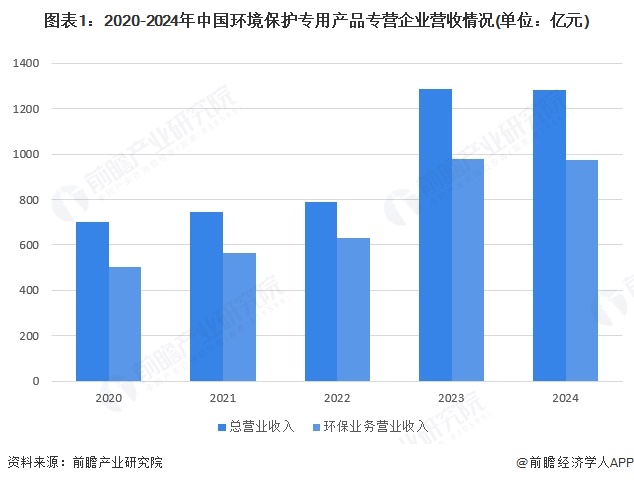
Core Insights - The revenue scale of China's environmental protection product specialized enterprises is projected to reach 1283 billion yuan in 2024, with a steady growth trend observed from 2020 to 2023 [2][3] Group 1: Revenue Growth - The operating revenue of China's environmental protection product enterprises was 1285 billion yuan in 2023, with the environmental business revenue at 978 billion yuan [2] - The estimated total operating revenue for specialized environmental protection equipment enterprises in 2024 is approximately 1283 billion yuan, with environmental business revenue around 975 billion yuan [2] Group 2: Demand Structure - The demand structure of the environmental protection equipment industry is dominated by water pollution prevention and air pollution control equipment, which occupy the majority of the market share [4] - The main categories of environmental protection equipment include water pollution control equipment, air pollution control equipment, solid waste treatment and resource recovery equipment, soil and groundwater remediation equipment, and noise and vibration control equipment [4] Group 3: Investment Trends - From 2015 to 2023, the total investment in industrial pollution control in China showed an overall declining trend, with a rebound in 2023 to 36.24 billion yuan, reflecting a year-on-year increase of 26.8% [7] - The estimated total investment in industrial pollution control for 2024 is approximately 355 billion yuan [7] - The shift in demand reflects a transition from end-of-pipe treatment to source prevention, with a growing preference for comprehensive solutions over single equipment purchases [7] Group 4: Supply and Demand Analysis - The supply-demand situation indicates that representative enterprises in the environmental equipment market are experiencing a supply shortage, with companies like Qingda Environmental maintaining a production-sales rate around 100% [9] - Many products from companies such as Fida Environmental and Zhongjian Huaneng have production-sales rates exceeding 100%, indicating strong demand [9] - The average production-sales rate of representative enterprises in the environmental equipment sector has shown an increasing trend, exceeding 100% from 2021 to 2024, with 2024 projected at 101.0% [10]