版权治理

Search documents
港股AI应用板块集体走强,Seedance 2.0引爆版权治理新需求,摩根大通斥资约7691万港元增持阜博集团
Jin Rong Jie· 2026-02-16 02:25
Group 1 - The AI application sector in Hong Kong saw active performance on February 16, with stocks like Fubo Group (03738.HK), Haizhi Technology Group (02706.HK), and Zhipu (02513.HK) showing significant strength due to multiple positive catalysts [1] - ByteDance's video generation model Seedance 2.0 has been integrated into the Doubao App, allowing users to generate 5 or 10-second videos through a prompt input, showcasing improvements in physical realism, consistency, and instruction comprehension [1] - Huachuang Securities reports that AI video generation is transitioning from entertainment to precise industrial production, with new models significantly reducing waste rates and overall production costs [1] Group 2 - The rise of Seedance 2.0 has introduced new challenges in copyright management, with concerns over unauthorized AI-generated movie clips and celebrity likenesses leading to disputes over portrait rights [2] - Fubo Group has launched the Vobile MAX™ platform for element-level rights management, capable of accurately identifying and tracking AI-generated content across the internet, aiding creators in monetizing their work [2] - Morgan Stanley increased its stake in Fubo Group by acquiring 14.92 million shares at an average price of HKD 5.1537, raising its holding from 4.57% to 5.15% [2] Group 3 - Zhipu recently released its next-generation flagship model GLM-5, achieving state-of-the-art performance in coding and agent capabilities [3] - Zhipu has withdrawn its previous guidance filing and is reapplying for registration, aiming to list on the Sci-Tech Innovation Board with new advisory firms [3]
AI视频侵权风险频发 阜博集团旗下Vobile MAX 平台正式上线元素级IP管理能力
Zhi Tong Cai Jing· 2026-02-16 01:05
Core Viewpoint - The rapid rise of AI video generation technology is accompanied by significant copyright governance challenges, highlighted by the recent launch of ByteDance's Seedance 2.0 model and ensuing controversies over unauthorized AI-generated content [1] Group 1: AI Video Generation Technology - AI video generation technology is experiencing explosive growth as the Lunar New Year approaches in 2026 [1] - ByteDance's Seedance 2.0 has gained popularity due to its powerful generation capabilities [1] Group 2: Copyright Issues - The emergence of AI-generated content has raised concerns regarding copyright, with instances of unauthorized use of character likenesses and scenes [1] - A notable case involves the agent of Stephen Chow questioning the presence of unauthorized AI-generated movie clips on platforms [1] - Controversies have also arisen on social media regarding AI-created videos featuring celebrity likenesses, leading to discussions about portrait rights [1] Group 3: Industry Response - Vobile MAX, launched by Vobile Group, offers element-level copyright management capabilities to address industry pain points [1] - The platform can accurately identify and track AI-generated derivative content, exemplified by its tracking of the character Judy from "Zootopia" [1] - Vobile MAX enables copyright holders and creators to monitor content distribution and monetization potential, providing clarity on asset flow [1]
AI视频侵权风险频发 阜博集团(03738)旗下Vobile MAX™平台正式上线元素级IP管理能力
智通财经网· 2026-02-16 00:59
Core Viewpoint - The rapid rise of AI video generation technology, particularly with the launch of ByteDance's Seedance 2.0, is creating significant copyright governance challenges in the industry as unauthorized AI-generated content becomes prevalent [1] Group 1: AI Video Generation Technology - The AI video generation technology is entering a period of explosive growth as the Lunar New Year approaches in 2026 [1] - ByteDance's Seedance 2.0 has quickly gained popularity due to its powerful generation capabilities [1] Group 2: Copyright Issues - Concerns have been raised regarding the presence of unauthorized AI-generated movie clips, highlighted by the public criticism from Stephen Chow's agent [1] - The use of AI to create videos featuring celebrity likenesses has sparked debates over portrait rights [1] Group 3: Industry Response - The traditional infringement model, which involved the illegal reproduction of complete works, is being challenged by AI's method of deep learning from vast amounts of material to reconstruct elements [1] - Vobile MAX™, launched by Vobile Group, showcases element-level rights management capabilities to address these industry pain points [1] - Vobile MAX™ can accurately identify and track AI-generated derivative content, as demonstrated with the character "Judy" from "Zootopia" [1] - The platform enables monitoring of the dissemination of classic real-life figures' content and assists creators in monetizing their work, providing clarity on asset flow and monetization potential [1]
于慈珂:版权技术范式重塑IP产业,AI时代需建立可持续授权机制
Xin Lang Cai Jing· 2025-12-30 10:12
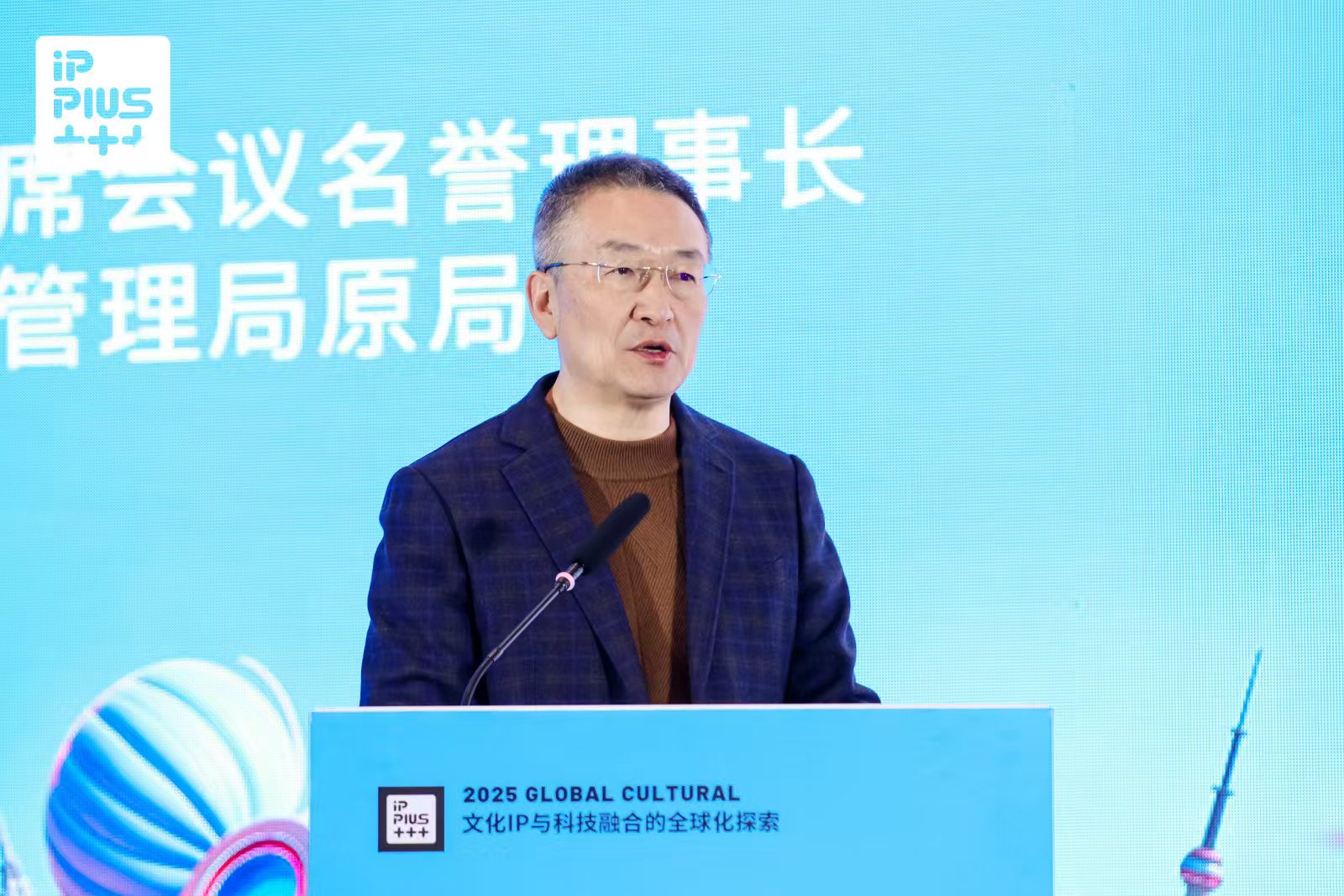
Core Viewpoint - The 2025 Global Cultural IP Industry Development Conference will be held in Shanghai on December 26-27, 2025, focusing on the theme of "IP Without Boundaries: Intelligent Creation of the Future - Global Exploration of Cultural IP and Technology Integration" [1][5]. Group 1: AI and IP Industry Transformation - AI is reshaping content production and dissemination, becoming a variable in the industry, with the key being to align "technological dividends" with "rights order" [6][4]. - Data and copyright governance are foundational to the AI content ecosystem, necessitating systematic upgrades in rights confirmation, authorization, traceability, and distribution to prevent a gap between rapid technological advancement and regulatory frameworks [6][4]. Group 2: Licensing and Revenue Distribution Mechanisms - The industry needs to explore more feasible licensing and revenue distribution mechanisms that involve rights holders, platforms, technology providers, and regulators [6][10]. - A verifiable copyright infrastructure, standardized rights expression, and scalable licensing models are essential to enhance the synchronization of original creators' earnings and industry efficiency, positioning AI as an engine for IP value increment rather than a source of controversy [6][10]. Group 3: Challenges and Solutions in Copyright Governance - The shift from "post-event rights protection" to "pre-event calculability" in copyright governance is crucial, requiring standardized rights expression, traceable usage records, and executable licensing rules to make authorization a low-cost, scalable capability [4][9]. - Technologies such as blockchain, digital watermarking, fingerprint recognition, and content traceability will unlock greater value in rights confirmation, evidence collection, and distribution [4][9]. Group 4: Collaborative Industry Efforts - The industry must collaboratively explore licensing models that align with AI characteristics, including authorization for training data, rights labeling for generated content, and revenue distribution mechanisms for multi-party collaboration [10]. - Rights holders should enhance their digital asset management capabilities to ensure content can be registered, authorized, and monetized, while platforms need to establish transparent content usage rules and compliance processes [10].

北京展区闪耀第十届中国国际版权博览会,擘画全国文化中心新图景
Bei Jing Ri Bao Ke Hu Duan· 2025-10-17 10:05
Core Viewpoint - The 10th China International Copyright Expo held in Qingdao showcased Beijing's achievements in copyright creation, utilization, protection, management, and service, featuring over 2,000 copyright works and 15 key projects [1] Group 1: Exhibition Highlights - The Beijing exhibition area covered 360 square meters and included 13 leading cultural enterprises from Beijing, such as Wanda and Beijing Publishing Group [1] - A thematic installation commemorating the 80th anniversary of the victory in the Chinese People's Anti-Japanese War was prominently displayed, enhancing historical engagement [3] - The exhibition featured innovative projects like the "Art Chain Global - Songzhuang Copyright Story" and digital font development by Han Yi Innovation Technology, showcasing the integration of traditional culture with modern technology [4][5] Group 2: Cultural and Technological Integration - The exhibition highlighted the role of copyright in the creative transformation and innovative development of traditional culture through various "cultural + technology" case studies [3] - Beijing Publishing Group presented a multi-dimensional reading culture space, showcasing the success of Chinese literature in international markets with translations in multiple languages [6] - AI-driven educational products were introduced, demonstrating the deep integration of publishing and artificial intelligence [6] Group 3: IP Development and Industry Growth - The exhibition illustrated Beijing's thriving ecosystem for IP development, showcasing the full industry chain from content creation to IP commercialization [8] - Wanda Film presented its achievements in digital empowerment and IP incubation, featuring various merchandise and collaborations with popular IPs [8] - The event also included interactive experiences and innovative technologies, such as AR applications and digital production showcases, enhancing audience engagement [8] Group 4: Cultural Heritage and Digital Transformation - The exhibition emphasized Beijing's rich museum resources, presenting creative products inspired by historical artifacts, blending traditional elements with modern design [9] - The China Cultural Relics Exchange Center launched a digital cultural heritage copyright asset service platform, promoting efficient utilization of cultural resources [10] - The "Beijing Model" for copyright governance was highlighted, showcasing a collaborative mechanism involving multiple governmental bodies to enhance copyright management [10]