Seedance2.0

Search documents
传媒互联网周报:Seedance2.0全球上线,把握游戏及IP潮玩底部机会-20260330
Guoxin Securities· 2026-03-30 13:28
Investment Rating - The report maintains an "Outperform the Market" rating for the media and internet industry [5][40]. Core Insights - The media industry experienced a decline of 4.02%, underperforming compared to the CSI 300 index (-1.76%) and the ChiNext index (-0.40%) during the week of March 23-27 [12][13]. - Seedance 2.0, an AI video generation model by ByteDance, has been launched globally, ranking first in the text-to-video category on the Artificial Analysis independent blind test leaderboard [2][16]. - OpenAI has announced the termination of its Sora project, indicating a significant business restructuring and a potential strain in its relationship with Microsoft [2][17]. - The ChatGPT advertising business trial has achieved an annualized revenue of over $100 million within six weeks of launch, showcasing the monetization potential of AI platforms [2][17]. - In March, 130 domestic games were approved for release, with notable titles including Tencent's "Lily's Little Kingdom" and 37 Interactive Entertainment's "Little Helmet Adventure" [2][18]. Summary by Sections Industry Performance - The media sector ranked 26th in terms of weekly performance among all sectors, with notable gainers including ST Mingcheng and Liansheng Technology, while major decliners included Tiandi Online and ST Huicheng [12][13][14]. Key Data Tracking - The total box office for the week of March 23-29 was 265 million yuan, with the top three films being "Rescue Plan" (77 million yuan, 28.9% share), "Beaver Transformation Plan" (47 million yuan, 17.6% share), and "Fast Life 3" (37 million yuan, 13.8% share) [3][20]. - In the gaming sector, the top three mobile games in China for February 2026 were "Gossip Harbor: Merge & Story" by Lemon Microfun, "Whiteout Survival," and "Kingshot," both by Dd Interactive [28][29]. Investment Recommendations - The report suggests capitalizing on the bottom opportunities in the gaming sector and IP trends, with a focus on companies like Giant Network, G-bits, and 37 Interactive Entertainment, which are expected to benefit from AI product implementations [4][38]. - The AI application landscape is rapidly evolving, with significant potential in marketing and content generation, particularly for companies like Bilibili and Chinese Online [4][38].




AI来了,香港影史又要重讲一遍
创业邦· 2026-03-30 08:44
以下文章来源于娱乐硬糖 ,作者谢明宏 娱乐硬糖 . 有温度的泛娱乐产业自媒体。娱乐人物的商业解读,资本客厅的莎士比亚。 来源 丨娱乐硬糖(ID: yuleyingtang ) 作者丨 谢明宏 编辑丨 李春晖 叫兽易小星最近拍了个 "雪山酱板鸭"短视频,一镜到底来了段超长台词。 "我是那日雪山脚下,你拿来救狐狸的那只酱板鸭——在他生前还是一只可爱小鸭子的时候,他曾经 交往过一个可爱的女朋友,叫作可爱的小母鸡——我是那只可爱的小母鸡,生前所下的最后一颗鸡蛋 上面的细菌。" 戏仿邵氏复仇主题的 AI短片最近很火,如今叫兽又戏仿AI,被众网友戏谑:"岁数太大只能手搓了 吗?" 出道快 20年的叫兽,叫一声"搞笑视频非遗传承人"确实不过分,那可还是土豆网的时代。无独有 偶,卢正雨近期也在抖音发布了自己2013年的作品《大侠卢小鱼》。两人一个90年代无厘头,一个 恶搞60、70年代邵氏,看着眼下铺天盖地的AI猫狗僵尸片,不知会感慨后继有人,还是后浪推前 浪? 更不约而同的是, 从草根时代的搞笑短片,到视频平台的网络电影,再到如今算法驱动的 AI革命, 香港电影总会成为创作者们的第一个"重写"对象。 甭管是李小龙成龙赛博对 ...


「一人一天一部剧」时代降临,但AI短剧供给过剩不是末日|专访巨日禄杰夫
36氪未来消费· 2026-03-28 09:13
互动影游迎来机会。 作者 | 李小霞 编辑 | 乔芊 2026春节前,由字节跳动旗下视频生成模型Seedance2.0掀起的巨浪,正推动AI剧走向规模化落地。身在这场巨变中的短剧公司,或惊恐、焦虑,抑或 面对新的机会热情高涨。 AI短剧创作平台巨日禄创始人杰夫预判,3—4月将成为行业关键节点,"一人一天一部剧"的生产能力成为现实,商业化标准的短剧制作成本将被大幅压 缩,随之而来的是成本结构的彻底倒挂:人力成本占比从8成骤降至2成,算力与Token成为核心成本。供给过剩将在两三个月后如期而至,但这并非赛 道式微的信号,反而意味着市场细分需求将被充分激活,行业总盘持续扩大。 在他看来,这场变革远不止于效率提升。从"跟风盯榜单"到"回归用户本身",从"平台找内容"到"内容求平台",行业逻辑正发生根本性转变;互动影游 迎来新生…… 除却情绪上的复杂,身处当下,该如何择机遇而安。近日,我们与巨日禄创始人杰夫聊了聊。 以下为36氪与巨日禄创始人杰夫对话(经编辑) 一定数量级的集群,就能支撑影视内容的生产与消费 36氪:你对2026-2027年AI剧赛道有什么核心的预判? 杰夫: 我认为,今年3—4月,就会出现「一人一天一 ...

可灵AI商业化进入“深水区”
36氪未来消费· 2026-03-27 10:22
Core Insights - Kuaishou's revenue from Keling AI has shown significant growth, with Q4 2025 revenue reaching RMB 340 million, a 13% increase from previous quarters, and an annualized revenue run rate of $240 million [3][4] - The CEO expressed confidence in Keling AI achieving over 100% year-on-year revenue growth in 2026, driven by continuous optimization of model capabilities and product forms [4] - Despite Keling AI's revenue surpassing RMB 1 billion, it still accounts for less than 1% of Kuaishou's overall revenue, raising concerns about high R&D expenditures, which increased by 18.8% to RMB 14.5 billion in 2025 [5] Financial Performance - Kuaishou's total capital expenditure (Capex) is projected to reach approximately RMB 26 billion in 2026, with an additional RMB 11 billion allocated for Keling AI and other foundational models [5] - Following the earnings report, Kuaishou's stock price dropped over 14%, reflecting market concerns about slowing growth in commission and advertising revenue amid increased AI investments [5] Competitive Landscape - Keling AI has maintained a competitive edge since Q3 2025, but faces increasing competition from ByteDance's Seedance 2.0, which offers advanced multi-modal capabilities and lower usage barriers [6][7] - Investors are inquiring about potential investments beyond video generation, prompting Kuaishou to explore applications of AI in various business scenarios, including online marketing and e-commerce [7]

传媒行业月报:谷歌苹果下调分成比例,加码游戏板块布局力度-20260327
Zhongyuan Securities· 2026-03-27 08:59
Investment Rating - The industry investment rating is "Outperform the Market," indicating an expected increase of over 10% in the industry index relative to the CSI 300 over the next six months [2][61]. Core Insights - The media sector has experienced a decline of 11.98% as of March 25, 2026, ranking 28th among 30 primary industries, underperforming compared to the ChiNext index and the CSI 300 [5][16]. - The gaming sector is highlighted as a key area for investment due to favorable changes in revenue-sharing models by Google and Apple, which enhance profitability for game developers [6][13]. - The AI application market is rapidly growing, with daily token usage exceeding 140 trillion, indicating a significant increase in AI adoption within the industry [7][14]. Summary by Sections Investment Recommendations - Focus on companies with strong performance, solid fundamentals, and sufficient valuation adjustments, particularly in the gaming sector due to recent favorable policy changes [6][13]. - High dividend/yield companies such as state-owned education publishing and advertising leaders are recommended for their stable cash flow and defensive characteristics in a declining risk appetite market [10][14][15]. Market Review - As of March 25, 2026, the media index has decreased by 11.98%, with all sub-sectors experiencing declines, particularly advertising and internet media [5][16][19]. - The overall PE ratio for the media sector is 27.76, with historical valuation metrics indicating a 62.5% percentile [5][21]. Industry News - Significant developments include Google's reduction of service fees for app purchases and Apple's adjustment of commission rates for the App Store, which are expected to benefit game developers [22][24]. - The national five-year plan emphasizes the development of the gaming industry, indicating governmental support for growth and international expansion [24]. Monthly Industry Data - In February 2026, the domestic gaming market generated actual sales revenue of 332.31 billion, reflecting a year-on-year increase of 18.96% [46]. - The film market saw a box office of 77.93 billion in February 2026, a decrease of 50.15% year-on-year, with a significant increase in viewing sessions compared to the previous month [25][33].
时隔5年半,程一笑再谈快手与字节竞争
21世纪经济报道· 2026-03-26 15:51
记者丨周慧 编辑 丨李新江 张伟贤 3月25日,快手科技发布2025年第四季度及全年业绩。 从全年数据来看,2025年快手总收入同比增长12.5%至人民币1428亿元,全年经调整净利润达 到人民币206亿元,同比增长16.5%,经调整净利润率提升至14.5%。 过去一年,各互联网大厂都在"烧钱"搞AI竞赛,快手的最新财报和3月25日晚间的业绩电话会 的核心议题也和AI有关。一方面,快手可灵AI的商业化提速,2025年第四季度,可灵AI营业 收入达到3.4亿元人民币;另外,快手在AI方面的投入也在提速。 快手科技创始人兼首席执行官程一笑还在业绩电话会上回应了视频生成大模型赛道的竞争,以 及AI投入方向等话题,尤其答复了市场最为关切的可灵和字节Seedance2.0竞争问题。 5年多前,2020年9月,华为开发者大会松湖对话上,他与搜狐 CEO 张朝阳的对话,谈的还是 快手与抖音内容分发、推荐算法的异同。 在业绩电话会上,快手科技创始人兼首席执行官程一笑透露,截至今年1月,可灵AI的年化收 入运行率(ARR)已超过3亿美元。基于当前的增长势头和商业化进展,公司对可灵AI在2026 年实现收入同比翻倍以上增长保持较 ...

拓竹和泡泡玛特和解,免费打印大牌IP的日子正在倒计时
36氪· 2026-03-26 13:46
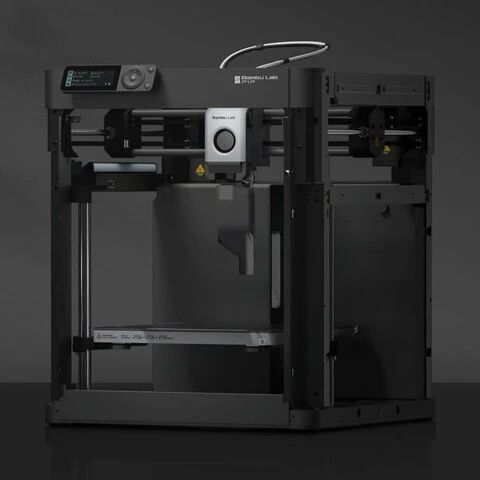
Core Viewpoint - The 3D printing industry is transitioning from hardware competition to content competition, with intellectual property (IP) becoming a critical factor for success in the market [4][11]. Group 1: Industry Challenges - After years of rapid growth, the 3D printing sector is now facing significant IP infringement issues, highlighted by the recent settlement between Bambu Lab and Pop Mart over unauthorized models [5][6]. - The consumer-grade 3D printing industry has reached a consensus that strong hardware specifications are merely entry points, while a robust community ecosystem is essential for long-term success [6][11]. - Bambu Lab's MakerWorld platform has become the largest 3D model community globally, boasting over 10 million monthly active users and more than 1 million 3D models [6][19]. Group 2: Legal and IP Risks - Hardware manufacturers operating 3D model communities face high legal responsibilities for user-uploaded infringing content, especially from major copyright holders like Disney [9][10]. - The current trend shows that many models uploaded are for personal use and have not yet entered the market, but as community users grow, legal scrutiny is expected to increase [10][21]. - The most downloaded models on MakerWorld are often related to popular IPs, which poses a significant risk of infringement and potential legal action from IP owners [20][21]. Group 3: Community and Business Model - The 3D printing community has historically been fragmented, with users relying on third-party sites for models, but this is changing as companies recognize the commercial value of model forums [13][19]. - MakerWorld has implemented a gamified incentive system to encourage user engagement, rewarding model uploads and downloads with points redeemable for materials [14][19]. - The platform's focus on providing optimized print files for specific machines creates a strong user barrier, enhancing customer loyalty and engagement [17][19]. Group 4: Future Outlook - The 3D printing market is projected to exceed billions in scale, prompting IP holders to take action against infringement, which could reshape the landscape for startups in the industry [22][23]. - The evolution of 3D model communities is expected, with a shift towards exclusive content production by hardware manufacturers, moving away from the open-source model of the past [23].

时隔5年半,程一笑再谈快手与字节竞争
2 1 Shi Ji Jing Ji Bao Dao· 2026-03-26 03:22
Core Insights - Kuaishou Technology reported a total revenue of RMB 142.8 billion for the year 2025, representing a year-on-year growth of 12.5%, with adjusted net profit reaching RMB 20.6 billion, up 16.5% from the previous year, and an adjusted net profit margin of 14.5% [1] - The company's focus on AI commercialization is highlighted, with Kuaishou's AI revenue reaching RMB 340 million in Q4 2025, and significant investments in AI expected to accelerate [1][2] Financial Performance - For 2025, Kuaishou's total revenue was RMB 142.8 billion, a 12.5% increase year-on-year, while adjusted net profit was RMB 20.6 billion, marking a 16.5% increase [1] - The adjusted net profit margin improved to 14.5% [1] AI Investment and Strategy - Kuaishou plans to significantly increase its capital expenditure (Capex) to approximately RMB 26 billion in 2026, an increase of about RMB 11 billion compared to 2025, focusing on AI model development and infrastructure [2][7] - The investment will cover computing power for Kuaishou's AI models, server procurement, and data center construction [2][7] Competitive Landscape - Kuaishou's CEO Cheng Yixiao discussed the competition between Kuaishou's AI model Keling and ByteDance's Seedance 2.0, emphasizing the complexity and openness of video generation models [3] - As of January 2025, Keling AI's annual recurring revenue (ARR) exceeded USD 300 million, with expectations for over 100% revenue growth in 2026 [3] Technological Advancements - Kuaishou has been iterating its AI models, with the introduction of multi-modal capabilities in Keling, enhancing user creativity and interaction [5] - The company aims to integrate multi-modal input and output within a unified model framework, advancing video generation capabilities [5][6] Future Directions - Kuaishou will focus on developing AI agents for e-commerce, enhancing automated marketing processes, and improving user search experiences [6][7] - The company aims to maintain healthy free cash flow growth despite increased Capex, with a target of achieving nearly RMB 12 billion in free cash flow in 2025 [7]


刘烈宏:以Token计费为基础的新型商业逻辑正在加速演进|金融与科技
清华金融评论· 2026-03-25 12:19
Core Viewpoint - The Chinese government emphasizes the importance of artificial intelligence (AI) development, aiming to integrate AI into various industries and enhance data resource utilization, with the AI industry expected to exceed 10 trillion yuan by the end of the 14th Five-Year Plan [4]. Group 1: AI Infrastructure Development - The "East Data West Computing" project optimizes data center construction by guiding computing demand from the east to the west, with a total computing power of 159 million PFlops expected by the end of 2025, where eight national hubs will account for over 80% of this capacity [6]. - The "Computing and Electricity Coordination" initiative aims to integrate computing infrastructure with the power system, promoting a sustainable cycle of resource allocation, with a target of 80% green electricity usage in new computing facilities by 2024 [7]. - The establishment of a national integrated computing network is underway, facilitating efficient scheduling and application of computing resources across the country, which is a key requirement for the 14th Five-Year Plan [8]. Group 2: AI Evolution and Economic Impact - AI is transitioning from dialogue to decision-making execution, with applications like OpenClaw driving explosive growth in large model applications, highlighting the need for robust data security measures [6][9]. - The integration of AI with various industries is crucial for transforming technological potential into developmental momentum, with high-quality industry-specific data sets becoming key to model effectiveness [9]. - The emergence of embodied intelligence is creating new demands for data, as AI integrates with robotics and sensors to perform complex tasks in specific industrial scenarios [9]. Group 3: Tokenization and New Business Models - Tokens are becoming a key unit of value in the AI era, facilitating the connection between technology supply and commercial demand, with daily token usage expected to rise from 100 billion to 100 trillion by the end of 2025 [10]. - The rapid increase in token usage indicates a developing market for high-quality data, establishing a positive cycle of data supply and value release [10]. Group 4: Data and AI Governance - The integration of AI into production and daily life raises concerns about data security and compliance, necessitating collaborative efforts among AI providers, users, and security maintainers to ensure comprehensive data safety solutions [11][12]. - The evolution of the data industry is marked by a shift from information services to a value-ecosystem stage, driven by AI's role in enhancing data utilization and market demand [12][13]. - AI's advancements are improving data processing efficiency and expanding the market for data elements, while also presenting new challenges for data security governance [14]. Group 5: Future Directions - The focus for 2026 is on data value release, with initiatives aimed at enhancing data quality and availability to support AI innovation across various sectors [15]. - The ongoing reforms in data rights and the establishment of new data circulation mechanisms are expected to mature the market for data elements, facilitating efficient data flow and privacy protection [14].

国家数据局局长谈“龙虾热”
第一财经· 2026-03-23 12:49
Core Insights - The article emphasizes that "good intelligent agents" should not only be versatile executors but also transparent risk communicators and reliable solution providers [4][5] - The rapid growth of AI applications in China is driven by technological innovation and commercial applications, with the AI industry expected to exceed 10 trillion yuan by the end of the 14th Five-Year Plan [3][4] Group 1: Trends in AI Development - The emergence of intelligent agents, exemplified by OpenClaw, signifies a new form of large model application that autonomously plans and executes tasks, leading to a global market explosion [4] - The "lobster craze" reflects a trend where AI deeply integrates into production and daily life, making safety and compliance governance focal points [5] Group 2: Data Security and Compliance - High-quality, secure, and compliant data is essential for the development of AI, with the National Data Bureau focusing on empowering AI innovation through quality data set construction [5][6] - The article highlights various security risks associated with AI, including copyright disputes, data poisoning attacks, and network security vulnerabilities, which can undermine the reliability of AI applications [5] Group 3: Safety Mechanisms for AI - Chinese companies are accelerating the application of intelligent agents by integrating domestic large models with comprehensive data security strategies, including compliance checks, data isolation, and operational audits [4][5] - The principles of "minimum privilege, proactive defense, and continuous auditing" should guide the ongoing safety measures for intelligent agents [5][6]