
物流行业整合

Search documents
两大巨头接连退市!刘强东豪掷156亿接盘,京东承诺要兑现了
Sou Hu Cai Jing· 2026-01-19 12:32
Core Viewpoint - The logistics industry is undergoing significant restructuring, highlighted by the recent announcements of voluntary delistings from the stock market by companies like Debon and Aneng Logistics, signaling a maturation of the capital market [1][3]. Group 1: Delisting Announcements - Debon Logistics announced its voluntary exit from the A-share market on January 13, 2026 [1]. - Aneng Logistics, listed in Hong Kong, confirmed its delisting date as February 9, 2026, following Debon's announcement [3]. - The delistings are part of a broader trend in the logistics sector, indicating a shift in market dynamics [13]. Group 2: JD's Acquisition of Debon - JD.com is acquiring Debon at a price of 19 yuan per share, representing a 35% premium over the stock price prior to suspension, amounting to a total investment of approximately 15.6 billion yuan [5]. - This acquisition is part of JD's strategy to resolve overlapping business issues within five years, with the delisting being a crucial step in fulfilling this commitment [7]. - JD has increased its stake in Debon to 75.4% prior to the acquisition, indicating a strategic move to consolidate control and streamline operations [9]. Group 3: Industry Trends and Challenges - The logistics industry is experiencing a wave of delistings, with many companies, including Debon and Aneng, choosing to exit the public market due to regulatory constraints that hinder deep integration and operational efficiency [18]. - The shift away from public listings is seen as a rational decision for companies to focus on service quality and cost optimization rather than maintaining a public image [24]. - The industry is moving from a fragmented competitive landscape to a more oligopolistic structure, where a few major players dominate the market [20]. Group 4: Financial Performance and Market Dynamics - Debon reported a loss of 277 million yuan in the first three quarters of 2025, reflecting the unsustainable nature of aggressive expansion and price competition [22]. - The changing consumer demands now prioritize customized solutions and comprehensive service tracking over mere price and speed, necessitating a shift in business strategies [24]. - The regulatory environment is tightening, with over 30 companies facing mandatory delisting in 2025, pushing firms to adapt or exit the market [26]. Group 5: Future Outlook - The delistings are expected to create a more competitive environment, potentially leading to improved service quality for consumers as companies focus on efficiency and cost control [31]. - The future logistics landscape will emphasize service excellence and operational efficiency rather than mere network expansion [29]. - The outcome of JD's significant investment in Debon will be closely monitored to assess whether it achieves the anticipated synergistic benefits [29].


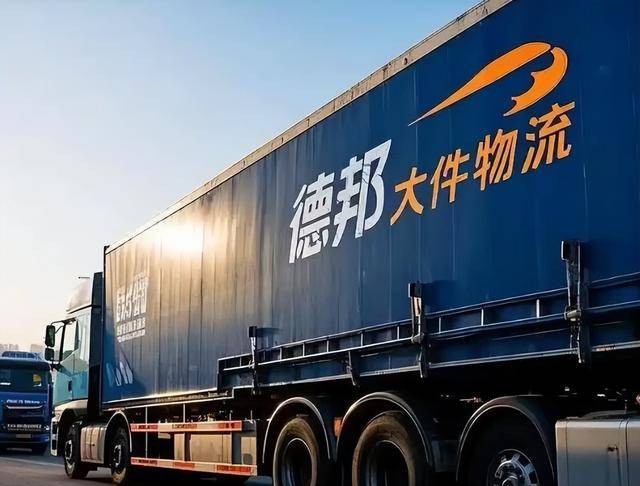
狠人刘强东,拿下德邦快递
商业洞察· 2026-01-18 09:23
Core Viewpoint - The article discusses the recent acquisition of Debon Logistics by JD Logistics, highlighting the strategic implications and the evolving landscape of the logistics industry in China [5][20]. Group 1: Acquisition Details - JD Logistics acquired Debon Logistics for 3.797 billion yuan, paying 19 yuan per share, which represents a premium of over 35% [5][17]. - This acquisition marks the completion of JD's strategy to fully integrate Debon, following an initial investment of over 12 billion yuan since 2022 [5][18]. Group 2: Debon's Historical Context - Debon Logistics was founded in 1996 and became a leader in the less-than-truckload (LTL) freight market, achieving a peak market value of over 30 billion yuan [8][9]. - The company attempted to diversify into the parcel delivery market in 2018, which led to operational challenges due to conflicting business models [11][12]. Group 3: Strategic Fit - The acquisition addresses JD's need for a robust LTL and large-item logistics network, while providing Debon with the financial and technological support to overcome its operational difficulties [14][18]. - JD's logistics strategy has been elevated under the leadership of Liu Qiangdong, who emphasizes the importance of logistics in supporting a comprehensive e-commerce ecosystem [18][20]. Group 4: Industry Implications - The consolidation of logistics companies, including JD's acquisition of Debon, reflects a shift in the industry from extensive expansion to quality improvement and efficiency [22][23]. - The logistics market is becoming increasingly concentrated, with the top eight companies holding an 87% market share, indicating a potential survival crisis for smaller players [23][24].

德邦跟了京东,极兔搂住顺丰
Sou Hu Cai Jing· 2026-01-16 16:23
Core Insights - The logistics industry in China is undergoing significant changes, marked by two major transactions: the strategic shareholding agreement between SF Express and Jitu Express, and the delisting of Debon Logistics, indicating a shift towards a more integrated and efficient competitive landscape [2][10][33] Group 1: Strategic Alliances - SF Express and Jitu Express announced an HKD 8.3 billion strategic shareholding agreement, with SF holding 10% of Jitu and Jitu holding 4.29% of SF, establishing a long-term partnership [2][4] - The collaboration is seen as a response to the industry's transition from rapid growth to a focus on efficiency and value reconstruction, as both companies aim to leverage each other's strengths in cross-border logistics and last-mile delivery [3][5][23] Group 2: Market Dynamics - The Chinese express delivery market has shifted from over 20% annual growth to a projected low of 5% by 2025, with average delivery prices dropping significantly from CNY 12.7 in 2015 to below CNY 3 [2][18] - The competitive landscape is evolving from scale expansion to efficiency and value creation, with market share increasingly concentrated among leading players [19][25] Group 3: Financial Implications - The share issuance for the strategic partnership allows both companies to optimize their capital structure without significant cash outflows, reducing financial pressure while enhancing their market positions [5][16] - SF's investment in Jitu is expected to yield benefits from Jitu's growth in overseas markets, particularly in Southeast Asia, while Jitu gains credibility and capital support from SF [5][7] Group 4: Operational Synergies - The partnership is already yielding operational benefits, with Jitu utilizing SF's network for deliveries in lower-tier markets, enhancing service quality and customer satisfaction [8][9] - Both companies plan to create a comprehensive cross-border logistics solution, aiming to reduce delivery times significantly in Southeast Asia and other emerging markets [9][25] Group 5: Debon Logistics and JD Logistics - Debon Logistics' delisting is viewed as a strategic move to eliminate competition with JD Logistics, which acquired a controlling stake in Debon, allowing for deeper integration and operational efficiency [10][12] - The integration aims to resolve competitive overlaps and enhance resource sharing, with JD Logistics leveraging Debon's capabilities in large-item logistics [11][13] Group 6: Future Outlook - The logistics industry is expected to enter a phase of ecological competition and globalization, with cross-border logistics and large-item logistics becoming key growth drivers [30][31] - Companies that adapt to these trends and focus on building collaborative ecosystems will likely emerge as leaders in the evolving market landscape [33]

快运巨头拟退市!此前已有多位“老将”离任,京东物流溢价35%接盘
Mei Ri Jing Ji Xin Wen· 2026-01-15 04:52
Core Viewpoint - The recent delisting of major express delivery companies, Debon Logistics and Aneng Logistics, introduces uncertainty into the logistics industry's competitive landscape, marking a transition towards deeper integration and transformation within the sector [1][3][8]. Group 1: Company Actions - Debon Logistics announced its intention to voluntarily withdraw its A-share listing on the Shanghai Stock Exchange, with JD Logistics offering a cash option to Debon shareholders at a price of 19 RMB per share, representing a premium of over 35% compared to the last trading price [1][5]. - Aneng Logistics has also announced plans for privatization and delisting, indicating a trend of privatization within the logistics industry since 2025 [3][8]. - Debon Logistics' delisting is part of JD Logistics' commitment to resolve competition issues following its acquisition of Debon, allowing for better resource integration and operational efficiency [4][6]. Group 2: Industry Trends - The logistics industry is entering a phase of deep integration and transformation, shifting from a focus on scale to a focus on both scale and strength, emphasizing service quality and comprehensive capabilities [3][4]. - The delisting of Debon and Aneng signifies a broader trend of consolidation in the logistics sector, with increased mergers and acquisitions expected as companies seek to enhance competitiveness [7][8]. - New players are entering the market, and existing companies like Zhongtong and SF Express are intensifying their competition in the express delivery sector [8]. Group 3: Financial Performance - Debon Logistics reported a revenue of 30.27 billion RMB for the first three quarters of 2025, reflecting a year-on-year growth of nearly 7%, but also recorded a net loss of 277 million RMB, contrasting with a profit of 517 million RMB in the same period of 2024 [5].
德邦拟主动退市,京东物流提供35%高溢价现金选择权
2 1 Shi Ji Jing Ji Bao Dao· 2026-01-15 01:23
Core Viewpoint - JD Logistics is integrating its logistics system, with DeBang Logistics announcing its intention to voluntarily withdraw from the A-share market to enhance resource coordination and fulfill commitments to avoid competition with JD Logistics [1] Group 1: DeBang Logistics' Withdrawal - DeBang Logistics plans to withdraw its A-share listing to better coordinate resources within JD Logistics, ensuring no adverse effects on its assets, personnel, or operations [1] - The proposal has been approved by the board and awaits shareholder voting and approval from the Shanghai Stock Exchange [1] - Following the announcement, DeBang's stock price surged to 15.44 yuan, a 9.97% increase, with significant trading volume, indicating positive market sentiment towards the withdrawal plan [1] Group 2: High Premium Cash Option - A cash option is being offered to shareholders at a price of 19.00 yuan per share, representing a 35.3% premium over the last closing price before suspension [2] - This cash option is not mandatory, allowing dissenting shareholders the choice to accept or reject it, with a total potential payout of approximately 37.97 billion yuan if all eligible shareholders participate [2] - The high premium reflects JD's commitment to facilitating the integration process amid increasing competition in the logistics sector [2] Group 3: Industry Context and Feasibility - Speculations about JD Logistics injecting other logistics assets into DeBang were deemed unfeasible due to regulatory and competitive concerns, making voluntary delisting the optimal solution [3] - The logistics industry lacks clear boundaries between different business segments, complicating potential integrations and increasing regulatory risks [3] - JD Logistics faces strict conditions for returning to the A-share market, making voluntary delisting a more practical approach to resolving competition issues and promoting resource integration [3] Group 4: Industry Trends - DeBang's withdrawal is part of a broader trend in the logistics industry, shifting from expansion to deep integration and efficiency improvement [5] - Successful delisting could allow DeBang to leverage JD's resources while maintaining its brand, enhancing operational efficiency and upgrading its core business [5] - The integration of DeBang and JD Logistics aligns with the logistics industry's high-quality development trend and balances corporate strategy with shareholder interests [5]
德邦退市,京东物流溢价35%接盘:一场价值156亿元的“一体化”豪赌
Mei Ri Jing Ji Xin Wen· 2026-01-15 00:57
Core Viewpoint - The recent delisting of major express delivery companies, Debon Logistics and Aneng Logistics, marks a significant shift in the logistics industry, indicating a transition from a focus on scale to a focus on quality and strength in operations [1][7]. Group 1: Company Developments - Debon Logistics announced its intention to voluntarily withdraw its A-share listing on the Shanghai Stock Exchange, with JD Logistics offering a cash option to Debon shareholders at a price of 19 RMB per share, representing a premium of over 35% compared to the last trading price [1][4]. - The delisting of Debon and the planned privatization of Aneng Logistics signal a trend of privatization in the logistics sector, which has been ongoing since 2025, leading to deeper industry consolidation [1][7]. - Debon Logistics has experienced leadership changes, with several long-term executives resigning as the integration with JD Logistics deepens [5]. Group 2: Industry Trends - The logistics industry is entering a phase of deep integration and value reassessment, with multiple mergers and privatizations occurring, including JD's privatization of Dada Group and Aneng Logistics' planned delisting [7][8]. - The competition in the zero担 logistics market is intensifying, with new players entering the field and existing companies like Zhongtong and SF Express vying for market share [8]. - The exit of major players like Debon and Aneng may lead to new opportunities for emerging companies in the logistics sector, suggesting that while some companies are exiting, others may rise to take their place [8].