特定领域

Search documents
2025年硅谷给华人AI精英开出上亿年薪!Agent、Infra人才被抢疯了
Sou Hu Cai Jing· 2026-01-04 08:12
Core Insights - The AI landscape in Silicon Valley is shifting from a focus on model parameters and benchmark scores to the ability to integrate models into products and systems that create real business value [2][4] - The talent market is experiencing simultaneous layoffs and aggressive hiring, reflecting a transition from a focus on general artificial intelligence (AGI) to application-specific intelligent systems (ASI) [6][7] - Major tech companies are restructuring their AI research teams, with a notable shift in focus towards product-centric development rather than foundational research [10][11] Talent Dynamics - There is a significant movement of talent within the AI sector, with companies like Meta aggressively recruiting engineering and product-oriented talent while simultaneously losing key research figures [3][10] - Meta's recent hiring strategies include offering signing bonuses up to $100 million, indicating a fierce competition for top talent [3][17] - Many Chinese engineers are stepping into critical roles within these companies, highlighting a demographic shift in the talent pool [5][16] Industry Trends - The AI industry is transitioning from a "technology breakthrough phase" to an "engineering realization phase," where the focus is on practical applications and commercial viability [7][9] - OpenAI's financial challenges illustrate the need for companies to pivot towards monetizing existing AI capabilities, as operational costs are rising significantly [8][9] - The importance of model training remains, but the emphasis is now on transforming model capabilities into stable systems and deployable products [4][9] Company-Specific Movements - Meta's strategic shift is evident in the decline of its FAIR lab, which was once a cornerstone of foundational AI research, now being overshadowed by product-focused teams [11][12] - Key figures like Yann LeCun are leaving established companies to pursue alternative paths, such as founding new ventures focused on advanced machine intelligence [13][14] - Other researchers are aligning with businesses that prioritize deployable AI solutions, indicating a trend towards practical applications of AI research [14][15] Key Skills in Demand - The current talent competition centers around three core capabilities: agent systems, multimodal interaction, and AI infrastructure [16][19] - Companies are seeking individuals who can integrate models into executable systems, emphasizing the need for skills beyond mere model training [16][19] - The demand for expertise in AI infrastructure is growing, as companies require professionals who can optimize model performance and ensure cost-effective operations [19][22]

2025年硅谷给华人AI精英开出上亿年薪
3 6 Ke· 2026-01-01 02:48
Core Insights - The AI landscape in Silicon Valley is shifting from a focus on model parameters and benchmark scores to the ability to integrate models into products and systems that create real business value [2][3][4] - Major tech companies are aggressively recruiting talent in engineering and product roles while simultaneously restructuring their AI research teams, leading to significant personnel changes [3][7] - The transition from a technology breakthrough phase to an engineering realization phase is evident, with companies prioritizing the commercialization of existing AI capabilities over further model training [4][5][6] Talent Dynamics - Meta has been particularly impactful in the talent market, offering substantial salaries to attract engineering and product-focused talent while losing key research figures [7][9] - The decline of Meta's FAIR lab signifies a strategic shift towards a centralized product-focused R&D system, diminishing the priority of foundational research [8][10] - Former top researchers are not exiting the field but are instead pursuing new entrepreneurial ventures that align with their vision of AI development [10][11][12] Key Talent Acquisition - The current talent competition centers around three core capabilities: agent systems, multimodal interaction, and AI infrastructure [15][20] - Companies are seeking individuals who can embed models into executable systems, emphasizing real-time interaction and environmental understanding [16][18] - The demand for expertise in inference systems and AI infrastructure is rising, as companies require efficient, cost-effective solutions for deploying AI models [21][24] Industry Trends - The AI industry is witnessing a recalibration of focus, moving from theoretical advancements to practical applications that can be scaled and monetized [25] - The emergence of new startups and labs, such as Thinking Machines Lab, reflects a growing interest in exploring next-generation AI systems beyond traditional paradigms [14][19] - The competitive landscape is increasingly defined by the ability to deliver AI solutions that are not only powerful but also practical and deployable in real-world scenarios [25]

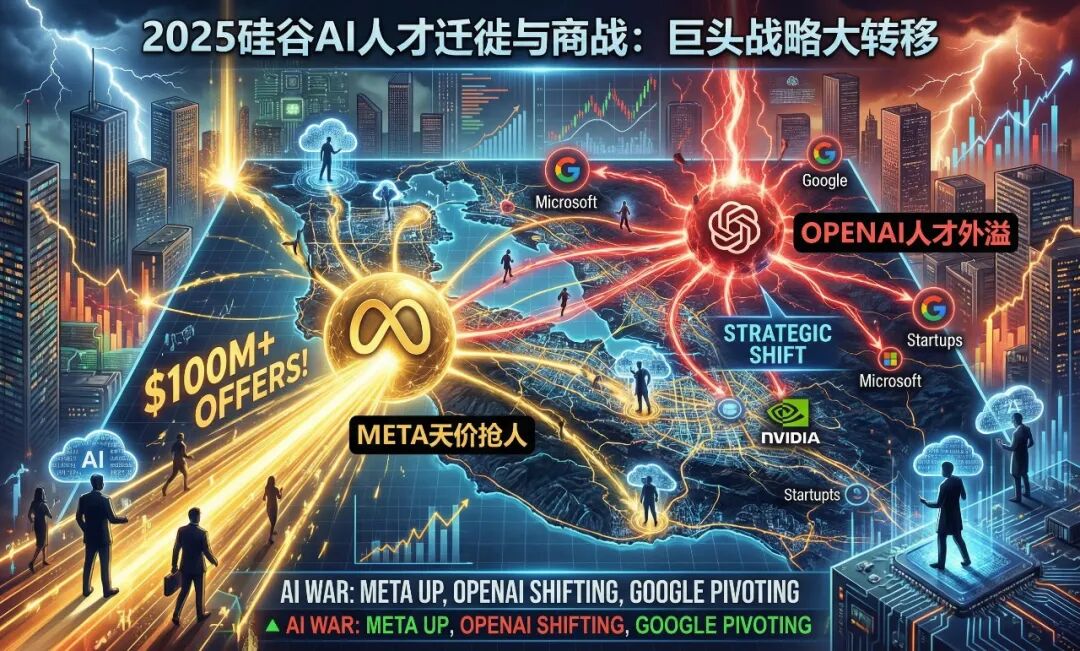
2025年硅谷给华人AI精英开出上亿年薪!Agent、Infra人才被抢疯了
AI前线· 2026-01-01 02:00
Core Insights - The AI landscape in Silicon Valley is shifting from a focus on model parameters and benchmark scores to the ability to integrate models into products and systems that create real business value [4][6] - The talent market is experiencing simultaneous layoffs and aggressive hiring, reflecting a transition from general artificial intelligence (AGI) aspirations to a consensus on application-specific artificial superintelligence (ASI) [8][10] - The operational focus is moving from technical breakthroughs to engineering execution, with companies prioritizing the conversion of existing model capabilities into stable systems and deployable products [12][16] Talent Dynamics - Major tech companies are aggressively recruiting talent in areas such as agent systems, multimodal capabilities, and AI infrastructure, indicating a shift in the types of AI skills that are in demand [25][30] - High-profile personnel changes, particularly at Meta, illustrate a strategic pivot towards product-centric development, leading to the departure of key research figures [15][19] - The influx of Chinese engineers into critical roles highlights the competitive nature of the talent market, with companies offering substantial signing bonuses to attract top talent [24][28] Market Trends - The operational costs associated with maintaining AI models are rising, leading to a reevaluation of investment strategies and a focus on commercial viability [10][11] - The decline in the marginal returns of increasing model size and complexity is prompting companies to seek more practical applications of AI technology [10][11] - The emergence of new startups and research labs, such as Advanced Machine Intelligence Labs and Thinking Machines Lab, reflects a diversification of approaches to AI development [20][23] Strategic Shifts - The decline of foundational research initiatives, such as Meta's FAIR lab, signifies a broader trend where research must directly contribute to product development to retain strategic importance [17][18] - The focus on practical applications of AI is reshaping the landscape, with companies prioritizing the ability to deploy AI systems effectively over theoretical advancements [12][16] - The competitive landscape is increasingly defined by the ability to optimize AI systems for real-world applications, moving beyond traditional metrics of success [35][36]