
环境经济政策

Search documents
优化金融市场支持政策,推动环境信息披露制度扩面提质
Mei Ri Jing Ji Xin Wen· 2026-02-06 00:11
Core Viewpoint - The Ministry of Ecology and Environment emphasizes the importance of environmental economic policies in balancing high-level protection and high-quality development, highlighting the need for innovation in this area during the 14th Five-Year Plan period [1][5]. Group 1: Environmental Economic Policies - Environmental economic policies are a new regulatory approach that adjusts market behavior through economic means, becoming increasingly significant in modern environmental governance [1][5]. - The total amount of environmental protection tax collected during the 14th Five-Year Plan period is nearly 120 billion yuan, with companies benefiting from tax reductions exceeding 80 billion yuan due to low emissions and waste management [2][3]. Group 2: Financial and Tax Support - Continuous strengthening of fiscal and tax support is crucial, with green tax policies creating a fairer market environment [2][6]. - The establishment of a financial support policy system for building a beautiful China aims to guide social capital towards green and low-carbon sectors [3][6]. Group 3: Market Dynamics and Corporate Responsibility - The release of a new version of the Environmental Protection Comprehensive Directory aims to help companies gain better market access and more tax incentives, serving as a guide for green development [3][4]. - The reform of environmental information disclosure has led to nearly 90,000 companies legally disclosing environmental information, enhancing corporate self-discipline and supporting green finance [4][6]. Group 4: Future Directions - The Ministry plans to further enhance ecological compensation mechanisms and optimize financial market support policies to stimulate the internal motivation of market entities for environmental protection [5][6]. - The framework for building a beautiful China has been largely established, with significant progress noted in the political responsibility for this initiative [7].
“十四五”时期,我国生态环境治理成绩亮眼
Zhong Guo Neng Yuan Wang· 2026-02-05 03:08
Core Insights - The "14th Five-Year Plan" period has seen significant achievements in ecological environment governance, with a focus on reducing major pollutant emissions and enhancing the green and low-carbon transformation of industrial structures [3][4]. Group 1: Major Projects and Emission Reduction - A total of 24,000 ecological environment governance projects have been planned and implemented, leading to a substantial decrease in emissions of nitrogen oxides, volatile organic compounds, chemical oxygen demand, and ammonia nitrogen [4]. - The cumulative completion of production capacity reductions includes 940 million tons of crude steel, 470 million tons of cement clinker, 360 million tons of coking capacity, and 1.7 billion kilowatts of coal-fired power units undergoing ultra-low emission transformations [4]. Group 2: Environmental Tax and Financial Policies - The total amount of environmental protection tax collected during the "14th Five-Year Plan" period is nearly 120 billion yuan, with companies benefiting from tax reductions exceeding 80 billion yuan for meeting pollution discharge standards and other environmental initiatives [7]. - Financial support mechanisms for green development have been established, including a project promotion mechanism for "Beautiful China," which guides social capital towards green and low-carbon sectors [8]. Group 3: Urban and Rural Environmental Infrastructure - Urban wastewater treatment capacity has been enhanced to 23.4 million cubic meters per day, with a total of 534,000 kilometers of sewage pipeline networks [5]. - In rural areas, 110,000 administrative villages have completed environmental remediation, with the rural domestic sewage treatment rate doubling to 55% compared to the end of the "13th Five-Year Plan" [5]. Group 4: Risk Control and Pollution Management - A total of 124 major projects for soil pollution source control have been implemented, and the capacity for hazardous waste disposal has reached 22 million tons per year, a 60% increase since 2020 [6]. - Significant progress has been made in the management of tailings and heavy metal pollution, with over 1,800 tailings pollution remediation projects completed in the Yangtze River Economic Belt and nearly 400 in the Yellow River Basin [6].

“十四五”时期,我国生态环境治理成绩亮眼
中国能源报· 2026-02-02 02:06
Core Viewpoint - During the "14th Five-Year Plan" period, China has made significant progress in ecological and environmental governance, with a notable reduction in major pollutant emissions and a substantial advancement in the green and low-carbon transformation of industrial structures [2][4]. Group 1: Major Projects and Pollution Reduction - A total of 24,000 ecological and environmental governance projects have been planned and implemented, leading to a significant decrease in emissions of nitrogen oxides, volatile organic compounds, chemical oxygen demand, and ammonia nitrogen [5]. - The cumulative completion of production capacity reductions includes 940 million tons of crude steel, 470 million tons of cement clinker, 360 million tons of coking capacity, and 1.7 billion kilowatts of coal-fired power units undergoing ultra-low emission transformations [5]. Group 2: Urban and Rural Environmental Infrastructure - Urban wastewater treatment capacity has been enhanced to 23.4 million cubic meters per day, with a sewage pipeline length of 534,000 kilometers, resulting in a reduction of chemical oxygen demand and ammonia nitrogen emissions by approximately 3.2 million tons and 350,000 tons, respectively [7]. - In rural areas, 110,000 administrative villages have completed environmental remediation, with the rural domestic sewage treatment rate increasing to 55%, effectively supporting the elimination of black and odorous water bodies [7]. Group 3: Environmental Economic Policies - The total amount of environmental protection tax collected during the "14th Five-Year Plan" period is nearly 120 billion yuan, with companies benefiting from tax reductions exceeding 80 billion yuan for meeting pollution discharge standards and other environmental initiatives [9][10]. - Financial support mechanisms for "Beautiful China" construction have been established, promoting social capital investment in green and low-carbon sectors, and enhancing the market environment for environmentally compliant enterprises [10].
生态环境部:“四措并举”激发绿色动能 环境经济政策成效显著
Zhong Guo Jing Ji Wang· 2026-01-28 13:30
Core Viewpoint - The Ministry of Ecology and Environment of China is actively enhancing the environmental economic policy framework through a "four-pronged approach," which has shown significant results in regulating market entities' environmental behaviors and optimizing ecological governance [1][3]. Group 1: Financial and Taxation Measures - The Ministry has emphasized the role of green taxation to create a fair market environment, with nearly 120 billion yuan collected in environmental protection taxes during the 14th Five-Year Plan period, and tax reductions for enterprises exceeding 80 billion yuan due to low emissions and waste management [3][4]. - The steel industry has seen a cumulative reduction of 24.9% in pollutant emissions over five years, with expected tax reductions exceeding 9 billion yuan, highlighting the benefits of the "polluter pays" principle [3][4]. Group 2: Ecological Compensation and Regional Cooperation - The reform of ecological compensation and horizontal compensation systems has led to the inclusion of 104 counties in key compensation areas and the establishment of 33 cross-provincial ecological protection compensation mechanisms across 24 provinces [4]. - In Beijing's Yanqing District, a reward fund of 50 million yuan per year has been set up to promote ecological protection, resulting in significant income increases for local village collectives [4]. Group 3: Financial Support and Trade Policies - The Ministry is working on a policy framework to support the construction of a "Beautiful China," promoting financial institutions to invest in green and low-carbon projects, with a project recommendation mechanism established for 2025 [4][5]. - The Ministry has collaborated with customs to release four batches of 276 products under a bonded maintenance directory, facilitating nearly 240 bonded maintenance projects, thus supporting high-quality trade development [4][5]. Group 4: Market Dynamics and Corporate Self-Regulation - The release of a new version of the "Comprehensive Environmental Protection Directory" aims to help enterprises gain better market access and tax incentives, serving as a guide for green and low-carbon development [5]. - Nearly 90,000 enterprises have disclosed environmental information, enhancing the identification of compliant companies and supporting green finance and ESG rating activities [5][6]. Group 5: Future Directions - The Ministry plans to further refine fiscal and tax policies, enhance financial market support, and strengthen industry self-regulation to stimulate market entities' internal motivation for ecological protection [6].
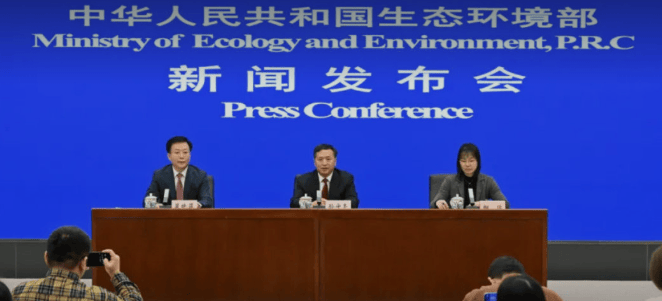
打好调结构、促融通等组合拳 激发市场主体生态环保内生动力
Mei Ri Jing Ji Xin Wen· 2026-01-28 13:25
Core Viewpoint - The Ministry of Ecology and Environment emphasizes the importance of environmental economic policies in balancing high-level protection and high-quality development, highlighting the need for innovation in this area during the 14th Five-Year Plan period [1][5]. Group 1: Environmental Economic Policies - Environmental economic policies are a new regulatory approach that uses economic means to adjust the environmental behaviors of market entities, becoming increasingly significant in modern environmental governance [1][2]. - During the 14th Five-Year Plan period, the total amount of environmental protection tax collected reached nearly 120 billion yuan, with companies benefiting from tax reductions exceeding 80 billion yuan due to low emissions and waste management [2][3]. - The Ministry has implemented a "who protects, who benefits" mechanism, with 104 counties included in ecological compensation areas and 33 cross-provincial ecological protection compensation mechanisms established [2][3]. Group 2: Financial and Trade Support - The Ministry is enhancing financial support for the construction of a beautiful China, promoting a project recommendation mechanism to guide social capital towards green and low-carbon sectors [3][4]. - A new version of the "Environmental Protection Comprehensive Directory" has been released to help companies gain better market access and tax incentives, serving as a guide for green and low-carbon development [3][4]. Group 3: Corporate Self-Regulation and Information Disclosure - The Ministry is deepening the reform of environmental information disclosure, with nearly 90,000 companies legally disclosing environmental information, which supports green finance and ESG ratings [4]. - A new regulatory approach based on environmental credit has been established, with over 1.1 million companies evaluated, promoting a better business environment through incentives for compliant companies [4]. Group 4: Future Directions - The Ministry plans to further enhance structural adjustments, cost reductions, and market dynamics to stimulate the internal motivation of market entities for ecological protection during the 14th Five-Year Plan period [5][6]. - The framework for building a beautiful China has been largely established, with strategic layouts and collaborative actions being implemented to achieve significant progress in green transformation [6].
“十四五”中国企业因低标排放等累计获税收减免预计超800亿元
Zhong Guo Xin Wen Wang· 2026-01-28 10:10
Core Viewpoint - During the "14th Five-Year Plan" period, Chinese enterprises are expected to receive tax reductions exceeding 80 billion yuan due to low emissions, centralized urban and rural sewage treatment, and comprehensive solid waste utilization [1][2] Group 1: Environmental Tax and Economic Policies - The total amount of environmental protection tax collected during the "14th Five-Year Plan" period is nearly 120 billion yuan, with enterprises benefiting from tax reductions due to low emissions and other environmental practices [1][2] - For the steel industry, pollutant emissions have decreased by 24.9% over five years, with expected tax reductions exceeding 9 billion yuan, highlighting the benefits for "protectors" [2] Group 2: Future Directions and Policy Enhancements - The environmental economic policy has significant potential for the "15th Five-Year Plan" period, focusing on structural adjustments, cost reductions, and promoting ecological protection [2] - There is an ongoing effort to deepen ecological compensation reforms and establish regional cooperation mechanisms, with 104 counties included in key ecological compensation areas and 33 cross-provincial ecological protection compensation mechanisms established [2]
生态环境部:全国104个县纳入生态综合补偿重点区域
Sou Hu Cai Jing· 2026-01-28 09:06
Core Viewpoint - The Ministry of Ecology and Environment emphasizes the effectiveness of environmental economic policies and plans to enhance structural adjustments, cost reductions, financial integration, and the cultivation of internal momentum in the upcoming period [1][7]. Group 1: Environmental Economic Policies - Environmental economic policies are a new regulatory approach that uses economic means to adjust the environmental behavior of market entities, highlighting their increasing importance in modern environmental governance [2][3]. - The Ministry has implemented flexible regulatory policies such as tax adjustments, financial support, information disclosure, and credit evaluation to optimize environmental supervision and balance environmental, economic, and social responsibilities [2][3]. Group 2: Fiscal and Tax Support - The Ministry aims to strengthen fiscal and tax support, with the environmental protection tax collection amounting to nearly 120 billion yuan during the 14th Five-Year Plan period, and tax reductions for enterprises exceeding 80 billion yuan due to low emissions and waste management [4]. - The establishment of ecological compensation mechanisms has been initiated, with 104 counties included in key compensation areas and 33 cross-provincial ecological protection compensation mechanisms established [4]. Group 3: Financial Support and Trade Services - The Ministry is working to improve financial support for the construction of a beautiful China, promoting projects to guide social capital towards green and low-carbon sectors [5]. - A total of 276 products have been included in the bonded maintenance directory, facilitating nearly 240 bonded maintenance projects, which support high-quality development of new trade formats [5]. Group 4: Market Dynamics and Enterprise Self-Regulation - The release of a new version of the Environmental Protection Comprehensive Directory aims to help enterprises gain better market access, tax benefits, and financial support, serving as a guide for green and low-carbon development [5]. - The Ministry has deepened the reform of environmental information disclosure, with nearly 90,000 enterprises disclosing environmental information, enhancing the identification of compliant enterprises and supporting green finance and ESG ratings [6]. Group 5: Future Directions - The Ministry plans to further enhance fiscal and tax adjustment policies, optimize green tax systems, and improve ecological compensation mechanisms [7]. - Financial market support policies will be optimized, including the development of a classification directory for green finance projects and support for the green development of private and small enterprises [7]. - The Ministry will strengthen industry self-regulation policies, expanding and improving environmental information disclosure systems and establishing a new regulatory mechanism based on environmental credit [7].
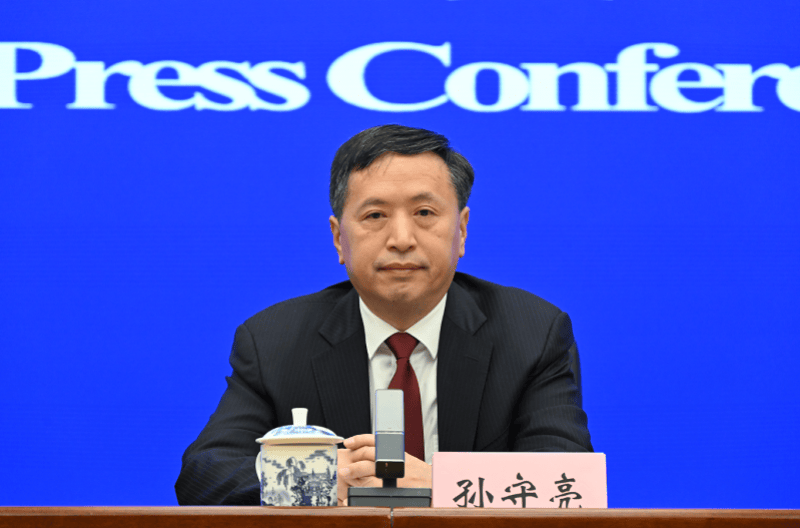
生态环境部:环境经济政策成效明显
Jin Rong Jie· 2026-01-28 05:20
Core Viewpoint - The Ministry of Ecology and Environment has made significant progress in environmental economic policies through a four-pronged approach, focusing on fiscal support, financial services, market cultivation, and corporate self-discipline [1] Group 1: Fiscal and Tax Policies - The Ministry has strengthened fiscal and tax support, enhancing the role of green taxation and reforming ecological compensation systems [1] - Continuous improvement in ecological comprehensive compensation and horizontal compensation systems for river basins has been emphasized [1] Group 2: Financial and Trade Services - The Ministry is working to improve the policy framework for financial support in building a beautiful China, establishing a project promotion mechanism for related initiatives [1] - Financial services are being enhanced to support ecological and environmental projects [1] Group 3: Market Development - The release of a new version of the "Comprehensive Environmental Protection Directory" aims to cultivate internal market dynamics [1] - The Ministry has issued 22 measures to promote the development of the private economy [1] Group 4: Corporate Self-Discipline - There is a focus on deepening the reform of environmental information disclosure and innovating regulatory methods through information technology [1] - The Ministry aims to enhance corporate self-discipline in environmental practices [1] Future Directions - The Ministry plans to further improve fiscal and tax adjustment policies, optimize financial market support policies, and strengthen industry self-discipline policies [1]