生态环境保护

Search documents
厚植生态底色 引领绿色转型——全力推动美丽宁夏建设迈出坚实步伐
Zhong Guo Huan Jing Bao· 2026-02-10 01:02
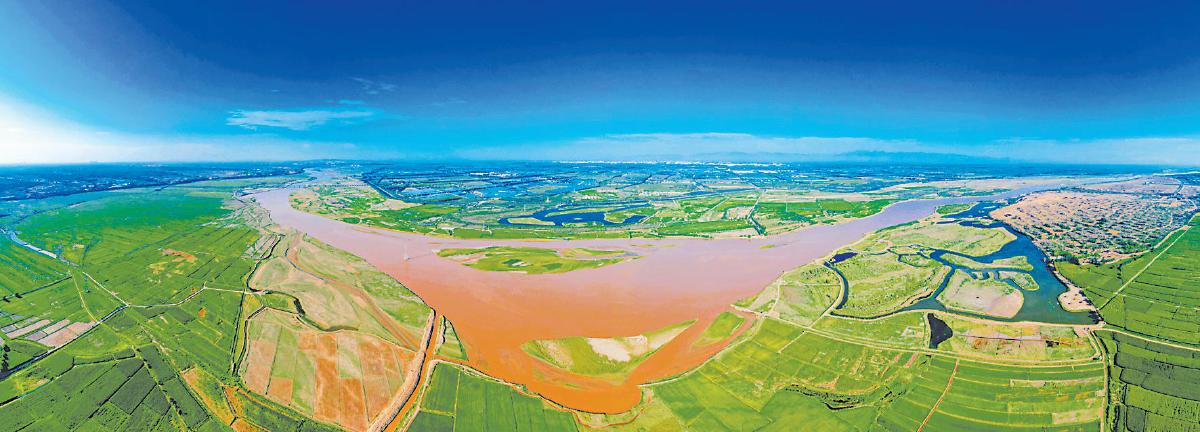
Core Insights - Ningxia Hui Autonomous Region has achieved significant improvements in ecological protection, evidenced by key metrics such as an 88.8% good air quality days ratio and a PM2.5 annual average concentration of 25.9 micrograms per cubic meter, marking the best level since 2015 [2][5] - The region is set to launch the "15th Five-Year Plan" in 2026, focusing on ecological environment protection, green low-carbon transformation, and addressing feedback from ecological environment inspections [2][3] Ecological Improvement Metrics - The good air quality days ratio reached 88.8%, with PM2.5 levels decreasing to 25.9 micrograms per cubic meter, the second-best improvement nationwide [5] - The Yellow River's main stream in Ningxia has maintained Class II water quality for nine consecutive years, and the proportion of good water quality at national control sections reached 85% [5] Financial and Project Investments - In 2025, Ningxia aims to secure 3.216 billion yuan in various ecological environment special funds and implement 110 projects, with over 40 billion yuan in green credit investments [4] - A collaborative system for the construction of beautiful China pilot areas has been established at provincial, city, and county levels [4] Pollution Prevention Achievements - All nine binding indicators for pollution prevention were met, with seven exceeding national averages, including a 99.9% remediation rate for pollution outlets [5] - The region has effectively managed solid waste, addressing 417 illegal dumping cases and promoting solid waste recycling practices [5] Green Transition Initiatives - Ningxia has implemented strict environmental assessment approvals for 18 categories, including coal and petrochemicals, and issued 1,031 pollution discharge permits [6] - The region has engaged in carbon market integration, with a total trading volume of 9.58 million tons and a transaction value of 570 million yuan [6] Environmental Rectification Efforts - The region has completed all tasks from the second round of central ecological environment protection inspections, addressing 1,240 public complaints [7] - A total of 3,787 prominent ecological environment issues have been identified and rectified [5][7] Ecological Safety Measures - Ningxia has maintained a stable ecological safety situation, implementing a three-tiered prevention system for sudden water pollution incidents in chemical parks [8] - The region has established a biodiversity investigation and assessment project to enhance ecological safety [8] Modern Environmental Governance - In 2025, Ningxia completed evaluations of seven local regulations and over 30 normative documents in the ecological environment sector [10] - The region has developed a comprehensive ecological protection compensation assessment system, distributing 469 million yuan in compensation funds [10] Future Plans for Ecological Development - The "15th Five-Year Plan" will focus on ecological environment protection, with specific projects aimed at improving air, water, and soil quality [11][14][15] - The region will initiate a new round of air quality improvement actions, targeting PM2.5 levels and heavy pollution days [14]

全省生态环境保护工作会议召开
Xin Lang Cai Jing· 2026-02-07 17:44
Core Viewpoint - The 2026 provincial ecological environment protection work meeting in Xining highlighted the achievements of the "14th Five-Year Plan" and outlined key tasks for 2026, emphasizing the need for a balance between high-level protection and high-quality development [1] Summary by Relevant Sections Achievements of the "14th Five-Year Plan" - The ecological environment quality in the province has continuously improved, with significant progress in pollution prevention and control [1] - The proportion of days with good air quality increased from 95.6% in 2021 to 97.9% in 2025 [1] - The province is the only one in the country to maintain a 100% annual average water quality for surface water national monitoring sections for five consecutive years [1] - The average water quality of the Huangshui River basin's national and provincial control sections reached Class II or above starting in 2024, marking a historic breakthrough [1] Goals for the "15th Five-Year Plan" - The province aims to better coordinate high-level protection with high-quality development, promoting a comprehensive green transformation of economic and social development [1] - 2026 is identified as a crucial year for the implementation of the "15th Five-Year Plan" and the advancement of the beautiful Qinghai construction [1] - The ecological environment protection department will promote the construction of beautiful China pilot areas in a classified and graded manner, striving to create a model for beautiful China at the provincial level [1] - Efforts will be made to deepen pollution prevention and control, enhance ecological environment law enforcement, accelerate the development of green productivity, strengthen ecological protection and restoration supervision, and reform the ecological environment protection sector [1] - A modern monitoring system will be established to ensure a good start for the "15th Five-Year Plan" [1]
厚植八桂生态优势 壮美广西更加秀丽
Zhong Guo Huan Jing Bao· 2026-02-06 04:09
Core Viewpoint - The news highlights the significant progress made by Guangxi in ecological environment protection and sustainable development during the year 2025, emphasizing the integration of ecological advantages into economic growth and the promotion of high-quality development through various environmental initiatives [2][3][4][5][6][7]. Group 1: Ecological Environment Protection Achievements - In 2025, Guangxi's air quality improved significantly, achieving a 96.1% rate of good air quality days and a PM2.5 concentration of 25.9 micrograms per cubic meter [4]. - The region completed the rectification of 128 out of 154 environmental risk points in the Lijiang River basin, with a total of 394 out of 432 environmental risk points addressed across various river basins [4]. - Guangxi's surface water quality and coastal water quality were reported at 99.1% and 94.9% respectively, ranking among the best in the country [4]. Group 2: Pollution Prevention and Control - Guangxi identified 1,919 sources of heavy metal pollution, with 1,564 already rectified and 355 included in long-term management plans [3]. - The region's soil pollution control projects under the national "14th Five-Year Plan" were successfully completed, contributing to the overall stability of soil and groundwater quality [5]. Group 3: Biodiversity and Natural Resource Management - Guangxi established 223 natural protected areas and reported the discovery of 249 new species, ranking third in biodiversity richness in China [6]. - The population of endangered species such as the white-headed leaf monkey increased from over 300 in the 1980s to over 1,400 in 2025 [6]. Group 4: Economic Development and Ecological Integration - Guangxi's ecological environment department has created 22 national ecological civilization demonstration zones and 9 "Green Water and Green Mountains are Golden Mountains and Silver Mountains" innovation bases, leading in the western region [7]. - The region's ecological health industry is expected to thrive, with the ecological environment department planning to implement a three-year action plan for the "Ecological Environment and Big Health" brand [8]. Group 5: International Cooperation and Engagement - The 2025 China-ASEAN Environmental Cooperation Forum was held in Beihai, focusing on practical cooperation in ecological governance and sustainable development [12]. - Various thematic forums during the event discussed climate resilience, green value chains, and environmental technology innovation, enhancing international collaboration [13]. Group 6: Future Directions and Strategic Goals - The ecological environment system in Guangxi aims to fully implement the spirit of the 20th National Congress of the Communist Party of China, focusing on the harmonious coexistence of political and natural ecologies [17]. - The region is set to continue its efforts in carbon reduction, pollution control, and green expansion, striving for a sustainable and beautiful Guangxi [17].
广东省全力实现美丽中国先行区建设取得新进展
Zhong Guo Fa Zhan Wang· 2026-02-03 08:03
Core Viewpoint - Guangdong Province has made significant progress in ecological and environmental protection during the "14th Five-Year Plan" period, with a focus on improving air, water, and soil quality, and aims to further advance the construction of a beautiful Guangdong and a beautiful China [1][2]. Group 1: Air Quality Improvements - The proportion of days with good air quality in Guangdong exceeds 95%, with a PM2.5 concentration of 20.7 micrograms per cubic meter, consistently better than the World Health Organization's transitional target [2][3]. - Guangdong has been recognized for five consecutive years for its excellent performance in the national pollution prevention and control assessment [2]. Group 2: Water Quality Enhancements - By the end of the "14th Five-Year Plan," the proportion of excellent water quality in national monitoring sections reached 94.6%, an increase of 7.3 percentage points from the end of the "13th Five-Year Plan" [2]. - All black and odorous water bodies in 533 cities and 41 county-level cities have been eliminated, with significant improvements in rivers like the Maozhou River and Lianjiang River [2]. Group 3: Ecological Construction Initiatives - Guangdong has established a multi-level, three-dimensional ecological demonstration system, creating 37 national ecological civilization demonstration cities and 13 "Green Water and Green Mountains are Golden Mountains and Silver Mountains" innovation bases [3]. - The province has implemented a reward-based approach to promote beautiful city construction, with 20 exemplary cases of beautiful county construction [3]. Group 4: Coordinated Development and Protection - Guangdong has developed a "Three Lines and One List" ecological environment zoning control application platform, covering over 1,903 land and 564 sea environmental control units [4]. - The province has optimized project environmental impact assessments and implemented a total pollutant management system to ensure the needs of key industries and major projects are met [4]. Group 5: Future Goals and Plans - By 2030, the Guangdong-Hong Kong-Macao Greater Bay Area aims to be a beautiful China pilot area, with a focus on ecological quality improvement and green financial innovation [5]. - The province plans to increase the proportion of beautiful rural areas to 40% and achieve a 35% completion rate for beautiful rivers and beautiful bays [5]. Group 6: Ongoing Environmental Protection Efforts - Guangdong will enhance drinking water source safety and establish a regular monitoring mechanism for pollution discharge outlets [6]. - The province aims to implement a "waste-free city" initiative and strengthen the management of new pollutants while ensuring environmental quality for events like the APEC meeting [6].
【安康】2025年空气质量综合指数位居全省第一
Shan Xi Ri Bao· 2026-02-03 00:19
Group 1 - The core viewpoint of the articles highlights the significant progress made by Ankang City in environmental protection and pollution control during the "14th Five-Year Plan" period, with a focus on air quality improvement and pollution prevention measures [1][2] Group 2 - Ankang City aims to achieve 352 days of good air quality by 2025, with a comprehensive air quality index reduced to 2.905, maintaining the top position in the province [1] - The average PM2.5 concentration is targeted to decrease to 25 micrograms per cubic meter, continuing a six-year streak of being recognized as a national air quality compliant city [1] - The city has implemented six key measures for air pollution control, including reducing coal usage, controlling vehicle emissions, dust suppression, source treatment, banning burning, and increasing greenery [1] - Ankang has established three major platforms for monitoring air quality, including city-level access control, online monitoring of restaurant emissions, and dust control supervision, achieving a 95% coverage rate for construction video monitoring [1] - The completion of the 750 kV power transmission project enhances regional power supply capacity and increases renewable energy absorption by 30% [1] - During the "14th Five-Year Plan," Ankang added over 17,000 new energy buses and more than 440 new energy trucks, with 99.4% of newly added or updated vehicles in the public sector being new energy vehicles [1] Group 3 - In terms of water quality protection, Ankang City emphasizes the integrated management of water resources, environment, and ecology, continuously enhancing water environment risk prevention and emergency response capabilities [2] - The water quality at the Han River's exit from Shaanxi maintains a stable Class II surface water standard, and Yinghu Lake has been recognized as an excellent case by the Ministry of Ecology and Environment [2] - Ankang is actively preventing soil pollution at the source and has conducted soil pollution status investigations, achieving a 100% safety utilization rate for key construction land [2] - During the "14th Five-Year Plan," Ankang completed the treatment of living sewage in 968 administrative villages and addressed 13 rural black and odorous water bodies, achieving a rural sewage treatment rate of 55.1% [2] - Shiquan County and Pingli County have been selected as pilot counties for comprehensive rural sewage treatment in Shaanxi Province [2]
全省生态环境保护工作会议提出:分级分类推进美丽广东建设
Nan Fang Ri Bao Wang Luo Ban· 2026-02-02 09:17
Core Viewpoint - The Guangdong provincial ecological environment protection work meeting highlighted the achievements during the 14th Five-Year Plan period and outlined future plans for ecological development, aiming for a harmonious coexistence between humans and nature by 2030 and 2035 [1][5]. Group 1: Environmental Quality Improvements - The air quality in Guangdong has shown significant improvement, with a good air quality day ratio of 95.7% and PM2.5 concentration reduced to 20.7 micrograms per cubic meter, consistently meeting WHO standards for six consecutive years [2][3]. - Water quality has also improved, with 94.6% of national monitoring sections meeting good quality standards by the end of the 14th Five-Year Plan, an increase of 7.3 percentage points from the previous plan [2]. - The province has eliminated all black and odorous water bodies in 533 cities and 41 counties, transforming rivers like the Maozhou and Lianjiang into clean and scenic waterways [2]. Group 2: Ecological Construction Initiatives - Guangdong has established a multi-layered, integrated ecological demonstration system, creating 37 national ecological civilization demonstration cities and 13 innovative practice bases [3]. - The province has implemented a reward-based system for beautiful city construction, with 20 exemplary cases of beautiful county construction [3]. - Over 5,700 administrative villages have undergone environmental remediation, achieving a 30% completion rate for beautiful rural areas [3]. Group 3: Green Development and Regulatory Framework - Guangdong has developed a "Three Lines and One List" ecological environment zoning control platform, covering over 1,900 land and 564 sea environmental control units, optimizing production layout from the source [4]. - The province has enhanced environmental impact assessment reforms and implemented a comprehensive management system for major pollutant discharge indicators [4]. Group 4: Future Goals and Action Plans - The province aims to establish a beautiful China pilot area by 2030 and a beautiful Guangdong by 2035, focusing on ecological quality improvement and green financial innovation [5]. - Specific tasks for beautiful city construction will be outlined, with a target of 40% completion for beautiful rural areas and 35% for beautiful rivers and bays [5]. - Continued efforts will be made in pollution prevention, particularly in air quality management and water source safety [6][7].
生态环境部一周要闻(1.25—1.31)
Xin Lang Cai Jing· 2026-02-01 00:44
Group 1 - The Ministry of Ecology and Environment (MEE) held the 2026 National Ecological Environment Protection Work Conference on January 14-15, where key speeches were made by Secretary Sun Jinlong and Minister Huang Runqiu [1] - MEE's regular press conference on January 28 highlighted ongoing efforts to improve ecological environment quality and promote the construction of a beautiful China [2] - MEE announced the publication of the national air quality status for December 2025 and the entire year, as well as the surface water quality status for the fourth quarter of 2025 [3] Group 2 - MEE, in collaboration with the Ministry of Natural Resources and the Ministry of Housing and Urban-Rural Development, issued guidelines for the environmental remediation and development of polluted land [3] - The MEE's Technology and Finance Department released the management measures for ecological civilization demonstration zones (ecological industrial parks) [3] - MEE conducted annual regulatory dialogue activities with China Huaneng Group and State Power Investment Corporation to address key regulatory issues [2]
做实第一职责 走好第一方阵丨助力全面推进美丽中国建设
Zhong Yang Ji Wei Guo Jia Jian Wei Wang Zhan· 2026-01-28 23:32
Core Viewpoint - The article emphasizes the role of the Central Commission for Discipline Inspection and National Supervisory Commission stationed at the Ministry of Ecology and Environment in promoting the implementation of ecological protection policies and enhancing political supervision to support the construction of a beautiful China [2][10]. Group 1: Supervision Mechanisms - The stationed disciplinary inspection team is enhancing political supervision by establishing a collaborative supervision mechanism to address cross-departmental issues, such as illegal disposal of construction waste [4]. - A "return visit" mechanism is being implemented to regularly assess the implementation of important directives from President Xi Jinping regarding ecological protection, ensuring high-quality problem rectification [3][4]. - The team has developed a supervision ledger to track the learning, research, and implementation of ecological protection policies, ensuring comprehensive coverage of important issues [3]. Group 2: Focus Areas and Challenges - The inspection team has identified shortcomings in water pollution prevention, air pollution control, and ecological restoration, providing feedback and suggestions to improve these areas [3]. - The article highlights the need for a robust mechanism to prevent corruption and ensure effective supervision in key areas such as environmental monitoring and administrative approvals, which are prone to risks [9]. - The team is pushing for reforms in environmental impact assessments and management to address existing issues in the approval process [9]. Group 3: Implementation and Accountability - The stationed team is actively involved in the central ecological environment protection inspections, ensuring that the inspection teams adhere to discipline and effectively address issues raised during inspections [6][7]. - The team conducts face-to-face discussions with department leaders to convey responsibility and ensure the implementation of various regulatory norms [9]. - Continuous focus on political supervision and accountability is emphasized to maintain the integrity of ecological protection efforts [10].
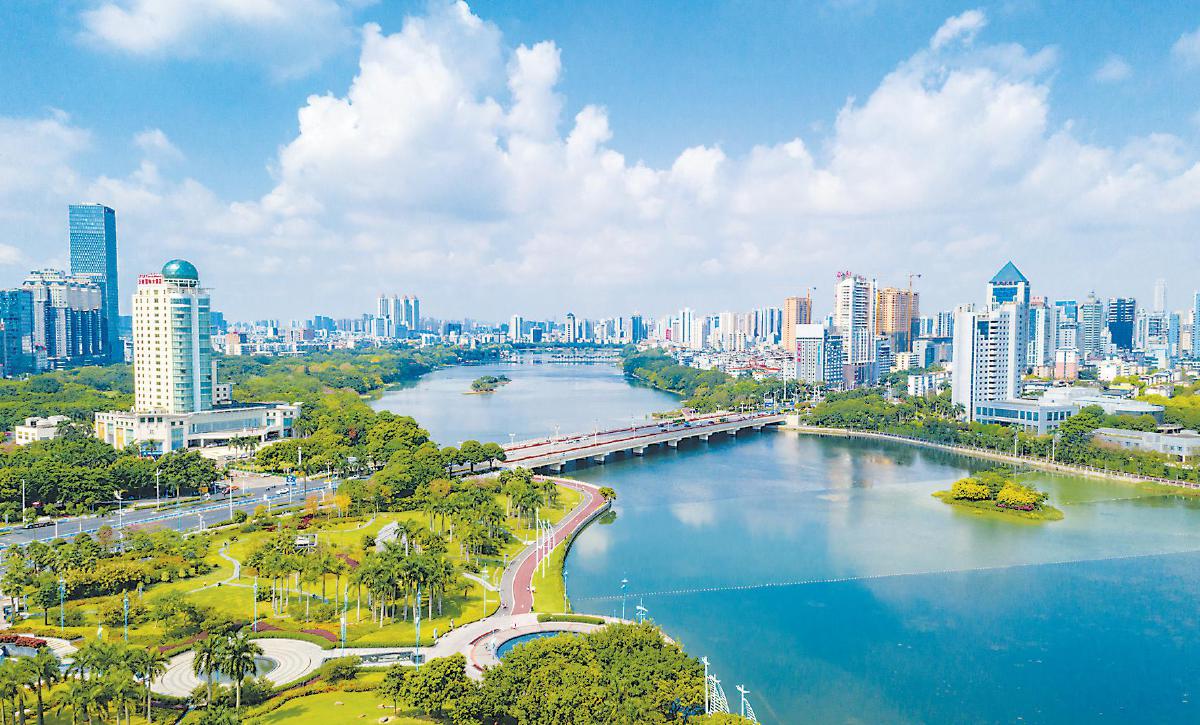
南宁市贯彻落实第二轮中央生态环境保护督察反馈意见整改情况
Xin Lang Cai Jing· 2026-01-28 22:02
Group 1 - The central government conducted a second round of ecological environment protection inspections in Guangxi Zhuang Autonomous Region, with a focus on Nanning, and provided a feedback report on July 16, 2021, highlighting 18 issues to be rectified by December 31, 2025, with a 100% completion rate for public complaints during the inspection period [1] - Nanning's municipal government has prioritized the rectification of ecological environment protection issues, establishing a leadership group to oversee the implementation of feedback from the central inspection [2][3] - The city has developed a comprehensive mechanism for accountability and progress tracking, ensuring effective management of the rectification process through regular reporting and strict supervision [3] Group 2 - Since 2021, Nanning has maintained an air quality good rate of over 96%, with significant improvements in water quality and soil safety, achieving 100% compliance in drinking water sources and black-odor water bodies [6][7] - The city has enhanced its sewage treatment capacity, with urban sewage collection rates increasing from 52.5% at the end of the 13th Five-Year Plan to 80.11% by the end of 2025, and has established multiple waste incineration plants to eliminate landfill waste [7] - Nanning is advancing green and low-carbon development, with over 70% of energy capacity coming from renewable sources by 2025, and a significant increase in the number of certified green factories and products [8] Group 3 - The city has implemented a new land use planning framework that integrates ecological protection into project approvals and planning processes, resulting in a forest coverage rate of 48.56% and a total afforestation area of 1.9839 million acres [9] - Nanning has established a robust environmental safety management system, focusing on heavy metal pollution control and water quality management, with all remediation tasks completed on schedule by 2025 [10] - The city plans to continue enhancing its ecological environment protection efforts, aligning with national policies and focusing on sustainable urban and rural development [11]
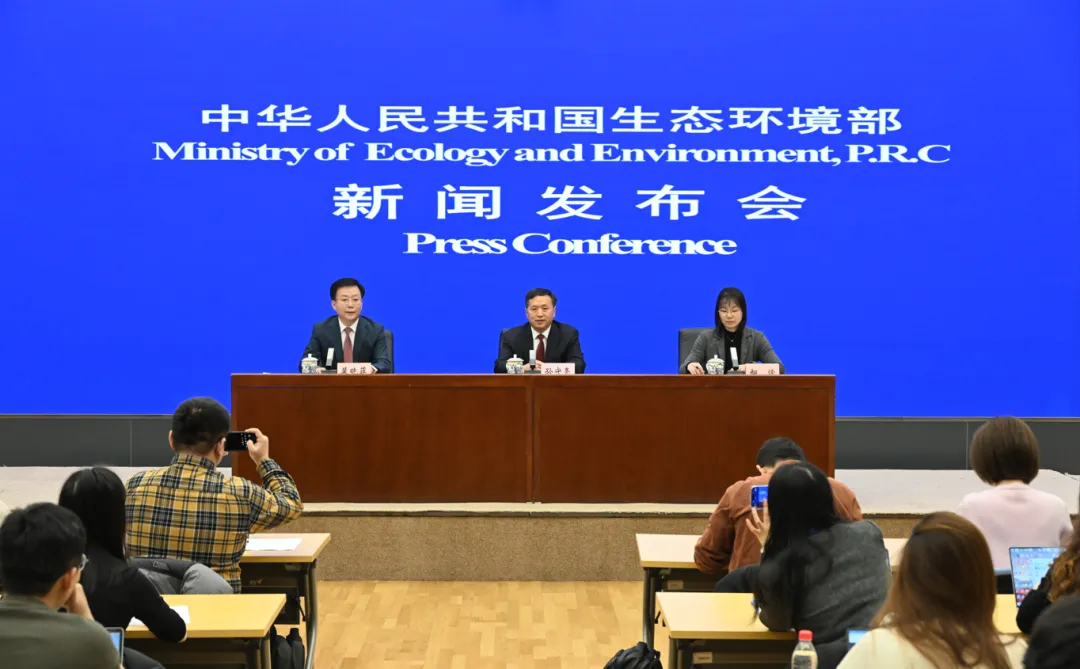
1月例行新闻发布会答问实录
Xin Lang Cai Jing· 2026-01-28 13:38
Core Viewpoint - The Ministry of Ecology and Environment of China has outlined key tasks and strategies for the "15th Five-Year Plan" period, emphasizing the importance of improving ecological environment quality and promoting the construction of a beautiful China through systematic planning and innovative measures [4][30]. Group 1: Key Strategies for Ecological Environment Improvement - The first keyword is "New Start," focusing on translating the roadmap from the 20th National Congress into actionable tasks for ecological environment improvement [4]. - The second keyword is "Comprehensive Treatment," which emphasizes both immediate and fundamental solutions to ecological issues, promoting green and low-carbon development as a core strategy [5]. - The third keyword is "Quality Improvement and Expansion," aiming to meet public expectations for a better ecological environment through high standards in air, water, and soil protection [5]. - The fourth keyword is "Bottom Line Defense," which involves strengthening ecological protection and restoration supervision, and enhancing biodiversity protection [6]. - The fifth keyword is "Foundation Strengthening and Efficiency Enhancement," focusing on improving the overall effectiveness of ecological governance and enhancing the implementation of environmental laws [6]. Group 2: Regional Development and Action Plans - The Ministry has launched action plans for the construction of beautiful China pilot areas in the Beijing-Tianjin-Hebei, Yangtze River Delta, and Guangdong-Hong Kong-Macau Greater Bay Area, which are seen as key regions for driving ecological and economic development [8][10]. - These regions contribute over 40% of China's economic output while occupying only 6.6% of the land area, highlighting their importance as engines of high-quality development [8]. - The action plans aim to address cross-regional ecological issues and leverage the unique characteristics of each area to promote sustainable development [10]. Group 3: Environmental Governance and Policy Innovations - The Ministry has implemented over 24,000 ecological environment governance projects during the "14th Five-Year Plan," significantly reducing emissions of major pollutants [21]. - Key focus areas include enhancing pollution reduction capabilities in high-emission industries and improving urban and rural environmental infrastructure [22][23]. - The Ministry is also emphasizing the importance of environmental economic policies, including tax incentives and financial support for green projects, to encourage market-driven environmental protection [25][26]. Group 4: Future Directions and Goals - The "15th Five-Year Plan" aims for comprehensive improvement in ecological environment quality, with a focus on collaborative governance across multiple environmental factors [30]. - The strategy includes addressing ecological challenges through structural adjustments and source prevention, emphasizing the need for green and low-carbon transitions [32]. - The Ministry plans to enhance policy incentives and technological support to modernize ecological governance and ensure effective implementation of environmental protection measures [33].