现房销售制度改革

Search documents
【独家】现房销售制度改革提速 多地谋划现房销售支持政策
Zheng Quan Shi Bao Wang· 2025-11-28 03:20
Core Viewpoint - The reform of the existing housing sales system is a key measure for constructing a new model of real estate development, with multiple regions in China planning supportive policies to promote the pilot of existing housing sales [2]. Group 1: Policy Initiatives - Various regions, including Sichuan, are encouraging localities to gradually improve pre-sale conditions and optimize pre-sale fund supervision to effectively promote existing housing sales [2]. - Chongqing aims to establish a management system for existing sales registration and improve the registration process to increase the proportion of existing housing sales [3]. - Fujian plans to refine its provincial housing development plan to promote existing housing sales and develop differentiated policy measures [3]. Group 2: Financial Support - Financial institutions are encouraged to prioritize development loans for pilot projects of existing housing sales, with loan terms extended to the existing sales phase [2]. - Tax and fee incentives will be implemented for pilot projects of existing housing sales in accordance with legal and regulatory requirements [2]. Group 3: Regional Strategies - Guangdong will continue to improve policies related to real estate development, financing, and sales to accelerate the promotion of existing housing sales [3]. - Tianjin is actively advancing pilot projects for existing housing sales and will continuously improve supporting policies [3]. - Zhejiang will implement relevant supporting policies for existing housing sales projects, including land, finance, and tax measures [3].
多地密集调整公积金政策
2 1 Shi Ji Jing Ji Bao Dao· 2025-11-13 02:31
Core Viewpoint - The recent optimization of housing provident fund policies across various cities in China reflects a broader trend of supportive measures aimed at revitalizing the real estate market, particularly as the end of the year approaches and developers increase their sales efforts [2][4][9]. Group 1: Policy Changes - Zhengzhou Housing Provident Fund Management Center has launched an online application channel for personal housing loans, significantly reducing the processing time for loan applications [2]. - Luoyang and Zhumadian in Henan Province have also optimized their provident fund policies by increasing loan limits and extending loan terms [2]. - Multiple cities, including Chongqing and Nanjing, have recently implemented similar optimizations to their provident fund policies [2]. Group 2: Specific Measures - In October, over 30 new housing policies were introduced across various regions, with about half focusing on provident fund adjustments, such as increasing loan limits and extending repayment periods [4]. - Hubei Province has introduced five new policies to enhance the use of housing provident funds, including raising loan limits and removing restrictions on withdrawals for purchasing homes in different locations [4]. - Huanggang City in Hubei has introduced measures allowing families with children under six to withdraw funds for child-friendly home modifications, with a cap of 50,000 yuan per account [5]. Group 3: Long-term Institutional Development - The optimization of provident fund policies is part of a larger trend of continuous policy support for the real estate market, transitioning from city-specific measures to district-level strategies [7]. - Chengdu's Qingyang District has announced six support measures aimed at promoting healthy real estate market development, including incentives for purchasing homes for educational purposes and encouraging the construction of high-quality housing [7]. - The implementation of a comprehensive system for selling completed homes has been initiated in Pingjiang County, Hunan Province, with a focus on improving the efficiency of real estate transactions [8]. Group 4: Market Outlook - Analysts suggest that the combination of short-term stimulus measures and long-term institutional reforms is likely to lead to a "tailwind" effect in the real estate market as the year ends, with increased activity from developers [9].

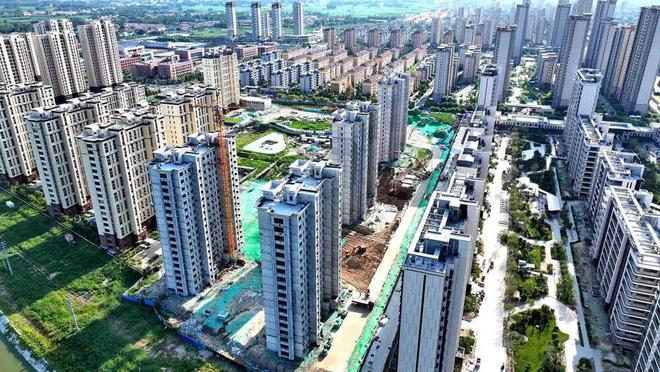
多地密集调整公积金政策
21世纪经济报道· 2025-11-13 02:25
Core Viewpoint - The recent optimization of housing provident fund policies across various cities indicates a continued release of favorable policies for the real estate market, with a focus on digital transformation and enhanced loan accessibility [1][3][8]. Group 1: Policy Changes - Zhengzhou Housing Provident Fund Management Center has launched an online application channel for personal housing loans, significantly shortening the loan application cycle for contributors [1]. - In Henan Province, cities like Luoyang and Zhumadian have increased the maximum loan amounts and extended loan terms, while also allowing the use of provident funds for upgrading old residential elevators [1][5]. - Other cities, including Chongqing and Nanjing, have also optimized their provident fund policies, reflecting a broader trend of policy enhancement in the real estate sector [1][3]. Group 2: Policy Implementation - The housing provident fund policy remains a crucial tool for regulating the real estate market, with over 30 new policies introduced in October, half of which pertain to provident fund adjustments [3]. - Hubei Province has implemented five new measures to optimize the use of housing provident funds, including increasing loan limits and expanding the scope of fund applications [3][5]. - Recent policies have eliminated the difference in loan limits between first and second homes, with the maximum loan amount increased by at least 20% for high-quality residential projects [5][6]. Group 3: Long-term Institutional Development - The optimization of provident fund policies is part of a broader trend of releasing favorable real estate policies, with a shift from city-specific measures to district-level strategies [8][10]. - The introduction of measures supporting the sale of existing homes and the promotion of "good housing" construction standards indicates a focus on long-term institutional reforms in the real estate sector [9][10]. - The recent push for "good housing" policies and the implementation of credit scoring for real estate companies in Fuzhou reflect a tightening of regulations aimed at ensuring market stability [10].

多地密集优化公积金政策 稳楼市走向“深水区”
2 1 Shi Ji Jing Ji Bao Dao· 2025-11-12 12:04
Core Viewpoint - The recent optimization of housing provident fund policies across various cities indicates a continued release of favorable policies for the real estate market, aiming to stimulate housing consumption and support market stability [2][6][9]. Group 1: Policy Changes - Zhengzhou Housing Provident Fund Management Center has launched an online application channel for personal housing loans, allowing employees to apply for loans digitally, significantly shortening the application period [1]. - In Henan Province, cities like Luoyang and Zhumadian have also optimized their provident fund policies, with Zhumadian increasing the maximum loan amount and extending loan terms, while Luoyang emphasizes the use of funds for updating old elevators [1]. - Other cities, including Chongqing and Nanjing, have also made similar adjustments to their provident fund policies, reflecting a broader trend of policy optimization in the real estate sector [2]. Group 2: Market Implications - Analysts suggest that as the year-end approaches, real estate companies are increasing their sales efforts, and with the support of various favorable policies, the market may experience a "tail-up" trend [3][9]. - The housing provident fund policy has been a crucial tool for regulating the real estate market, with over 30 new policies introduced in October alone, half of which pertain to provident fund adjustments, focusing on increasing loan limits and optimizing withdrawal processes [3]. - The recent policies include measures such as unifying loan limits for first and second homes, increasing maximum loan amounts for high-quality housing, and adjusting down payment ratios for affordable housing [3][4]. Group 3: Long-term Structural Changes - The ongoing optimization of provident fund policies is part of a broader trend of deepening and refining real estate policies, with a shift from city-level to district-level strategies [2][7]. - Long-term institutional reforms are also being implemented, such as the promotion of "good housing" policies and the introduction of regulations for selling completed properties, which aim to enhance market transparency and consumer confidence [8][9]. - The focus on "good housing" includes establishing design standards and improving the quality of housing supply, indicating a shift towards more sustainable and consumer-oriented development in the real estate sector [9].
现房销售改革提速:河南信阳“风口”发文,告别预售制仍需把控节奏力度
Hua Xia Shi Bao· 2025-05-14 07:39
Core Viewpoint - The reform of the commodity housing pre-sale system is set to be advanced in 2025, with a focus on promoting the sale of existing homes and tightening regulations on pre-sale permits and funding management [2][3][4]. Policy Changes - The recent announcement from Xinyang, Henan Province, mandates that new projects must reach the main structure's completion before applying for pre-sale permits, and all newly developed land must implement existing home sales [2][3]. - The central government's 2024 policy direction emphasizes reforming real estate financing and the pre-sale system, aiming to optimize the supervision of pre-sale funds and promote the sale of existing homes [2][3]. Market Impact - Xinyang is the first city to fully implement existing home sales, which may have limited short-term effects due to the city's weak real estate market and low land transaction volumes [3][6]. - The existing home sales policy aligns with the central government's goal of "strictly controlling increments" in regions with high inventory levels [3][4]. Risk Management - The policy aims to mitigate risks by enforcing strict conditions for pre-sale permits, regulating pre-sale fund usage, and ensuring that project development companies adhere to financial regulations [4][5]. - Measures include prohibiting the diversion of funds and ensuring that developers have sufficient own capital for projects, addressing issues that led to previous construction halts and defaults [5][6]. Background and Trends - The push for existing home sales is part of a broader trend, with over 30 provinces and cities having introduced related policies since late 2022, following significant market disruptions [7][8]. - National statistics indicate a significant increase in existing home sales, with a 19.1% year-on-year growth in 2024, reflecting a shift in buyer preferences towards completed properties [9]. Future Outlook - Experts suggest that while the current focus is on regions with high inventory, the transition to existing home sales may not be uniform across all areas, particularly in regions with lower inventory levels [10][12]. - The ongoing adjustments in the real estate market indicate a cautious approach to implementing stricter sales regulations, allowing for a balanced recovery of both the market and developers [11][12].