生产力变革

Search documents
独家 | 三百家机构,盯上一个海洋机器人
投中网· 2026-03-27 00:30
Core Viewpoint - The article discusses the rapid development and investment opportunities in the marine robotics sector, particularly focusing on the company "Shihang Intelligent," which has recently secured significant funding and has a strong order backlog of 1 billion yuan [2][7]. Group 1: Investment and Market Dynamics - Shihang Intelligent has completed two rounds of strategic financing totaling several hundred million yuan, with new investors including state-backed funds and various venture capital firms [3][5]. - The marine economy is highlighted as a key area for growth, with projections indicating that the national marine production value will exceed 11 trillion yuan by 2025, growing at 5.5% year-on-year [5]. - The marine engineering equipment manufacturing sector is expected to grow by 10.2%, with offshore wind power capacity increasing by over 60% [5]. Group 2: Technological Advancements - Shihang's marine robots have demonstrated significant technological advancements, achieving a tenfold increase in operational efficiency compared to traditional methods [7][18]. - The company has developed a versatile marine robot, "Hujing Pro," designed for various applications, including underwater cleaning and monitoring of offshore photovoltaic installations [13][11]. - The robots are capable of operating in complex underwater environments, with features such as real-time positioning and autonomous operation, which are critical for ensuring the stability of marine energy installations [13][12]. Group 3: Future Outlook and Strategic Goals - The company has set ambitious sales targets, tripling its goals in response to market dynamics and technological advancements [9][10]. - Shihang aims to lead the marine robotics market by addressing production efficiency and expanding into various high-demand scenarios, including port inspections and underwater data center operations [13][22]. - The strategic vision includes the potential for self-repairing robots and autonomous operations in deep-sea environments, which could redefine productivity in marine exploration [20][21].


英国的选择应是西方理解时代的窗口
Xin Lang Cai Jing· 2026-01-31 08:13
Core Viewpoint - The article emphasizes a shift in Western policy, particularly in the UK, towards pragmatic cooperation with China, moving away from ideology-driven approaches that have led to internal and external tensions [1][3][4]. Group 1: Shift in UK Policy - The current UK government under Starmer advocates for active engagement and pragmatic cooperation with China, contrasting with previous administrations that halted collaboration due to security concerns [4][5]. - There is a growing consensus in the UK that ignoring China's significance will lead to increased poverty and insecurity [3][4]. - Starmer's visit to China symbolizes a return to rationality and a focus on the practical interests of the majority [1][3]. Group 2: Economic Context - The UK's GDP growth has stagnated at low levels, with productivity and industrial structure issues contributing to economic challenges [4][5]. - By 2024-2025, the proportion of goods exports in total exports is expected to drop to around 40%, a significant decline from two-thirds in 2000, marking a historical low [5]. - The rising cost of living, with CPI exceeding double digits since 2018, has led to record numbers of families living in extreme poverty [6]. Group 3: Cooperation Opportunities - The UK and China have substantial cooperation potential, with a goods trade volume of approximately $103.7 billion and service trade expected to exceed $30 billion [9]. - The UK is focusing on sectors like finance, legal services, and creative industries, which are seen as its economic backbone [7]. - There is mutual interest in collaborating on emerging industries such as artificial intelligence, advanced manufacturing, and clean energy, with specific examples like Octopus Energy showcasing innovative approaches [8][9].

无招放出胜负手
Tai Mei Ti A P P· 2025-08-27 14:03
Core Insights - The core idea of the news revolves around DingTalk's transition to an AI-driven business model, emphasizing a pay-for-results approach, which is seen as a bold move in the industry [2][23][37] Company Strategy - DingTalk's founder, Wu Zhao, envisions a future where users pay for deliverable results rather than just software usage, aligning with the anticipated evolution of AI in business applications [2][23] - The launch of over 10 AI products, including DingTalk One and AI Search Engine, represents a significant step towards making DingTalk a fully AI-driven platform [2][5] - Wu Zhao believes that the transformation from human-centric to AI-centric decision-making is essential for DingTalk's evolution [4][50] AI Integration - The integration of AI is not merely a tool enhancement but a fundamental shift in the software application paradigm, which Wu Zhao describes as a necessary self-disruption [4][5] - The company aims to redefine productivity by shifting the focus from efficiency improvements to transformative productivity changes enabled by AI [5][39] Market Positioning - DingTalk's approach to AI is positioned as a means to lower the barriers for businesses, particularly small and medium enterprises, to adopt AI technologies [11][24] - The company recognizes that many decision-makers still view AI primarily as a tool for efficiency rather than a catalyst for productivity transformation [11][39] Product Development - The development of DingTalk One is highlighted as a significant innovation, with its complexity stemming from the need to create AI-ready data and establish a new voice recognition model [9][10] - The company has invested heavily in AI capabilities, with significant resources allocated to developing voice models and other AI functionalities [10][25] Business Model Evolution - The future business model of DingTalk is expected to evolve towards a consumption-based payment system, where costs are tied to the actual usage of AI resources [25][26] - Wu Zhao emphasizes the importance of creating industry-specific models that can be customized for individual enterprises, which represents a substantial market opportunity [27][28] Team Dynamics - Initially, only about 10% of the DingTalk team was willing to embrace the AI transformation, indicating challenges in achieving internal consensus [7][42] - Wu Zhao's leadership style focuses on fostering belief and participation among team members to drive the AI initiative forward [42][43] Industry Impact - The shift towards AI-driven applications is expected to disrupt traditional software and SaaS models, with DingTalk positioning itself at the forefront of this transformation [33][35] - The company aims to leverage its AI capabilities to create a new standard for productivity in the workplace, potentially reshaping how businesses operate [11][37]

巅峰对话具身智能:高光时刻的三个追问
Bei Jing Shang Bao· 2025-06-07 13:33
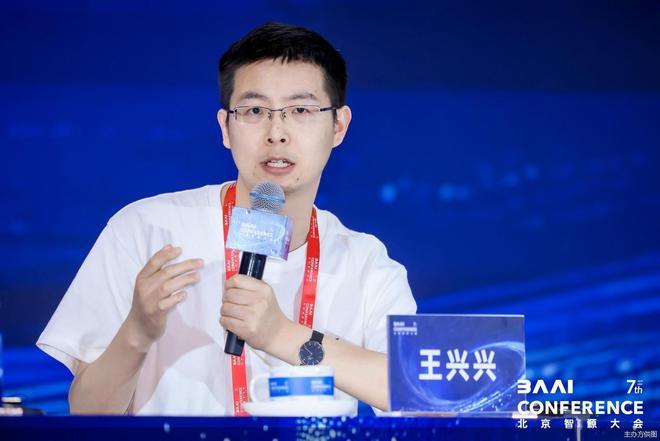
Core Insights - The event highlighted advancements in robotics and AI, focusing on the potential of humanoid robots to redefine productivity and their current limitations in practical applications [1][3][12] Group 1: Company Goals and Market Potential - Yushu Technology aims to liberate human productivity through humanoid robots capable of performing various tasks, although they currently face challenges in practical deployment [3][5] - The humanoid robot rental market has seen significant growth in the first half of 2025, indicating emerging industrial value [3] - The market for humanoid robots is expected to be larger than that for other robotic forms due to their adaptability to human environments and tasks [8][6] Group 2: Technological Development and Challenges - The development of embodied intelligence is focused on industrialization, with a need to ensure high success rates in new environments [5][11] - The VLA (Vision, Language, Action) model is a key area of research, but it is seen as just a starting point that requires further integration of additional sensory modalities to achieve human-level intelligence [9][11] - The current humanoid robot designs are advantageous for data collection and training, but there is flexibility in robot shapes for practical applications [6][8] Group 3: Event Highlights and Public Engagement - The event served as a platform for showcasing the G1 humanoid robot, which has gained significant public attention and is positioned as a symbol of future robotics [12][13] - The interaction between the audience and the G1 robot demonstrated the potential for entertainment and technology convergence, emphasizing the importance of practical demonstrations over mere presentations [12][13]