海洋机器人

Search documents
独家 | 三百家机构,盯上一个海洋机器人
投中网· 2026-03-27 00:30
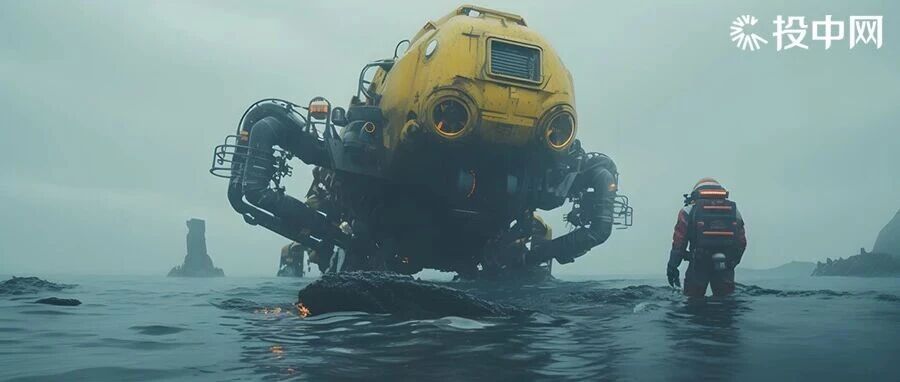
Core Viewpoint - The article discusses the rapid development and investment opportunities in the marine robotics sector, particularly focusing on the company "Shihang Intelligent," which has recently secured significant funding and has a strong order backlog of 1 billion yuan [2][7]. Group 1: Investment and Market Dynamics - Shihang Intelligent has completed two rounds of strategic financing totaling several hundred million yuan, with new investors including state-backed funds and various venture capital firms [3][5]. - The marine economy is highlighted as a key area for growth, with projections indicating that the national marine production value will exceed 11 trillion yuan by 2025, growing at 5.5% year-on-year [5]. - The marine engineering equipment manufacturing sector is expected to grow by 10.2%, with offshore wind power capacity increasing by over 60% [5]. Group 2: Technological Advancements - Shihang's marine robots have demonstrated significant technological advancements, achieving a tenfold increase in operational efficiency compared to traditional methods [7][18]. - The company has developed a versatile marine robot, "Hujing Pro," designed for various applications, including underwater cleaning and monitoring of offshore photovoltaic installations [13][11]. - The robots are capable of operating in complex underwater environments, with features such as real-time positioning and autonomous operation, which are critical for ensuring the stability of marine energy installations [13][12]. Group 3: Future Outlook and Strategic Goals - The company has set ambitious sales targets, tripling its goals in response to market dynamics and technological advancements [9][10]. - Shihang aims to lead the marine robotics market by addressing production efficiency and expanding into various high-demand scenarios, including port inspections and underwater data center operations [13][22]. - The strategic vision includes the potential for self-repairing robots and autonomous operations in deep-sea environments, which could redefine productivity in marine exploration [20][21].

数据驱动如何重塑海洋机器人控制?顶刊权威综述,港科大、大连海事大学团队综述数据驱动时代下的海洋机器人控制
机器人大讲堂· 2026-01-05 00:00
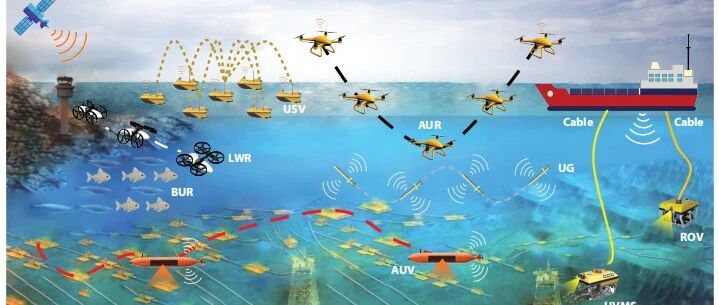
Core Insights - The article discusses the evolution and significance of underwater robots, highlighting their roles in ocean exploration, resource investigation, engineering inspection, and national defense [1][2][3]. Group 1: Types of Underwater Robots - The family of underwater robots includes Autonomous Underwater Vehicles (AUVs), Remotely Operated Vehicles (ROVs), Unmanned Surface Vehicles (USVs), and underwater gliders (UG), each designed for specific tasks [2][3]. - Bionic underwater robots (BUR) mimic fish movements, while air-water cross-domain robots (AUR) can seamlessly switch between air and underwater operations [3]. Group 2: Control Systems and Challenges - Control systems are crucial for underwater robots, ensuring basic movement and supporting complex autonomous decisions [3]. - Traditional control methods face limitations in complex marine environments due to non-linear dynamics, model uncertainties, and unpredictable disturbances [4][5]. Group 3: Data-Driven Control Approaches - The rise of machine learning has introduced data-driven control methods, which allow robots to learn from data rather than relying solely on precise mathematical models [7]. - Data-driven methods are categorized into model-based, model-free, and hybrid approaches, enhancing adaptability and robustness in control [7][8][9]. Group 4: Multi-Robot Collaboration - Multi-robot systems enhance operational efficiency and coverage, enabling complex tasks like large-scale flow field mapping and underwater collaborative operations [12][14]. - Collaborative control strategies include coordinated formations, game-theoretic competition, and cross-domain cooperation, leveraging the strengths of multiple robots [12][14]. Group 5: Open Source Technology - The emergence of open-source platforms is democratizing ocean robot research, providing low-cost testing environments and hardware options for researchers [15][16]. - Open-source software frameworks like ROS facilitate seamless integration between simulation and real-world applications, promoting algorithm sharing and innovation [16]. Group 6: Future Directions - Future developments in underwater robotics will focus on enhancing intelligence, autonomy, and safety, addressing challenges such as data efficiency and communication constraints [17]. - The integration of physical information learning and offline reinforcement learning will enable rapid learning with minimal data, while advancements in cross-domain collaboration will create a comprehensive exploration network [17].
第六届中国人工智能大赛配套论坛在厦成功举办
Huan Qiu Wang Zi Xun· 2025-12-15 02:06
Core Insights - The sixth China Artificial Intelligence Competition forum was successfully held in Xiamen, emphasizing the importance of the event in building communication platforms and promoting industry collaboration [1] - The forum's theme was "Integrating New Ideas and Wisdom to Promote Development," focusing on national strategies and industry needs, gathering various stakeholders to explore innovative AI technologies and development paths [1] - The competition attracted over 700 teams, with more than 1,200 project submissions, highlighting significant interest and engagement in AI innovation [1] Group 1 - The forum featured a prominent award ceremony for the sixth China Artificial Intelligence Competition, which included 10 competition topics such as large model adversarial contests and AI-enabled supply chain case studies [1] - Keynote speakers included experts from renowned companies and research institutions, discussing critical topics like AI technology innovation and computational power [2] - The event included a project roadshow that connected award-winning teams with venture capital firms and local enterprises, facilitating project implementation and resource alignment [2] Group 2 - The forum served as an open platform for showcasing cutting-edge technology and precise industry resource matching, promoting the integration of AI technologies into various sectors [3] - Xiamen aims to leverage the competition to drive industry upgrades and ecological prosperity in AI, focusing on areas like large model innovation and intelligent manufacturing [3]
浙江发布海洋空天高端装备产业发展指引
Zhong Guo Xin Wen Wang· 2025-12-09 17:26
Core Insights - The event "Intelligent Deep Blue Dreaming of Aerospace" was held in Taizhou, focusing on the development of high-end marine aerospace equipment and technology in Zhejiang Province [1] - The marine aerospace high-end equipment industry integrates various spatial scenarios, emphasizing intelligent unmanned platforms and aims to establish a modern high-end equipment system with characteristics such as high intelligence and cross-medium collaborative operations [1] Industry Development Goals - Zhejiang Province aims to build a first-class marine aerospace high-end equipment industry innovation hub and demonstration application base within 3 to 5 years [1] - The province will focus on developing two main industrial chains: marine satellites and marine drones, while also expanding into intelligent ships (unmanned vessels) and marine robots [1] Industrial Chain Structure - The marine satellite industrial chain will create an integrated industry system that encompasses satellite platforms, core payloads, and intelligent processing and data services [1] - The next step involves applying products to real-world scenarios to effectively support marine economic development, with ten key application scenarios identified, including satellite technology and marine radar detection [2] Collaborative Initiatives - The Zhejiang Marine Satellite Innovation Consortium was established, led by Taizhou Xingkong Zhiliang Technology Co., Ltd., in collaboration with six other organizations, including Hangzhou University of Electronic Science and Technology [2] - This consortium aims to overcome technical bottlenecks in marine satellite platform innovation and support applications in marine resource development, environmental protection, and disaster warning [2]
独家 | 朱啸虎连投3轮,50家机构排队,这家公司又融数亿
投中网· 2025-12-09 02:10
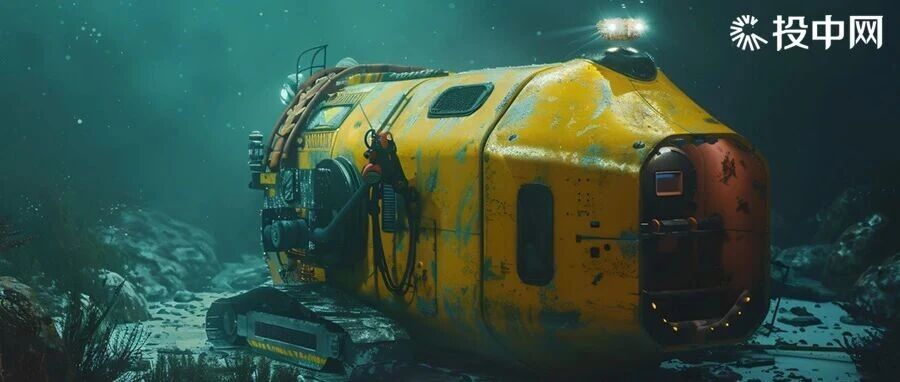
Core Viewpoint - The article highlights the rapid growth and investment interest in a company specializing in underwater robotics, particularly in extreme environments, showcasing its technological advancements and commercial potential [2][12]. Group 1: Company Overview - The company, established just over two years ago, has successfully completed multiple rounds of financing, raising several hundred million yuan to accelerate product and technology iterations [2][3]. - The latest funding rounds were led by prominent investors, indicating strong market confidence in the company's future [2][3]. Group 2: Technological Advancements - The company has made significant breakthroughs in both hardware and software, enhancing operational efficiency and enabling its robots to work in complex underwater environments [4][5]. - Its flagship product, the "Orca" robot, is noted for its cost-effectiveness and efficiency, outperforming international competitors in terms of operational capabilities [5][6]. Group 3: Market Demand and Applications - There is a growing demand for underwater robots in marine infrastructure maintenance, particularly for ship hull cleaning, which is a critical and recurring need for shipping companies [12][13]. - The company has expanded its services beyond ship cleaning to include applications in marine photovoltaics, offshore wind energy, and underwater pipeline inspections, indicating a broadening market reach [13][14]. Group 4: Business Model - The company operates on a pay-per-cleaning model, ensuring a steady revenue stream as clients pay for results rather than services [12][13]. - It has successfully established operations in multiple major ports, exceeding initial expansion plans, and has completed maintenance for numerous large vessels [13][14]. Group 5: Industry Recognition - The company has received multiple awards for its technological innovations, including top honors in logistics technology and recognition from various industry experts [6][7][8]. - It has been acknowledged as a national high-tech enterprise and has accumulated over 300 intellectual property certifications, underscoring its innovative capabilities [8][9]. Group 6: Leadership and Vision - The founder, Chen Xiaobo, has extensive experience in underwater robotics and has led numerous significant projects, positioning the company for future success [16][21]. - The leadership's vision focuses on transforming underwater robotics into a versatile platform capable of addressing various marine challenges, which is seen as a key differentiator in the industry [15][21].
【CCRS 2025】圆满落幕!中国第六届机器人学术年会在长沙画上完美句点
机器人圈· 2025-08-04 11:38
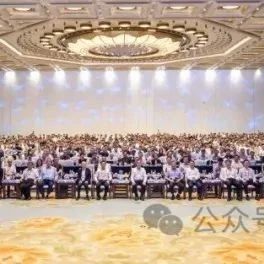
Core Viewpoint - The Sixth China Robotics Academic Annual Conference (CCRS 2025) focused on the theme "Human-Machine Integration, Intelligent Future," gathering over 200 experts and scholars to discuss cutting-edge robotics technology and industry applications [2][3]. Group 1: Conference Overview - The conference attracted more than 3,000 participants, including academicians and industry representatives from around the world [2]. - It featured 7 keynote speeches, 14 thematic reports, and 115 invited presentations across various robotics fields, including industrial, service, special, marine, and medical robotics [2][3]. - A total of 259 poster presentations and free communication sessions showcased the latest research and innovations in the robotics sector [3]. Group 2: Keynote Speakers and Topics - Notable speakers included academicians from the Chinese Academy of Engineering and the Chinese Academy of Sciences, discussing topics such as embodied intelligence, collaborative robots, humanoid and bionic robots [4][5]. - Ding Han emphasized the importance of human-machine integration in intelligent manufacturing, highlighting the need for deep coupling between physical entities and digital virtualities [7]. - Yang Huayong discussed the role of AI-enhanced tactile perception in robots, aiming to improve human-robot interaction and safety [9]. - Zheng Qinghua introduced three evolutionary paths for advancing artificial intelligence from weak to strong, addressing challenges in current large model technologies [11][12]. - Guo Lei presented a framework for bionic intelligent systems, focusing on the survival capabilities of unmanned systems in complex environments [14]. - Zhang Jianwei highlighted the challenges of mimicking human intelligence in robots and the importance of collaboration in addressing global challenges [16]. - Gao Feng discussed the challenges and opportunities in intelligent robot design, emphasizing the need for impactful industrial directions [18][19]. - Ji Xiangyang explored the significance of machine vision technology in various applications, including industrial and aerospace sectors [21]. Group 3: Event Highlights - The opening ceremony featured speeches from academicians outlining the future development of robotics [25]. - The conference sessions were well-attended, with significant engagement in discussions on advanced technologies [27]. - Various robot prototypes were showcased, attracting interest and discussions among attendees [37]. Group 4: Closing Remarks - The event concluded with gratitude expressed to the organizing and supporting units, emphasizing the successful establishment of a high-level communication platform for the robotics field [46]. - The anticipation for the next annual conference was highlighted, marking a new journey in the robotics era [47].
第十八届中国智能机器人大会第二轮征文通知
机器人圈· 2025-07-29 09:41
Group 1 - The 18th China Intelligent Robot Conference will be held from November 14-16, 2025, in Nanjing, focusing on the theme "Digital Intelligence Assists Machines, Co-creating a Strong Nation" [1] - The conference aims to discuss and promote the development of theories, technologies, and applications related to intelligent robots and intelligent manufacturing [1] - The organizing committee invites submissions from researchers, practitioners, and students in the fields of intelligent robots, intelligent manufacturing, and artificial intelligence [1] Group 2 - The call for papers includes a wide range of topics such as embodied intelligence in robots, soft/special robots, bionic robots, marine robots, drones, humanoid robots, industrial/collaborative robots, rehabilitation/medical robots, and robot perception and human-robot interaction [2] - Important dates for submissions are as follows: submission deadline is August 15, 2025, and notification of acceptance is on September 10, 2025 [2] - Manuscript requirements specify that papers must be unpublished, with a maximum length of 6,000 words for Chinese papers and 10,000 words for English papers [2] Group 3 - Contact information for inquiries includes two representatives: Zhu Bo and Li Bing, with provided email addresses and phone numbers [5] - The official conference website and submission portal are available for further details [5][6] Group 4 - The report on 75 listed robot companies highlights key insights from their 2024 annual reports, indicating a competitive landscape with both opportunities and challenges [7] - The report notes that 55 listed robot companies showed mixed results in their 2023 annual reports, suggesting an intensifying market reshuffle [7] - Innovations in bionic robot technology and humanoid robot mass production are significant trends, with price wars and industrial restructuring being key themes [7][8]