生育支持措施

Search documents
中国已全面将辅助生殖纳入医保报销
Jing Ji Guan Cha Wang· 2025-07-31 02:33
Core Viewpoint - The Chinese government is implementing a comprehensive reproductive support system, including subsidies for childbirth and assisted reproductive technologies, to promote family growth and address demographic challenges [1] Group 1: Reproductive Support Measures - The National Medical Insurance Administration has announced that assisted reproductive technologies will be covered by insurance across all 31 provinces and regions, benefiting over 1 million people in 2024 [1] - Some provinces are including pain relief during childbirth in their insurance coverage, aiming to reduce the burden and pain for pregnant women [1] Group 2: Service Optimization - The government is accelerating the establishment of pricing projects for newborn care and "family companionship" during childbirth, enhancing pediatric and obstetric services [1] - These measures are designed to better meet the diverse needs of the public regarding reproductive services [1]
全国性生育补贴来了,但为什么大家觉得不够?
吴晓波频道· 2025-07-31 00:30
Core Viewpoint - The newly implemented national child-rearing subsidy policy aims to encourage childbirth in response to declining birth rates, with a focus on providing financial support to families with children under three years old [1][11][14]. Group 1: Subsidy Details - Starting from January 2023, families with children under three years old will receive an annual subsidy of 3,600 yuan per child, applicable to first, second, and third children [1][11]. - Children born between January 1, 2022, and December 31, 2024, are eligible for retroactive subsidies, with amounts increasing based on the birth month [2][3]. - The total number of newborns in China from 2022 to 2024 is estimated to be around 28.12 million, with families expressing that this group of children is catching the "last train" for subsidies [4][6]. Group 2: Cost of Raising Children - The total cost of raising a child from birth to 17 years is approximately 538,312 yuan, while the annual subsidy of 3,600 yuan represents only about 10% of this total cost [8][10]. - The breakdown of costs shows that raising a child incurs significant expenses, with the largest portion (45.15%) occurring between ages 6-14 [10]. Group 3: Policy Implications and Expert Opinions - Experts suggest that the subsidy amount is too low and the duration too short to significantly impact birth rates, recommending a minimum of 12,000 yuan per year per child [21][26]. - The policy is seen as a milestone in China's approach to population growth, contrasting with previous penalties for exceeding birth limits [13][14]. - The universal nature of the subsidy is highlighted, as it applies equally to all children regardless of birth order, unlike some local policies [14]. Group 4: Future Expectations and Sustainability - There are concerns about the sustainability of the subsidy, with estimates suggesting that the total annual cost could reach 1.2 to 1.3 trillion yuan, which is manageable within the national budget [29][31]. - Experts advocate for additional measures to support families, such as free preschool education and tax incentives, to further alleviate the financial burden of raising children [27][34]. - The need for a comprehensive social security system and reduced living costs is emphasized as essential for improving birth rates [34][36].


8点1氪|演唱会偷情事件男主以侵犯隐私起诉Coldplay;日本政府对200多万人发出海啸避难指示;各地产假延长至158天及以上
3 6 Ke· 2025-07-31 00:02
Group 1: Company Developments - Xiwanda has submitted a listing application to the Hong Kong Stock Exchange, with Goldman Sachs and CITIC Securities as joint sponsors [1] - Starbucks CEO Brian Niccol mentioned that over 20 potential buyers have shown interest in acquiring the company's stake in the China market [3] - Starbucks reported third-quarter revenue of $9.5 billion, with same-store sales down 2%, and net profit of $558.3 million, significantly lower than expected [4][15] - Meta Platforms reported second-quarter revenue of $47.52 billion, a 22% year-over-year increase, with net profit of $18.337 billion, up 36% [13] - Adidas reported second-quarter revenue of €5.95 billion, a 2.2% year-over-year increase, with net profit of €369 million, up 94% [14] Group 2: Financial Performance - CATL achieved a net profit of 30.512 billion yuan in the first half of the year, a 33.02% year-over-year increase, with revenue of 178.886 billion yuan, up 7.27% [16] - Luckin Coffee reported second-quarter net revenue of 12.36 billion yuan, a 47% year-over-year increase, with net profit of 1.25 billion yuan, up 44% [16] - Prada's first-half net revenue reached €2.74 billion, an 8% year-over-year increase, with net profit of €386 million [17] - Airbus reported first-half revenue of €29.610 billion, with a net profit of €1.525 billion [17] Group 3: Market Trends - Ryanair announced it will cease operations at three French airports due to high ticket taxes imposed by the French government, which increased by 180% [6] - Mercedes-Benz warned of a significant decline in annual revenue due to tariffs affecting car and truck sales, with expectations of lower sales in 2025 compared to last year [10]



育儿补贴今年初步安排预算900亿元左右
Bei Jing Shang Bao· 2025-07-30 16:40
Core Points - The article discusses the introduction of a new universal childcare subsidy system in China, set to be implemented on January 1, 2025, aimed at reducing family burdens and promoting a family-friendly society [1][8] - The subsidy will cover all legally recognized births of children under three years old, with a standard annual subsidy of 3,600 yuan per child [4][8] - The government has allocated approximately 90 billion yuan for the subsidy in the initial budget, with the central government covering about 90% of the costs [8] Implementation Details - The application process for the childcare subsidy will begin in late August 2023, with a nationwide online system established for easy access [3][4] - Families can apply through a unified online system or in-person at local administrative offices, with simplified application materials to facilitate the process [3][4] - The subsidy is available for children born between January 1, 2022, and December 31, 2024, calculated based on the number of eligible months [4] Supportive Measures - The government is implementing a comprehensive support system that includes financial, time, and educational assistance to families [6][7] - Financial support includes tax deductions for childcare costs and increased maternity leave, with many provinces extending maternity leave to 158 days or more [6][7] - Educational initiatives aim to expand quality education resources and promote free preschool education to alleviate family education costs [7] Tax and Financial Implications - The childcare subsidy will be exempt from personal income tax and will not be counted as income for low-income assistance programs [8] - The initiative is part of a broader strategy to enhance social welfare and stimulate economic growth by investing in human capital [8]
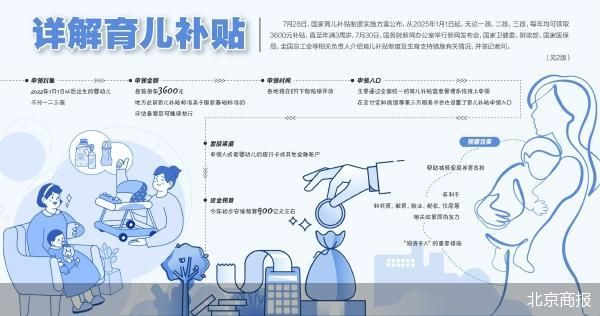
产假、托育服务、住房支持……多部门解读育儿补贴制度及生育支持措施
Bei Jing Shang Bao· 2025-07-30 10:46
Core Viewpoint - The newly introduced childcare subsidy system in China is a significant public policy aimed at providing direct cash benefits to families with children under three years old, set to be implemented on January 1, 2025, to alleviate family burdens and promote a family-friendly society [1][4]. Group 1: Childcare Subsidy Implementation - The childcare subsidy will be available for all legally recognized births of children under three years old, with an annual subsidy of 3,600 yuan per child, applicable to children born between January 1, 2022, and December 31, 2024, as well [4][6]. - The application process for the subsidy will begin in late August 2023, with a nationwide online system established for easy access, while also providing offline options for those unable to apply online [3][4]. Group 2: Comprehensive Support Policies - A multi-departmental approach has been established to create a comprehensive support system covering the entire lifecycle of childbirth, upbringing, and education, with 13 specific measures outlined to promote a family-friendly environment [5][6]. - Economic support measures include tax deductions for childcare costs, increased maternity medical expense coverage, and direct disbursement of maternity benefits [6][7]. Group 3: Budget and Financial Support - The central government has allocated approximately 90 billion yuan for the childcare subsidy program this year, with the central finance covering about 90% of the costs, ensuring the program's sustainability and broad reach [8]. - The childcare subsidy is designed to be a universal, foundational policy that enhances basic social security and promotes family development, contributing to a virtuous cycle of improving livelihoods and economic growth [8].
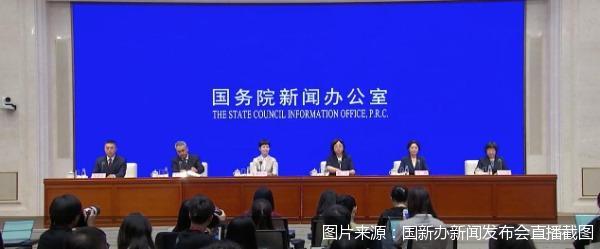
国家卫健委:育儿补贴申领以家庭为单位
Xin Hua She· 2025-07-30 08:51
Core Points - The State Council Information Office held a press conference on July 30 to discuss the childcare subsidy system and reproductive support measures [2] - Wang Haidong, Director of the Population and Family Department of the National Health Commission, stated that the application for childcare subsidies is based on family units, with one applicant designated by the family, typically one parent of the infant [2] Summary by Category Childcare Subsidy System - The childcare subsidy application is family-based, requiring the family to designate one applicant, usually a parent of the infant [2] Reproductive Support Measures - The press conference highlighted the government's efforts to provide support for families, indicating a focus on enhancing reproductive policies [2]
育儿补贴,申领时间定了!
券商中国· 2025-07-30 08:02
Core Viewpoint - The article discusses the implementation of a national childcare subsidy system in China, which aims to support families with children under three years old starting from January 1, 2025, with a subsidy of 3,600 yuan per child per year [2][3]. Group 1: Implementation Details - The National Health Commission is working with relevant departments to establish management norms and funding management methods for the childcare subsidy system, with local governments required to create specific implementation plans [1]. - The subsidy will be available for children born on or after January 1, 2022, and will also cover those born before this date who are under three years old as of January 1, 2025 [1]. - The application for the subsidy will be made at the family level, with one parent or guardian designated as the applicant [1]. Group 2: Local Policy Integration - Local governments that have previously implemented higher subsidy standards than the national baseline can continue to do so after proper evaluation and filing [3]. - The national policy aims for comprehensive coverage while establishing a basic standard, ensuring that areas without existing subsidies will adopt the national standard [2]. Group 3: Application Process - The application process has been simplified to minimize required documentation, only necessitating essential identity and relationship proof [4]. - Various channels for application have been established, including provincial government service platforms and third-party services like Alipay and WeChat [4]. Group 4: Alipay Application Steps - Users can apply for the subsidy through Alipay by searching for "育儿补贴" and following the prompts to calculate potential subsidy amounts [5][6][13].
国家卫健委:将多渠道降低群众生育、养育、教育成本,进一步完善生育休假制度,设立15天左右的配偶陪产假、5~20天不等的父母育儿假
Ge Long Hui· 2025-07-30 07:54
Core Points - The Chinese government is implementing a childcare subsidy system and measures to support childbirth, aiming to reduce the costs associated with childbirth, upbringing, and education [1] Group 1: Childcare Subsidy Measures - The National Health Commission will include childcare costs for children under three years old in the special additional deductions for personal income tax, raising the deduction standard to 2,000 yuan per month for each child [1] - The government is working to lower the overall costs of childbirth and childcare through multiple channels [1] Group 2: Parental Leave Policies - The maternity leave has been extended to 158 days or more across various provinces, regions, and municipalities [1] - A paternity leave of approximately 15 days has been established, along with parental leave ranging from 5 to 20 days [1]
育儿补贴地方标准如高于国家基础标准,评估备案后可继续执行
Ge Long Hui· 2025-07-30 07:54
Group 1 - The State Council's press conference introduced the childcare subsidy system and fertility support measures [1] - Some local governments have already implemented childcare subsidy policies, with certain local standards exceeding the national basic standard [1] - The National Health Commission's Deputy Director Guo Yanhong stated that local governments must develop specific policy connection plans to ensure orderly integration of local policies with the national system [1] Group 2 - Local policies that previously had higher subsidy standards than the national basic standard can continue to be implemented after proper evaluation and filing [1]
四部门重磅发布会,就在明天
21世纪经济报道· 2025-07-29 09:56
Group 1 - The government is introducing a childcare subsidy of 3,600 yuan per child per year for children under the age of three [2][1] - A press conference will be held on July 30 to discuss the childcare subsidy system and related measures to support childbirth [1] - Key officials from the National Health Commission, Ministry of Finance, National Medical Insurance Administration, and All-China Federation of Trade Unions will provide insights and answer questions [1]