
用户参与

Search documents
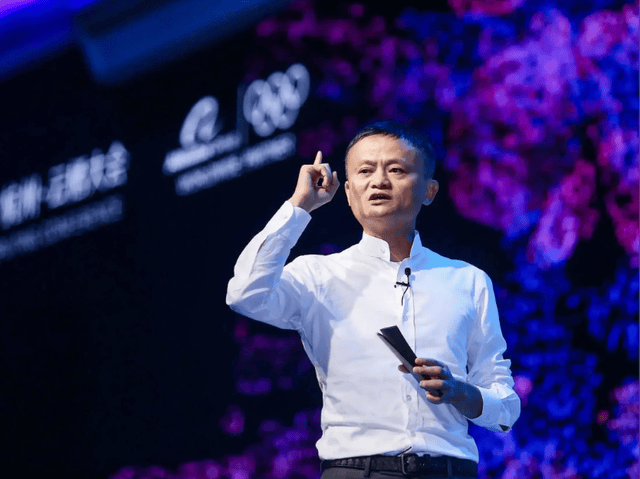
雷军终于活成了马云的样子
Sou Hu Cai Jing· 2026-01-06 02:50
Core Insights - The article contrasts two legendary figures in the internet industry: Jack Ma, who defined the era with visionary concepts, and Lei Jun, who responds to challenges with practical achievements in the automotive sector [1][8] Group 1: Leadership Styles - Jack Ma is characterized as a "solitary hero" who drives financing through vision, while Lei Jun is seen as a "campfire leader" who focuses on practical execution and real-world results [5][8] - Lei Jun's approach emphasizes the essence of industry, focusing on "extreme cost performance" and efficiency revolution by restructuring supply chains [3][6] Group 2: Financial Strength and Strategy - Lei Jun's financial strength is highlighted by a cash reserve of 108 billion yuan, allowing Xiaomi to avoid external financing risks when entering the automotive market [6] - The article notes that Lei Jun's capital strategy is built on solid cash reserves, contrasting with Ma's reliance on visionary funding [6][8] Group 3: Achievements and Market Impact - In 2025, Xiaomi's first SUV, YU7, achieved a delivery of 412,000 units, becoming the top-selling new energy SUV, showcasing Lei Jun's ability to deliver on promises [9] - The YU7's performance metrics, such as a 92% achievement rate for a 650 km range, demonstrate Lei Jun's commitment to product quality and transparency [9] Group 4: Challenges and Risks - The article discusses the potential risks associated with Lei Jun's personal brand becoming overly tied to Xiaomi, similar to the challenges faced by Jack Ma [11][12] - Lei Jun's future challenges include navigating the competitive landscape of hard technology and the need for Xiaomi to develop a decision-making culture independent of his personal influence [17][19] Group 5: Future Outlook - The article concludes with a call for Lei Jun to transcend Jack Ma's legacy and establish a unique identity that emphasizes practical achievements in hard technology [21]


100观察丨从小米到腾讯:互联网大厂为何都在造“员工社区”
Mei Ri Jing Ji Xin Wen· 2025-08-16 10:56
Group 1: Tencent Headquarters Development - Tencent's headquarters park has been completed 30% as of August 14, with trial operations set to begin in October [2] - The park, located in Shenzhen, covers an area of 809,000 square meters and is designed to accommodate over 80,000 employees [1][2] - The construction of employee apartments aims to address housing difficulties for young workers, enhancing their sense of belonging and recognition towards the company [1][2] Group 2: BYD's New Racing Facility - BYD's all-terrain racetrack in Zhengzhou officially opened on August 14, featuring various specialized tracks [3] - The racetrack includes a 1,758-meter course with nine turns and a maximum straight-line acceleration of 550 meters, allowing speeds over 220 km/h [3] - This facility serves as a platform to showcase BYD's technical capabilities and provides a testing ground for electric vehicle performance [3] Group 3: Lenovo's Financial Performance - Lenovo reported a record revenue of 136.2 billion yuan for Q1 of the 2025/2026 fiscal year, marking a 22% year-on-year increase [4][5] - The company's net profit also grew by 22% to 2.816 billion yuan, driven by the successful implementation of its hybrid AI strategy [4][5] - The infrastructure solutions segment saw a revenue increase of 35.8%, while AI infrastructure revenue doubled, contributing to Lenovo's competitive advantage [5] Group 4: China Unicom's Revenue Growth - China Unicom's revenue surpassed 200 billion yuan in the first half of the year, reflecting a 1.5% year-on-year growth [6] - The company's profit reached 17.7 billion yuan, up 5.2% from the previous year, supported by stable traditional communication services and growth in smart network services [6] - The smart network services segment generated 45.4 billion yuan, accounting for 22.7% of total revenue, indicating a shift towards digital infrastructure [6] Group 5: GAC Group's New Automotive Initiative - GAC Group launched the Huawang Automotive city recruitment plan, focusing on a "few businesses, many stores" strategy [7] - The plan aims to create a diversified and professional store matrix to enhance brand penetration and reduce channel costs [7] - This initiative is expected to drive sales growth for GAC's new energy vehicles if successfully implemented [7] Group 6: Xiaomi's User Engagement Strategy - Xiaomi's CEO Lei Jun initiated a poll regarding the renaming of the Xiaomi YU7 standard version, with over 70% of voters supporting no name change [8] - The strong user support reflects recognition of the product's positioning and reinforces Xiaomi's user-centric brand identity [8] - This approach is crucial for Xiaomi to maintain its market share in the competitive smart electric vehicle sector [8] Group 7: JD Group's Strategic Partnership - JD Group signed a strategic cooperation agreement with Dongfeng Motor Group to enhance collaboration in various automotive sectors [9] - The partnership will focus on full-channel marketing for passenger vehicles and green intelligent logistics for commercial vehicles [9] - This collaboration aligns with the trend of integrating online and offline operations in the automotive industry [9]




