
电动汽车安全标准

Search documents
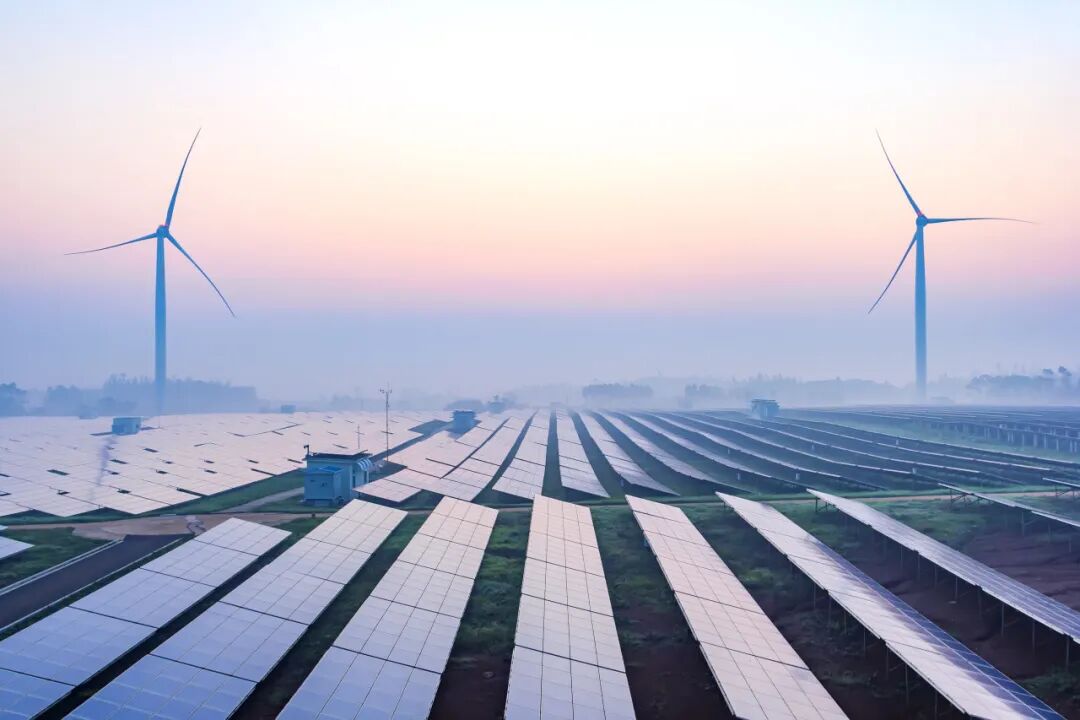
《关于支持风电开发建设 规范使用林地草地有关工作的通知》出台 | 中电联发布《2025-2026年度全国电力供需形势分析预测报告》
Xin Lang Cai Jing· 2026-02-24 11:08
Policy Updates - The National Forestry and Grassland Administration and the National Energy Administration issued a notice to support the development of wind power projects, encouraging the efficient use of forest and grassland areas, particularly in desertified regions [1][18] - The notice aims to promote high-quality development of wind power by regulating the use of land and enhancing project supervision, effective until December 31, 2030 [1][18] Industry Insights - The China Electricity Council released the "2025-2026 National Power Supply and Demand Analysis and Forecast Report," predicting that national electricity consumption will exceed 10 trillion kilowatt-hours for the first time in 2025, reaching 10.37 trillion kilowatt-hours, a 5.0% increase year-on-year [4][20] - By the end of 2025, the total installed power generation capacity is expected to reach 3.89 billion kilowatts, a 16.1% increase from the end of the 13th Five-Year Plan, with non-fossil energy sources accounting for over 60% of the total capacity [4][20] - The report forecasts that in 2026, electricity consumption will grow to between 10.9 and 11 trillion kilowatt-hours, with a year-on-year growth of 5% to 6%, and that new installed capacity will exceed 4 million kilowatts, with renewable energy sources expected to contribute over 3 million kilowatts [5][21]

电动汽车安全新国标发布 2026年7月1日正式实施
Zhong Guo Jing Ji Wang· 2026-02-02 03:03
Core Viewpoint - The newly revised national standard for electric vehicle safety (GB18384—2025) will be implemented on July 1, 2026, marking the first comprehensive revision since its integration in 2020, addressing emerging safety risks associated with rapid technological advancements in electric vehicles [1][2]. Group 1: Key Changes in the New Standard - The new standard mandates a physical disconnection between the high-voltage circuit of the vehicle and the rechargeable energy storage system, introducing a "one-button power-off" device as a physical disconnection mechanism, enhancing reliability and timeliness in accident rescue [2]. - Vehicles must be equipped with high-voltage or low-voltage maintenance disconnection devices, with high-voltage devices meeting IPXXB protection level requirements, ensuring that live parts drop to safe voltage levels within one second after disconnection [2]. - A new requirement for underbody scraping tests has been added, specifying a barrier of 150mm solid hemisphere and a test speed of 35 km/h, with no leakage, shell rupture, fire, or explosion allowed, while meeting insulation resistance requirements [2]. Group 2: Industry Implications - Since 2025, over ten safety standards for new energy vehicle technologies have been released or are under public consultation, covering areas such as power batteries, vehicle safety, intelligent networking, and key components, directly addressing consumer concerns [3]. - The implementation of the new standard is expected to enhance the overall safety control system for electric vehicles in China, providing authoritative technical basis for product access, quality supervision, and accident investigation, which is crucial for mitigating safety risks and solidifying China's leading position in the global new energy vehicle industry [3].
4.9万辆电车名额放出,加拿大消费者在热议什么? | 电厂
Xin Lang Cai Jing· 2026-01-30 11:41
Core Viewpoint - The Canadian government has released a quota allowing 49,000 Chinese electric vehicles (EVs) to enter the market at a reduced tariff, which will gradually increase to 70,000 over five years, amidst a heated public debate on the implications for consumers and the automotive industry [1]. Group 1: Government Policy and Market Impact - Starting in 2026, Canada will allow up to 49,000 Chinese EVs annually, with a tariff of 6.1%, increasing to 70,000 over five years [1]. - By 2030, at least 50% of the imported Chinese EVs must be priced below CAD 35,000 (approximately RMB 177,000) [1]. - The 49,000 quota is expected to represent about 44.5% of the projected 2025 Canadian EV sales, which is similar to pre-tariff sales levels [13]. Group 2: Consumer Sentiment and Preferences - Canadian consumers have expressed a desire for specific Chinese models, with BYD's Atto1 and Seal being highly mentioned, alongside the Shark pickup, which is seen as a strong contender due to its hybrid structure [3][6]. - There is a general positive sentiment among Canadian consumers towards the introduction of Chinese EVs, as they believe it will not significantly disrupt the local automotive ecosystem [13]. - Concerns about the availability of charging infrastructure and after-sales service are prevalent among consumers, with many highlighting the inadequacy of current public charging facilities [16][17]. Group 3: Market Viability of Chinese Brands - Tesla's Shanghai factory has been a significant source of EVs for Canada, with 44,400 units shipped in 2023, indicating a strong existing market presence for Chinese-manufactured vehicles [9][10]. - Geely is viewed as a likely candidate for market entry due to its established presence in Canada through brands like Volvo and Polestar [10]. - The Lotus Eletre, a luxury electric SUV, has successfully passed North American certification and is expected to see a significant price reduction due to the new tariff policy, potentially boosting its sales in Canada [11]. Group 4: Challenges for Chinese EVs - The lack of a robust sales and service network for Chinese brands in Canada poses a significant barrier to market entry, as compliance with North American safety standards is still a challenge [19]. - Concerns about the supply chain for parts and the time required for repairs have been raised, particularly in light of experiences from other markets like Mexico and Australia [17]. - The current infrastructure for charging EVs in Canada is insufficient, with a need for 40,000 new chargers annually to meet federal sales targets, which could hinder the adoption of new EV models [16].

工信部公开征求对《电动汽车安全要求》强制性国家标准(报批稿)、《国家电气设备安全技术规范》等2项强制性国家标准外文版(报批稿)的意见
Zheng Quan Shi Bao Wang· 2025-10-31 11:40
Core Viewpoint - The Ministry of Industry and Information Technology (MIIT) has completed the drafting of two mandatory national standards related to electric vehicle safety and electrical equipment safety, which are now open for public consultation [1] Group 1: National Standards - The MIIT has organized the completion of the mandatory national standard draft for "Safety Requirements for Electric Vehicles" [1] - The MIIT has also completed the draft for "National Technical Specifications for Electrical Equipment Safety" [1] - These drafts are part of the mandatory national standard revision plan issued by the National Standardization Administration [1] Group 2: Public Consultation - The drafts and their explanatory notes are now being made public to gather opinions from various sectors of society [1]