电动汽车充电基础设施

Search documents
零跑汽车欧洲创新中心在德国慕尼黑正式开业;中国电动汽车充电基础设施总数达2101.0万个丨汽车交通日报
创业邦· 2026-03-22 03:06
Group 1 - Suzuki is strengthening its electric vehicle (EV) production system in India by establishing a dedicated production line, expected to start operations between July and September, with an annual capacity increase of 250,000 units, reaching a total of 1 million units [2] - Nissan has appointed its first Chinese general manager for its China operations, effective April 1, 2026, amid a decline in sales that have dropped for seven consecutive years since 2019, with 2025 sales reported at 653,000 units, a year-on-year decrease of 6.26% [2] - As of February 2026, China's electric vehicle charging infrastructure has reached a total of 21.01 million charging points, marking a year-on-year growth of 47.8%, with public charging facilities at 4.834 million and private charging facilities at 16.176 million [2] - Leap Motor has officially opened its first overseas innovation center in Munich, Germany, on March 20 [2]


国家能源局:2101万个
中国能源报· 2026-03-21 08:01
Core Insights - The article discusses the latest data on electric vehicle charging infrastructure in China as of February 2026, highlighting significant growth in both public and private charging facilities [2]. Group 1: Overall Charging Infrastructure - As of the end of February 2026, the total number of electric vehicle charging facilities (guns) in China reached 21.01 million, representing a year-on-year increase of 47.8% [2]. Group 2: Public Charging Facilities - The number of public charging facilities (guns) reached 4.834 million, with a year-on-year growth of 28.8% [2]. - The total rated power of public charging facilities is 229 million kilowatts, with an average power of approximately 47.41 kilowatts [2]. Group 3: Private Charging Facilities - The number of private charging facilities (guns) reached 16.176 million, showing a year-on-year increase of 54.6% [2]. - The installed electricity capacity for private charging facilities is 14.1 million kilovolt-amperes [2].

直通部委|去年空气质量为有监测记录以来最优 《死亡证明》电子证照具有同等法律效力
Xin Lang Cai Jing· 2026-02-27 10:11
Group 1: Environmental Quality - By 2025, China's air quality is expected to reach the best level since monitoring began, with PM2.5 average concentration at 28 micrograms per cubic meter, 89.3% of days classified as good, and only 0.9% of days experiencing heavy pollution [1] Group 2: Electric Vehicle Infrastructure - As of January 2026, China has a total of 20.698 million electric vehicle charging facilities, marking a year-on-year increase of 49.6%. Public charging facilities account for 4.801 million, with a growth of 31.2%, while private charging facilities reached 15.897 million, up by 56.1% [2] Group 3: Foreign Exchange Risk Management - The People's Bank of China will reduce the foreign exchange risk reserve requirement for forward foreign exchange sales from 20% to 0% starting March 2, 2026, aimed at promoting foreign exchange market development and supporting enterprises in managing exchange rate risks [3] Group 4: Cross-Strait Relations - The Taiwan Affairs Office has stated that it will not allow "Taiwan independence" advocates and their relatives to profit from investments in mainland China, emphasizing the need to maintain peace and stability across the Taiwan Strait [4] Group 5: Safety Regulations - The Ministry of Emergency Management will enhance oversight of the public disclosure of safety accident investigation reports, ensuring timely and complete transparency to uphold public rights and improve safety governance [5] Group 6: Traditional Chinese Medicine - By the end of 2025, 475 traditional Chinese medicine production bases will have passed inspections, covering nearly 1.24 million acres and supplying 101 types of medicinal materials to 215 production enterprises [6] Group 7: Education and Health - The Ministry of Education has mandated that students engage in at least 2 hours of comprehensive physical activity daily, alongside implementing mandatory labor education and enhancing mental health education for teachers [7] Group 8: Death Certification - Starting July 1, 2026, medical institutions will use a nationally unified "Death Certificate," which must be issued promptly and accurately, ensuring legal validity for both paper and electronic versions [8]
美国力特保险丝业务稳健增长,聚焦电子与电动汽车领域
Jing Ji Guan Cha Wang· 2026-02-11 13:39
Core Viewpoint - The recent financial report of Lite-On Technology Corporation indicates stable business performance, with plans to focus on growth in the electronics, transportation, and industrial sectors while considering the divestiture of non-core businesses to optimize resource allocation [1] Financial Performance - For the third quarter of fiscal year 2025, the company reported revenue of $625 million and a net profit of $69.52 million, with strong growth in the electronics sector [1] Strategic Focus - The company is expanding its power semiconductor business, particularly in the electric vehicle charging infrastructure sector, with progress potentially influenced by industry policies and demand fluctuations [1] Market Expansion - Lite-On plans to continue acquiring and integrating new businesses to increase market share in its targeted sectors [1]
4.9万辆电车名额放出,加拿大消费者在热议什么? | 电厂
Xin Lang Cai Jing· 2026-01-30 11:41
Core Viewpoint - The Canadian government has released a quota allowing 49,000 Chinese electric vehicles (EVs) to enter the market at a reduced tariff, which will gradually increase to 70,000 over five years, amidst a heated public debate on the implications for consumers and the automotive industry [1]. Group 1: Government Policy and Market Impact - Starting in 2026, Canada will allow up to 49,000 Chinese EVs annually, with a tariff of 6.1%, increasing to 70,000 over five years [1]. - By 2030, at least 50% of the imported Chinese EVs must be priced below CAD 35,000 (approximately RMB 177,000) [1]. - The 49,000 quota is expected to represent about 44.5% of the projected 2025 Canadian EV sales, which is similar to pre-tariff sales levels [13]. Group 2: Consumer Sentiment and Preferences - Canadian consumers have expressed a desire for specific Chinese models, with BYD's Atto1 and Seal being highly mentioned, alongside the Shark pickup, which is seen as a strong contender due to its hybrid structure [3][6]. - There is a general positive sentiment among Canadian consumers towards the introduction of Chinese EVs, as they believe it will not significantly disrupt the local automotive ecosystem [13]. - Concerns about the availability of charging infrastructure and after-sales service are prevalent among consumers, with many highlighting the inadequacy of current public charging facilities [16][17]. Group 3: Market Viability of Chinese Brands - Tesla's Shanghai factory has been a significant source of EVs for Canada, with 44,400 units shipped in 2023, indicating a strong existing market presence for Chinese-manufactured vehicles [9][10]. - Geely is viewed as a likely candidate for market entry due to its established presence in Canada through brands like Volvo and Polestar [10]. - The Lotus Eletre, a luxury electric SUV, has successfully passed North American certification and is expected to see a significant price reduction due to the new tariff policy, potentially boosting its sales in Canada [11]. Group 4: Challenges for Chinese EVs - The lack of a robust sales and service network for Chinese brands in Canada poses a significant barrier to market entry, as compliance with North American safety standards is still a challenge [19]. - Concerns about the supply chain for parts and the time required for repairs have been raised, particularly in light of experiences from other markets like Mexico and Australia [17]. - The current infrastructure for charging EVs in Canada is insufficient, with a need for 40,000 new chargers annually to meet federal sales targets, which could hinder the adoption of new EV models [16].

金属普涨 伦沪锡涨逾5% 碳酸锂涨超7% 沪金突破1100元/克
Sou Hu Cai Jing· 2026-01-21 08:31
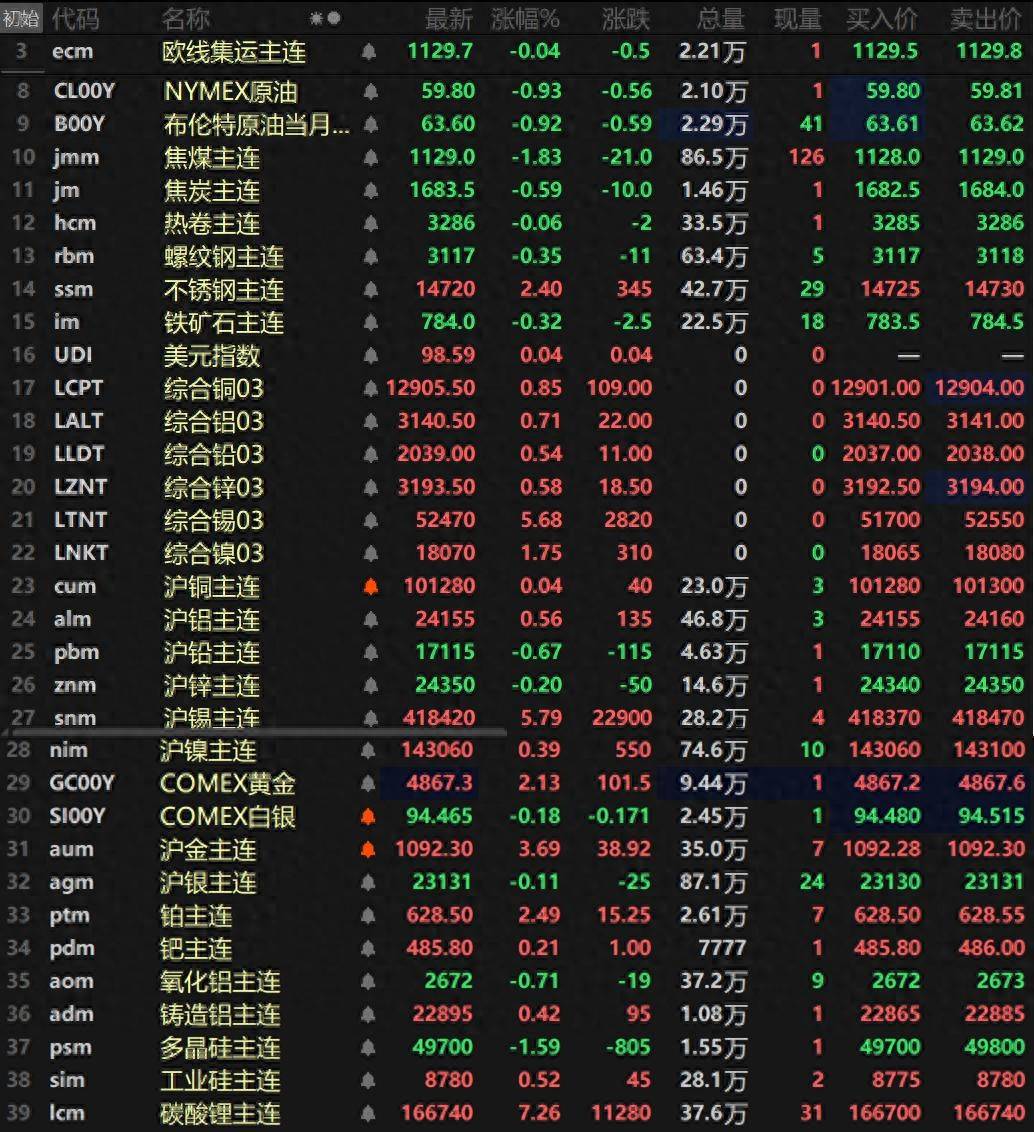
Metal Market - Domestic base metals experienced a general increase, with Shanghai lead and zinc both declining by 0.67% and 0.2% respectively. Shanghai tin led the gains with a rise of 5.79%, while other metals saw increases of less than 1% [1] - In the external market, base metals also showed positive performance, with London tin rising by 5.68% and nickel increasing by 1.75%. Other metals had gains of less than 1% [1] - Precious metals saw significant movements, with COMEX gold rising by 2.13% to a peak of $4891.1 per ounce, nearing the $4900 mark, setting a new historical high. COMEX silver fell by 0.18%, while domestic gold rose by 3.69% to a peak of 1101.92 yuan per gram, also setting a new historical high. Domestic silver decreased by 0.11% [1] Macro Environment - The Ministry of Industry and Information Technology announced plans to promote collaborative innovation in advanced materials across the entire supply chain, aiming to enhance the innovation capacity and development efficiency of the new materials industry [3] - The number of 5G users in China has exceeded 1.2 billion, with 483.8 million 5G base stations built, covering all towns and 95% of administrative villages. The country is also advancing in 6G technology, having completed the first phase of technical trials and starting the second phase [4] - The People's Bank of China conducted a net injection of 122.7 billion yuan through reverse repos, maintaining the operation rate at 1.40% [5] Oil Market - Both domestic and international oil prices fell, with U.S. oil down by 0.93% and Brent oil down by 0.92%. The U.S. President indicated that Venezuelan oil could help lower U.S. oil prices, while EIA forecasts a moderate recovery in crack spreads by 2026, with increasing refined oil inventories exerting short-term downward pressure on crude oil prices [8]
【快讯】每日快讯(2025年10月21日)
乘联分会· 2025-10-21 09:31
Domestic News - The number of applications for the national vehicle trade-in program has exceeded 8.3 million this year, with an average of over 30,000 applications per day [3] - As of September 2025, the total number of electric vehicle charging infrastructure reached 18.063 million, a year-on-year increase of 54.5% [4] - Dongfeng Motor has established a self-controlled solid-state battery supply chain, achieving battery products with energy densities of 240Wh/kg and 350Wh/kg, and a maximum range exceeding 1000 kilometers [5] - SAIC Group plans to start local assembly operations in Malaysia in the first quarter of 2026, with the first model expected to be the MG S5 [6] - Dongfeng Honda has launched a "lifetime warranty" service for its powertrain components, covering key parts without mileage or time limits [8] - GAC Group and Huawei's new brand "Qijing" plans to launch its first model in mid-2026, featuring Huawei's intelligent solutions [9] - A new battery technology company has been established by NIO and CATL, focusing on battery leasing and recycling [10] - Meituan's autonomous delivery vehicles have achieved large-scale deployment in Shenzhen, completing 5 million orders and covering over 15 million kilometers [11] International News - Germany plans to restart electric vehicle purchase subsidies, allocating €3 billion to support low- and middle-income families in buying zero-emission vehicles [12] - Indonesia aims to achieve domestic automobile production within the next three years, with budget allocations already in place [13] - Canada's electric vehicle incentive program has officially ended, having provided approximately $2.6 billion in subsidies since its launch [14] - Tesla has confirmed that the new generation Roadster will debut this year, with ambitious performance targets including a 0-100 km/h acceleration in under one second [15] Commercial Vehicles - The Yuantong Star F3E has been launched in the southern market, with 188 orders signed at the release event [17] - The Jianghuai 1 Card has launched two new models, focusing on different market needs for urban logistics [18] - The Zhengzhou Nissan Frontier Pro pickup, designed and produced in China, will officially start pre-sales at the end of October [19] - China National Heavy Duty Truck exported 15,000 heavy trucks in September, setting a new record for the industry [20]

中国充电联盟:截至6月全国充电基础设施累计数量达1610万个
Yang Shi Wang· 2025-07-31 05:41
Core Insights - The China Charging Alliance reported significant growth in electric vehicle charging infrastructure in the first half of 2025, with a total increase of 3.282 million units, representing a year-on-year growth of 99.2% [1] Infrastructure Growth - Public charging facilities saw an increase of 517,000 units, which is a year-on-year growth of 30.6% [1] - Private charging facilities experienced a substantial increase of 2.765 million units, marking a year-on-year growth of 120.8% [1] - As of June 2025, the total number of charging infrastructure units in China reached 16.1 million, reflecting a year-on-year increase of 55.6% [1]
后悔率逐年提高 消费者对电动汽车有何不满?
Zhong Guo Qi Che Bao Wang· 2025-05-19 01:06
Core Insights - The ownership of pure electric vehicles in China reached 22.09 million by the end of 2024, accounting for 70.34% of the total new energy vehicle ownership, but there is a rising regret rate among electric vehicle owners, particularly in lower-tier cities [2][4] - Over 30% of pure electric vehicle owners expressed regret about their purchase, with the regret rate increasing significantly from 3% in 2022 to 22% in 2023 [2][4] - Charging infrastructure remains a critical issue, with a notable disparity in user experience between first-tier cities and lower-tier cities, where the regret rate for electric vehicle owners can be as high as 54% [2][3] Charging Infrastructure - The charging infrastructure in China has developed rapidly, but issues such as uneven distribution, outdated technology, and inadequate service persist, leading to increased regret among electric vehicle owners in lower-tier areas [3][4] - Public charging stations have a utilization rate three times higher than private ones, yet the overall charging infrastructure still faces challenges in terms of layout and efficiency [3][4] Battery Life and Replacement Costs - The cost of replacing electric vehicle batteries is a significant concern, with replacement costs reaching 40%-50% of the vehicle's purchase price, leading many owners to reconsider their investment [5][8] - Battery warranty conditions are often perceived as inadequate, with many consumers unaware of the limitations until they need to replace their batteries [6][7] Second-Hand Market Dynamics - The resale value of electric vehicles is declining, with some models depreciating nearly 70% within four years, contrasting sharply with the higher resale values of gasoline vehicles [9][10] - The second-hand electric vehicle market lacks a mature evaluation system, making it difficult for consumers to assess the value of used electric vehicles, further contributing to low resale values [9][11] Insurance Costs - Electric vehicle insurance premiums are significantly higher than those for gasoline vehicles, with annual premiums for electric vehicles being 20%-50% more expensive, which adds to the overall cost of ownership [11][12] - The insurance industry faces challenges due to high claims costs associated with electric vehicles, leading to losses and higher premiums for consumers [12] Future Outlook - Despite current challenges, the industry remains optimistic about the future of electric vehicles in China, viewing the market as a testing ground for global electric and intelligent vehicle transitions [13]

关于汽车充电设计,我们都错了?
半导体行业观察· 2025-03-05 01:03
Core Viewpoint - The article emphasizes the critical need for a robust public electric vehicle (EV) charging infrastructure to accelerate the transition to electric vehicles, highlighting that while most charging occurs at home, the availability of public charging is essential for broader adoption [1][2]. Summary by Sections Section 1: Importance of Charging Infrastructure - A strong public charging infrastructure is vital for the success of electric vehicles, as many potential users are deterred by the lack of reliable charging options [1]. - A Forbes survey indicated that 62% of EV owners are concerned about range, affecting their travel plans [1]. Section 2: Historical Context and Challenges - The company has been involved in EV technology since 1992, focusing on creating desirable electric vehicles and addressing the limitations of charging station availability [2]. - High costs of charging stations, particularly fast chargers, are a significant barrier to expanding the charging network [2]. Section 3: Charging Mechanism Basics - Charging stations convert AC from the grid to DC for vehicle batteries, requiring strict control over voltage and current to prevent damage [4][5]. Section 4: Safety Measures - Electric vehicle chargers must protect users from electric shock, often using grounding methods to provide a safe path for stray currents [5][6]. Section 5: Cost Implications of Current Technology - Current electric vehicle charging systems are complex and expensive, with isolation links accounting for about 60% of the cost of power electronics in charging stations [10][11]. Section 6: Proposed Solutions - The article suggests eliminating current isolation methods to reduce costs and improve reliability, which could lead to a significant reduction in the size and cost of onboard chargers [12][20]. - A new method called Direct Power Conversion (DPC) is proposed, which could halve equipment costs and improve energy efficiency by 2-3% [21]. Section 7: Future of Public EV Charging - Simplifying the charging process and making it more cost-effective is essential for increasing the attractiveness of electric vehicles, especially for those hesitant due to inadequate charging infrastructure [21].