
电动汽车电动化转型

Search documents
特斯拉季度交付量创历史纪录,电动化转型是否迎来拐点?
Xin Lang Cai Jing· 2025-10-17 10:08
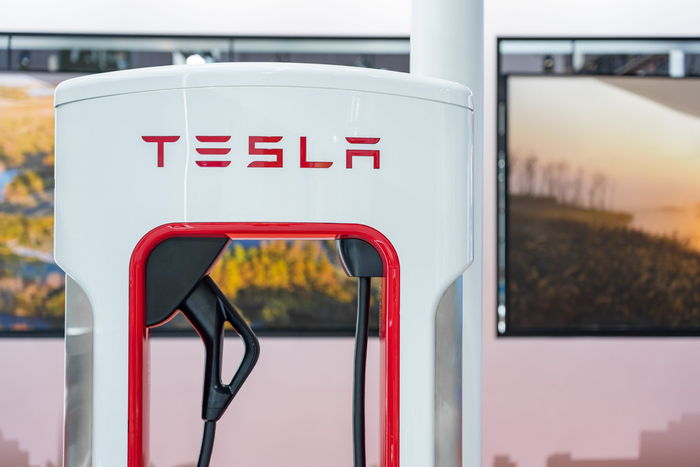
Core Insights - The electric vehicle (EV) wave is transforming the global automotive market, with Tesla achieving record deliveries in Q3 2025, delivering 497,100 vehicles, surpassing luxury automaker Mercedes-Benz [1][2] - Tesla's Q3 2025 deliveries exceeded market expectations, driven primarily by the Model 3 and Model Y, which accounted for 481,200 units, representing over 96% of total deliveries [1] - A significant factor in the surge of deliveries was the expiration of a $7,500 EV subsidy in the U.S. on September 30, prompting consumers to purchase vehicles ahead of the deadline [1] Tesla's Performance and Market Position - Tesla's Q3 2025 performance reflects over a decade of development, with historical challenges including near bankruptcy during the 2008 financial crisis, which was mitigated by a $50 million investment from Daimler [4] - The company has seen substantial growth in global sales, reaching 1.81 million units in 2023, with projections for 2025 sales between 2.15 million and 2.33 million units [6] - Tesla's global production efficiency, particularly at its Shanghai Gigafactory with a 95% automation rate, is a key competitive advantage in meeting market demand [6] Market Dynamics and Competition - China is a crucial market for Tesla, contributing to one-third of its global sales, with Q3 2025 deliveries in China reaching 169,200 units, a 31% increase quarter-over-quarter [2] - The competitive landscape is intensifying, with BYD leading in pure electric vehicle sales in Q3 2025 with 582,500 units, surpassing Tesla's deliveries [12] - Traditional luxury brands are adjusting their EV strategies, indicating a shift in the market dynamics as electric vehicles increasingly compete with internal combustion engine vehicles [7] Consumer Preferences and Product Strategy - Consumer preferences are evolving, with technology, smart features, and software ecosystems becoming critical factors in vehicle valuation, overshadowing traditional luxury attributes [9] - Tesla's recent launch of lower-spec versions of the Model 3 and Model Y has drawn criticism for reducing features, potentially alienating some consumers [9][10] - The pricing strategy in China shows gaps in key segments, particularly in the 100,000 to 200,000 yuan range, which may hinder Tesla's ability to attract a broader consumer base [10] Future Outlook - Analysts predict that the global EV market will continue to grow, with sales expected to reach 10 million units by 2025 and 28 million by 2030, representing 57% of all new car sales [7] - The future of Tesla's market leadership will depend on its ability to adapt to consumer needs, optimize lifecycle costs, and balance global and local strategies [12]



小鹏汽车欧洲市场海外本地化生产 三季度首批G6、G9量产下线
Zheng Quan Shi Bao Wang· 2025-09-15 04:24
Core Viewpoint - Xiaopeng Motors is advancing its localization strategy in Europe by partnering with Magna in Graz, Austria, to enhance electric vehicle production, with the first localized production project set to launch in Q3 2025 [1][2]. Group 1: Localization and Production - The first localized production project will commence in Q3 2025, with the initial models being Xiaopeng G6 and G9 rolling off the production line [1]. - Xiaopeng Motors has expanded its global presence since entering the European market in 2021, now covering over 46 countries and regions [1]. - In the first seven months of 2025, Xiaopeng's overseas sales reached 18,701 units, marking a 217% year-on-year increase [1]. Group 2: Market Position and Strategy - Xiaopeng Motors has become the top-selling Chinese brand in the mid-to-high-end electric vehicle segment in Europe, with over 8,000 registrations in the first half of the year [1]. - The G6 model contributed 67% of the European sales, indicating strong market demand [1]. - The company has established a research and development center in Munich, Germany, to enhance its understanding of European consumer needs and accelerate local innovation [2]. Group 3: Future Plans and Market Trends - Xiaopeng plans to produce a wider range of models at the Magna factory, including electric sedans and SUVs, to cater to diverse consumer preferences in Europe [2]. - The collaboration with Magna aligns with Xiaopeng's long-term vision to strengthen its capabilities in the European market [2]. - The European automotive market is undergoing a shift towards electrification, with increasing consumer acceptance and demand for electric vehicles, making Xiaopeng's localization efforts timely [2][3].
市场持续升温、品牌百花齐放 中国新能源汽车全球优势再进阶
Zhong Guo Qi Che Bao Wang· 2025-05-19 01:06
Market Overview - Global electric vehicle (EV) sales exceeded 1.6 million units in March, marking a 25% year-on-year increase, with pure electric vehicle sales rising by 32% to 1.1 million units [2] - In the first quarter, electric vehicles accounted for 21% of global new car sales, increasing to 25% in March [2] - China contributed significantly to global EV growth, holding a 67.7% share of the global market and accounting for 84% of the growth in the first quarter [2] Industry Dynamics - Chinese brands are rapidly expanding in the global market, with BYD leading the charge, significantly widening the gap with Tesla [3] - Traditional automakers like Geely and SAIC-GM-Wuling are maintaining their market positions through innovative products, while new entrants like Xiaomi and Xpeng are capturing market share with differentiated strategies [3] China Market Insights - In Q1 2025, China's automotive production and sales reached 7.561 million and 7.47 million units, respectively, reflecting year-on-year growth of 14.5% and 11.2% [5] - New energy vehicle (NEV) production and sales were 3.182 million and 3.075 million units, showing significant growth of 50.4% and 47.1% year-on-year [5] - Domestic NEV sales reached 2.633 million units, with a year-on-year increase of 47.6%, representing 43.5% of total domestic car sales [5] Export Performance - NEV exports totaled 441,000 units in Q1, a 43.9% increase year-on-year, with pure electric vehicle exports at 290,000 units, up 16.7% [6] - The growth in plug-in hybrid vehicle exports was particularly notable, increasing by 2.3 times [6] Competitive Landscape - The competition in the NEV market is intensifying, with companies focusing on both price and technological advancements [7] - Traditional automakers and new entrants are investing heavily in R&D for battery technology and autonomous driving [7] European Market Trends - In Q1 2025, European passenger car sales totaled 3.382 million units, with pure electric vehicle sales surging by 28% to 573,500 units [8] - The market share of electric vehicles reached a record high of 24.87% [8] - The shift towards electric vehicles is driven by EU emission regulations and continued subsidies in several countries [9] U.S. Market Challenges - In Q1 2025, U.S. pure electric vehicle sales grew by 11.4% to 294,000 units, but the market share remains lower than previous quarters [11] - The reintroduction of policies under the Trump administration is expected to impact the growth of the EV market negatively [11] Brand Performance - BYD's total sales reached 1,000,800 units in Q1, nearly three times that of Tesla, which delivered approximately 336,700 units, marking a 13% decline [18] - Geely's sales surged to about 260,000 units, moving it to the third position in the market [18] - Xiaomi's single model, the SU7, has propelled it into the top 20 brands, showcasing the potential of new entrants [19] Global Model Rankings - In Q1 2025, 17 out of the top 20 electric vehicle models sold globally were from Chinese brands, with BYD dominating the list [14] - Tesla's Model Y remains the best-selling electric vehicle, while the Model 3 ranks third [14]

